Kirjailija
Michael Bérubé
Kirjat ja teokset yhdessä paikassa: 23 kirjaa, julkaisuja vuosilta 1994-2024, suosituimpien joukossa The Secret Life of Stories. Vertaile teosten hintoja ja tarkista saatavuus suomalaisista kirjakaupoista.
Mukana myös kirjoitusasut: Michael Berube
23 kirjaa
Kirjojen julkaisuhaarukka 1994-2024.
Facing threats like climate change and nuclear warfare, science fiction authors have conjured apocalyptic scenarios of human extinction. Can such gloomy fates help us make sense of our contemporary crises? How important is the survival of our species if we wind up battling for an Earth that has become an unhabitable hellscape? What other possible futures do narratives of the end of humanity allow us to imagine?Michael Bérubé explores the surprising insights of classic and contemporary works of SF that depict civilizational collapse and contemplate the fate of Homo sapiens. In a lively, conversational style, he considers novels by writers including Ursula K. Le Guin, Margaret Atwood, Liu Cixin, Philip K. Dick, and Octavia Butler, as well as films that feature hostile artificial intelligence, such as 2001: A Space Odyssey, Blade Runner, and the Terminator and Matrix franchises. Bérubé argues that these works portray a future in which we have become able to see ourselves from the vantage point of something other than the human. Though framed by the possibility of human extinction, they are driven by a vision of the “ex-human”—a desire to imagine that another species is possible. For all science fiction readers worried about the fate of humanity, The Ex-Human is an entertaining yet sobering account of how key novels and films envision the world without us.
How far does the idea of academic freedom extend to professors in an era of racial reckoning?The protests of summer 2020, which were ignited by the murder of George Floyd, led to long-overdue reassessments of the legacy of racism and white supremacy in both American academe and cultural life more generally. But while universities have been willing to rename some buildings and schools or grapple with their role in the slave trade, no one has yet asked the most uncomfortable question: Does academic freedom extend to racist professors?It's Not Free Speech considers the ideal of academic freedom in the wake of the activism inspired by outrageous police brutality, white supremacy, and the #MeToo movement. Arguing that academic freedom must be rigorously distinguished from freedom of speech, Michael Bérubé and Jennifer Ruth take aim at explicit defenses of colonialism and theories of white supremacy—theories that have no intellectual legitimacy whatsoever. Approaching this question from two angles—one, the question of when a professor's intramural or extramural speech calls into question his or her fitness to serve, and two, the question of how to manage the simmering tension between the academic freedom of faculty and the antidiscrimination initiatives of campus offices of diversity, equity, and inclusion—they argue that the democracy-destroying potential of social media makes it very difficult to uphold the traditional liberal view that the best remedy for hate speech is more speech. In recent years, those with traditional liberal ideals have had very limited effectiveness in responding to the resurgence of white supremacism in American life. It is time, Bérubé and Ruth write, to ask whether that resurgence requires us to rethink the parameters and practices of academic freedom. Touching as well on contingent faculty, whose speech is often inadequately protected, It's Not Free Speech insists that we reimagine shared governance to augment both academic freedom and antidiscrimination initiatives on campuses. Faculty across the nation can develop protocols that account for both the new realities—from the rise of social media to the decline of tenure—and the old realities of long-standing inequities and abuses that the classic liberal conception of academic freedom did nothing to address. This book will resonate for anyone who has followed debates over #MeToo, Black Lives Matter, Critical Race Theory, and "cancel culture"; more specifically, it should have a major impact on many facets of academic life, from the classroom to faculty senates to the office of the general counsel.
How an understanding of intellectual disability transforms the pleasures of reading Narrative informs everything we think, do, plan, remember, and imagine. We tell stories and we listen to stories, gauging their "well-formedness" within a couple of years of learning to walk and talk. Some argue that the capacity to understand narrative is innate to our species; others claim that while that might be so, the invention of writing then re-wired our brains. In The Secret Life of Stories, Michael Bérubé tells a dramatically different tale, in a compelling account of how an understanding of intellectual disability can transform our understanding of narrative. Instead of focusing on characters with disabilities, he shows how ideas about intellectual disability inform an astonishingly wide array of narrative strategies, providing a new and startling way of thinking through questions of time, self-reflexivity, and motive in the experience of reading. Interweaving his own stories with readings of such texts as Faulkner's The Sound and the Fury, Haddon's The Curious Incident of the Dog in the Night-Time, Kingston's The Woman Warrior, and Philip K. Dick's Martian Time-Slip, Bérubé puts his theory into practice, stretching the purview of the study of literature and the role of disability studies within it. Armed only with the tools of close reading, Bérubé demonstrates the immensely generative possibilities in the ways disability is deployed within fiction, finding in them powerful meditations on what it means to be a social being, a sentient creature with an awareness of mortality and causality—and sentience itself. Persuasive and witty, Michael Bérubé engages Harry Potter fans and scholars of literature alike. For all readers, The Secret Life of Stories will fundamentally change the way we think about the way we read.
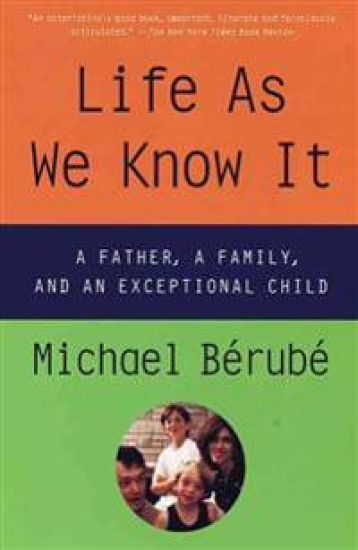
The story of Jamie B rub 's journey to adulthood and a meditation on disability in American life Published in 1996, Life as We Know It introduced Jamie B rub to the world as a sweet, bright, gregarious little boy who loves the Beatles, pizza, and making lists. When he is asked in his preschool class what he would like to be when he grows up, he responds with one word: big. At four, he is like many kids his age, but his Down syndrome prevents most people from seeing him as anything but disabled. Twenty years later, Jamie is no longer little, though he still jams to the Beatles, eats pizza, and makes endless lists of everything--from the sixty-seven counties of Pennsylvania (in alphabetical order, from memory) to the various opponents of the wrestler known as the Undertaker. In Life as Jamie Knows It, Michael B rub chronicles his son's journey to adulthood and his growing curiosity and engagement with the world. Writing as both a disability studies scholar and a father, he follows Jamie through his social and academic experiences in school, his evolving relationships with his parents and brother, Nick, his encounters with illness, and the complexities of entering the workforce with a disability. As Jamie matures, his parents acknowledge his entitlement to a personal sense of independence, whether that means riding the bus home from work on his own, taking himself to a Yankees game, or deciding which parts of his story are solely his to share. With a combination of stirring memoir and sharp intellectual inquiry, B rub tangles with bioethicists, politicians, philosophers, and anyone else who sees disability as an impediment to a life worth living. Far more than the story of an exceptional child growing up to be "big," Life as Jamie Knows It challenges us to rethink how we approach disability and is a passionate call for moving toward a more just, more inclusive society. From the Hardcover edition.
The story of Jamie Berube s journey to adulthood and a meditation on disability in American life Published in 1996, "Life as We Know It" introduced Jamie Berube to the world as a sweet, bright, gregarious little boy who loves the Beatles, pizza, and making lists. At four, he is like many young people his age, but his Down syndrome leads most people to see him only in terms of his disability. Twenty years later, Jamie is no longer little, though he still loves the Beatles, pizza, and making lists. In "Life as Jamie Knows It," Michael Berube chronicles his son s growth and his growing love of the world, writing as both a disability studies scholar and as a father. He follows Jamie through the transitions within his family and home life, through his school years, through the complicated process of entering the workforce with a disability. In a book that joins stirring memoir and sharp philosophical inquiry, Berube guides us through the labyrinth of ethical issues surrounding how we approach disability and uses Jamie s story to argue for a deeper understanding of disability that challenges us to move toward a more just, more inclusive society."
How an understanding of intellectual disability transforms the pleasures of reading Narrative informs everything we think, do, plan, remember, and imagine. We tell stories and we listen to stories, gauging their "well-formedness" within a couple of years of learning to walk and talk. Some argue that the capacity to understand narrative is innate to our species; others claim that while that might be so, the invention of writing then re-wired our brains. In The Secret Life of Stories, Michael Bérubé tells a dramatically different tale, in a compelling account of how an understanding of intellectual disability can transform our understanding of narrative. Instead of focusing on characters with disabilities, he shows how ideas about intellectual disability inform an astonishingly wide array of narrative strategies, providing a new and startling way of thinking through questions of time, self-reflexivity, and motive in the experience of reading. Interweaving his own stories with readings of such texts as Faulkner's The Sound and the Fury, Haddon's The Curious Incident of the Dog in the Night-Time, Kingston's The Woman Warrior, and Philip K. Dick's Martian Time-Slip, Bérubé puts his theory into practice, stretching the purview of the study of literature and the role of disability studies within it. Armed only with the tools of close reading, Bérubé demonstrates the immensely generative possibilities in the ways disability is deployed within fiction, finding in them powerful meditations on what it means to be a social being, a sentient creature with an awareness of mortality and causality—and sentience itself. Persuasive and witty, Michael Bérubé engages Harry Potter fans and scholars of literature alike. For all readers, The Secret Life of Stories will fundamentally change the way we think about the way we read.
The Humanities, Higher Education, and Academic Freedom
Michael Bérubé; J. Ruth
Palgrave Macmillan
2015
nidottu
This book is a lively, passionate defence of contemporary work in the humanities, and, beyond that, of the university system that makes such work possible. The book's stark accounts of academic labour, and its proposals for reform of the tenure system, are novel, controversial, timely, and very necessary.
The Humanities, Higher Education, and Academic Freedom
Michael Bérubé; J. Ruth
Palgrave Macmillan
2015
sidottu
This book is a lively, passionate defence of contemporary work in the humanities, and, beyond that, of the university system that makes such work possible. The book's stark accounts of academic labour, and its proposals for reform of the tenure system, are novel, controversial, timely, and very necessary.
The terrorist attacks of 9/11 and Bush's belligerent response fractured the American left—partly by putting pressure on little-noticed fissures that had appeared a decade earlier. In a masterful survey of the post-9/11 landscape, renowned scholar Michael Bérubé revisits and reinterprets the major intellectual debates and key players of the last two decades, covering the terrain of left debates in the United States over foreign policy from the Balkans to 9/11 to Iraq, and over domestic policy from the culture wars of the 1990s to the question of what (if anything) is the matter with Kansas. The Left at War brings the history of cultural studies to bear on the present crisis—a history now trivialized to the point at which few left intellectuals have any sense that merely "cultural" studies could have something substantial to offer to the world of international relations, debates over sovereignty and humanitarian intervention, matters of war and peace. The surprising results of Bérubé's arguments reveal an American left that is overly fond of a form of "countercultural" politics in which popular success is understood as a sign of political failure and political marginality is understood as a sign of moral virtue. The Left at War insists that, in contrast to American countercultural traditions, the geopolitical history of cultural studies has much to teach us about internationalism—for "in order to think globally, we need to think culturally, and in order to understand cultural conflict, we need to think globally." At a time when America finds itself at a critical crossroads, The Left at War is an indispensable guide to the divisions that have created a left at war with itself.
Mentoring and Making it in Academe
Elena Klaw; Michael Bérubé
University Press of America
2008
nidottu
Mentoring is vital to success in both achieving a doctorate and in establishing a productive, satisfying career. Yet, the current apprenticeship model of doctoral education leaves many students feeling mystified, isolated, and overwhelmed. This book provides an antidote to marginalization in the academy. Drawing from the experiences of current and recent doctoral candidates, Mentoring and Making It illuminates the often covert norms of the academic enterprise and provides a rich and detailed overview of the steps involved in "becoming a PhD." Written for students aspiring toward the doctorate, current doctoral candidates, and PhDs positioned at any step on the tenure ladder, Mentoring and Making It is an essential guide for PhD earners in their quest to create a rewarding career path within or outside of the ivory tower.
Described as one of the "101 Most Dangerous Academics in America" by right-wing critic David Horowitz, Michael Bérubé has become a leading liberal voice in the ongoing culture wars. This "smooth and swift read" (New Criterion) offers a definitive rebuttal of conservative activists' most incendiary claims about American universities, and in the process makes a supple case for liberalism itself. An important polemic as well as "a clear-eyed, occasionally quite humorous account of the joys and frustrations of running a college classroom" (New York Observer), this book is required reading for anyone concerned about the political climate on and off campus.
A bold and contemporary discourse of the intersection of disability studies and queer studies Crip Theory attends to the contemporary cultures of disability and queerness that are coming out all over. Both disability studies and queer theory are centrally concerned with how bodies, pleasures, and identities are represented as "normal" or as abject, but Crip Theory is the first book to analyze thoroughly the ways in which these interdisciplinary fields inform each other. Drawing on feminist theory, African American and Latino/a cultural theories, composition studies, film and television studies, and theories of globalization and counter-globalization, Robert McRuer articulates the central concerns of crip theory and considers how such a critical perspective might impact cultural and historical inquiry in the humanities. Crip Theory puts forward readings of the Sharon Kowalski story, the performance art of Bob Flanagan, and the journals of Gary Fisher, as well as critiques of the domesticated queerness and disability marketed by the Millennium March, or Bravo TV's Queer Eye for the Straight Guy. McRuer examines how dominant and marginal bodily and sexual identities are composed, and considers the vibrant ways that disability and queerness unsettle and re-write those identities in order to insist that another world is possible.
A bold and contemporary discourse of the intersection of disability studies and queer studies Crip Theory attends to the contemporary cultures of disability and queerness that are coming out all over. Both disability studies and queer theory are centrally concerned with how bodies, pleasures, and identities are represented as “normal” or as abject, but Crip Theory is the first book to analyze thoroughly the ways in which these interdisciplinary fields inform each other. Drawing on feminist theory, African American and Latino/a cultural theories, composition studies, film and television studies, and theories of globalization and counter-globalization, Robert McRuer articulates the central concerns of crip theory and considers how such a critical perspective might impact cultural and historical inquiry in the humanities. Crip Theory puts forward readings of the Sharon Kowalski story, the performance art of Bob Flanagan, and the journals of Gary Fisher, as well as critiques of the domesticated queerness and disability marketed by the Millennium March, or Bravo TV’s Queer Eye for the Straight Guy. McRuer examines how dominant and marginal bodily and sexual identities are composed, and considers the vibrant ways that disability and queerness unsettle and re-write those identities in order to insist that another world is possible.
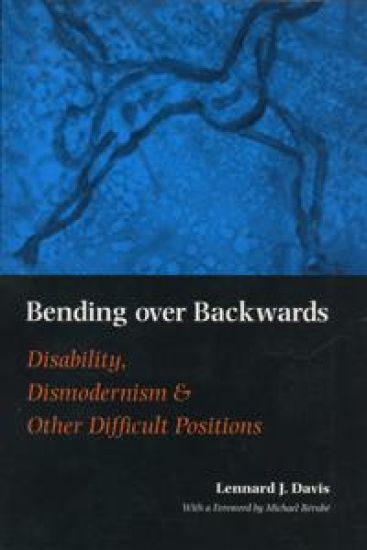
With the advent of the human genome, cloning, stem-cell research and many other developments in the way we think of the body, disability studies provides an entirely new way of thinking about the body in its relation to politics, the environment, the legal system, and global economies. Bending Over Backwards reexamines issues concerning the relationship between disability and normality in the light of postmodern theory and political activism. Davis takes up homosexuality, the Americans with Disabilities Act, the legal system, the history of science and medicine, eugenics, and genetics. Throughout, he maintains that disability is the prime category of postmodernity because it redefines the body in relation to concepts of normalcy, which underlie the very foundations of democracy and humanistic ideas about the body. Bending Over Backwards argues that disability can become the new prism through which postmodernity examines and defines itself, supplanting the categories of race, class, gender, and sexual orientation.
What sorts of cultural criticism are teachers and scholars to produce, and how can that criticism be "employed" in the culture at large? In recent years, debates about the role and direction of English departments have mushroomed into a broader controversy over the public legitimacy of literary criticism. At first glance this might seem odd: few taxpayers and legislators care whether the nation's English professors are doing justice to the project of identifying the beautiful and the sublime. But in the context of the legitimation crisis in American higher education, the image of English departments has in fact played a major role in determining public attitudes toward colleges and college faculty. Similarly, the changing economic conditions of universities have prompted many English professors to rethink their relations to their "clients," asking how literary study can serve the American public. What sorts of cultural criticism are teachers and scholars to produce, and how can that criticism be "employed" in the culture at large? In The Employment of English, Michael Bérubé, one of our most eloquent and gifted critics, examines the cultural legitimacy of literary study. In witty, engaging prose, Bérubé asserts that we must situate these questions in a context in which nearly half of all college professors are part-time labor and in which English departments are torn between their traditional mission of defining movements of literary history and protocols of textual interpretation, and their newer tasks of interrogating wider systems of signification under rubrics like "gender," "hegemony," "rhetoric," "textuality" (including film and video), and "culture." Are these new roles a betrayal of the field's founding principles, in effect a short-sighted sell-out of the discipline? Do they represent little more that an attempt to shore up the status of--and student enrollments in--English? Or are they legitimate objects of literary study, in need of public support? Simultaneously investigating the economic and the intellectual ramifications of current debates, The Employment of English provides the clearest and most condensed account of this controversy to date.
When Jamie Bérubé was born with Down syndrome in 1991, he was immediately subject to themedical procedures, insurance guidelines, policies, and representations that surround every child our societydesignates as disabled. In this wrenching yet ultimately inspiring book, Jamie's father, literary scholar MichaelBérubé, describes not only the challenges of raising his son but the challenge of seeing him as a personrather than as a medical, genetic, or social problem.