

Kirjailija
Michael Blake
Kirjat ja teokset yhdessä paikassa: 14 kirjaa, julkaisuja vuosilta 2013-2026, suosituimpien joukossa Beyond Blood Oil. Vertaile teosten hintoja ja tarkista saatavuus suomalaisista kirjakaupoista.
14 kirjaa
Kirjojen julkaisuhaarukka 2013-2026.

An unforgettable American story continues in the gripping sequel to the modern classic Dances With Wolves--from the #1 New York Times bestselling author Michael Blake. Eleven years have passed since Lieutenant John Dunbar became the Comanche warrior Dances With Wolves and married Stands With A Fist, a white-born woman raised as a Comanche from early childhood. With their three children, they live peacefully in the village of Ten Bears. But there is unease in the air, caused by increased reports of violent confrontations with white soldiers who want to drive the Comanche onto reservations. Disquiet turns to horror, and then to rage, when a band of white rangers descends on Ten Bear's village, slaughtering half its inhabitants and abducting Stands With A Fist and her infant daughter. The three surviving great warriors--Wind In His Hair, Kicking Bird, and Dances With Wolves--decide they must go to war with the white invaders. At the same time, Dances With Wolves realizes that only he can rescue his wife and child. Told with all the sweep, insight, and majesty that made Dances With Wolves a worldwide phenomenon, The Holy Road is an epic story of courage and honor.

The world-renowned American epic that inspired the incredible Oscar-winning film Dances with Wolves, the eternal story of one man's search for his place in the world--from #1 New York Times bestselling author Michael Blake In 1863, Lieutenant John Dunbar is ordered to an abandoned army post where the war-weary soldier finds himself alone with only his horse and a wolf for company. The desolate and deserted outpost soon becomes the springboard for contact with his wild neighbors, the Comanche. Survival forces Dunbar into the Comanche camp, where he strikes up an unlikely friendship and begins a dangerous adventure that changes his life forever. Each day in the wilderness, Dunbar becomes more and more like the Comanche, learning the ways of a proud and glorious people. But when his past comes back to haunt him, Dunbar must decide who he really is and where his loyalties lie. Relive the adventure and beauty of the incredible Academy Award-winning film Dances with Wolves.
Political controversy about migration is becoming more frequent, more heated, and for certain groups, decidedly more urgent. This raises pressing questions not only in the realms of policy-making and public discourse, but also for philosophical accounts of migration. Do liberal states have the right to exclude unwanted outsiders, or should all borders be open? How should we begin to theorize the morality of refugee and asylum policy? If states can exclude unwanted outsiders, what ethical principles govern the determination of who gets in? Justice, Migration, and Mercy offers a way in which these questions might be answered by providing a vision of how we can understand the political morality of migration. Michael Blake offers a novel, and plausible, account of the right to exclude on which that right is grounded on a more fundamental right to avoid unwanted forms of political relationship. Far from simply justifying exclusion, however, Blake examines the best justifications for exclusion in an effort to determine its limits. In doing so, he challenges the current global realities of migration which ensure open borders for a select few and closed borders for the majority, most often the most marginalized in society. His account sheds light on more specific questions of justice in migration, such as the permissibility of travel bans and carrier sanctions. He also offers a particular vision about how to go beyond questions of right and liberal justice, towards a declaration of the sort of community we wish to be. Blake then identifies the moral notion of mercy as a central one for the moral analysis of migration, a move which leads to the conclusion that we ought to show mercy and justice in constructing migration policy as well as in public debate.
Dances with Wolves: The American Frontier Epic including The Holy Road
Michael Blake
Head of Zeus
2021
nidottu
2025 is the 35th anniversary of multi-Academy Award-winning movie DANCES WITH WOLVES, a true American epic directed by and starring Kevin Costner. Read the breathtaking original novel that inspired it!1863. The last occupant of Fort Sedgewick, Lieutenant John Dunbar watches over the American frontier. A thousand miles back east, his comrades are locked in battle with the Confederates, but out here he is alone. His desolate posting will bring him into contact with the lords of the southern plains – the Comanche. He has no knowledge of their customs but Dunbar is intrigued by these people and begins a transformation from which he emerges a different man. A man called Dances With Wolves. The story continues, 11 years later in The Holy Road. Times are hard for the Comanche. The white man is closing in from all directions, claiming land, driving the tribes on to reservations. Should the Comanche fight or make peace? Misunderstanding and duplicity lead to raids and atrocities on both sides that can have only one conclusion. The man that was John Dunbar must go to war again.The epic novel that inspired an Academy Award-winning movie, Dances With Wolves, and its sequel, The Holy Road, are presented here in one volume for the first time. For fans of Larry McMurtry, Charles Portis, and epic series like Yellowstone 1883.
Political controversy about migration is becoming more frequent, more heated, and for certain groups, decidedly more urgent. This raises pressing questions not only in the realms of policy-making and public discourse, but also for philosophical accounts of migration. Do liberal states have the right to exclude unwanted outsiders, or should all borders be open? How should we begin to theorize the morality of refugee and asylum policy? If states can exclude unwanted outsiders, what ethical principles govern the determination of who gets in? Justice, Migration, and Mercy offers a way in which these questions might be answered by providing a vision of how we can understand the political morality of migration. Michael Blake offers a novel, and plausible, account of the right to exclude on which that right is grounded on a more fundamental right to avoid unwanted forms of political relationship. Far from simply justifying exclusion, however, Blake examines the best justifications for exclusion in an effort to determine its limits. In doing so, he challenges the current global realities of migration which ensure open borders for a select few and closed borders for the majority, most often the most marginalized in society. His account sheds light on more specific questions of justice in migration, such as the permissibility of travel bans and carrier sanctions. He also offers a particular vision about how to go beyond questions of right and liberal justice, towards a declaration of the sort of community we wish to be. Blake then identifies the moral notion of mercy as a central one for the moral analysis of migration, a move which leads to the conclusion that we ought to show mercy and justice in constructing migration policy as well as in public debate.
Safe Behind Bars
Ellis Amdur; Chris de Villeneuve; Michael Blake
Edgework: Crisis Intervention Resources Pllc
2019
sidottu
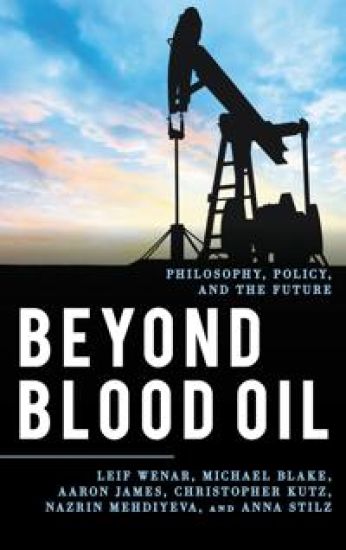
Beyond Blood Oil
Leif Wenar; Michael Blake; Aaron James; Christopher Kutz; Nazrin Mehdiyeva; Anna Stilz
Rowman Littlefield
2018
sidottu
Leif Wenar’s 2016 book Blood Oil: Tyrants, Violence, and the Rules that Run the World argues that much of the conflict, suffering, and injustice in the world is driven by an archaic rule in global trade that forces consumers to fund oppression and corruption. This oil curse is a major threat to global peace and stability. Wenar sets out Clean Trade policies to lift the oil curse through national legislation that affirms democratic principles. In Beyond Blood Oil, Wenar summarizes and extends his views, setting the stage for five essays from first-class critics from the fields of political theory, philosophy, and energy politics. Wenar replies vigorously and frankly to the critics, making the volume the scene of a highly energetic debate that will benefit all scholars, students, and global citizens interested in global justice, international security, oil politics, fair trade, climate change, and progressive reforms.

Beyond Blood Oil
Leif Wenar; Michael Blake; Aaron James; Christopher Kutz; Nazrin Mehdiyeva; Anna Stilz
Rowman Littlefield
2018
nidottu
Leif Wenar’s 2016 book Blood Oil: Tyrants, Violence, and the Rules that Run the World argues that much of the conflict, suffering, and injustice in the world is driven by an archaic rule in global trade that forces consumers to fund oppression and corruption. This oil curse is a major threat to global peace and stability. Wenar sets out Clean Trade policies to lift the oil curse through national legislation that affirms democratic principles. In Beyond Blood Oil, Wenar summarizes and extends his views, setting the stage for five essays from first-class critics from the fields of political theory, philosophy, and energy politics. Wenar replies vigorously and frankly to the critics, making the volume the scene of a highly energetic debate that will benefit all scholars, students, and global citizens interested in global justice, international security, oil politics, fair trade, climate change, and progressive reforms.
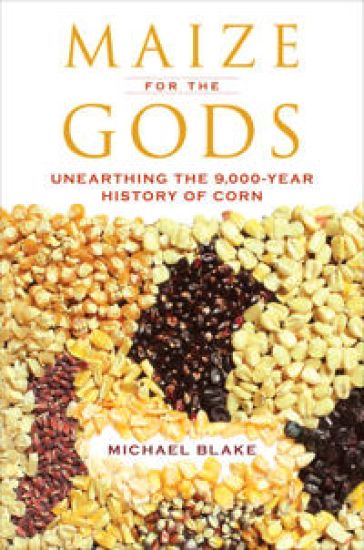
Maize is the world's most productive food and industrial crop, grown in more than 160 countries and on every continent except Antarctica. If by some catastrophe maize were to disappear from our food supply chain, vast numbers of people would starve and global economies would rapidly collapse. How did we come to be so dependent on this one plant? Maize for the Gods brings together new research by archaeologists, archaeobotanists, plant geneticists, and a host of other specialists to explore the complex ways that this single plant and the peoples who domesticated it came to be inextricably entangled with one another over the past nine millennia. Tracing maize from its first appearance and domestication in ancient campsites and settlements in Mexico to its intercontinental journey through most of North and South America, this history also tells the story of the artistic creativity, technological prowess, and social, political, and economic resilience of America's first peoples.

Maize is the world's most productive food and industrial crop, grown in more than 160 countries and on every continent except Antarctica. If by some catastrophe maize were to disappear from our food supply chain, vast numbers of people would starve and global economies would rapidly collapse. How did we come to be so dependent on this one plant? Maize for the Gods brings together new research by archaeologists, archaeobotanists, plant geneticists, and a host of other specialists to explore the complex ways that this single plant and the peoples who domesticated it came to be inextricably entangled with one another over the past nine millennia. Tracing maize from its first appearance and domestication in ancient campsites and settlements in Mexico to its intercontinental journey through most of North and South America, this history also tells the story of the artistic creativity, technological prowess, and social, political, and economic resilience of America's first peoples.
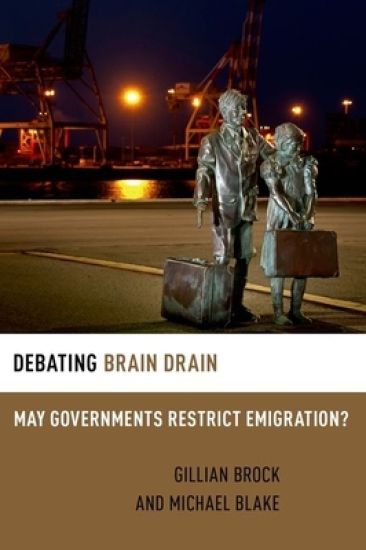
Many of the best and brightest citizens of developing countries choose to emigrate to wealthier societies, taking their skills and educations with them. What do these people owe to their societies of origin? May developing societies legitimately demand that their citizens use their skills to improve life for their fellow citizens? Are these societies ever permitted to prevent their own citizens from emigrating? These questions are increasingly important, as the gap between rich and poor societies widens, and as the global migration of skilled professionals intensifies. This volume addresses the ethical rights and responsibilities of such professionals, and of the societies in which they live. Gillian Brock and Michael Blake agree that the phenomenon of the brain drain is troubling, but offer distinct arguments about what might be permissibly done in response to this phenomenon.
Many of the best and brightest citizens of developing countries choose to emigrate to wealthier societies, taking their skills and educations with them. What do these people owe to their societies of origin? May developing societies legitimately demand that their citizens use their skills to improve life for their fellow citizens? Are these societies ever permitted to prevent their own citizens from emigrating? These questions are increasingly important, as the gap between rich and poor societies widens, and as the global migration of skilled professionals intensifies. This volume addresses the ethical rights and responsibilities of such professionals, and of the societies in which they live. Gillian Brock and Michael Blake agree that the phenomenon of the brain drain is troubling, but offer distinct arguments about what might be permissibly done in response to this phenomenon.
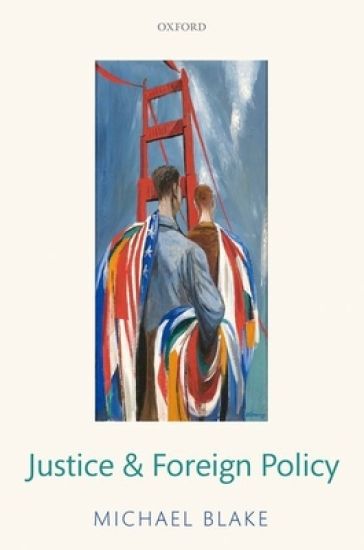
This book is an argument about the moral foundations of foreign policy. It argues that a liberal state can insist upon the universal reach of liberal ideas, while still distinguishing between what is owed to citizens and what is owed to foreign citizens. This liberalism includes a concern for liberal toleration, which is intended to defend the proposition that a liberal state can work for democratization and liberalism abroad, without being intolerant or illiberal in doing so. What constraints there are on foreign policy emerge not from the need to tolerate undemocratic regimes, but from the prudential reason that there are few effective and proportional means by which such regimes might be liberalized. It also argues that international inequality is wrong only when and to the extent this inequality can be shown to undermine the democratic self-rule of a society. Global poverty and underdevelopment is wrong for reasons quite unlike the reasons given to condemn domestic inequality. These facts are combined to give an attractive and coherent picture of how the foreign policy of a liberal state might be morally evaluated.