

Kirjailija
Michael Bliss
Kirjat ja teokset yhdessä paikassa: 20 kirjaa, julkaisuja vuosilta 1992-2026, suosituimpien joukossa Northern Enterprise. Vertaile teosten hintoja ja tarkista saatavuus suomalaisista kirjakaupoista.
20 kirjaa
Kirjojen julkaisuhaarukka 1992-2026.

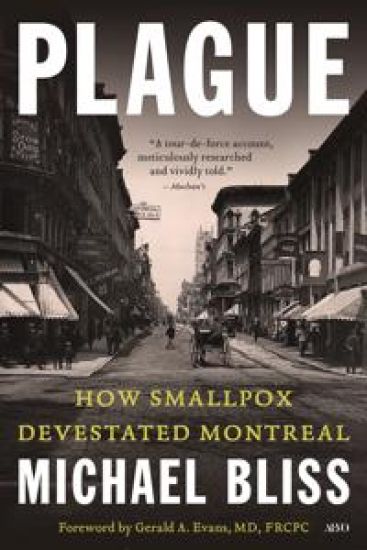
In January 1885, as the people of Montreal celebrated one of the greatest winter carnivals of the century, a deadly epidemic inched its way through the city streets. When the case of a railway porter suffering from smallpox was gravely mishandled, what followed was a “carnival of death” causing the preventable demise of over 3,000 Montrealers. In Plague, historian Michael Bliss uncovers one of the most remarkable untold stories in Canadian history. Crafted through thorough and comprehensive research, Bliss recounts this tale of carnage and humanity in an engaging and vividly detailed format. Now updated with a foreword by infectious diseases expert Gerald A. Evans, this new edition of Plague puts forth an unflinching portrayal of the city of Montreal featuring quack doctors, French-Canadian strongmen, black-robed priests, crusading journalists, Louis Riel, and more. Bliss depicts how every single death could have been avoided through vaccination even as the epidemic turned people against each other. The book shows how troops had to be called upon to guard smallpox hospitals against anti-vaccination rioters. In an uncanny mirroring of modern day, the whole city of Montreal was quarantined by the rest of North America as a charnel house of disease and death. Bliss paints a picture of a Montreal routed by divisions and brought to its knees by an epidemic. By bringing to life the last epidemic of smallpox to devastate a city in the Western world, he writes a stark history of life, living, and the human condition. This book is a thriller, a horror story, and a parable about the infectious diseases that have shocked our times.

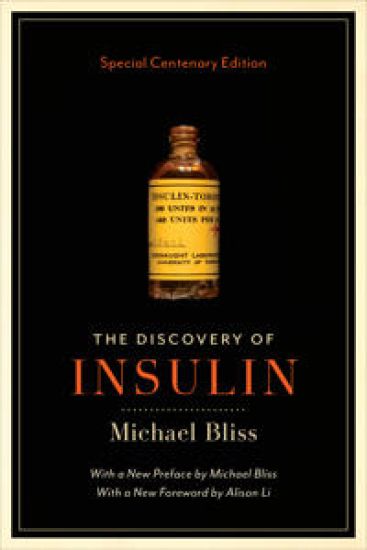
The discovery of insulin at the University of Toronto in 1921–2 was one of the most dramatic events in the history of the treatment of disease. Insulin, discovered by the Canadian research team of Frederick Banting, Charles Best, James Collip, and John Macleod, was a wonder drug with the ability to bring diabetes patients back from the brink of death. It was no surprise that in 1923 the Nobel Prize for Medicine was awarded for its discovery. In this engaging and award-winning account, historian Michael Bliss draws on archival records and personal adventures to recount the fascinating story behind the discovery of insulin – a story as much filled with fiery confrontation and intense competition as medical dedication and scientific genius. With a new preface by Michael Bliss and a foreword by Alison Li, the special centenary edition of The Discovery of Insulin honours the one hundredth anniversary of insulin’s discovery and its continued significance a century later.
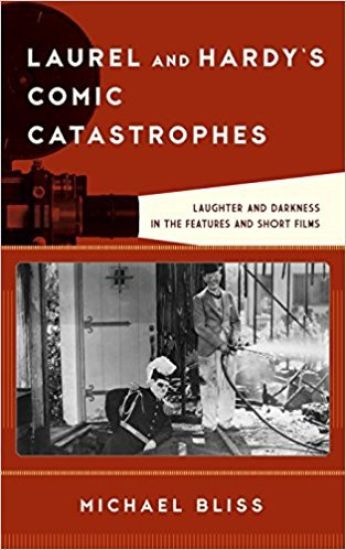
One of America’s most beloved comic duos, Stan Laurel and Oliver Hardy have entertained generations of viewers with their unique, heartwarming brand of slapstick comedy. The pair’s teamwork and friendship set their films apart, softening both pratfalls and hardships, and earning them a cherished place in cinema history. From their first joint on-screen appearance in 1921’s The Lucky Dog through their work at the Hal Roach studios, their comic signature remained unique. But what made the films of Laurel and Hardy so enduring? In Laurel and Hardy’s Comic Catastrophes: Laughter and Darkness in the Features and Short Films, Michael Bliss illustrates why these films continue to make audiences laugh. Combining an appreciation for the pleasure that these films elicit with a critical examination of what made them work, Bliss first investigates the milieu in which the pair’s comedy takes place. The author then explores Stan and Ollie’s friendship and their troubled—and troubling—relationships with women. The book also features a detailed discussion of Stan Laurel’s approach to gag structure, while the remainder of the book focuses on many of the pair’s silent and sound films, such as Duck Soup, Pack Up Your Troubles, Chickens Come Home, and The Music Box. By delving into the pair’s films—including several neglected short films—in greater detail than any previous work, this volume provides readers with a fundamental understanding of Stan and Ollie’s universal appeal. Featuring an extensive filmography, Laurel and Hardy’s Comic Catastrophes will engage a wide audience, from film scholars to fans of humor everywhere.

Loving Jesus: How To Grow In Love
Michael Bliss
Createspace Independent Publishing Platform
2015
nidottu
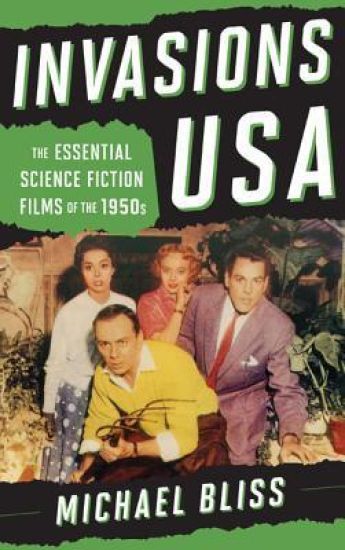
Out of more than 180 science fiction films produced in the United States between 1950 and 1959, twenty were concerned with the notion of an invasion. Of these, a select number used the invasions as metaphors of issues that were of importance to America at the time, such as assaults upon individuality and marriage and debates about the supremacy of the human race. The invasion may be real (The Day the Earth Stood Still and War of the Worlds), dreamed (Invaders from Mars), or the result of a mental breakdown, as seems to be the case in Invasion of the Body Snatchers. Real or not, all of these massive disturbances to the status quo convey the same anxiety: In the 1950s, many Americans felt that things in their world weren’t quite right, and this sense of unease was expressed in the country’s art, notably these films. In Invasions USA: The Essential Science Fiction Films of the 1950s, Michael Bliss examines movies that stripped away the veneer of normality during a decade often portrayed as the last innocent period in American history. From a boy’s nightmares about his alien-controlled parents and a young woman’s fears that her fiancé has been replaced by an emotionless alien to an extraterrestrial visitor who comes to warn mankind about its self-destructive ways, the stories of these films offer a variety of messages, both subtle and overt. With detailed discussions and analyses of the films in question, this book examines a unique group of movies with profound messages. By exploring depictions of insecurities—whether personal or political—Bliss shows how science fiction films spoke to American audiences deeply troubled by their circumstances. Invasions USA will appeal to science fiction buffs and film aficionados interested in this significant phenomenon in movie and cultural history.

John P. McGovern held seventeen professorships, received twenty-nine honorary doctorates, and established the nation’s largest privately owned allergy and immunology clinic. He authored 252 professional publications including twenty-six books in the medical sciences and humanities, and served as president or chief elected officer of fifteen professional societies in medicine. In addition, the McGovern Foundation has given millions of dollars to various local and national health charities, and many Houston landmarks bear the McGovern name, including the McGovern Lake and McGovern Children’s Zoo (at Houston’s Hermann Park), the McGovern Health and Science Museum, and the McGovern Campus of the Texas Medical Center. Bryant Boutwell, a long-time friend and colleague, has captured the influential life of this visionary Texas physician in John P. McGovern, MD: A Lifetime of Stories . In captivating narrative, interlaced with revealing personal and family stories, Boutwell chronicles McGovern’s holistic approach to medicine, which transcended the traditional boundaries of institutional identities and medical specialties. McGovern worked tirelessly to bring together big institutions, the health professions, bold interdisciplinary ideas, and a team approach to healthcare that, though prescient at the time, is recognized today as imperative. This commitment led to his founding role in the American Osler Society, which promotes humanistic and ethical dimensions of the practice of medicine, and his establishment of humanities programs at the UT Health Science Center at Houston and the UT Medical Branch at Galveston.
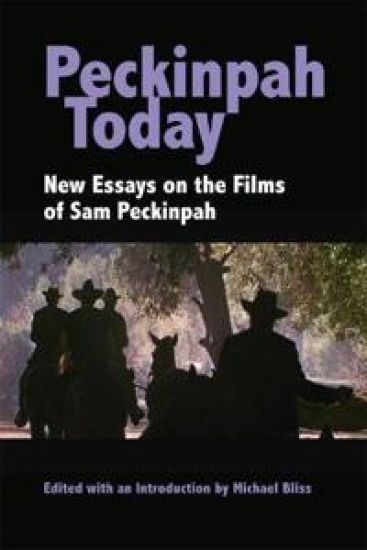
Written exclusively for this collection by today’s most significant writers and researchers on Sam Peckinpah, the nine essays in Peckinpah Today explore the body of work of one of the most important American filmmakers, revealing new insights into his artistic process and the development of his lasting themes. By unearthing new sources—from modified screenplay documents and pulp fiction novels to interviews with screenplay writers and editors—this book, edited by Peckinpah scholar Michael Bliss, provides groundbreaking criticism of Peckinpah’s work. To better understand Peckinpah’s artistic process, four of the essayists examine the transformation of written material into film, while acknowledging the significant contributions of screenwriters and producers. Included is a rare interview with A. S. Fleischman, author of the screenplay for The Deadly Companions, the film that launched Peckinpah’s career in feature films. The collection also contains essays by scholar Stephen Prince and Paul Seydor, editor of the controversial special edition of Pat Garrett and Billy the Kid, who explains his editing rationale in detail. In his essay on Straw Dogs, film critic Michael Sragow reveals how Peckinpah and co-scriptwriter David Zelag Goodman transformed a pulp novel into a powerful film. Other contributors explore spiritual and biblical themes in The Wild Bunch, The Ballad of Cable Hogue, The Killer Elite, and Cross of Iron. Tony Williams’s essay on The Osterman Weekend proposes that this underappreciated film is a sophisticated tract on the media. The final essay of the collection surveys Peckinpah’s career, showing the dark turn that the filmmaker’s artistic path took between his first film, The Deadly Companions, and his last film, The Osterman Weekend. This broad assessment helps to reinforce the book’s dawn-to-dusk approach, which provides a fascinating picture of the great filmmaker’s work.
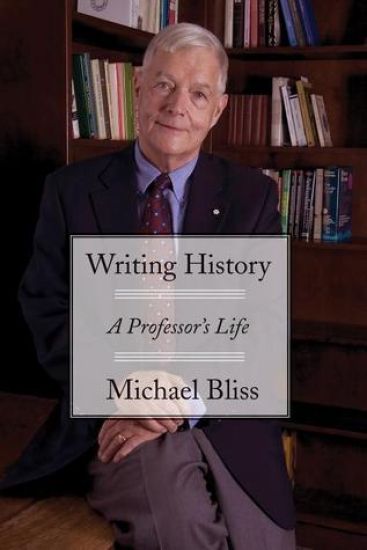
One of Canada's best-known and most-honoured biographers turns to the raw material of his own life in Writing History. A university professor, prolific scholar, public intellectual, and frank critic of the world he has known, Michael Bliss draws on extensive personal diaries to describe a life that has taken him from small-town Ontario in the 1950s to international recognition for his books in Canadian and medical history. His memoir ranges remarkably widely: it encompasses social history, family tragedy, a critical insider's view of university life, Canadian national politics, and, above all, a rare glimpse into the craftsmanship that goes into the research and writing of history in our time. Whether writing about pigs and millionaires, the discovery of insulin, sleazy Canadian politicians, or the founders of modern medicine and brain surgery, Michael Bliss is noted for the clarity of his prose, the honesty of his opinions, and the breadth of his literary interests.

Originating in the prestigious Joanne Goodman Lecture Series, and drawing on the author's series of award-winning books, The Making of Modern Medicine explores the foundations of medicine through three case studies that elucidate turning points in the evolution of health care. Michael Bliss first sketches the religiously-based attitudes of fatalism that enveloped the Montreal of 1885 during the last great epidemic of smallpox in the Western world. He then traces the scientific, research-based approach to disease of the Canadian-born doctor William Osler, practicing at Johns Hopkins in Baltimore. The final study reveals how the values that Osler espoused helped to inspire those who discovered insulin at the University of Toronto. In a provocative epilogue, Bliss reflects on how these events have contributed to our current anxieties about and attitudes towards health care. A tour de force, The Making of Modern Medicine is an essential summation of the work of Canada's leading historian of medicine.

At the dawn of the twenty-first century, we have become accustomed to medical breakthroughs and conditioned to assume that, regardless of what ails us, doctors almost certainly will be able to help - not just by diagnosing illnesses and alleviating our pain, but by actually treating or even curing diseases, and significantly improving our lives. For most of human history, however, that was far from the case, as veteran medical historian Michael Bliss explains in "The Making of Modern Medicine". Focusing on a few key moments in the transformation of medical care, Bliss reveals the way that new discoveries and new approaches led doctors and patients alike to discard fatalism and their traditional religious acceptance of suffering in favor of a new faith in health care and in the capacity of doctors to treat disease. He takes readers to three turning points - a devastating smallpox outbreak in Montreal in 1885, the founding of the Johns Hopkins Hospital and Medical School, and the discovery of insulin - and recounts the lives of three crucial figures - researcher Frederick Banting, surgeon Harvey Cushing, and physician William Osler - turning medical history into a fascinating story of dedication and discovery. Compact and compelling, this searching history vividly depicts and explains the emergence of modern medicine - and, in a provocative epilogue, outlines the paradoxes and confusions underlying our contemporary understanding of disease, death, and life itself.
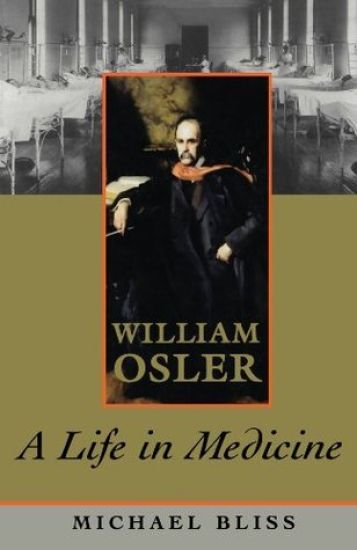
William Osler was born in a parsonage in backwoods Canada on July 12, 1849. In a life lasting seventy years, he practiced, taught, and wrote about medicine at Canada's McGill University, America's Johns Hopkins University, and finally as Regius Professor at Oxford. At the time of his death in England in 1919, many considered him to be the greatest doctor in the world. Osler, who was a brilliant, innovative teacher and a scholar of the natural history of disease, revolutionised the art of practicing medicine at the bedside of his patients. He was idolised by two generations of medical students and practitioners for whom he came to personify the ideal doctor. But much more than a physician, Osler was a supremely intelligent humanist. In both his writings and his personal life, and through the prism of the tragedy of the Great War, he embodied the art of living. It was perhaps his legendary compassion that elevated his healing talents to an art form and attracted to his private practice students, colleagues, poets (Walt Whitman for example) politicians, royalty, and nameless ordinary people with extraordinary conditions. William Osler's life lucidly illuminates the times in which he lived. Indeed, this is a book not only about the evolution of modern medicine, the training of doctors, holism in medical thought, and the doctor-patient relationship, but also about humanism, Victorianism, the Great War, and much else. Meticulously researched, drawing on many new sources and offering new interpretations, William Osler: A Life in Medicine brings to life both a fascinating man and the formative age of twentieth-century medicine. It is a classic biography of a classic life, both authoritative and highly readable.
Originally a Hong Kong-based director, John Woo is now considered one of the ten most successful directors working in American films, receiving world-wide attention for his highly stylized violence in films such as The Killer (1989), Hard-Boiled (1992), Face/Off (1997), and Mission Impossible 2 (2000). While Woo is widely regarded as a master action director, scant attention has been paid to the manner in which Woo's films reflect the director's religious and ethical concerns. Through an examination of representative films from the director's Hong Kong and American periods, Michael Bliss demonstrates that Woo should be regarded as a predominantly religious director, in whose films action is the vehicle by virtue of which a concern with spirituality is dramatized. Contains a chapter on Chinese opera tradition as relates to Woo's films, an exclusive interview with John Woo, and a complete filmography.
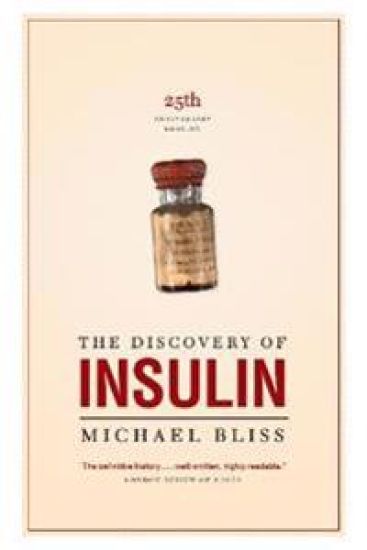
The discovery of insulin at the University of Toronto in 1921-22 was one of the most dramatic events in the history of the treatment of disease. Insulin was a wonder-drug with ability to bring patients back from the very brink of death, and it was no surprise that in 1923 the Nobel Prize for Medicine was awarded to its discoverers, the Canadian research team of Banting, Best, Collip, and Macleod. In this engaging and award-winning account, historian Michael Bliss recounts the fascinating story behind the discovery of insulin - a story as much filled with fiery confrontation and intense competition as medical dedication and scientific genius. Originally published in 1982 and updated in 1996, The Discovery of Insulin has won the City of Toronto Book Award, the Jason Hannah Medal of the Royal Society of Canada, and the William H. Welch Medal of the American Association for the History of Medicine.
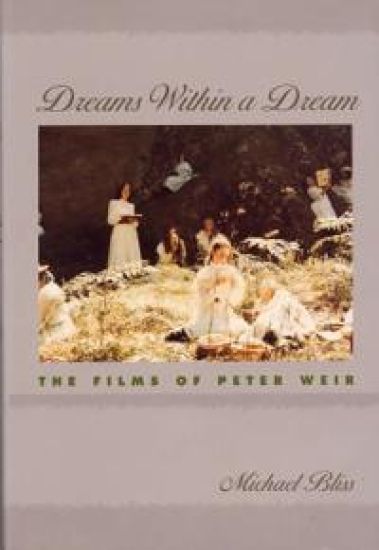
What we see, and what we seem, are but a dream, a dream within a dream. Michael Bliss views Miranda's voice-over at the beginning of ""Picnic at Hanging Rock"" as so pivotal in explaining the films of Peter Weir that he borrows her words to create the title of his own study of the Australian filmmaker's work. Bliss views Weir as an artist whose values are rooted in the realm of the dream, of the unconscious. Surrealistic in technique, Weir avoids the pedestrian assurances of a material realm in favour of an irresolution that, while potentially frustrating, is nonetheless for him a more truthful representation of what he considers reality. For Weir, as for Plato, Bliss demonstrates, ""empirical reality is nothing more than a shadow of what is real"". Bliss also considers Weir's heritage. Australian cinema, Bliss explains, is characterized by melodramatic narratives born of a desire to see good and evil portrayed in striking opposition. Weir, for example, dramatizes the contradictory forces of light versus darkness, reason versus mystery, and rationality versus magic in such films as ""Picnic at Hanging Rock"" and ""The Last Wave"". This melodramatic emphasis is evident as well in the polarized characterizations in such films as ""Witness"", ""Dead Poets Society"", and ""The Truman Show"". Bliss also discusses Weir's use of another staple of Australian cinema - ""mateship"", the celebration of the bond between male companions. But by making self-knowledge dependent on action involving one's friends, Weir gives mateship a new meaning. Moreover, like other Australian filmmakers, Weir emphasizes the starkness of the Australian landscape, which functions either as a hazard or a deadly challenge, at least until American mythology caused him to see nature in a more positive light. Also prominent in Weir's films is an Australian spirit of rebellion coupled with the Aussie ambivalence toward all aspects of British culture. To help explain Weir's films, Bliss looks to Freud and Jung, whom Weir has studied, and also to two other prominent purveyors of myth and archetype, Northrop Frye and Joseph Campbell. Virtually all Weir characters struggle toward a new mode of awareness, a psychological awareness based on archetypal truths. Many of his films involve archetypal journeys heading through conflict to spiritual unity. Weir's quest is to find out what we really know and how we know what we know
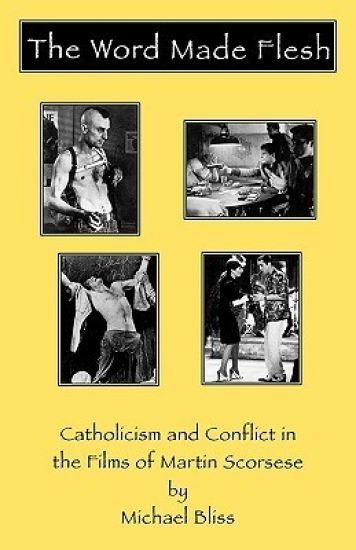
The Word Made Flesh is an exploration of the thematic concerns and the underlying humanism and morality found in Martin Scorsese's films. It contains individual chapters on fifteen Scorsese films, the most complete Scorsese filmography available, and a host of illustrations. Generally acknowledged as one of the most important and influential directors of his generation, Scorsese has directed a wide range of films, from documentaries to musicals to comedies to dramas. Although Scorsese has a well-known penchant for violence, as in the films Taxi Driver, Raging Bull, and Cape Fear, he is also a master of the character study. The Word Made Flesh is an essential addition to any film collection.
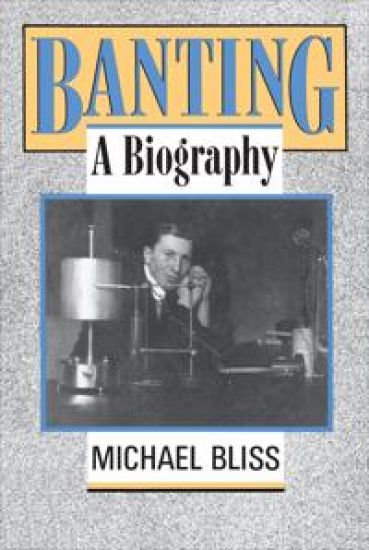
Frederick Banting was thirty-one when he received the Nobel Prize for his part in the discovery of insulin. He was catapulted to instant fame, for which he was neither personally nor professionally prepared. Set up as head of his own research institute by a grateful government, he struggled fruitlessly to duplicate his first triumph. His marriage to a beautiful socialite ended in a scandal that rocked Toronto, and he returned to work and painting to dull his frustration. He died in a mysterious plane crash; a new preface to this edition discusses recent findings about the crash. Michael Bliss's highly acclaimed biography explores the life of a scientist who during his lifetime was the most famous of all Canadians, but who in his private life stands revealed as a passionate, troubled man, in many ways the victim of his own fame.
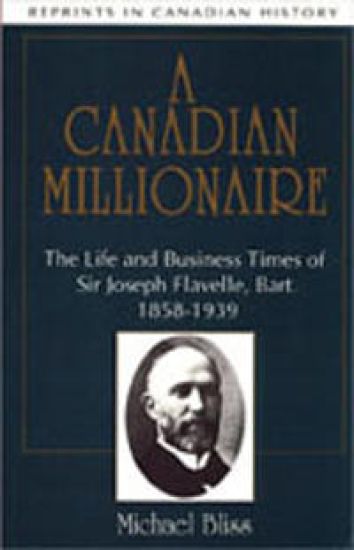
Joseph Flavelle was one of the most influential businessmen in Canada's history. This intimate biography of the man is also a history of the origins and development of big business in Canada, of the corporations and institutions that became an integral part of Canadian life during Joseph Flavelle's lifetime. His career is a Canadian business epic - his story is also the story of Canada Packers, Simpsons, the Bank of Commerce, National Trust, and half a dozen other major coporations that continue to influence Canada today. When it was first published in 1978, A Canadian Millionaire quickly became one of the most honoured books of its kind. For it, Michael Bliss was awarded the Macdonald Price in Canadian history, the University of British Columbia Medal for Biography, the City of Toronto Book Award, the Toronto Historical Board Award of Merit, and the Francois Garneau prize. Today it is recognized as a classic in Canadian biography.