Kirjojen hintavertailu. Mukana 12 390 323 kirjaa ja 12 kauppaa.

Kirjailija

Michael C. McKenna

Kirjat ja teokset yhdessä paikassa: 24 kirjaa, julkaisuja vuosilta 2002-2022, suosituimpien joukossa Cracking the Common Core. Vertaile teosten hintoja ja tarkista saatavuus suomalaisista kirjakaupoista.

24 kirjaa

Kirjojen julkaisuhaarukka 2002-2022.

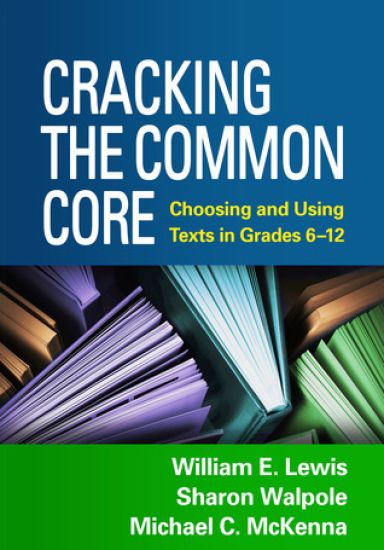
Cracking the Common Core

Cracking the Common Core

William E. Lewis; Sharon Walpole; Michael C. McKenna

Guilford Press
2014
sidottu
This book guides teachers in grades 6-12 to strategically combine a variety of texts--including literature, informational texts, and digital sources--to meet their content-area goals and the demands of the Common Core State Standards (CCSS). It presents clear-cut ways to analyze text complexity, design challenging text sets, and help students get the most out of what they read. Provided are practical instructional ideas for building background knowledge, promoting engagement, incorporating discussion and text-based writing, and teaching research skills. Appendices offer sample unit plans for English language arts, history/social studies, and science classrooms. More than 20 reproducible coaching templates and other tools can be downloaded and printed in a convenient 8 1/2 x 11 size.
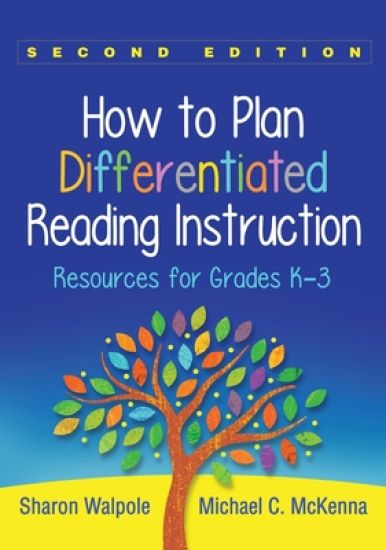
How to Plan Differentiated Reading Instruction, Second Edition

How to Plan Differentiated Reading Instruction, Second Edition

Sharon Walpole; Michael C. McKenna

Guilford Publications
2022
sidottu
Tens of thousands of K-3 teachers have relied on this book--now revised and expanded with more than 50% new material--to plan and deliver effective literacy instruction tailored to each student's needs. The authors provide a detailed framework for implementing differentiated small-group instruction over multiweek cycles. Each component of the beginning reading program is addressed--phonological awareness, word recognition, fluency, vocabulary, and comprehension. In a large-size format for easy photocopying, the book includes dozens of reproducible lesson plans, instructional activities, assessment forms, and other tools. Purchasers get access to a webpage where they can download and print the reproducible materials. New in 2024: A free online-only Study Guide by Sharon Walpole presents commentary and discussion questions for each chapter from a science-of-reading perspective--available for download at www.guilford.com/walpole-studyguide. New to This Edition Differentiation 2.0: the approach has been fine-tuned based on field testing, new research findings, and current standards and response-to-intervention frameworks. Many additional reproducible tools, such as coaching templates and the Informal Decoding Inventory. Beyond lesson plans and materials, the second edition offers more guidance for designing instruction and grouping students, making it a one-stop resource. Reproducible tools now available to download and print. An NCTQ Exemplary Text for Reading Instruction
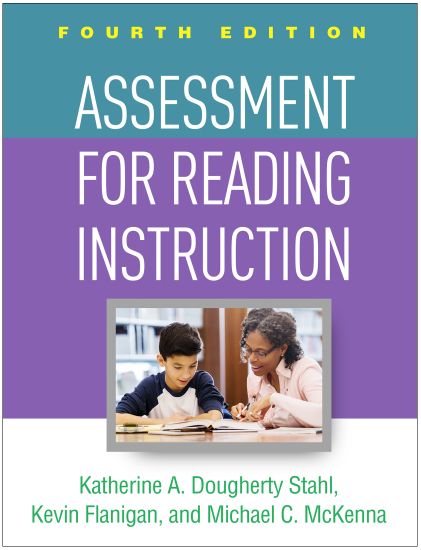
Assessment for Reading Instruction, Fourth Edition

Assessment for Reading Instruction, Fourth Edition

Katherine A. Dougherty Stahl; Kevin Flanigan; Michael C. McKenna

Guilford Press
2020
sidottu
Now in a revised and updated fourth edition, this accessible text has given over 125,000 preservice and inservice teachers vital tools for systematic reading assessment in grades K-8. The book explains how to use both formal and informal assessments to evaluate students' strengths and needs in all components of reading. Effective, engaging methods for targeted instruction in each area are outlined. In a convenient large-size format, the book includes 30 reproducible tools, plus an additional multipage assessment in an online-only appendix. Purchasers get access to a companion website where they can download and print the reproducible materials. New to This Edition Expanded coverage of the middle grades (4–8), including a new chapter and case study, and explicit attention to this grade range throughout; new coauthor Kevin Flanigan adds expertise in this area. New and expanded topics: computer-based testing methods, assessing academic language, and how to use reading inventories more accurately. Additional reproducible tools: informal reading inventory summary form, comprehension retelling forms for narrative and informational text, computer-based comprehension test comparison worksheet, revised Informal Decoding Inventory, and more.
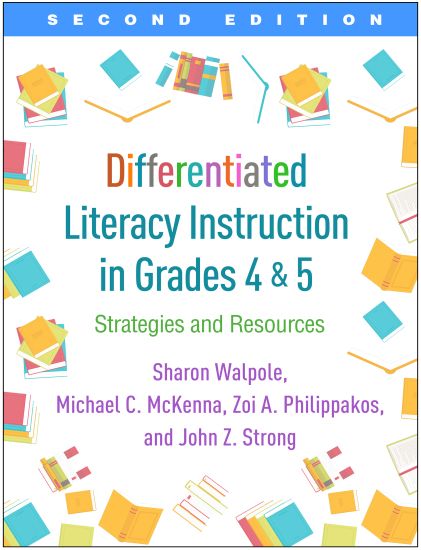
Differentiated Literacy Instruction in Grades 4 and 5, Second Edition

Differentiated Literacy Instruction in Grades 4 and 5, Second Edition

Sharon Walpole; Michael C. McKenna; Zoi A. Philippakos; John Z. Strong

Guilford Press
2019
nidottu
Now revised and updated, with many new lesson plans and a new chapter on writing instruction, this trusted book guides upper elementary teachers to design and implement a research-based literacy program. The expert authors show how to teach and assess students in differentiated small groups, and explain how instruction works in a tiered response-to-intervention model. Included are extensive reproducible lesson plans and other tools for building students’ skills in word recognition, fluency, vocabulary, comprehension, and writing. The convenient large-size format facilitates photocopying; purchasers also get access to a webpage where they can download and print the reproducible materials. Prior edition title: Differentiated Reading Instruction in Grades 4 and 5. New to This Edition Chapter on differentiated writing instruction. New lesson plans for Tier 1 instruction, interactive read-alouds, and narrative writing; new extended sample lessons for building fluency, vocabulary, and comprehension. Updated with the latest research and recommended teacher resources. All reproducible materials now available online.
Assessment for Reading Instruction, Fourth Edition

Assessment for Reading Instruction, Fourth Edition

Katherine A. Dougherty Stahl; Kevin Flanigan; Michael C. McKenna

Guilford Press
2019
nidottu
Now in a revised and updated fourth edition, this accessible text has given over 125,000 preservice and inservice teachers vital tools for systematic reading assessment in grades K-8. The book explains how to use both formal and informal assessments to evaluate students' strengths and needs in all components of reading. Effective, engaging methods for targeted instruction in each area are outlined. In a convenient large-size format, the book includes 30 reproducible tools, plus an additional multipage assessment in an online-only appendix. Purchasers get access to a companion website where they can download and print the reproducible materials. New to This Edition Expanded coverage of the middle grades (4–8), including a new chapter and case study, and explicit attention to this grade range throughout; new coauthor Kevin Flanigan adds expertise in this area. New and expanded topics: computer-based testing methods, assessing academic language, and how to use reading inventories more accurately. Additional reproducible tools: informal reading inventory summary form, comprehension retelling forms for narrative and informational text, computer-based comprehension test comparison worksheet, revised Informal Decoding Inventory, and more.
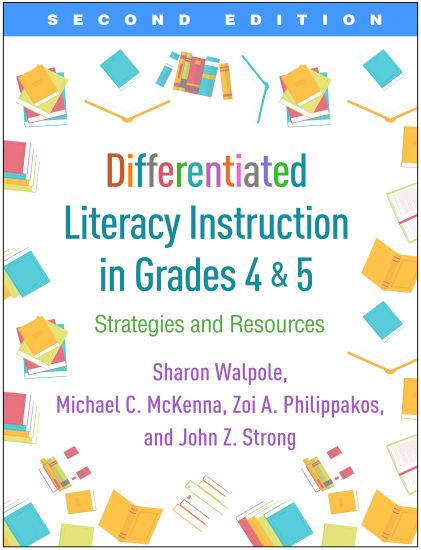
Differentiated Literacy Instruction in Grades 4 and 5, Second Edition

Differentiated Literacy Instruction in Grades 4 and 5, Second Edition

Sharon Walpole; Michael C. McKenna; Zoi A. Philippakos; John Z. Strong

Guilford Press
2019
sidottu
Now revised and updated, with many new lesson plans and a new chapter on writing instruction, this trusted book guides upper elementary teachers to design and implement a research-based literacy program. The expert authors show how to teach and assess students in differentiated small groups, and explain how instruction works in a tiered response-to-intervention model. Included are extensive reproducible lesson plans and other tools for building students’ skills in word recognition, fluency, vocabulary, comprehension, and writing. The convenient large-size format facilitates photocopying; purchasers also get access to a webpage where they can download and print the reproducible materials. Prior edition title: Differentiated Reading Instruction in Grades 4 and 5. New to This Edition Chapter on differentiated writing instruction. New lesson plans for Tier 1 instruction, interactive read-alouds, and narrative writing; new extended sample lessons for building fluency, vocabulary, and comprehension. Updated with the latest research and recommended teacher resources. All reproducible materials now available online.
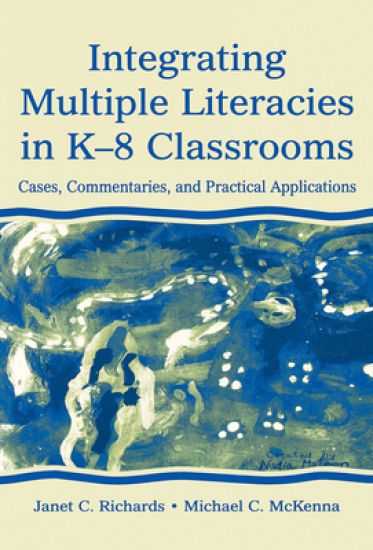
Integrating Multiple Literacies in K-8 Classrooms

Integrating Multiple Literacies in K-8 Classrooms

Janet C. Richards; Michael C. McKenna

Routledge
2019
sidottu
This text gives prospective and practicing teachers a comprehensive understanding of how to teach multiple literacies in elementary arid middle school classrooms. All of the Iiteracies—dance, music, visual arts, popular culture, media, and computer technologies—are integrated with reading and writing. Balanced treatment is given to theoretical perspectives and practical applications. The text also features authentic cases written by preservice teachers, and commentaries on the cases from practitioners and university professors. The cases are designed to prepare future teachers for the PRAXIS teacher certifying exam and others offered in many states. Three theoretical chapters support the practical applications: Chapter 1 addresses the benefits of writing and analyzing cases and the specific attributes of exemplary teaching cases, and offers guidelines for teachers to author their own case narratives and questions for analyzing and discussing case issues with peers; Chapter 2 discusses the role of electronic symbol making and multiple sign systems in children’s literacy and how children use symbols to receive and express meaning; Chapter 3 offers a theoretical framework that helps define and enable teachers to use the new literacies of Internet technology, and provides a strong rationale for expanding traditional definitions of literacy.
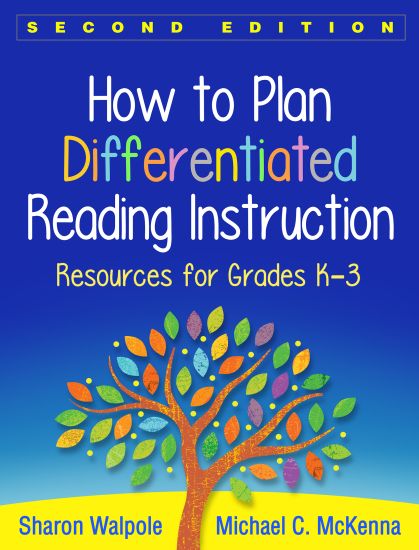
How to Plan Differentiated Reading Instruction, Second Edition

How to Plan Differentiated Reading Instruction, Second Edition

Sharon Walpole; Michael C. McKenna

Guilford Press
2017
nidottu
Tens of thousands of K-3 teachers have relied on this book--now revised and expanded with more than 50% new material--to plan and deliver effective literacy instruction tailored to each student's needs. The authors provide a detailed framework for implementing differentiated small-group instruction over multiweek cycles. Each component of the beginning reading program is addressed--phonological awareness, word recognition, fluency, vocabulary, and comprehension. In a large-size format for easy photocopying, the book includes dozens of reproducible lesson plans, instructional activities, assessment forms, and other tools. Purchasers get access to a webpage where they can download and print the reproducible materials. New in 2024: A free online-only Study Guide by Sharon Walpole presents commentary and discussion questions for each chapter from a science-of-reading perspective--available for download at www.guilford.com/walpole-studyguide. New to This Edition Differentiation 2.0: the approach has been fine-tuned based on field testing, new research findings, and current standards and response-to-intervention frameworks. Many additional reproducible tools, such as coaching templates and the Informal Decoding Inventory. Beyond lesson plans and materials, the second edition offers more guidance for designing instruction and grouping students, making it a one-stop resource. Reproducible tools now available to download and print. An NCTQ Exemplary Text for Reading Instruction
Differentiated Literacy Instruction

Differentiated Literacy Instruction

Sharon Wapole; Michael C. McKenna; Zoi A. Philippakos; John Z. Strong

Holcomb Hathaway, Incorporated
2016
nidottu
The goal of this book is to answer the question What is differentiated instruction? It offers pre-service and in-service teachers the background and foundational skills they will need to understand, plan for, and achieve effective differentiated literacy instruction in their classrooms, based on individual student needs. Chapters provide essential information about how to analyze and synthesize data from assessments, use the information for grouping students, and then plan and implement differentiated instruction. Many specific, hands-on descriptions and exhibits are provided. Case studies of real classrooms demonstrate effective differentiated instructional techniques. End-of-chapter Practical Application questions allow readers to apply chapter concepts as they learn to motivate and teach diverse learners.
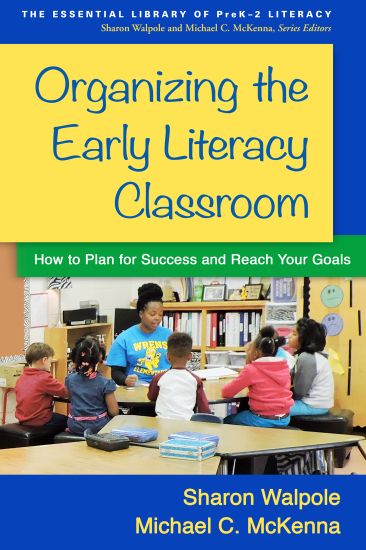
Organizing the Early Literacy Classroom

Organizing the Early Literacy Classroom

Sharon Walpole; Michael C. McKenna

Guilford Press
2016
nidottu
Filled with clear explanations and doable strategies, this book helps PreK-2 teachers juggle the demands of planning effective instruction and creating a literacy-rich classroom environment. Realistic vignettes illustrate how to set goals, develop standards-based curricula and assessments, establish routines, and organize the classroom space and the daily schedule. The authors demonstrate the nuts and bolts of building an exemplary classroom library and professional teaching library, collaborating as a team with other teachers and specialists, preparing report cards, and communicating with families. Several reproducible forms can be downloaded and printed in a convenient 8 1/2" x 11" size.
Organizing the Early Literacy Classroom

Organizing the Early Literacy Classroom

Sharon Walpole; Michael C. McKenna

Guilford Press
2016
sidottu
Filled with clear explanations and doable strategies, this book helps PreK-2 teachers juggle the demands of planning effective instruction and creating a literacy-rich classroom environment. Realistic vignettes illustrate how to set goals, develop standards-based curricula and assessments, establish routines, and organize the classroom space and the daily schedule. The authors demonstrate the nuts and bolts of building an exemplary classroom library and professional teaching library, collaborating as a team with other teachers and specialists, preparing report cards, and communicating with families. Several reproducible forms can be downloaded and printed in a convenient 8 1/2" x 11" size.
World Literacy

World Literacy

John W. Miller; Michael C. McKenna

Routledge
2016
sidottu
International literacy assessments have provided ample data for ranking nations, charting growth, and casting blame. Summarizing the findings of these assessments, which afford a useful vantage from which to view world literacy as it evolves, this book examines literate behavior worldwide, in terms of both the ability of populations from a wide variety of nations to read and the practice of literate behavior in those nations. Drawing on The World’s Most Literate Nations, author Jack Miller’s internationally released study, emerging trends in world literacy and their relationships to political, economic, and social factors are explored. Literacy, and in particular the practice of literate behaviors, is used as a lens through which to view countries’ economic development, gender equality, resource utilization, and ethnic discrimination. Above all, this book is about trajectories. It begins with historical contexts, described in terms of support for literate cultures. Based on a variety of data sources, these trends are traced to the present and then projected ahead. The literate futures of nations are discussed and how these relate to their economic and sociocultural development. This book is unique in providing a broader perspective on an intractable problem, a vantage point that offers useful insights to inform policy, and in bringing together an array of relevant data sources not typically associated with literacy status.
World Literacy

World Literacy

John W. Miller; Michael C. McKenna

Routledge
2016
nidottu
International literacy assessments have provided ample data for ranking nations, charting growth, and casting blame. Summarizing the findings of these assessments, which afford a useful vantage from which to view world literacy as it evolves, this book examines literate behavior worldwide, in terms of both the ability of populations from a wide variety of nations to read and the practice of literate behavior in those nations. Drawing on The World’s Most Literate Nations, author Jack Miller’s internationally released study, emerging trends in world literacy and their relationships to political, economic, and social factors are explored. Literacy, and in particular the practice of literate behaviors, is used as a lens through which to view countries’ economic development, gender equality, resource utilization, and ethnic discrimination. Above all, this book is about trajectories. It begins with historical contexts, described in terms of support for literate cultures. Based on a variety of data sources, these trends are traced to the present and then projected ahead. The literate futures of nations are discussed and how these relate to their economic and sociocultural development. This book is unique in providing a broader perspective on an intractable problem, a vantage point that offers useful insights to inform policy, and in bringing together an array of relevant data sources not typically associated with literacy status.
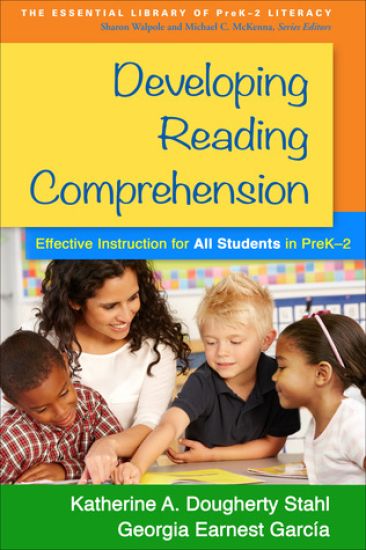
Developing Reading Comprehension

Developing Reading Comprehension

Katherine A. Dougherty Stahl; Georgia Earnest Garcia; Michael C. McKenna; Sharon Walpole

Guilford Press
2015
nidottu
Early literacy instruction typically emphasizes foundational skills--often at the expense of engaging young children in reading and supporting their comprehension of different types of texts. This book explains the essential elements of comprehension and shares a wealth of classroom-tested instructional practices. It presents developmentally informed strategies for scaffolding comprehension skills, using content to promote engagement, and implementing high-level discussions and writing tasks. Ways to teach and assess English learners and other diverse students are highlighted throughout. The book features explicit links to the Common Core State Standards (CCSS) as well as helpful reproducible forms. Purchasers get access to a Web page where they can download and print the reproducible materials in a convenient 8 1/2" x 11" size. See also the authors' related book on the intermediate grades: Expanding Reading Comprehension in Grades 3-6.
Developing Word Recognition

Developing Word Recognition

Latisha Hayes; Kevin Flanigan; Sharon Walpole; Michael C. McKenna; Mary Napoli

Guilford Press
2014
nidottu
A complete road map for word knowledge instruction in PreK-2, this book focuses on developing the word recognition and phonics skills identified in the Common Core standards for foundational skills. It offers clear-cut instructions for assessing students' stages of word knowledge development--emergent, beginning, or transitional--and their specific instructional needs. Chapters on each developmental stage are packed with effective learning activities and strategies, plus guidance for fitting them into the classroom day. Of special value, online-only appendices provide purchasers with more than 50 reproducible assessment and instructional tools, ready to download and print in a convenient 8 1/2 x 11 size.
Cracking the Common Core

Cracking the Common Core

William E. Lewis; Sharon Walpole; Michael C. McKenna

Guilford Press
2014
nidottu
This book guides teachers in grades 6-12 to strategically combine a variety of texts--including literature, informational texts, and digital sources--to meet their content-area goals and the demands of the Common Core State Standards (CCSS). It presents clear-cut ways to analyze text complexity, design challenging text sets, and help students get the most out of what they read. Provided are practical instructional ideas for building background knowledge, promoting engagement, incorporating discussion and text-based writing, and teaching research skills. Appendices offer sample unit plans for English language arts, history/social studies, and science classrooms. More than 20 reproducible coaching templates and other tools can be downloaded and printed in a convenient 8 1/2 x 11 size.
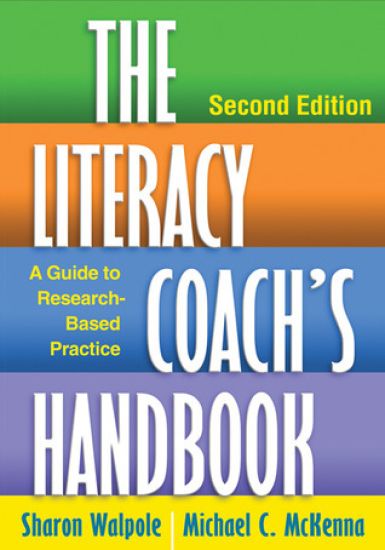
The Literacy Coach's Handbook, Second Edition

The Literacy Coach's Handbook, Second Edition

Sharon Walpole; Michael C. McKenna

Guilford Press
2013
sidottu
This indispensable book gives preservice and practicing literacy coaches the tools they need to build a successful schoolwide reading program. The authors, well-known experts in the field, describe the literacy coach's crucial, evolving role in today's schools. They offer step-by-step guidelines for implementing curricula and assessments, selecting instructional materials, and planning for differentiation and intervention. Specific ways to support teachers by providing high-quality professional development are discussed. The book is grounded inresearch on PreK-5 instruction and the characteristics of effective coaches. New to This Edition *Incorporates the latest research and instructional materials. *Expanded grade range now includes PreK and grades 4-5. *Content on RTI and the Common Core standards is woven throughout. *Strategies for making professional development more responsive to teachers' needs. See also The Literacy Coaching Challenge, which guides more experienced coaches in choosing among different coaching models and addresses typical issues of implementation.
The Literacy Coach's Handbook, Second Edition

The Literacy Coach's Handbook, Second Edition

Sharon Walpole; Michael C. McKenna

Guilford Press
2013
nidottu
This indispensable book gives preservice and practicing literacy coaches the tools they need to build a successful schoolwide reading program. The authors, well-known experts in the field, describe the literacy coach's crucial, evolving role in today's schools. They offer step-by-step guidelines for implementing curricula and assessments, selecting instructional materials, and planning for differentiation and intervention. Specific ways to support teachers by providing high-quality professional development are discussed. The book is grounded inresearch on PreK-5 instruction and the characteristics of effective coaches. New to This Edition *Incorporates the latest research and instructional materials. *Expanded grade range now includes PreK and grades 4-5. *Content on RTI and the Common Core standards is woven throughout. *Strategies for making professional development more responsive to teachers' needs. See also The Literacy Coaching Challenge, which guides more experienced coaches in choosing among different coaching models and addresses typical issues of implementation.
Reading Assessment in an RTI Framework

Reading Assessment in an RTI Framework

Katherine A. Dougherty Stahl; Michael C. McKenna

Guilford Press
2012
sidottu
From leading experts, this indispensable resource presents a practical model for conducting reading assessments for screening, diagnosis, and progress monitoring in each of the three tiers of response to intervention (RTI). K-8 teachers and school personnel are guided to use norm-referenced, informal, and curriculum-based measures to assess key components of reading development and make informed choices about instruction. The book describes how to survey existing assessment practices in a school and craft a systematic plan for improvement; reproducible tools include a 10-page RTI Assessment Audit that can be downloaded and printed in a convenient 8 1/2" x 11" size.See also Assessment for Reading Instruction, Third Edition, which explains the fundamentals of assessment and provides essential hands-on tools.
Reading Assessment in an RTI Framework

Reading Assessment in an RTI Framework

Katherine A. Dougherty Stahl; Michael C. McKenna

Guilford Press
2012
nidottu
From leading experts, this indispensable resource presents a practical model for conducting reading assessments for screening, diagnosis, and progress monitoring in each of the three tiers of response to intervention (RTI). K-8 teachers and school personnel are guided to use norm-referenced, informal, and curriculum-based measures to assess key components of reading development and make informed choices about instruction. The book describes how to survey existing assessment practices in a school and craft a systematic plan for improvement; reproducible tools include a 10-page RTI Assessment Audit that can be downloaded and printed in a convenient 8 1/2" x 11" size.See also Assessment for Reading Instruction, Third Edition, which explains the fundamentals of assessment and provides essential hands-on tools.