Kirjojen hintavertailu. Mukana 12 390 323 kirjaa ja 12 kauppaa.

Kirjailija

Michael Charlesworth

Kirjat ja teokset yhdessä paikassa: 6 kirjaa, julkaisuja vuosilta 2007-2025, suosituimpien joukossa The Modern Culture of Reginald Farrer. Vertaile teosten hintoja ja tarkista saatavuus suomalaisista kirjakaupoista.

6 kirjaa

Kirjojen julkaisuhaarukka 2007-2025.

Derek Jarman’s Visionary Arts

Derek Jarman’s Visionary Arts

Michael Charlesworth

BLOOMSBURY PUBLISHING PLC
2025
nidottu
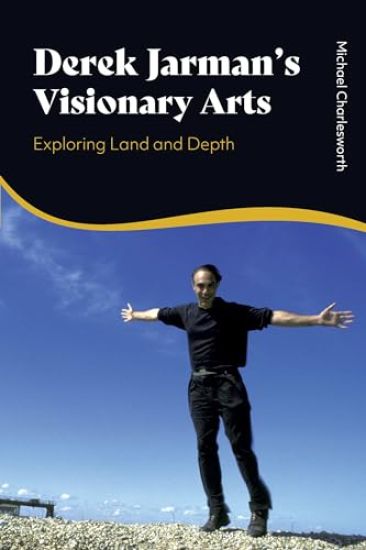
Derek Jarman's place in the history of film is assured by virtue of his vibrant, defiant films that experiment with the very process of film-making and create new forms. His paintings, their excitements and their profundity, are less well known. Michael Charlesworth sheds light on the varied ramifications of Jarman's artistic practice from his years at Prospect Cottage, Dungeness, and provides the first book-length study of his interest in depth psychology. He draws on Jarman's paintings, especially his landscapes from the 1960s and 70s, his multiple series such as 'black' and 'broken glass', GBH, Queer and Evil Queen, and his last Ecstatic Landscapes (1991-3). He also showcases Jarman's excellence as a writer with respect to his memoir, Kicking the Pricks. In a novel approach to Jarman's cinema, selecting films such as Journey to Avebury (1973), Caravaggio (1986), The Garden (1990) and Blue (1993), Charlesworth emphasizes themes and artistry rather than narrative. Exploring the ways in which Jungian and post-Jungian psychology were absorbed into Jarman's varied works, Derek Jarman’s Visionary Arts provides a fresh perspective on his painting, film and writing. It celebrates him as one of the major British artists of the late 20th century, engaging with current debates about queer sexualities, environmentalism and climate catastrophe.
Derek Jarman’s Visionary Arts

Derek Jarman’s Visionary Arts

Michael Charlesworth

BLOOMSBURY PUBLISHING PLC
2024
sidottu
Derek Jarman's place in the history of film is assured by virtue of his vibrant, defiant films that experiment with the very process of film-making and create new forms. His paintings, their excitements and their profundity, are less well known. Michael Charlesworth sheds light on the varied ramifications of Jarman's artistic practice from his years at Prospect Cottage, Dungeness, and provides the first book-length study of his interest in depth psychology. He draws on Jarman's paintings, especially his landscapes from the 1960s and 70s, his multiple series such as 'black' and 'broken glass', GBH, Queer and Evil Queen, and his last Ecstatic Landscapes (1991-3). He also showcases Jarman's excellence as a writer with respect to his memoir, Kicking the Pricks. In a novel approach to Jarman's cinema, selecting films such as Journey to Avebury (1973), Caravaggio (1986), The Garden (1990) and Blue (1993), Charlesworth emphasizes themes and artistry rather than narrative. Exploring the ways in which Jungian and post-Jungian psychology were absorbed into Jarman's varied works, Derek Jarman’s Visionary Arts provides a fresh perspective on his painting, film and writing. It celebrates him as one of the major British artists of the late 20th century, engaging with current debates about queer sexualities, environmentalism and climate catastrophe.
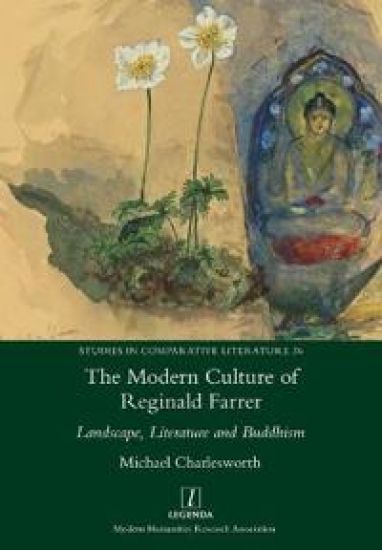
The Modern Culture of Reginald Farrer

The Modern Culture of Reginald Farrer

Michael Charlesworth

Legenda
2019
pokkari
The British plant-collector Reginald Farrer (1880-1920) became a Buddhist in Ceylon, and his published works contain lively and uninhibited critiques of British society and civilisation partly informed by this alternative perspective. He came to love Asia, spending four years in China, Tibet and Burma, and nine months in Japan. A moderniser in the fields of garden design and garden-writing, he made famous plant introductions, also producing novels and travel-writing, paintings and photographs. In 1917 Farrer visited the Great War's Western Front and published a book describing the emotional effect of that experience. He is very much an unknown and unsung hero of twentieth-century culture. Charlesworth explores all Farrer's activities, particularly his involvement with two strong forces within the cultural dynamics of the early twentieth century: modernism and Buddhism.Michael Charlesworth is Professor of Art History at the University of Texas at Austin.
The Modern Culture of Reginald Farrer

The Modern Culture of Reginald Farrer

Michael Charlesworth

Legenda
2018
sidottu
The British plant-collector Reginald Farrer (1880-1920) became a Buddhist in Ceylon, and his published works contain lively and uninhibited critiques of British society and civilisation partly informed by this alternative perspective. He came to love Asia, spending four years in China, Tibet and Burma, and nine months in Japan. A moderniser in the fields of garden design and garden-writing, he made famous plant introductions, also producing novels and travel-writing, paintings and photographs. In 1917 Farrer visited the Great War's Western Front and published a book describing the emotional effect of that experience. He is very much an unknown and unsung hero of twentieth-century culture. Charlesworth explores all Farrer's activities, particularly his involvement with two strong forces within the cultural dynamics of the early twentieth century: modernism and Buddhism.Michael Charlesworth is Professor of Art History at the University of Texas at Austin.
Landscape and Vision in Nineteenth-Century Britain and France
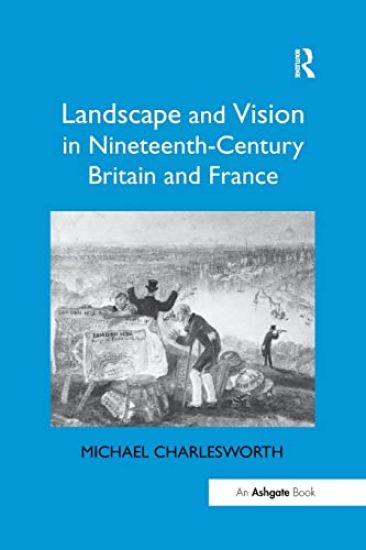
A study of the ways landscape was perceived in nineteenth-century Britain and France, this book draws on evidence from poetry, landscape gardens, spectacular public entertainments, novels and scientific works as well as paintings in order to develop its basic premise that landscape and the processes of perceiving it cannot be separated. Vision embraces panoramic seeing from high places, but also the seeing of ghosts and spectres when madness and hallucination impinge upon landscape. The rise of geology and the spread of empires upset the existing comfortable orders of comprehension of landscape. Reverie and imagination produced powerful interpretive actions, while landscape in French culture proved central to the rejection of conservative classicism in favour of perceptual questioning of experience. The experience of subjectivity proved central to the perception of landscape while the visual culture of landscape became of paramount importance to modernity during the period in question.
Landscape and Vision in Nineteenth-Century Britain and France

Landscape and Vision in Nineteenth-Century Britain and France

Michael Charlesworth

Ashgate Publishing Limited
2007
sidottu
A study of the ways landscape was perceived in nineteenth-century Britain and France, this book draws on evidence from poetry, landscape gardens, spectacular public entertainments, novels and scientific works as well as paintings in order to develop its basic premise that landscape and the processes of perceiving it cannot be separated. Vision embraces panoramic seeing from high places, but also the seeing of ghosts and spectres when madness and hallucination impinge upon landscape. The rise of geology and the spread of empires upset the existing comfortable orders of comprehension of landscape. Reverie and imagination produced powerful interpretive actions, while landscape in French culture proved central to the rejection of conservative classicism in favour of perceptual questioning of experience. The experience of subjectivity proved central to the perception of landscape while the visual culture of landscape became of paramount importance to modernity during the period in question.