Kirjojen hintavertailu. Mukana 12 595 353 kirjaa ja 12 kauppaa.

Kirjailija

Michael Claringbould

Kirjat ja teokset yhdessä paikassa: 35 kirjaa, julkaisuja vuosilta 2017-2025, suosituimpien joukossa Solomons Air War Volume 4. Vertaile teosten hintoja ja tarkista saatavuus suomalaisista kirjakaupoista.

35 kirjaa

Kirjojen julkaisuhaarukka 2017-2025.

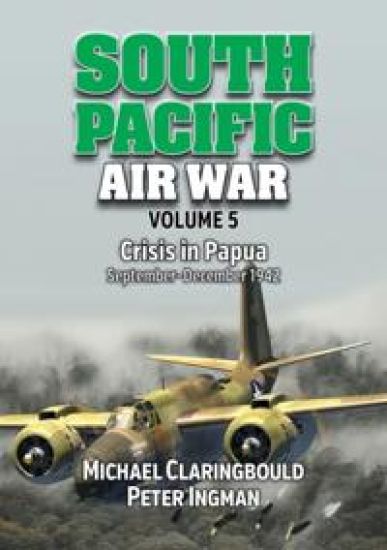
South Pacific Air War Volume 5

South Pacific Air War Volume 5

Peter Ingman; Michael Claringbould

AVONMORE BOOKS
2022
nidottu
Volume Five of this series chronicles aerial warfare primarily in the New Guinea theatre in the critical period between September and December 1942. It can be read alone or as a continuation of the previous four volumes which span the first nine months of the Pacific War. By early September the strategic picture in the theatre had changed markedly within just six weeks. From their new Buna beachhead the Japanese Army commenced a Papuan mountain campaign which threatened the Allied bastion of Port Moresby. Meanwhile the battle for Guadalcanal was raging, with the outcome of the wider Pacific War in the balance. Against this background a strengthened US Fifth Air Force took the fight to the IJA with direct air support. While this was being conducted by P-39s, P-40Es, A-20As and B-25s, raids by B-17s against Rabaul aided US forces in the neighbouring Solomons. RAAF Beaufighters, Beauforts, Bostons and Hudsons also contributed substantially to these efforts. At Rabaul a wide variety of fresh IJN fighter and bomber units poured in the theatre, although these became focused mainly on the Solomons. Such were the massive losses experienced, by November the IJN undertook a complete operational and administrative reorganisation of its air power. Then, despite a strong reluctance to become involved, the IJA sent an advance reconnaissance detachment to Rabaul, the forerunner of major reinforcements that would arrive in December. Never before has this campaign been chronicled in such detail, with Allied and Japanese accounts matched together for a truly factual account of the conflict.
Pacific Profiles - Volume Five

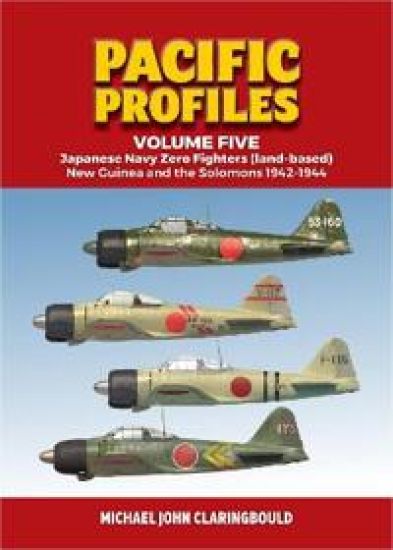
Pacific Profiles - Volume Five

Michael Claringbould

Avonmore Books
2021
nidottu
Volume Five of this Pacific Profiles series presents the most accurate colour profiles to date of Japanese Navy land based Zero fighters in the "South Seas" theatre: New Guinea, Rabaul and the Solomons. Illustrated by unit are abundant examples of the varied markings, tail codes, leadership hallmarks and camouflage schemes which appeared on the thirteen Air Groups (Kokutai) operating in the theatre from February 1942 to February 1944. Each of the 113 profiles is supported by primary source material including colour photos, Japanese records, POW interrogations, technical reports, post-war wreck examinations and Allied intelligence summaries. These are accompanied by brief histories of each unit and notes on the changing nature of each unit's markings. How the late 1942 Japanese Navy restructure impacted these units is also clarified, along with the rationale and meaning of the ensuing multifaceted markings systems. Never before have such accurate profiles been presented. Past errors are corrected, and many new markings including hokoku (patriotic) Kanji are presented for the first time. The author is world-renown for his expertise in respect to the Japanese aerial war in the Pacific.
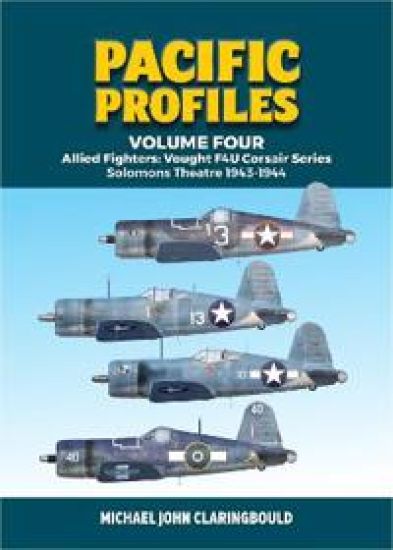
Pacific Profiles - Volume Four

Pacific Profiles - Volume Four

Michael Claringbould

Avonmore Books
2021
nidottu
The Pacific Profiles series presents the most accurate WWII profiles to date of aircraft which served in the Pacific theatre. Volume Four focuses on the US Navy, US Marine Corps and RNZAF squadrons which operated land based F4U series Corsair fighters throughout the Solomons theatre from February 1943 onwards. The distinctive markings schemes, unit heraldry and nose art varied considerably between models and squadrons, the latter of which developed their own particular markings themes and patterns. This volume illustrates the precise markings of each Corsair squadron, from the early "birdcage" F4U-1 series through to the later F4U-1A "bubble" canopy models. Each profile is accompanied by supporting photos along with a brief history of the aircraft. A wide range of reference material was sourced to illustrate each profile, including colour movie film, post-war wreck surveys, official records, diaries and hundreds of photos. The author, Michael John Claringbould, is world-renown for his expertise on both the Allied and Japanese sides of the Pacific theatre. Never before have such meticulous colour profiles of the Corsair family been illustrated so accurately, and with such attendant detail.
Nemoto'S Travels

Nemoto'S Travels

Michael Claringbould

Avonmore Books
2021
nidottu
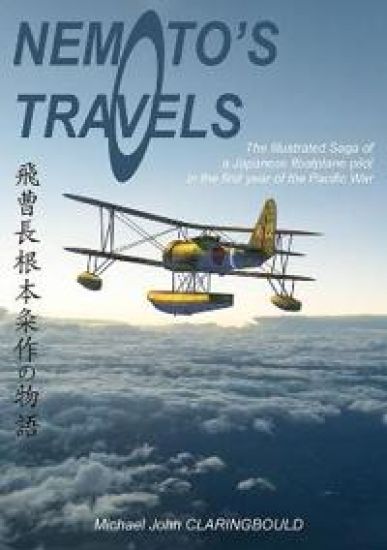
This is the illustrated diary of Imperial Japanese Navy floatplane pilot Warrant Officer Nemoto Kumesako, dating from the early months of the Pacific War. His recollections offer an intimate perspective into his life, along with insights into Japanese thinking of the times. Unusually, these memoirs are presented in a style consistent with the Japanese manga (illustrated cartoon) format. The curious floatplanes of the time, some of which verge on the steampunk, come to life with the author's uncanny sense of humour. Nemoto defies every stereotype of the Samurai warrior, for his diary betrays coveted romanticism. Although an exceptional character, he was certainly a man of his times. Not particularly close to his comrades, Nemoto prided himself in his worldly credentials. For example, he read Tolstoy's War& Peace in German between missions. Nemoto's writing style, cultivated and matter of fact, is tinged with insight and assurance. He never envisaged it would wind up in the wrong hands, and for this reason the reader will savour its frankness and insights. Michael Claringbould is a globally renown Pacific War author. This is his first attempt at getting away from conventional formats, instead producing an entertaining hybrid tale, garishly illustrated yet historically accurate. Its humorous format is also guaranteed to tell readers many things about this fascinating period they did not know.
Pacific Adversaries - Volume Four

Pacific Adversaries - Volume Four

Michael Claringbould

Avonmore Books
2021
nidottu
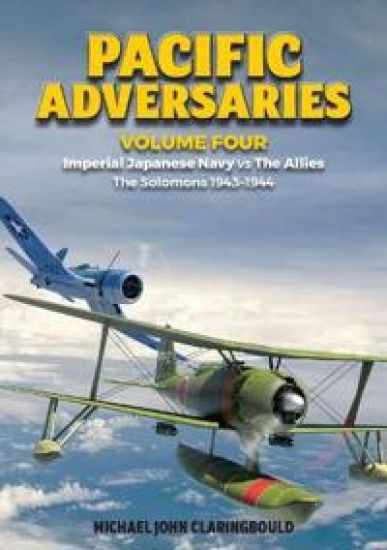
This Volume Four of Pacific Adversaries conveys detailed stories of aerial warfare in the Solomons theatre, chosen because both Japanese and Allied records can be matched for an accurate accounting. Often the actual outcomes are very different to the exaggerated claims made by both sides as outlined in most traditional histories. In some cases, this factual approach enables long-standing mysteries to be solved. Further, for each chosen story photographic or other evidence enables accurate depictions of the aircraft involved. Through these chosen snapshots, Pacific Adversaries portrays the South Pacific conflict as accurately as possible. This fourth volume focuses exclusively on confrontations between the Japanese Naval Air Force (JNAF) and Allied air power in the Solomons theatre between 1943 and 1944. Following the bloody 1942 Guadalcanal campaign, the JNAF fought a largely defensive war in the Solomons against gathering Allied forces. Perhaps surprisingly, right through to the end of 1943, the JNAF offered significant resistance to the Allies and never ceded air superiority in the vicinity of its key base of Rabaul. Only in 1944, when units were withdrawn to the Central Pacific and the Philippines, was the JNAF presence in the South Pacific finally wound down to just a token force. Never before have detailed accounts matched up adversaries so closely, and in doing so, shine light on key events in Pacific skies so many years ago.
Pacific Profiles - Volume Three

Pacific Profiles - Volume Three

Michael Claringbould

Avonmore Books
2021
nidottu
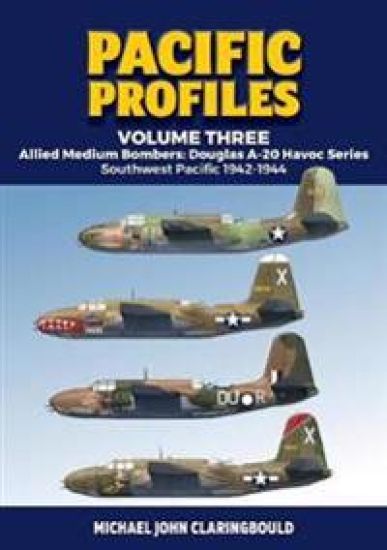
The Pacific Profiles series presents the most accurate WWII aircraft profiles to date of Japanese & Allied aircraft in the Pacific theatre. Volume Three illustrates, by squadron, USAAF Fifth Air Force A-20 series medium bombers operating in New Guinea from July 1942 to the end of 1944. In this distant theatre, a dozen USAAF A-20 squadrons from the 3rd, 312th and 417th Bombardment Groups, joined by No. 22 Squadron, RAAF, used many variants of the A-20, mainly as strafers. Squadron insignia, camouflage, heraldry, nose-art and command markings varied significantly between squadrons, giving a wide variety of colour schemes. The profiles, based on photos, diaries and other wide-ranging documents, are accompanied by brief histories of each squadron, the development of respective heraldry and information on each aircraft profiled. The author, Michael Claringbould, is world-renown for his expertise in respect to the A-20 in the Pacific, stemming from his direct involvement in locating and recovering one from New Guinea in 1984. These rare profiles, many appearing for the first time, accurately portray the A-20 during this captivating timeframe of the South Pacific air war.
South Pacific Air War Volume 4

South Pacific Air War Volume 4

Michael Claringbould; Peter Ingman

Avonmore Books
2021
nidottu
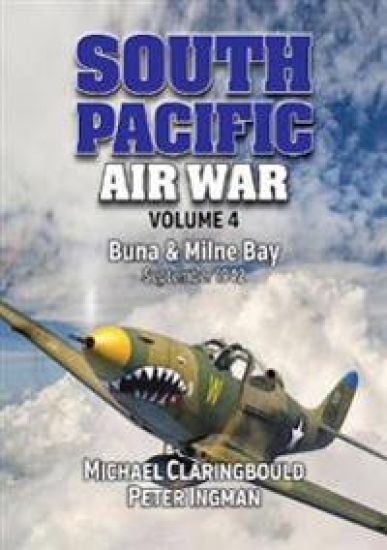
Volume Four chronicles aerial warfare in the South Pacific in the critical period between 19 June and 8 September 1942. It can be read alone or as a continuation of the first three volumes that spanned the first six months of the Pacific War, culminating in the Battle of the Coral Sea. Unlike the previous three volumes, no aircraft carriers appeared in New Guinea waters. Instead, the air war was fought solely by land-based air units. This was in the face of an increasingly complex strategic situation that saw the Japanese land at both Buna and Milne Bay. For the first time, airpower in the theatre was tasked to support the land forces of both sides which became engaged in a bloody struggle in the mountains of Papua and then the narrow muddy quagmire of Milne Bay. Two veteran Japanese air groups, the Tainan and No. 4 Kokutai, continued their Herculean struggle against mounting Allied opposition. In the face of continued attrition, Japanese pilots had many notable successes including several coveted aerial victories against B-17s. Then, from August a plethora of fresh Japanese units arrived in theatre including the No. 2, No. 6, Chitose, Misawa and Kisarazu Kokutai. USAAF P-39s and RAAF P-40Es responded with low level close support missions and B-25s, B-26s and B-17s ramped up an unrelenting bombing campaign. Towards the end of the period A-20A strafers made their combat debut, portending a radical blueprint for future attack tactics in the theatre. Never before has this campaign been chronicled in such detail, with Allied accounts matched against Japanese records for a truly factual account of the conflict.
Pacific Profiles - Volume Two

Pacific Profiles - Volume Two

Michael Claringbould

Avonmore Books
2021
nidottu
The Pacific Profiles series presents the most accurate WWII aircraft profiles to date of Japanese & Allied aircraft in the Pacific theatre. Volume Two illustrates, by unit, Japanese Army Air Force (JAAF) bomber and other supporting aircraft types operating in New Guinea and the Solomons from December 1942 to April 1944. In this distant theatre many different aircraft types and their variants were assigned to a variety of bomber, reconnaissance, command and transport units which together formed the 4th Air Army. Unit insignia, camouflage and command markings varied considerably from unit to unit, giving a wide variety of colour, heraldry and markings. The profiles, based on photos, Japanese documents, Allied intelligence reports and post-war wreck investigations, are accompanied by brief histories of each relevant unit and explanations of their role in the theatre. The author, Michael Claringbould, is world-renown for his expertise in respect to wartime Japanese aviation. These profiles accurately portray JAAF bombers and support aircraft during this fascinating and esoteric timeframe of the Pacific air war.
Pacific Adversaries - Volume Three

Pacific Adversaries - Volume Three

Michael Claringbould

Avonmore Books
2020
nidottu
This Volume Three of Pacific Adversaries conveys detailed stories of aerial warfare in the South Pacific, chosen because both Japanese and Allied records can be matched for an accurate accounting. Often the actual outcomes are very different to the exaggerated claims made by both sides upon which many traditional histories have relied to date. Further, for each of the chosen stories photographic or other evidence enables an accurate depiction of the aircraft involved. Through these chosen snapshots, Pacific Adversaries will portray the South Pacific conflict as accurately as possible. This third volume focuses exclusively on confrontations with the Japanese Navy Air Force (JNAF) in New Guinea and the Solomons, known to the Japanese as the "South Seas". The JNAF first appeared in the South Pacific in December 1941 and was at the vanguard of offensive efforts during the course of 1942. Following the bloody Guadalcanal campaign, the JNAF fought a largely defensive war in New Guinea and the Solomons against increasingly powerful Allied forces. Perhaps surprisingly, right through to the end of 1943 the JNAF offered significant resistance to the Allies and never ceded air superiority in the vicinity of its key base of Rabaul. Only in 1944, when units were withdrawn to the Central Pacific and the Philippines, was the JNAF presence in the South Pacific finally wound down to just a token force. Never before have detailed accounts matched up adversaries so closely and in doing so shine light on key events in Pacific skies so many years ago.
Pacific Profiles - Volume One

Pacific Profiles - Volume One

Michael Claringbould

Avonmore Books
2020
nidottu
The Pacific Profiles series presents the most accurate WWII aircraft profiles to date of Japanese aircraft in the "South Seas" theatre. Volume One illustrates, by unit, Japanese Army Air Force fighter aircraft operating in New Guinea and the Solomons from December 1942 to April 1944. In this theatre numerous different aircraft types and their variants were assigned to eleven fighter regiments which formed the 4th Air Army. Unit insignia, camouflage and command markings varied from unit to unit, giving a wide variety of colour and markings. The profiles, based on photos, Japanese documents, Allied intelligence reports and post-war wreck investigations, are accompanied by brief histories of the relevant units and explanations of their role in the theatre. The author, Michael Claringbould, is world-renown for his expertise in respect to wartime Japanese aviation. These profiles accurately portray Japanese Army Air Force fighters during this fascinating and esoteric component of the Pacific air war.
Pacific Adversaries - Volume Two

Pacific Adversaries - Volume Two

Michael Claringbould

Avonmore Books
2020
nidottu
This Volume Two of Pacific Adversaries conveys detailed stories of aerial warfare in the South Pacific, chosen because both Japanese and Allied records can be matched for an accurate accounting. Often the actual outcomes are very different to the exaggerated claims made by both sides upon which many traditional histories have relied to date. Further, for each of the chosen stories photographic or other evidence enables an accurate depiction of the aircraft involved. Through these chosen snapshots, Pacific Adversaries will portray the South Pacific conflict as accurately as possible. This second volume focuses exclusively on confrontations with the Japanese Navy Air Force (JNAF) in New Guinea and the Solomons, known to the Japanese as the "South Seas". The JNAF first appeared in the South Pacific in December 1941 and was at the vanguard of offensive efforts during the course of 1942. Following the bloody Guadalcanal campaign, the JNAF fought a largely defensive war in New Guinea and the Solomons against increasingly powerful Allied forces. Perhaps surprisingly, right through to the end of 1943 the JNAF offered significant resistance to the Allies and never ceded air superiority in the vicinity of its key base of Rabaul. Only in 1944, when units were withdrawn to the Central Pacific and the Philippines, was the JNAF presence in the South Pacific finally wound down to just a token force. Never before have detailed accounts matched up adversaries so closely and in doing so shine light on key events in Pacific skies so many years ago.
Pacific Adversaries - Volume One

Pacific Adversaries - Volume One

Michael Claringbould

Avonmore Books
2019
nidottu
This volume conveys detailed stories of aerial warfare in the South Pacific, chosen because both Japanese and Allied records can be matched for an accurate accounting. Often the actual outcomes are very different to the exaggerated claims made by both sides upon which many traditional histories have relied to date. Further, for each of the chosen stories photographic or other evidence enables an accurate depiction of the aircraft involved. Through these chosen snapshots Pacific Adversaries portrays the South Pacific conflict as accurately as possible. This first volume describes confrontations between the Japanese Army Air Force (JAAF) and the Allies in New Guinea and the Solomons. JAAF units first arrived in the South Pacific in December 1942 and effectively ceased operations in mainland New Guinea in April 1944. Theirs is a rich and colourful history about which many myths persist. Perhaps the biggest is that their Allied counterparts thought they were mainly fighting "Zeros", a falsehood still published and accepted to this day. In New Guinea the Allies ratcheted up a grueling, coordinated and unrelenting campaign, destroying most JAAF air power on the ground, not in the air. Their assault against Wewak's key bases involved an interwoven and complex strategy which eventually overpowered the Japanese. Never before have detailed accounts matched up adversaries so closely and in doing so shine light on key events in Pacific skies so many years ago.
South Pacific Air War Volume 3

South Pacific Air War Volume 3

Michael Claringbould; Peter Ingman

Avonmore Books
2019
nidottu
South Pacific Air War Volume 3 chronicles aerial warfare in the South Pacific during the critical months of May and June 1942. For the first time in history, opposing carriers faced each other in the Battle of the Coral Sea. The battle is portrayed in a complete regional context which includes the land-based air forces of both sides. The events were both complex and surprising: when the respective carrier forces departed an intense regional air war continued. This volume can be read alone or as part of a trilogy which spans the first six months of the Pacific War from December 1941 until June 1942.
South Pacific Air War Volume 2

South Pacific Air War Volume 2

Michael Claringbould; Peter Ingman

Avonmore Books
2018
nidottu
This second volume chronicles aerial warfare in the South Pacific for the two crucial months of March and April 1942 when a deadly struggle for Port Moresby played out. It can be read alone or as part of a trilogy that culminates in the Battle of the Coral Sea in May 1942. The period begins with the stunning 10 March US Navy carrier strike against Lae and Salamaua, which caused the Japanese to pause their advance until their own carriers were available. Instead, they tried to grind the Allied forces at Port Moresby into submission through an unrelenting air assault by their Betty bombers and superlative Zero fighters. After a long wait, Allied land-based fighters finally arrived in the form of Royal Australian Air Force No. 75 Squadron Kittyhawks. These were backed up by a growing collection of United States Army Air Force bombers, including A-24 Banshees, B-17 Flying Fortresses, B-25 Mitchells and B-26 Marauders (the latter two types making their worldwide combat debut over the skies of New Guinea). Together, this motley force took the fight to the Japanese, resulting in a complex aerial campaign that saw units from both sides reach exhaustion. Never before has such a detailed chronicle of this air war been published, and for the first time the authors match Allied accounts with Japanese records. The result is both thrilling and surprising, with the resulting dispositions of the air forces of both sides setting the scene for the Battle of the Coral Sea in May.
South Pacific Air War Volume 1

South Pacific Air War Volume 1

Michael Claringbould; Peter Ingman

Avonmore Books
2017
nidottu
This volume chronicles aerial warfare in the South Pacific from December 1941 until March 1942, durign which air operations by both sides became a daily occurrence. As Imperial Japanese Navy flying boats and land-based bombers penetrated over vast distances, a few under-strength squadrons of the Royal Australian Air Force put up a spirited fight. However it was the supreme power of aircraft carriers that had the biggest impact. Four Japanese fleet carriers facilitated the capture of Rabaul over a devastating four-day period in January 1942. The following month, the USS Lexington's fighter squadron VF-3 scored one of the most one-sided victories of the entire Pacific War. By March 1942 the Japanese had landed on mainland New Guinea, and the scene was set for a race to control Port Moresby. This is the full story of both sides of an air war that could have been won by either incumbent, but for timing, crucial decisions and luck.