

Kirjailija
Michael Clarke
Kirjat ja teokset yhdessä paikassa: 74 kirjaa, julkaisuja vuosilta 2000-2026, suosituimpien joukossa Inside Computer Music. Vertaile teosten hintoja ja tarkista saatavuus suomalaisista kirjakaupoista.
74 kirjaa
Kirjojen julkaisuhaarukka 2000-2026.
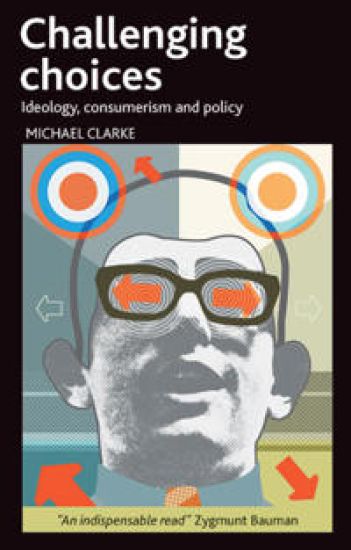
Choice pervades our society: it is founded on political rights to choose and our economy on market choices, but we have now reached the point where choice is extended almost everywhere. This lively and topical book provides a critique of choice in contemporary society and policy, arguing that we can have too much of a good thing. And there are alternatives. In part one, the author shows how choice works at a personal level, its demands, and how it can fail. By examining healthcare, education and pensions, he then explores the alternatives, such as provision. In part two the book reviews the impact of choice through the life cycle, in areas such as careers, relationships fertility, retirement and death. The author considers whether this enhances or burdens our lives, and questions the assumption that more choice is always for the better.

Choice pervades our society: it is founded on political rights to choose and our economy on market choices, but we have now reached the point where choice is extended almost everywhere. This lively and topical book provides a critique of choice in contemporary society and policy, arguing that we can have too much of a good thing. And there are alternatives. In part one, the author shows how choice works at a personal level, its demands, and how it can fail. By examining healthcare, education and pensions, he then explores the alternatives, such as provision. In part two the book reviews the impact of choice through the life cycle, in areas such as careers, relationships fertility, retirement and death. The author considers whether this enhances or burdens our lives, and questions the assumption that more choice is always for the better.
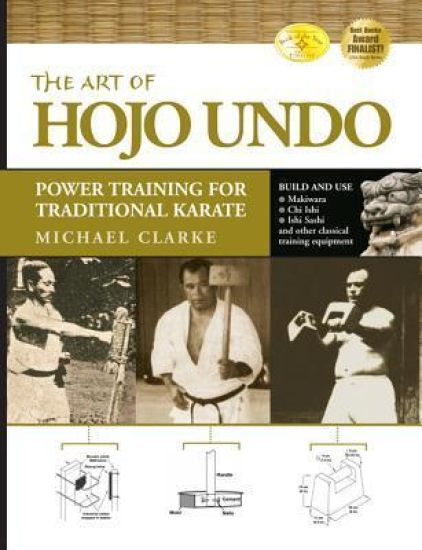
The Art of Hojo Undo
Michael Clarke; Patrick McCarthy; Tsuneo Kinjo; Tetsuhiro Hokama; Hiroshi Akamine
YMAA Publication Center
2009
pokkari
Silver Winner - 2010 IP'S Living Now Award1st Runner Up - 2010 Eric Hoffer AwardEndorsement - 2010 IP's Highlighted Title AwardFinalist - 2010 Book of the Year Award by ForeWord MagazineFinalist - 2010 USA Best Book Award Hojo Undo means 'supplementary training', and using these tools is the key for developing the devastating power of karate techniques. Without Hojo Undo, a practitioner cannot reach the profound strength levels required for a lifetime of karate training. This book details how to construct and use many training tools; provides accurate mechanical drawings, comprehensive training methods, and an historical context to understand why Hojo Undo was created in 'old' Okinawa. * Warm up exercises* Detailed construction drawings* Build your own Hojo Undo tools!* Learn how to use the tools to develop devastating power* Link your increased power to fighting techniques* Hear what Okinawan Masters say about Hojo Undo training


In the epics of Homer people experience emotions, carry out thought, express themselves, suffer death, and survive in a shadowy afterlife. When Homer describes these processes he reveals his sense of human identity; his conception of the self and its relation to the visible body. Despite many generations of study a fully satisfactory account of that conception has never been offered, partly because analyses of word-meanings, world-picture, and literary tradition have proceeded along separate paths. This book offers a newly integrated interpretation of Homeric man. The author starts with the working hypothesis that, in this poetry, the human being is not divided into two parts - inner and outer; body and soul; flesh and spirit - but stands as an indivisible unity. Thought and emotion are precisely the same as the movement of breath, blood, and fluids in the breast; the thinking self and the visible flesh are inextricably united, with no sense of man having either a mind or a body as a constituent part of himself; and at death the journey to the Underworld is fundamentally the same as the descent of the corpse into the soil. The last part of this analysis leads to a reassessment of the Homeric psuche, an entity which leaves the mouth at death and whose name is often misleadingly translated as soul. This study of the psuche leads to a new view of life in the Underworld, with wider implications for the study of the interrelation between myth, poetic narrative, and the meanings of early Greek words.