Kirjojen hintavertailu. Mukana 12 595 353 kirjaa ja 12 kauppaa.

Kirjailija

Michael Creese

Kirjat ja teokset yhdessä paikassa: 4 kirjaa, julkaisuja vuosilta 1999-2019, suosituimpien joukossa Jodhpur Lancers. Vertaile teosten hintoja ja tarkista saatavuus suomalaisista kirjakaupoista.

4 kirjaa

Kirjojen julkaisuhaarukka 1999-2019.

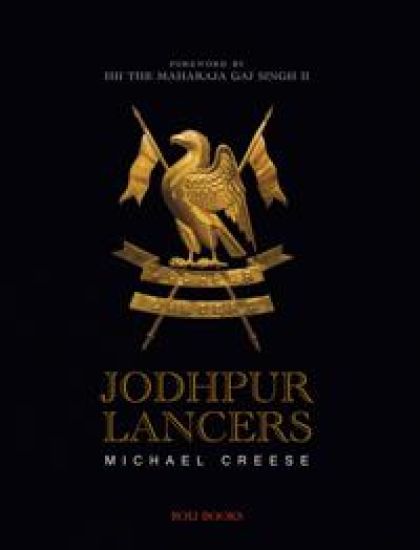
Jodhpur Lancers

Jodhpur Lancers

Michael Creese

Roli Books Pvt Ltd
2019
sidottu
This is the story of the magnificent Jodhpur Lancers - one of India's most charismatic cavalry regiments - even as centenary celebrations begin of their finest hour, their extraordinary victory at the Battle of Haifa (now in Israel) in 1918. Indeed, the charge, mounted on horses against machine gun fire, at the fortified city then held by German and Turkish forces, is described by many as 'perhaps the greatest cavalry charge ever on a regimental scale', ranking alongside Cromwell's Ironsides at Marston Moor, the Polish Lancers at Somosierra and the German cavalry at Mars-la-Tour. No wonder the Jodhpur Lancers were referred to as the Jo Hokums ('As You Command') by the end of the Great War - no challenge was insurmountable, no order ever refused. Laced with anecdotes and 'inside stories', Michael Creese traces the roots of the regiment from its raising by the legendary Sir Pratap Singh to its early actions in China. From the muddy trenches of France, to Haifa, Aleppo and Damascus; to its eventual mechanisation in the Second World War. Finally, and sadly, to its bureaucratic amalgamation with the Indian Army in the 1950s, where, against many odds, it has been able to retain a slice of its identity and history; the battle cry always 'Ran Banka Rathore' ('The Rathore - Invincible in Battle').
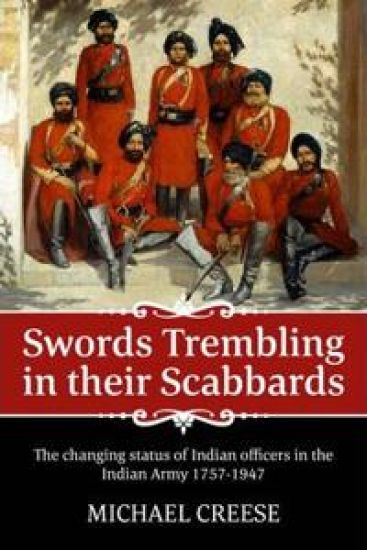
Swords Trembling in Their Scabbards

Swords Trembling in Their Scabbards

Michael Creese

Helion Company
2015
sidottu
The Indian Army founded by the East India Company in the eighteenth century was unique among the armies of the world in that it had two groups of officers – British and Indian. The intention was that the Indian officers, coming from similar backgrounds as their men and naturally understanding their social and religious mores and customs, would form the crucial link between the British officers and the sepoys. It is surprising, therefore, that there has been very little written, by either British or Indian historians, regarding the role and experience of those officers. They were promoted from the ranks and served for many years in their units, embodying both the spirit and the traditions of their regiments. So who were these Indian officers who look out at us from photographs taken from the eighteen eighties onwards? What was their background, education and training? How did they, and their British officers, interpret their role? The present volume is a long over-due attempt to answer these questions and to pay due tribute to the men who served the Raj and their country so well in peace and war. A wide variety of sources has been drawn upon, including interviews with British officers who served with the Indian Army. A thread running through the book is provided by the diary of Amar Singh, a Rajput from Jaipur. He was one of the first members of the elite Imperial Cadet Corps and served in China, France, Mesopotamia and on the North-West Frontier. He ended his military career as Commandant of the Jaipur State forces.