Kirjojen hintavertailu. Mukana 12 197 917 kirjaa ja 12 kauppaa.

Kirjailija

Michael D. Barr

Kirjat ja teokset yhdessä paikassa: 10 kirjaa, julkaisuja vuosilta 2000-2026, suosituimpien joukossa The Ruling Elite of Singapore. Vertaile teosten hintoja ja tarkista saatavuus suomalaisista kirjakaupoista.

10 kirjaa

Kirjojen julkaisuhaarukka 2000-2026.

The Ruling Elite of Singapore

The Ruling Elite of Singapore

Michael D. Barr

BLOOMSBURY PUBLISHING PLC
2026
sidottu
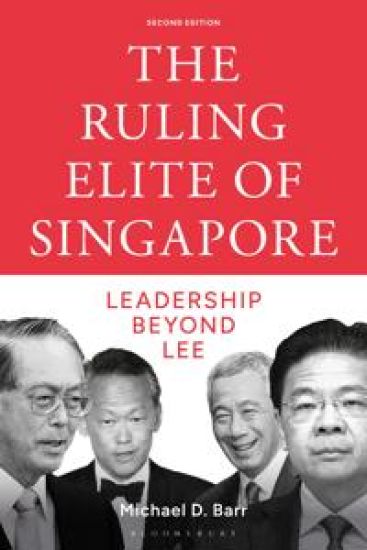
Michael Barr explores the complex and covert networks of power at work in one of the world’s most prosperous countries, the city-state of Singapore. Charting the creation of a national elite in the 1950s and its consolidation as the ruling elite in the 1960s, it argues that the contemporary networks of power are a deliberate project initiated and managed by Lee Kuan Yew- former prime minister and Singapore’s ‘founding father’. This updated and revised edition extends the narrative to consider recent developments and shifts in power since the death of Lee Kuan Yew in 2015. From the Lee-family feud to Lee Hsien Loong’s prime ministerial succession and the inexorable rise of K. Shanmugam, this book considers what this means for the future direction, character and power structure of Singapore’s ruling elite, and what the future might hold for this flourishing and affluent nation.
The Ruling Elite of Singapore

The Ruling Elite of Singapore

Michael D. Barr

BLOOMSBURY PUBLISHING PLC
2026
nidottu
Michael Barr explores the complex and covert networks of power at work in one of the world’s most prosperous countries, the city-state of Singapore. Charting the creation of a national elite in the 1950s and its consolidation as the ruling elite in the 1960s, it argues that the contemporary networks of power are a deliberate project initiated and managed by Lee Kuan Yew- former prime minister and Singapore’s ‘founding father’. This updated and revised edition extends the narrative to consider recent developments and shifts in power since the death of Lee Kuan Yew in 2015. From the Lee-family feud to Lee Hsien Loong’s prime ministerial succession and the inexorable rise of K. Shanmugam, this book considers what this means for the future direction, character and power structure of Singapore’s ruling elite, and what the future might hold for this flourishing and affluent nation.
Singapore

Singapore

Michael D. Barr; Carl A. Trocki

Bloomsbury Academic
2020
nidottu
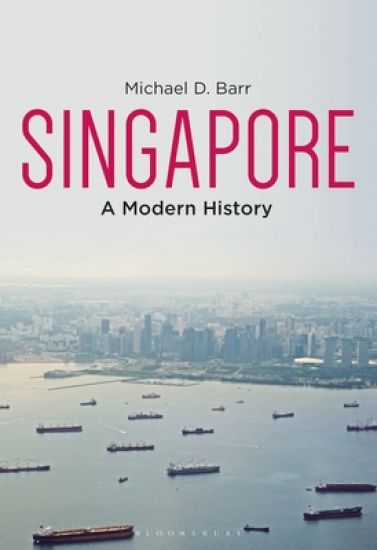
Singapore gained independence in 1965, a city-state in a world of nation-states. Yet its long and complex history reaches much farther back. Blending modernity and tradition, ideologies and ethnicities, a peculiar set of factors make Singapore what it is today. In this thematic study of the island nation, Michael D. Barr proposes a new approach to understand this development. From the pre-colonial period through to the modern day, he traces the idea, the politics and the geography of Singapore over five centuries of rich history. In doing so he rejects the official narrative of the so-called 'Singapore Story'. Drawing on in-depth archival work and oral histories, Singapore: A Modern History is a work both for students of the country's history and politics, but also for any reader seeking to engage with this enigmatic and vastly successful nation.
Cultural Politics and Asian Values

Cultural Politics and Asian Values

Michael D. Barr

Routledge
2017
sidottu
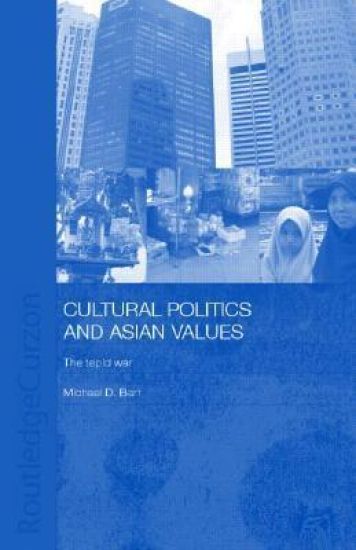
Cultural Politics and Asian Values looks at the political, cultural and religious background of East and Southeast Asian societies and those of 'the West', with a view to seeing how they are affecting contemporary national and international politics: democratization, the international human rights discourse, NGOs and globalization.The book surveys the political history and pre-history of the 'Asian values' debate, taking it up to the era of Megawati Sukarnoputri, Chen Shui-bian and Kim Dae-jung. In chapters on Confucianism, Buddhism, Islam, Christianity and liberalism, Barr explores the histories and conceptual essences of the world religions involved in or affected by the debate.
Lee Kuan Yew

Lee Kuan Yew

Michael D. Barr

Talisman Publishing
2012
pokkari
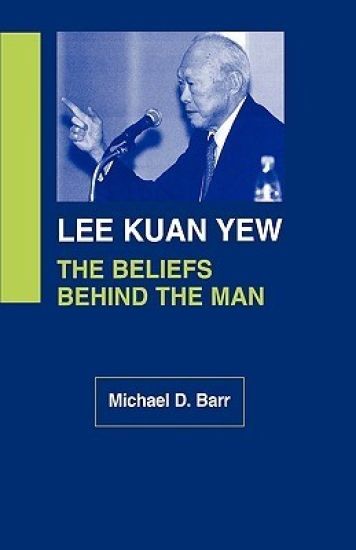
Lee Kuan Yew, first Prime Minister of Singapore, is a figure whose international stature far exceeds that of the tiny island over which he presided for thirty years. This book analyses the origin and substance of Lee's ideas.
Constructing Singapore

Constructing Singapore

Michael D. Barr; Zlatko Skrbis

NIAS Press
2009
nidottu
Singapore has few natural resources but, in a relatively short history, its economic and social development and transformation are nothing short of remarkable. Today Singapore is by far the most successful exemplar of material development in Southeast Asia and it often finds itself the envy of developed countries. Furthermore over the last three and a half decades the ruling party has presided over the formation of a thriving community of Singaporeans who love and are proud of their country.Nothing about these processes has been 'natural' in any sense of the word. Much of the country's investment in nation building has in fact gone into the selection, training and formation of a ruling and administrative elite that reflects and will perpetuate its vision of the nation. The government ownership of the nation-building project, its micromanagement of everyday life and the role played by the elite are three fundamental elements in this complex and continuing process of construction of a nation. The intense triangulation of these elements and the pace of change they produce make Singapore one of the most intriguing specimens of nation building in the region.In a critical study of the politics of ethnicity and elitism in Singapore, Constructing Singapore looks inside the supposedly 'meritocratic' system, from nursery school to university and beyond, that produces Singapore's political and administrative elite. Focusing on two processes elite formation and elite selection it gives primary attention to the role that ethno-racial ascription plays in these processes but also considers the input of personal connections, personal power, class and gender. The result is a study revealing much about how Singapore's elite-led nationbuilding project has reached its current state whereby a Singaporean version of Chinese ethno-nationalism has overwhelmed the discourse on national and Singaporean identity.
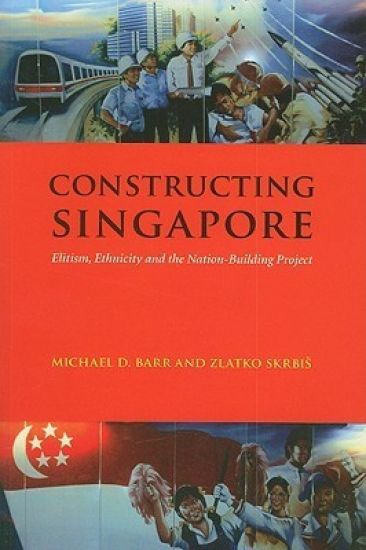
Constructing Singapore

Constructing Singapore

Michael D. Barr; Zlatko Skrbis

NIAS Press
2009
sidottu
Singapore has few natural resources but, in a relatively short history, its economic and social development and transformation are nothing short of remarkable. Today Singapore is by far the most successful exemplar of material development in Southeast Asia and it often finds itself the envy of developed countries. Furthermore over the last three and a half decades the ruling party has presided over the formation of a thriving community of Singaporeans who love and are proud of their country.Nothing about these processes has been 'natural' in any sense of the word. Much of the country's investment in nation building has in fact gone into the selection, training and formation of a ruling and administrative elite that reflects and will perpetuate its vision of the nation. The government ownership of the nation-building project, its micromanagement of everyday life and the role played by the elite are three fundamental elements in this complex and continuing process of construction of a nation. The intense triangulation of these elements and the pace of change they produce make Singapore one of the most intriguing specimens of nation building in the region.In a critical study of the politics of ethnicity and elitism in Singapore, Constructing Singapore looks inside the supposedly 'meritocratic' system, from nursery school to university and beyond, that produces Singapore's political and administrative elite. Focusing on two processes elite formation and elite selection it gives primary attention to the role that ethno-racial ascription plays in these processes but also considers the input of personal connections, personal power, class and gender.The result is a study revealing much about how Singapore's elite-led nationbuilding project has reached its current state whereby a Singaporean version of Chinese ethno-nationalism has overwhelmed the discourse on national and Singaporean identity.
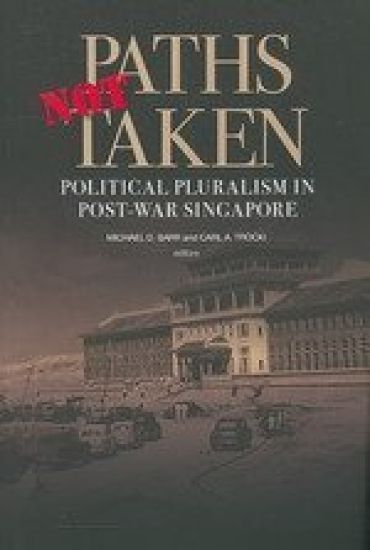
Paths not Taken

Paths not Taken

Michael D. Barr; Carl A. Trocki

NUS Press
2007
nidottu
Singapore's era of pluralism between the 1950s and 1970s was a time of extraordinary cultural, intellectual and political dynamism. Students, labour unions, ambitious political contenders, and representatives of the various ethnic communities all stepped forward to offer alternate visions of Singapore's future from across the entire political spectrum. They generated a ferment of ideologies, priorities, perspectives and social visions such as mainstream 'official' Singapore politics had never known before and has not seen since.Post WWII Singapore history generally follows a central theme of progress to establish the PAP political, economic and social model. Alternatives receive cursory treatment as problems, false starts, or difficulties to be overcome. This book reveals a more complex situation that involved a much larger cast of significant players, and gives due weight to the middle years of the twentieth century as a period that offered real alternatives, rather than a chaotic age before the dawn.The book will remind older Singaporeans of pages from their past, and will provide a younger generation with a novel perspective at their country's past struggles. For outside observers, it offers a fascinating glimpse of a side of Singapore that has received relatively little attention.
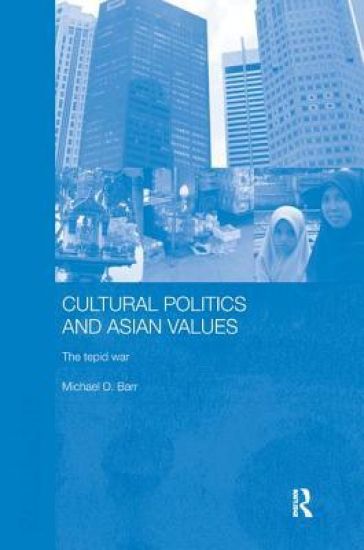
Cultural Politics and Asian Values

Cultural Politics and Asian Values

Michael D. Barr

Routledge
2004
nidottu
Cultural Politics and Asian Values looks at the political, cultural and religious background of East and Southeast Asian societies and those of 'the West', with a view to seeing how they are affecting contemporary national and international politics: democratization, the international human rights discourse, NGOs and globalization.The book surveys the political history and pre-history of the 'Asian values' debate, taking it up to the era of Megawati Sukarnoputri, Chen Shui-bian and Kim Dae-jung. In chapters on Confucianism, Buddhism, Islam, Christianity and liberalism, Barr explores the histories and conceptual essences of the world religions involved in or affected by the debate.
Lee Kuan Yew

Lee Kuan Yew

Michael D. Barr

Georgetown University Press
2000
sidottu
Lee Kuan Yew, Singapore's first prime minister (from 1959 to 1990), has been an international figure not only for establishing Singapore's political and economic stability but also for fostering economic development throughout Asia. He is particularly renowned as a principle architect of the 'Asian values' campaign of the 1990s, which sought to preserve the undemocratic traits of Asian culture while attending to the demands of a capitalist economy operating globally. A critical examination of Lee's life, career, and ideas, this is the first book to analyze the origins and substance of Lee's political thought. Augmenting established primary sources with his own interviews and correspondence with Lee's old associates, Barr shows how Lee has been influenced by British and Chinese racism and elitism, western progressivism, and even the cultural evolutionism of Arnold Toynbee. This reassessment of Lee's achievements and worldview sheds new light on a key figure on the world stage.