Kirjojen hintavertailu. Mukana 12 390 323 kirjaa ja 12 kauppaa.

Kirjailija

Michael D. Bordo

Kirjat ja teokset yhdessä paikassa: 6 kirjaa, julkaisuja vuosilta 1993-2017, suosituimpien joukossa Strained Relations. Vertaile teosten hintoja ja tarkista saatavuus suomalaisista kirjakaupoista.

6 kirjaa

Kirjojen julkaisuhaarukka 1993-2017.

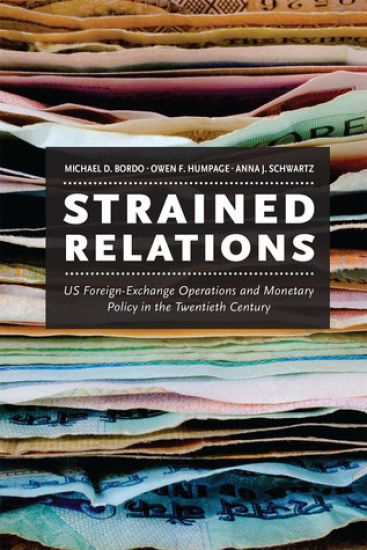
Strained Relations

Strained Relations

Michael D. Bordo; Owen F. Humpage; Anna J. Schwartz

University of Chicago Press
2015
sidottu
Drawing on a trove of previously confidential data, Strained Relations reveals the evolution of US policy regarding currency market intervention, and its interaction with monetary policy. The authors consider how foreign-exchange intervention was affected by changing economic and institutional circumstances - most notably the abandonment of the international gold standard - and how political and bureaucratic factors affected this aspect of public policy.
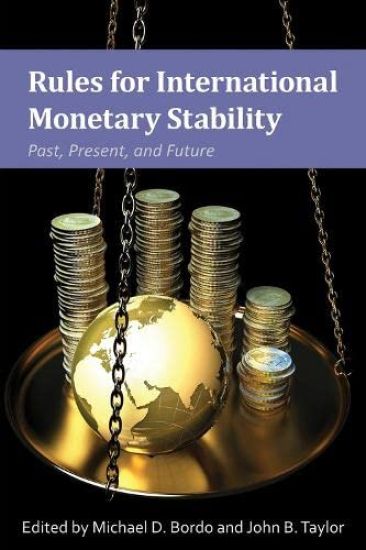
Rules for International Monetary Stability

Rules for International Monetary Stability

Michael D. Bordo; John B. Taylor

Hoover Institution Press,U.S.
2017
sidottu
Since the end of the Great Recession in 2009 the central banks of the advanced countries have taken unprecedented actions to reflate and stimulate their economies. There have been significant differences in the timing and pace of these actions. These independent monetary policy actions have had significant spillover effects on the economies and monetary policy strategies of other advanced countries. In addition the monetary policy actions and interventions of the advanced countries have had a significant impact on the emerging market economies leading to the charge of 'currency wars.' The perceived negative consequences of spillovers from the actions of national central banks has led to calls for international monetary policy coordination. The arguments for coordination based on game theory are the same today as back in the 1980s, which led to accords which required that participant countries follow policies to improve global welfare at the expense of domestic fundamentals. This led to disastrous consequences. An alternative approach to the international spillovers of national monetary policy actions is to view them as deviations from rules based monetary policy. In this view a return to rules based monetary policy and a rolling back of the "" global great deviation"" by each country's central bank would lead to a beneficial policy outcome without the need for explicit policy coordination. In this book we report the results from a recent conference which brought together academics, market participants, and policy makers to focus on these issues. The consensus of much of the conference was on the need for a classic rules based reform of the international monetary system.
Monetary Regimes in Transition

Monetary Regimes in Transition

Michael D. Bordo; Forrest Capie

Cambridge University Press
2006
pokkari
This important contribution to comparative economic history examines different countries' experiences with different monetary regimes, laying particular emphasis on how the regimes fared when placed under stress such as wars or other changes in the economic environment. Covering the experience of ten countries over the period 1700–1990, the contributors employ the latest techniques of economic analysis in their studies. Several papers are concerned with the transformation from bimetallism to gold monometallism in the nineteenth century and the determinants of monetary regimes transformation in the core countries of Britain, France and the United States. Others focus on the successful and unsuccessful gold standard experiences of Canada, Australia, and Spain, while yet others examine the experience of wartime and postwar stabilizations surrounding the two World Wars and the Napoleonic War.
The Gold Standard and Related Regimes

The Gold Standard and Related Regimes

Michael D. Bordo

Cambridge University Press
2005
pokkari
This book contains a collection of Michael D. Bordo's essays, written singly and with colleagues, on the classical gold standard and related regimes based directly or indirectly on gold convertibility. The gold standard (and its variants) was the basis for both international and domestic monetary arrangements from the third quarter of the nineteenth century until 1971 when President Nixon closed the US gold window, effectively ending the Bretton Woods International Monetary System. Although the gold standard and its variants are now history, it still has great appeal for policymakers and scholars. Several desirable features of the gold standard have resources for the ongoing issue of international monetary reform. They include its record as a stable nominal anchor; its automaticity; and its role as a credible commitment mechanism. The essays in this collection are organized around several themes: gold and the international monetary system; the commodity theory of money; the gold standard as a rule; variants of the gold standard including the interwar gold standard and the Bretton Woods International Monetary System.
The Gold Standard and Related Regimes

The Gold Standard and Related Regimes

Michael D. Bordo

Cambridge University Press
1999
sidottu
This book contains a collection of Michael D. Bordo’s essays, written singly and with colleagues, on the classical gold standard and related regimes based directly or indirectly on gold convertibility. The gold standard (and its variants) was the basis for both international and domestic monetary arrangements from the third quarter of the nineteenth century until 1971 when President Nixon closed the US gold window, effectively ending the Bretton Woods International Monetary System. Although the gold standard and its variants are now history, it still has great appeal for policymakers and scholars. Several desirable features of the gold standard have resources for the ongoing issue of international monetary reform. They include its record as a stable nominal anchor; its automaticity; and its role as a credible commitment mechanism. The essays in this collection are organized around several themes: gold and the international monetary system; the commodity theory of money; the gold standard as a rule; variants of the gold standard including the interwar gold standard and the Bretton Woods International Monetary System.
Monetary Regimes in Transition

Monetary Regimes in Transition

Michael D. Bordo; Forrest Capie

Cambridge University Press
1993
sidottu
This important contribution to comparative economic history examines different countries’ experiences with different monetary regimes, laying particular emphasis on how the regimes fared when placed under stress such as wars or other changes in the economic environment. Covering the experience of ten countries over the period 1700–1990, the contributors employ the latest techniques of economic analysis in their studies. Several papers are concerned with the transformation from bimetallism to gold monometallism in the nineteenth century and the determinants of monetary regimes transformation in the core countries of Britain, France and the United States. Others focus on the successful and unsuccessful gold standard experiences of Canada, Australia, and Spain, while yet others examine the experience of wartime and postwar stabilizations surrounding the two World Wars and the Napoleonic War.