Kirjojen hintavertailu. Mukana 12 390 323 kirjaa ja 12 kauppaa.

Kirjailija

Michael D. Gambone

Kirjat ja teokset yhdessä paikassa: 12 kirjaa, julkaisuja vuosilta 1997-2025, suosituimpien joukossa Modern Conspiracies in America. Vertaile teosten hintoja ja tarkista saatavuus suomalaisista kirjakaupoista.

12 kirjaa

Kirjojen julkaisuhaarukka 1997-2025.

Veterans and America

Veterans and America

Michael D. Gambone

BLOOMSBURY PUBLISHING PLC
2025
sidottu
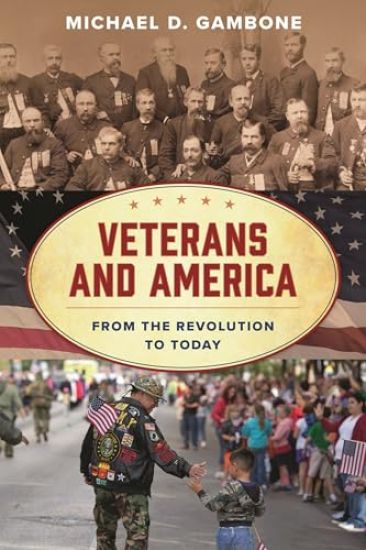
A concise history of America's relationship with its veterans, from the Revolution and Civil War to Vietnam and Afghanistan.Millions of veterans live among us and are part of one the largest social groups in America. They have redefined civil rights, activism, and public policy for our entire history. Their stories are our stories.Veterans and America: From the Revolution to Today examines four hundred years of military service, social recognition, activism, and public policy. Michael D. Gambone addresses the evolving nature of military service from the colonial era to our contemporary global contingency operations and the concurrent relationship between veterans and American society as a whole. He illustrates the nature of military service and its impact on veterans, from the American Revolution to Vietnam and the “Forever Wars” of today, and explores veterans’ social standing in American society to understand its impact on how the country sees and recognizes military service.Highlighting veterans’ relevance to politics, culture, social reform, economics, and more, Gambone ultimately argues for public policy reform to understand how military service is compensated and to mitigate the impact of that service on individual veterans. From the first piecemeal efforts of individual colonies to the massive national safety net first constructed by the 1944 G.I. Bill, the country must do better for those who have nobly served it. An essential read for anyone interested in veterans’ affairs and their evolving struggles through centuries of American history.
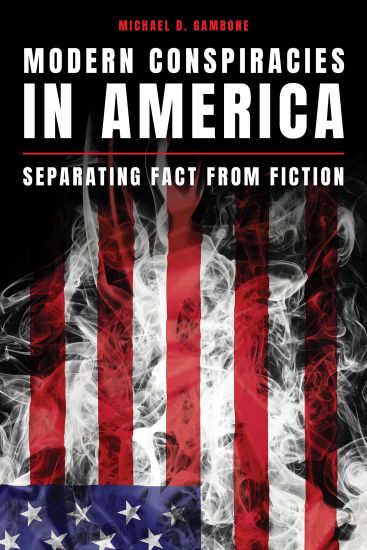
Modern Conspiracies in America

Modern Conspiracies in America

Michael D. Gambone

BLOOMSBURY PUBLISHING PLC
2024
nidottu
"... an excellent guide to logic and credibility for all who are curious about this complex and urgent subject." Booklist Starred Review America is awash with alleged conspiracies. It seems like today, no one with a cell phone escapes the vortex of skepticism, cynicism, paranoia, and fear that occupy our thoughts almost constantly. Seeking out valid answers in this cacophony can be confusing and deeply frustrating. In this book, historian Michael D. Gambone provides case studies of popular conspiracy theories in America from the past 100 years, from Protocol of the Elders of Zion to #stopthesteal. He offers an approach based on basic logic and historical case studies, not designed to win arguments, but to help readers separate truth from the avalanche of nonsense descending on us every day. In each case, Gambone outlines the conspiracy claim, provides historical context for the conspiracy, presents evidence of the conspiracy claim, and analyzes the claim, context, and evidence. Modern Conspiracies in American History will appeal to a broad audience of readers interested in American history and those seeking to become better informed consumers of news in an era when social media spreads misinformation widely and quickly.
Modern Conspiracies in America

Modern Conspiracies in America

Michael D. Gambone

BLOOMSBURY PUBLISHING PLC
2022
sidottu
America is awash with alleged conspiracies. It seems like today, no one with a cell phone escapes the vortex of skepticism, cynicism, paranoia, and fear that occupy our thoughts almost constantly. Seeking out valid answers in this cacophony can be confusing and deeply frustrating. In this book, historian Michael D. Gambone provides case studies of popular conspiracy theories in America from the past 100 years, from Protocol of the Elders of Zion to #stopthesteal. He offers an approach, based on basic logic and historical case studies, not designed to win arguments, but to help reads separate truth from the avalanche of nonsense descending on us every day. In each case, GamboneOutlines the conspiracy claimProvides historical context for the conspiracyPresents evidence of the conspiracy claimAnalyzes the claim, context, and evidence Modern Conspiracies in American History will appeal to a broad audience of readers interested in American history and those seeking to become better informed consumers of news in an era when social media spreads misinformation widely and quickly.
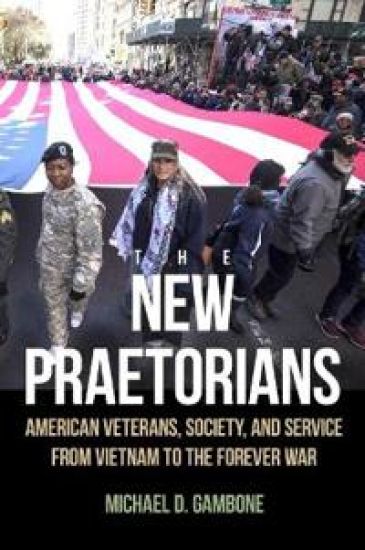
The New Praetorians

The New Praetorians

Michael D. Gambone

University of Massachusetts Press
2021
sidottu
Contemporary veterans belong to an exclusive American group. Celebrated by most of the country, they are nevertheless often poorly understood by the same people who applaud their service. Following the introduction of an all-volunteer force after the war in Vietnam, only a tiny fraction of Americans now join the armed services, making the contemporary soldier, and the veteran by extension, increasingly less representative of mainstream society. Veterans have come to comprise their own distinct tribe—modern praetorians, permanently set apart from society by what they have seen and experienced.In an engrossing narrative that considers the military, economic, political, and social developments affecting military service after Vietnam, Michael D. Gambone investigates how successive generations have intentionally shaped their identity as veterans. The New Praetorians also highlights the impact of their homecoming, the range of educational opportunities open to veterans, the health care challenges they face, and the unique experiences of minority and women veterans. This groundbreaking study illustrates an important and often neglected group that is key to our understanding of American social history and civil-military affairs.
The New Praetorians

The New Praetorians

Michael D. Gambone

University of Massachusetts Press
2021
nidottu
Contemporary veterans belong to an exclusive American group. Celebrated by most of the country, they are nevertheless often poorly understood by the same people who applaud their service. Following the introduction of an all-volunteer force after the war in Vietnam, only a tiny fraction of Americans now join the armed services, making the contemporary soldier, and the veteran by extension, increasingly less representative of mainstream society. Veterans have come to comprise their own distinct tribe—modern praetorians, permanently set apart from society by what they have seen and experienced.In an engrossing narrative that considers the military, economic, political, and social developments affecting military service after Vietnam, Michael D. Gambone investigates how successive generations have intentionally shaped their identity as veterans. The New Praetorians also highlights the impact of their homecoming, the range of educational opportunities open to veterans, the health care challenges they face, and the unique experiences of minority and women veterans. This groundbreaking study illustrates an important and often neglected group that is key to our understanding of American social history and civil-military affairs.
Long Journeys Home

Long Journeys Home

Michael D. Gambone

Texas A M University Press
2017
sidottu
In the modern history of American veterans, it is sometimes difficult to separate myth from fact. The men and women who served in World War II are routinely praised as heroes; the “Greatest Generation,” after all, triumphed over fascism and successfully reentered postwar society. Veterans of the Vietnam War, on the other hand, occupy a different thread in the postwar narrative, sometimes as a threat to society but usually as victims of it; these vets returned home to a combination of disdain, fear, and prolonged suffering. And until very recently, both the public and historians have largely overlooked veterans of the Korean War altogether; the hit television show M*A*S*H was set in Korea but was more about Vietnam.Long Journeys Home explores the veteran experience of World War II, Korea, and Vietnam. It examines and dissects the various myths that have grown up around each of these wars. Author Michael D. Gambone compares and contrasts the basic elements of each narrative, including the factors that influenced the decision to enlist, the impact of combat on life after the war, the struggles of postwar economic adjustment, and participation in (or withdrawal from) social and political activism.Gambone does not treat these veterans monolithically but instead puts each era’s veterans in historical context. He also explores the nuances of race, gender, and class. Despite many differences, some obvious and some not, Gambone nonetheless finds a great deal of continuity, and ultimately concludes that Korean and Vietnam veterans have much more in common with the Greatest Generation than was previously understood.
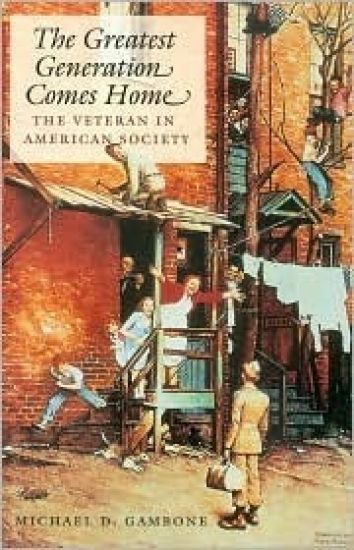
The Greatest Generation Comes Home

The Greatest Generation Comes Home

Michael D. Gambone

Texas A M University Press
2005
sidottu
At the conclusion of World War II, Americans anxiously contemplated the return to peace. It was an uncertain time, rife with concerns about demobilization, inflation, strikes, and the return of a second Great Depression. Balanced against these challenges was the hope in a future of unparalleled opportunities for a generation raised in hard times and war. One of the remarkable untold stories of postwar America is the successful assimilation of sixteen million veterans back into civilian society after 1945. The G.I. generation returned home filled with the same sense of fear and hope that most citizens felt at the time. Their transition from conflict to normalcy is one of the greatest chapters in American history. ""The Greatest Generation Comes Home"" combines military and social history into a comprehensive narrative of the veteran's experience after World War II. It integrates early impressions of home in 1945 with later stories of medical recovery, education, work, politics, and entertainment, as well as moving accounts of the dislocation, alienation, and discomfort many faced. This book includes the experiences of not only the millions of veterans drawn from mainstream white America but also the women, African Americans, Latinos, and Asian Americans who served the nation. Perhaps most important, this book also examines the legacy bequeathed by these veterans to later generations who served in uniform on new battlefields around the world.
The Greatest Generation Comes Home

The Greatest Generation Comes Home

Michael D. Gambone

Texas A M University Press
2005
nidottu
At the conclusion of World War II, Americans anxiously contemplated the return to peace. It was an uncertain time, rife with concerns about demobilization, inflation, strikes, and the return of a second Great Depression. Balanced against these challenges was the hope in a future of unparalleled opportunities for a generation raised in hard times and war. One of the remarkable untold stories of postwar America is the successful assimilation of sixteen million veterans back into civilian society after 1945. The G.I. generation returned home filled with the same sense of fear and hope that most citizens felt at the time. Their transition from conflict to normalcy is one of the greatest chapters in American history. ""The Greatest Generation Comes Home"" combines military and social history into a comprehensive narrative of the veteran's experience after World War II. It integrates early impressions of home in 1945 with later stories of medical recovery, education, work, politics, and entertainment, as well as moving accounts of the dislocation, alienation, and discomfort many faced. This book includes the experiences of not only the millions of veterans drawn from mainstream white America but also the women, African Americans, Latinos, and Asian Americans who served the nation. Perhaps most important, this book also examines the legacy bequeathed by these veterans to later generations who served in uniform on new battlefields around the world.
Documents of American Diplomacy

Documents of American Diplomacy

Michael D. Gambone

Greenwood Press
2001
sidottu
As a young republic, an emerging imperial power, a combatant in the Cold War, or the world's last remaining superpower, America has exercised a pivotal influence on world affairs throughout its history. Through documents drawn from every period of American history, this book offers a comprehensive examination of American diplomacy from its revolutionary roots to the present day. It includes both classic statements, such as Washington's Farewell Address and the Monroe Doctrine, and other lesser known but critical documents. From the post-Cold War era, it includes Bill Clinton's, Madeline Albright's, and other leaders' statements addressing terrorism, instability in eastern Europe, and nuclear proliferation.In one comprehensive volume, this book examines the entire evolution of U.S. diplomacy. Addressing every major period of American history from the late 18th century to the post-Cold War era, it includes major American policy decisions regarding Europe, Asia, the Middle East, and Latin America. The book affords the reader a complete overview of more than two centuries of American diplomatic decisions from the Declaration of Independence to the October 2000 outbreak of violence between Palestinians and Israelis. The volume is a valuable resource for any student or instructor interested in a comprehensive, comparative study of U.S. diplomacy.
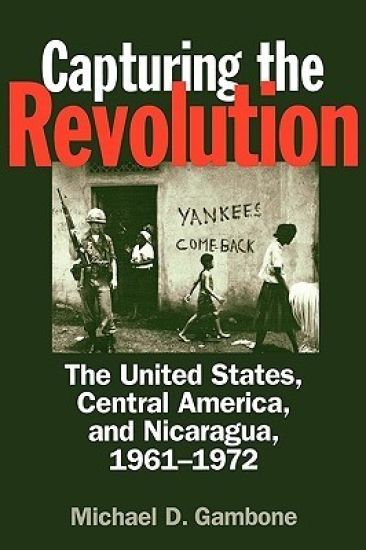
Capturing the Revolution

Capturing the Revolution

Michael D. Gambone

Praeger Publishers Inc
2001
nidottu
At the start of the 1960s, revolution challenged the established world order. In every corner of the underdeveloped world, discontent with the status quo fueled attempts to revoke colonialism and the strangleholds on power maintained by entrenched local oligarchies. This book examines the causes of revolution in the sixties and the various responses crafted to stop it, in particular, the Alliance for Progress, a program which represented the best products of American developmental and counterinsurgency theory. Equally important, however, is an examination of the independent policies implemented by Latin Americans themselves, often in direct opposition to those pursued by the U.S.For the United States the period represented a challenge to both its sovereignty and its leadership in the so-called Free World. Perhaps more importantly, the disruptions blanketing the globe also pointed out the dramatic weaknesses of an American policy dominated by preparations for thermonuclear war with the Soviet Union. For Latin America, revolution challenged national stability and, in the cases of the regimes it was directed against, their very survival.
Capturing the Revolution

Capturing the Revolution

Michael D. Gambone

Praeger Publishers Inc
2001
sidottu
At the start of the 1960s, revolution challenged the established world order. In every corner of the underdeveloped world, discontent with the status quo fueled attempts to revoke colonialism and the strangleholds on power maintained by entrenched local oligarchies. This book examines the causes of revolution in the sixties and the various responses crafted to stop it, in particular, the Alliance for Progress, a program which represented the best products of American developmental and counterinsurgency theory. Equally important, however, is an examination of the independent policies implemented by Latin Americans themselves, often in direct opposition to those pursued by the U.S.For the United States the period represented a challenge to both its sovereignty and its leadership in the so-called Free World. Perhaps more importantly, the disruptions blanketing the globe also pointed out the dramatic weaknesses of an American policy dominated by preparations for thermonuclear war with the Soviet Union. For Latin America, revolution challenged national stability and, in the cases of the regimes it was directed against, their very survival.
Eisenhower, Somoza, and the Cold War in Nicaragua

Eisenhower, Somoza, and the Cold War in Nicaragua

Michael D. Gambone

Praeger Publishers Inc
1997
sidottu
During the Cold War era, the United States faced the prospect of expanding its power in Central America. But we miscalculated—grievously. After 1945, Central America teemed with leaders willing to alter the region's quasi-colonial status. Some, like Fidel Castro, sought out revolution to shatter the status quo. Others, like Anastasio Somoza Garcia, attempted to seek out new directions along more subtle paths. Nicaragua subsequently challenged American hegemony in a manner at once more deliberate and more dangerous than any other effort in the hemisphere. The Somoza regime, unlike its contemporaries, chose to utilize American institutions and American preferences to subvert the latter's power rather than reinforce it. American arrogance, combined with a complacent approach to policy in its global backyard, offered a myriad of political, military, and economic opportunities to a leader willing to take risks. In the years after 1945, Somoza was thus able to peel away layers of clientage until, at certain moments, he could act as a partner of his northern neighbor.