Kirjailija
Michael D. O'Brien
Kirjat ja teokset yhdessä paikassa: 16 kirjaa, julkaisuja vuosilta 1998-2025, suosituimpien joukossa The Lighthouse. Vertaile teosten hintoja ja tarkista saatavuus suomalaisista kirjakaupoista.
Mukana myös kirjoitusasut: Michael D O'Brien
16 kirjaa
Kirjojen julkaisuhaarukka 1998-2025.


Elijah in Jerusalem, the long-awaited sequel to the acclaimed, best-selling novel Father Elijah: An Apocalypse, is the continuing story of the Catholic priest called to confront a powerful politician who could be the Antichrist foretold in the Bible.A convert from Judaism, a survivor of the Holocaust, and a participant in the founding of Israel, Father Elijah was for decades a monk on Mount Carmel, the mountain made famous by his Old Testament prophet-namesake. In the events of the preceding novel, the Pope commissioned Father Elijah to meet the President of the European Union, a man rising toward global control as President of the soon- to-be realized World Government. Recognizing in the President a resemblance to the anticipated Antichrist, the Pope asked Father Elijah to call the President to repentance, a mission that ended in failure.In this sequel, now-Bishop Elijah, wanted for a murder he did not commit, tries again to meet the President. Accompanied by his fellow monk Brother Enoch, he enters Jerusalem just as the President arrives in the holy city to inaugurate a new stage of his rise to world power. This time Elijah hopes to unmask him as a spiritual danger to mankind. As the story unfolds, people of various backgrounds meet the fugitive priest, and in the encounter their souls are revealed and tested.Elijah perseveres in his mission even when all seems lost. The dramatic climax is surprising, yet it underlines that God works all things to the good for those who love him.

Dr. Owen Whitfield is the elderly Oxford professor of history who first appeared in Michael O''Brien''s novel The Father''s Tale. In the events of The Sabbatical, which occur sometime later, Dr. Whitfield is looking forward to a sabbatical year of peace and quiet, gardening in his backyard, and tinkering with what he calls his latest unpublishable book.As the year begins, he is drawn by a series of seeming coincidences into involvement with a group of characters from across Europe, including a family that has been the target of assassination attempts by unknown powers. During his journey to Romania, the situation in which he finds himself becomes more sinister than it first seemed.The story deals with the tension between fatalism and the providential understanding of history, with the courage and love that are necessary for navigating through a confusion of signs, and with the triumph of faith and reason over the forces of destruction.
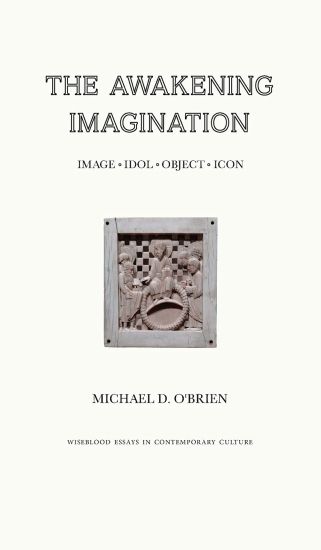
Based on a lecture Michael D. O'Brien gave at the Centre for Faith and Culture, Oxford, this essay traces the long history of mankind's creative imagination throughout millennia of expansion and growth-citing examples that range from cave painting to classical sculpture, the icon and manuscript illumination to film and contemporary literature. The author weaves together his under-standing of numerous significant works of art, philosophical insights, spiritual reflection, and personal stories, which, combined, offer a multi-dimensional vision of our origin and our future. Underlying it all is the question of Man's nature and what our creative powers reveal about our true identity as children of God. O'Brien proposes that a new iconography is waiting for us, one that will be built upon all that the historical imagination has given, but reinvigorated by a rejuvenated Christian consciousness. Humility alone will allow us to find again our proper place in the hierarchy of creation: "In submission to natural and supernatural law," he writes, "to the absolutes, in obedience and prayer, by opening our interior life and the intellectual life to the full authority of the Holy Spirit, we will germinate a little seed. And from it entire forests can spring and may yet cover the earth."

Set eighty years in the future, this novel is about an expedition sent from Earth to Alpha Centauri, the star closest to our solar system. The Kosmos, a great ship that the central character Neil de Hoyos describes as a "flying city", is immense in size and capable of more than half light-speed. Hoyos is a Nobel Prize winning physicist who has played a major role in designing the ship.Hoyos has signed on as a passenger because he desires to escape the seemingly benign totalitarian government that controls everything on his home planet. He is a skeptical and quirky misanthropic humanist with old tragedies, loves, and hatreds that are secreted in his memory. The surprises that await him on the voyage--and at its destination--will shatter all of his assumptions and point him to a true new horizon.Our fascination with the near-angelic powers of new technology, its benefits and dangers, its potential for obsession and catastrophe, raises vital questions that this work explores about human nature and the cosmos, about man's image of himself and where he is going --and why he seeks to go there.
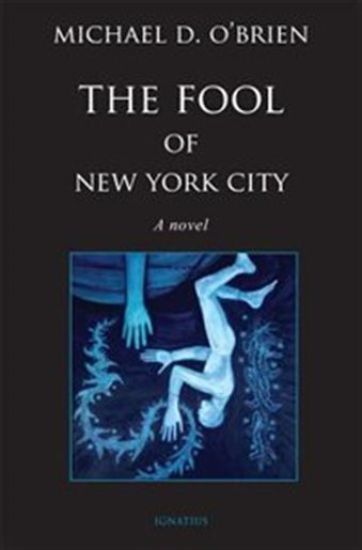
Set in present day Manhattan, The Fool of New York City is the tale of two souls who are considered to be "fools" and "idiots" in the eyes of most people they encounter. One is a literal giant, the other an amnesiac who believes he is the 17th century Spanish painter Francisco de Goya, hundreds of years old, aging more slowly than the rest of the human race. Billy the giant has also briefly suffered from amnesia years ago, and he understands the anguish of those who have lost their identity. He is an apparently simple person, a failed basketball player with an enormous good heart who takes Francisco under his wing after they meet through a seeming coincidence. Together they undertake a laborious search to discover Francisco's true past. The trail leads them to numerous adventures, into the shrouded realm of hidden memories, the ironies and complexities of human character and destiny, of catastrophic evil and of redemption. It is a journey into the mysterious dimensions of the mind. It is about trauma and remembrance in America.
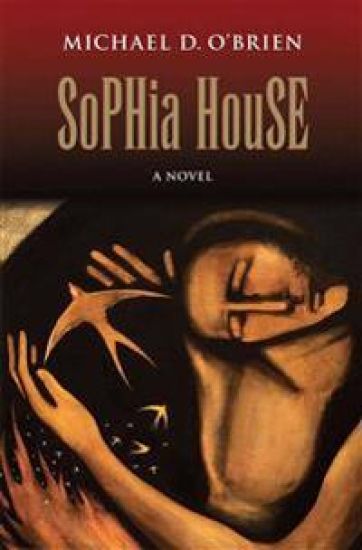
Sophia House is set in Warsaw during the Nazi occupation. Pawel Tarnowski, a bookseller, gives refuge to David Schafer, a Jewish youth who has escaped from the ghetto, and hides him in the attic of the book shop. Throughout the winter of 1942-43, haunted by the looming threat of discovery, they discuss good and evil, sin and redemption, literature and philosophy, and their respective religious views of reality. Decades later, David becomes a convert to Catholicism, and is the Carmelite priest Fr. Elijah Schafer called by the Pope to confront the Anti-Christ in Michael O'Brien's best-selling novel, Father Elijah: an Apocalypse. In this "prequel," the author explores the meaning of love, religious identity, and sacrifice viewed from two distinct perspectives. The cast of characters also includes the notorious Count Smokrev, a literate Nazi Major, a French novelist, a terrifying Polish bear, the Russian icon painter Andrei Rublev, and Pawel's beloved Kahlia, the elusive figure who moves through the story as an unseen presence. As the story unfolds, the loss of spiritual fatherhood in late Western society is revealed as a problem of language in the heart and soul, and as one of the gravest crises of our times. The story points the way to rediscovery of our Father in heaven, and also shows us the path to renewal of human fatherhood. This is a novel about small choices that shift the balance of the world."

"A modern retelling of the parables of The Good Shepherd and The Prodigal Son." -- Michael O'BrienCanadian bookseller Alex Graham is a middle-age widower whose quiet life is turned upside down when his college-age son disappears without any explanation or trace of where he has gone. With minimal resources, the father begins a long journey that takes him for the first time away from his safe and orderly world. As he stumbles across the merest thread of a trail, he follows it in blind desperation, and is led step by step on an odyssey that takes him to fascinating places and sometimes to frightening people and perils.Through the uncertainty and the anguish, the loss and the longing, Graham is pulled into conflicts between nations, as well as the eternal conflict between good and evil. Stretched nearly to the breaking point by the inexplicable suffering he witnesses and experiences, he discovers unexpected sources of strength as he presses onward in the hope of recovering his son-- and himself.
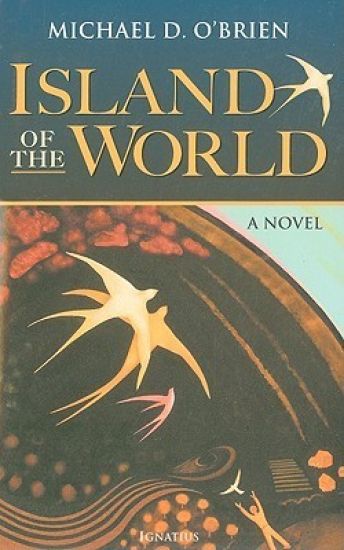
Island of the World is the story of a child born in 1933 into the turbulent world of the Balkans and tracing his life into the third millennium. The central character is Josip Lasta, the son of an impoverished school teacher in a remote village high in the mountains of the Bosnian interior. As the novel begins, World War II is underway and the entire region of Yugoslavia is torn by conflicting factions: German and Italian occupying armies, and the rebel forces that resist them--the fascist Ustashe, Serb nationalist Chetniks, and Communist Partisans. As events gather momentum, hell breaks loose, and the young and the innocent are caught in the path of great evils. Their only remaining strength is their religious faith and their families. For more than a century, the confused and highly inflammatory history of former Yugoslavia has been the subject of numerous books, many of them rife with revisionist history and propaganda. The peoples of the Balkans live on the border of three worlds: the Islamic, the orthodox Slavic East, and Catholic Europe, and as such they stand in the path of major world conflicts that are not only geo-political but fundamentally spiritual. This novel cuts to the core question: how does a person retain his identity, indeed his humanity, in absolutely dehumanizing situations? In the life of the central character, the author demonstrates that this will demand suffering and sacrifice, heroism and even holiness. When he is twelve years old, his entire world is destroyed, and so begins a lifelong Odyssey to find again the faith which the blows of evil have shattered. The plot takes the reader through Josip's youth, his young manhood, life under the Communist regime, hope and loss and unexpected blessings, the growth of his creative powers as a poet, and the ultimate test of his life. Ultimately this novel is about the crucifixion of a soul--and resurrection.

In this fifth novel in his series, Children of the Last Days, Michael O'Brien explores the true meaning of poverty of spirit. Loosely based on the real lives of a number of native North Americans, A Cry of Stone is the fictional account of the life of a native artist, Rose W bos. Abandoned as an infant, Rose is raised by her grandmother, Oldmary W bos, in the remotest regions of the northern Ontario wilderness. The story covers a period from 1940 to 1973, chronicling Rose's growth to womanhood, her discovery of art, her moving out into the world of cities and sophisticated cultural circles. Above all it is the story of a soul who is granted little of human strengths and resources, yet who strives to love in all circumstances. As she searches for the ultimate meaning of her life, she changes the lives of many people whom she meets along the way.O'Brien takes the reader deep into the heart of a "small" person. There he uncovers the beauty and struggles of a soul who wants only to create, to help others to see what she sees. The story also explores the complex lies and false images, the ambitions and posturing that dominate much of contemporary culture, and shows how these have contributed to a loss of our understanding of the sacredness of each human life.Once again, Michael O'Brien beautifully demonstrates that no matter how insignificant a person may be in the world's eyes, marvels and mysteries are to be found in everyone. His central character, Rose, is among the despised and rejected of the earth, yet her life bears witness to the greatness in man, and to his eternal destiny.
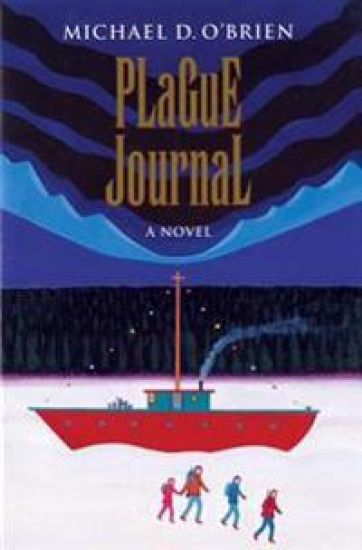
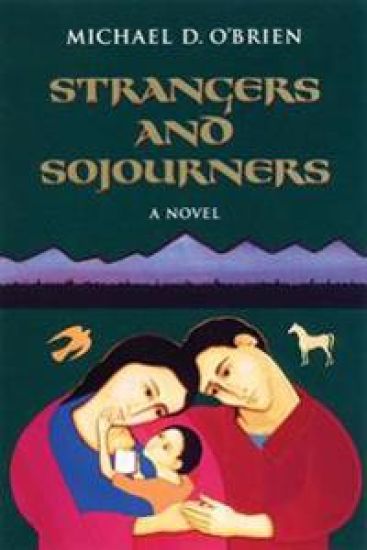
An epic novel set in the rugged interior of British Columbia, the first volume of a trilogy which traces the lives of four generations of a family of exiles. Beginning in 1900, and concluding with the climactic events leading up to the Millennium, the series follows Anne and Stephen Delaney and their descendants as they live through the tumultuous events of this century.Anne is a highly educated Englishwoman who arrives in British Columbia at the end of the First World War. Raised in a family of spiritualists and Fabian socialists, she has fled civilization in search of adventure. She meets and eventually marries a trapper-homesteader, an Irish immigrant who is fleeing the "troubles" in his own violent past. This is a story about the gradual movement of souls from despair and unbelief to faith, hope, and love, about the psychology of perception, and about the ultimate questions of life, death and the mystery of being.Interwoven with scenes from Ireland, England, Poland, Russia, and Belgium during the War, "Strangers and Sojourners" is a tale of the extraordinary hidden within the ordinary. It is about courage and fear, and the triumph of the human spirit.