Kirjojen hintavertailu. Mukana 12 390 323 kirjaa ja 12 kauppaa.

Kirjailija

Michael Davis

Kirjat ja teokset yhdessä paikassa: 43 kirjaa, julkaisuja vuosilta 1996-2025, suosituimpien joukossa The Big Book of Apex Legends (Unoffical Guide): The Ultimate Guide to Dominate the Arena. Vertaile teosten hintoja ja tarkista saatavuus suomalaisista kirjakaupoista.

43 kirjaa

Kirjojen julkaisuhaarukka 1996-2025.

Politics As Usual

Politics As Usual

Michael Davis

Northern Illinois University Press
2014
pokkari
The presidential election of 1944, which unfolded against the backdrop of the World War II, was the first since 1864-and one of only a few in all of US history-to take place while the nation was at war. After a brief primary season, the Republican Party settled upon New York governor Thomas E. Dewey, the former district attorney and popular special prosecutor of Legs Diamond and Lucky Luciano, as its nominee for president of the United States. The Democratic nominee for president, meanwhile, was the three-term incumbent, sixty-two year-old Franklin Delano Roosevelt. Sensitive to the wartime setting of the election, both Roosevelt and Dewey briefly adopted dignified and low-key electoral strategies early in their campaigns. Within a few months however, "politics as usual" returned as the campaign degenerated into a vigorously fought, chaotic, unpredictable, and highly competitive contest. While Politics as Usual is a comprehensive study of the campaign, Davis focuses attention on the loser, Dewey, and shows how he emerged as a central figure for the Republican Party. Davis examines the political landscape in the United States in the early 1940s, including the state of the two parties, and the rhetoric and strategies employed by both the Dewey and Roosevelt campaigns. He details the survival of partisanship in World War II America and the often overlooked role of Dewey-who sought to rebuild the Republican Party "to be worthy of national trust"-as party leader at such a critical time. Although Dewey fell short of victory, Dewey kept his party unified, helped steer it away from isolationist influences, and rebuilt it to fit into (and to be a relevant alternative within) the post-World War II, New Deal order.
Straight Up!

Straight Up!

Michael Davis

HigherLife Publishing
2013
nidottu
Life isn’t easy, especially for young men growing up without a role model that offers encouragement and direction. Most of these young men never find a safe place to go for straight answers that will help them find the direction and courage to be the man they want to become. Straight Up! is filled with sound fatherly advice for a fatherless generation. It’s the kind of candid, sometimes in-your-face, straight talk that will help readers not just to get by in life but get ahead! This book contains short, simple truths that if embraced and applied can change lives! Written by a man who understands the pressures young men face today, Michael Davis challenges young men everywhere to step up and live a life that matters and make a difference in the world.
Local Control of Microvascular Perfusion

Local Control of Microvascular Perfusion

Michael Hill; Michael Davis

Morgan Claypool Publishers
2012
nidottu
Local control of microvascular perfusion refers to the ability of individual tissues to maintain a relative constancy of hemodynamics in the face of changing perfusion pressure while meeting metabolic demands appropriately. The regulation of local blood flow, or autoregulation, and its underlying mechanisms have been a subject of considerable interest for over 100 years. Particular focus has been placed on the acute interaction of myogenic (pressure-induced) and metabolic (local production of vasodilator metabolites) parameters and how they interact with flow (shear stress)-dependent and conduction-based mechanisms to produce integrated local vascular network responses (for example, as seen during reactive and functional hyperemia). This monograph discusses each of these vasoregulatory phenomena while also considering evidence for their underlying cellular mechanisms. Further, an attempt is made to integrate the information into complex in vivo situations and consider their relevance to pathophysiological situations.
The Soul of the Greeks

The Soul of the Greeks

Michael Davis

University of Chicago Press
2012
nidottu
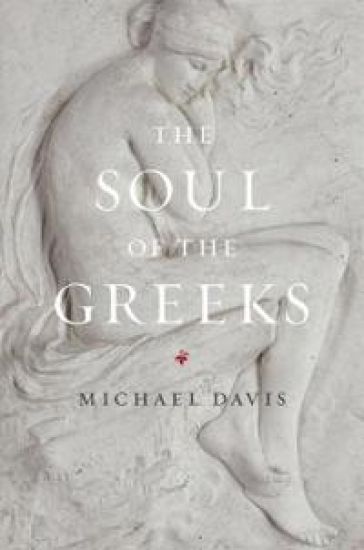
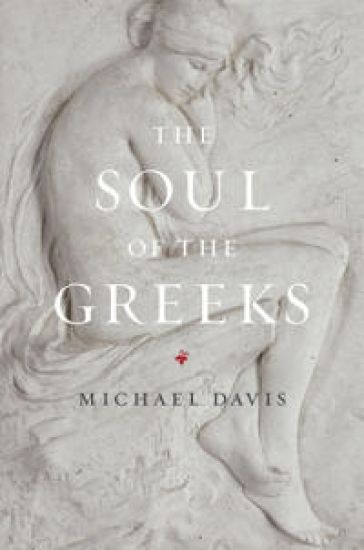
The understanding of the soul in the West has been profoundly shaped by Christianity, and its influence can be seen in certain assumptions often made about the soul: that, for example, if it does exist, it is separable from the body, free, immortal, and potentially pure. The ancient Greeks, however, conceived of the soul quite differently. In this ambitious new work, Michael Davis analyzes works by Homer, Herodotus, Euripides, Plato, and Aristotle to reveal how the ancient Greeks portrayed and understood what he calls "the fully human soul." Beginning with the "Iliad", Davis lays out the tension within the soul of Achilles between immortality and life. He then turns to Aristotle's work to explore the consequences of the problem of Achilles across the whole range of the soul's activity. Moving to Herodotus and Euripides, Davis considers their shared understanding of the consequences for soul of the two extremes of culture - one rooted in stability and tradition, the other in freedom and motion - and explores how these extremes mark the limits of character. The book then turns, in the final part, to several Platonic dialogues to understand the soul's imperfection in relation to law, justice, tyranny, eros, the gods, and philosophy itself. Davis concludes with Plato's presentation of the soul of Socrates as self-aware and nontragic, even if it is necessarily alienated and divided against itself.
The Soul of the Greeks

The Soul of the Greeks

Michael Davis

University of Chicago Press
2011
sidottu
The understanding of the soul in the West has been profoundly shaped by Christianity, and its influence can be seen in certain assumptions often made about the soul: that, for example, if it does exist, it is separable from the body, free, immortal, and potentially pure. The ancient Greeks, however, conceived of the soul quite differently. In this ambitious new work, Michael Davis analyzes works by Homer, Herodotus, Euripides, Plato, and Aristotle to reveal how the ancient Greeks portrayed and understood what he calls 'the fully human soul'. Beginning with Homer's "Iliad", Davis lays out the tension within the soul of Achilles between immortality and life. He then turns to Aristotle's "De Anima" and "Nicomachean Ethics" to explore the consequences of the problem of Achilles across the whole range of the soul's activity. Moving to Herodotus and Euripides, Davis considers the former's portrayal of the two extremes of culture - one rooted in stability and tradition, the other in freedom and motion - and explores how they mark the limits of character formation. Davis then shows how Helen and Iphigeneia among the Taurians serve to provide dramatic examples of Herodotus' extreme cultures and their consequences for the soul. The book concludes with Plato's presentation of the soul of Socrates as self-aware and nontragic, even if it is necessarily alienated and divided against itself.

Street Gang

Street Gang

Michael Davis

Penguin Books Ltd
2009
pokkari
"Sesame Street" is the longest-running-and arguably most beloved- children's television program ever created. Today, it reaches some six million preschoolers weekly in the United States and countless others in 140 countries around the world. "Street Gang" is the compelling, comical, and inspiring story of a media masterpiece and pop- culture landmark. Television reporter and columnist Michael Davis - with the complete participation of Joan Ganz Cooney, one of the show's founders-unveils the idealistic personalities, decades of social and cultural change, stories of compassion and personal sacrifice, and miraculous efforts of writers, producers, directors, and puppeteers that together transformed an empty soundstage into the most recognisable block of real estate in television history.
Gravity

Gravity

Michael Davis

Carnegie-Mellon University Press
2009
nidottu
Although the stories in Gravity operate from the perspective of male speakers, the experiences they describe are as much about women as men. Bound up in them is the assumption that everything in life depends on being solvent, employed, and generally needed. These things constitute the gravity, or the seriousness, of one's situation--that which holds a person's life together and makes it mean something.
George Eliot and Nineteenth-Century Psychology

George Eliot and Nineteenth-Century Psychology

Michael Davis

Ashgate Publishing Limited
2006
sidottu
In his study of Eliot as a psychological novelist, Michael Davis examines Eliot's writings in the context of a large volume of nineteenth-century scientific writing about the mind. Eliot, Davis argues, manipulated scientific language in often subversive ways to propose a vision of mind as both fundamentally connected to the external world and radically isolated from and independent of that world. In showing the alignments between Eliot's work and the formulations of such key thinkers as Herbert Spencer, Charles Darwin, T. H. Huxley, and G. H. Lewes, Davis reveals how Eliot responds both creatively and critically to contemporary theories of mind, as she explores such fundamental issues as the mind/body relationship, the mind in evolutionary theory, the significance of reason and emotion, and consciousness. Davis also points to important parallels between Eliot's work and new and future developments in psychology, particularly in the work of William James. In Middlemarch, for example, Eliot demonstrates more clearly than either Lewes or James the way the conscious self is shaped by language. Davis concludes by showing that the complexity of mind, which Eliot expresses through her imaginative use of scientific language, takes on a potentially theological significance. His book suggests a new trajectory for scholars exploring George Eliot's representations of the self in the context of science, society, and religious faith.
Aristotle On Poetics

Aristotle On Poetics

Seth Benardete; Michael Davis

St Augustine's Press
2002
sidottu
Aristotle's much-translated On Poetics is the earliest and arguably the best treatment that we possess of tragedy as a literary form. Seth Benardete and Michael Davis have translated it anew with a view to rendering Aristotle’s text into English as precisely as possible. A literal translation has long been needed, for in order to excavate the argument of On Poetics one has to attend not simply to what is said on the surface but also to the various puzzles, questions, and peculiarities that emerge only on the level of how Aristotle says what he says and thereby leads one to revise and deepen one’s initial understanding of the intent of the argument. As On Poetics is about how tragedy ought to be composed, it should not be surprising that it turns out to be a rather artful piece of literature in its own right.Benardete and Davis supplement their edition of On Poetics with extensive notes and appendices. They explain nuances of the original that elude translation, and they provide translations of passages found elsewhere in Aristotle’s works as well as in those of other ancient authors that prove useful in thinking through the argument of On Poetics both in terms of its treatment of tragedy and in terms of its broader concerns. By following the connections Aristotle plots between On Poetics and his other works, readers will be in a position to appreciate the centrality of this little book for his thought on the whole.In an introduction that sketches the overall interpretation of On Poetics presented in his The Poetry of Philosophy (St. Augustine’s Press, 1999), Davis argues that, while On Poetics is certainly about tragedy, it has a further concern extending beyond poetry to the very structure of the human soul in its relation to what is, and that Aristotle reveals in the form of his argument the true character of human action.
Aristotle On Poetics

Aristotle On Poetics

Seth Benardete; Michael Davis

St Augustine's Press
2002
nidottu
Aristotle's much-translated On Poetics is the earliest and arguably the best treatment that we possess of tragedy as a literary form. Seth Benardete and Michael Davis have translated it anew with a view to rendering Aristotle’s text into English as precisely as possible. A literal translation has long been needed, for in order to excavate the argument of On Poetics one has to attend not simply to what is said on the surface but also to the various puzzles, questions, and peculiarities that emerge only on the level of how Aristotle says what he says and thereby leads one to revise and deepen one’s initial understanding of the intent of the argument. As On Poetics is about how tragedy ought to be composed, it should not be surprising that it turns out to be a rather artful piece of literature in its own right.Benardete and Davis supplement their edition of On Poetics with extensive notes and appendices. They explain nuances of the original that elude translation, and they provide translations of passages found elsewhere in Aristotle’s works as well as in those of other ancient authors that prove useful in thinking through the argument of On Poetics both in terms of its treatment of tragedy and in terms of its broader concerns. By following the connections Aristotle plots between On Poetics and his other works, readers will be in a position to appreciate the centrality of this little book for his thought on the whole.In an introduction that sketches the overall interpretation of On Poetics presented in his The Poetry of Philosophy (St. Augustine’s Press, 1999), Davis argues that, while On Poetics is certainly about tragedy, it has a further concern extending beyond poetry to the very structure of the human soul in its relation to what is, and that Aristotle reveals in the form of his argument the true character of human action.
Poetry of Philosophy

Poetry of Philosophy

Michael Davis

St Augustine's Press
1999
pokkari
Although Aristotle's Poetics is the most frequently read of his works, philosophers and political theorists have, for the most part, left analysis of the text to literary critics and classicist. In this book Michael Davis argues convincingly that in addition to teaching us something about poetry, poetics contains an understanding of the common structure of human action and human thought that connects it to Aristotle's other writings on politics and morality. Davis demonstrates that the duality of Poetics reaches out to the philosopher,writer, and political theorist and shows the importance of the ideal in our imaginings of an goals for the future.
The Autobiography of Philosophy

The Autobiography of Philosophy

Michael Davis

Rowman Littlefield
1998
nidottu
This is the most important book about the nature of philosophy and of the human soul published this year. In making the condition for its own possibility its deepest concern, philosophy is necessarily about itself_it is autobiographical. The first part of The Autobiography of Philosophy interprets Heidegger's Being and Time, Nietzsche's On the Genealogy of Morals, Aristotle's Metaphysics, and Plato's Lysis as examples of the implicitly autobiographical character of philosophy. The second part is a reading of Rousseau's The Reveries of the Solitary Walker. Although Rousseau's explicitly autobiographical writings are more often read for the tantalizing details of his rather eccentric life than for their philosophical import, this work is an artful use of Rousseau's exile and isolation_'the strangest position in which a mortal could ever find himself'_as a paradigm for the human soul in its relation to the world. In powerfully articulating the activity that is at the core of all philosophy, The Reveries articulates the nature of the human soul for which this activity is the defining possibility.
Ethics and the University

Ethics and the University

Michael Davis

Routledge
1998
sidottu
Ethics and the University brings together two closely related topics, the practice of ethics in the university ("academic ethics") and the teaching of practical or applied ethics in the university. This volume is divided into four parts: * A survey of practical ethics, offering an explanation of its recent emergence as a university subject, situating that subject into a wider social and historical context and identifying some problems that the subject generates for universities * An examination of research ethics, including the problem of plagiarism * A discussion of the teaching of practical ethics. Michael Davis explores how ethics can be integrated into the university curriculum and what part particular cases should play in the teaching of ethics * An exploration of sexual ethicsEthics and the University provides a stimulating and provocative analysis of academic ethics which will be useful to students, academics and practitioners.
Ethics and the University

Ethics and the University

Michael Davis

Routledge
1998
nidottu
Ethics and the University brings together two closely related topics, the practice of ethics in the university ("academic ethics") and the teaching of practical or applied ethics in the university. This volume is divided into four parts: * A survey of practical ethics, offering an explanation of its recent emergence as a university subject, situating that subject into a wider social and historical context and identifying some problems that the subject generates for universities * An examination of research ethics, including the problem of plagiarism * A discussion of the teaching of practical ethics. Michael Davis explores how ethics can be integrated into the university curriculum and what part particular cases should play in the teaching of ethics * An exploration of sexual ethicsEthics and the University provides a stimulating and provocative analysis of academic ethics which will be useful to students, academics and practitioners.