Kirjojen hintavertailu. Mukana 12 390 323 kirjaa ja 12 kauppaa.

Kirjailija

Michael Dawson

Kirjat ja teokset yhdessä paikassa: 24 kirjaa, julkaisuja vuosilta 2004-2025, suosituimpien joukossa The Consumer Trap. Vertaile teosten hintoja ja tarkista saatavuus suomalaisista kirjakaupoista.

24 kirjaa

Kirjojen julkaisuhaarukka 2004-2025.

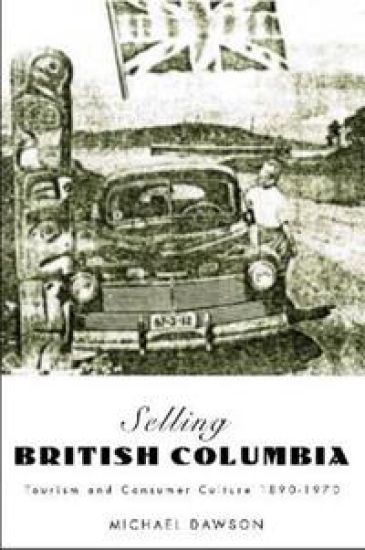
Selling British Columbia

Selling British Columbia

Michael Dawson

University of British Columbia Press
2005
pokkari
Selling British Columbia is an entertaining examination of the development of the tourist industry in British Columbia between 1890 and 1970. Michael Dawson argues that in order to understand the roots of the fully-fledged consumer culture that emerged in Canada after the Second World War, it is necessary to understand the connections between the 1930s, 1940s, and the postwar era.Cultural producers such as tourism promoters and the state infrastructure played important roles in fostering consumer demand, particularly during the Depression, the Second World War, and throughout the postwar era. Dawson draws upon promotional pamphlets, newspapers, advertisements, and films, as well as archival sources regarding government, civic, and international tourism organizations. Central to his book is an examination of the representation of popular imagery and of how aboriginal and British cultures were commodified and marketed to potential tourists. He also looks at the gendered aspect of these promotional campaigns, particularly during the 1940s, and challenges earlier interpretations regarding the relationship between tourism and nature in Canada.Historians have tended to focus on either the first wave of consumerism from the 1880s to the 1920s, or else on the era of economic expansion that followed World War Two. As Dawson shows, the 1930-45 period in particular was an important and dynamic one in the creation of Canadian and British Columbian consumer culture.Michael Dawson's highly readable and engaging account of the development of the British Columbia tourist industry will be welcomed by British Columbian and Canadian historians, as well as other scholars of tourism and consumerism.
The Consumer Trap

The Consumer Trap

Michael Dawson

University of Illinois Press
2004
nidottu
The Consumer Trap blows the lid off the trillion-dollar-a-year business marketing industry, explaining how it continues to soak up economic and environmental resources and dominate the personal lives of citizens. Flouting conventional mainstream and radical thinking about consumer culture, Michael Dawson reveals how corporate marketing embodies and extends into personal life the scientific management principles famously enunciated by Frederick Winslow Taylor, whose earliest disciples predicted the big business marketing revolution. After revealing why corporate capitalism fuels an ever-increasing marketing race, Dawson provides a step-by-step account of how this behemoth works and expands. Using firsthand evidence, he explains in detail how big business marketing campaigns penetrate and profoundly affect the lives of ordinary Americans. Dawson argues that if people are to escape the costly consumer trap set by the overclass, they will need to renew class struggle from below, inventing new institutions for democratically governing and implementing major economic decisions. A blueprint for reinventing the study and debate of the sociocultural effects of corporate marketing practices, The Consumer Trap makes big business marketing a target of direct historical and sociological scrutiny.
Selling British Columbia

Selling British Columbia

Michael Dawson

University of British Columbia Press
2004
sidottu
Selling British Columbia is an entertaining examination of the development of the tourist industry in British Columbia between 1890 and 1970. Michael Dawson argues that in order to understand the roots of the fully-fledged consumer culture that emerged in Canada after the Second World War, it is necessary to understand the connections between the 1930s, 1940s, and the postwar era.Cultural producers such as tourism promoters and the state infrastructure played important roles in fostering consumer demand, particularly during the Depression, the Second World War, and throughout the postwar era. Dawson draws upon promotional pamphlets, newspapers, advertisements, and films, as well as archival sources regarding government, civic, and international tourism organizations. Central to his book is an examination of the representation of popular imagery and of how aboriginal and British cultures were commodified and marketed to potential tourists. He also looks at the gendered aspect of these promotional campaigns, particularly during the 1940s, and challenges earlier interpretations regarding the relationship between tourism and nature in Canada.Historians have tended to focus on either the first wave of consumerism from the 1880s to the 1920s, or else on the era of economic expansion that followed World War Two. As Dawson shows, the 1930-45 period in particular was an important and dynamic one in the creation of Canadian and British Columbian consumer culture.Michael Dawson's highly readable and engaging account of the development of the British Columbia tourist industry will be welcomed by British Columbian and Canadian historians, as well as other scholars of tourism and consumerism.