Kirjojen hintavertailu. Mukana 12 115 457 kirjaa ja 12 kauppaa.

Kirjailija

Michael Dunne

Kirjat ja teokset yhdessä paikassa: 10 kirjaa, julkaisuja vuosilta 1996-2024, suosituimpien joukossa Anything is Possible. Vertaile teosten hintoja ja tarkista saatavuus suomalaisista kirjakaupoista.

10 kirjaa

Kirjojen julkaisuhaarukka 1996-2024.

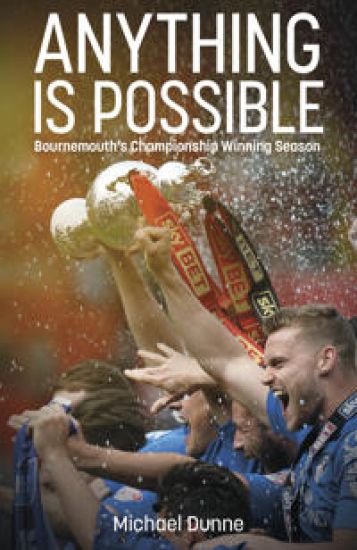
Anything is Possible

Anything is Possible

Michael Dunne

PITCH PUBLISHING LTD
2024
sidottu
Anything Is Possible is the inside story of Bournemouth's remarkable Championship winning season and tells how the smallest club in the division defied bookmakers, pundits and the Football League to emerge triumphant from a fiercely fought promotion contest and gate-crashed the richest league in the world. But that is just the end of the story! Only six years earlier, the club was on the brink of liquidation following a series of financial crises and points deductions. The club took a last-ditch gamble on former player Eddie Howe, a 31-year-old former player with zero management experience. It paid dividends and some, as Howe sowed the seeds for an astonishing rise up the leagues. The club rose from League Two to the Championship in four seasons, successes made all the more remarkable as Howe spent 20 months of that period managing Burnley. In 2014/15, Howe eclipsed his previous successes as he led a squad described as 'misfits' by captain Tommy Elphick to the Championship title in the final seconds of the season. Anything is Possible is the quite astonishing story of how a club on the brink of extinction rose through the divisions and reached the promised land of the Premier League.
Pilgrim Home

Pilgrim Home

Michael Dunne

Lulu.com
2020
sidottu
This small volume of unpublished writings by the late Prof. James McEvoy (1943-2010) appears to mark the tenth anniversary of his death. The various texts collected here, of many different literary types and for very different occasions, are marked by his typical careful and characteristically accurate style. The collection is as Prof. McEvoy left it, some pieces are more polished than others, the order could perhaps be adjusted but it is as it is. They do, however, capture the intellectual life of a busy and committed academic and priest. James McEvoy was a noted international academic in the field of medieval philosophy and theology, holding distinguished Chairs at Belfast, Louvain and Maynooth.
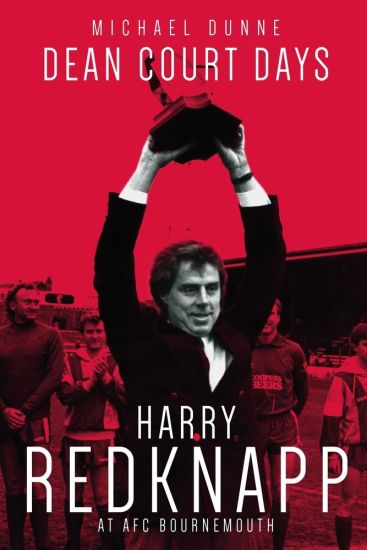
Dean Court Days

Dean Court Days

Michael Dunne

Pitch Publishing Ltd
2018
sidottu
Harry Redknapp spent 15 years at AFC Bournemouth as a player, coach and manager, longer than at any other club in his colourful career in football. Despite this lengthy association, Redknapp's days at Dean Court have featured only fleetingly in his biographies to date. Now, with the co-operation of Harry himself, the tale of his rise from barely remembered player to the country's brightest young manager is told for the first time. Harry shot to fame when lowly Bournemouth dumped Manchester United out of the FA Cup, overcoming a backdrop of financial turmoil to guide the Cherries out of English football's third tier for the first time. He then bounced back from relegation and from almost losing his life to nurture his son, Jamie, from schoolboy sensation into one of Britain's most expensive teenage players. Featuring painstakingly researched archive material and interviews with team-mates, colleagues and friends, this is an inside account of Redknapp's years at Dean Court, as well as a history of two decades in the life of the Cherries.
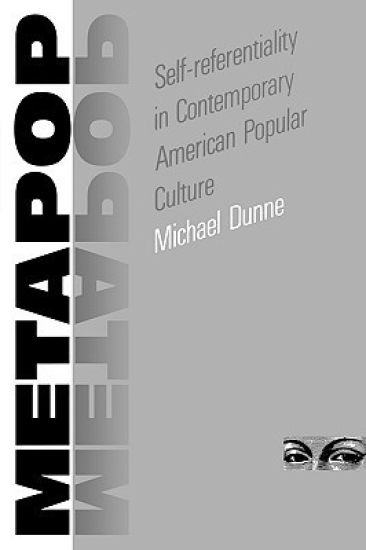
Metapop

Metapop

Michael Dunne

University Press of Mississippi
2010
nidottu
Since no other book has been written on this subject, Metapop blazes a trail into new territory. The author writes very clearly and gracefully and expresses what could be difficult critical concepts in concise and comprehensible prose free of jargon. He identifies a major characteristic of our culture and provides a definitive guide to the phenomenon. Metapop is his term for popular culture's reflection of itself in its genres. This ""self-referentiality"" is becoming a major characteristic of our popular culture, one in which genre is meta-physical mirror of itself. Examples occur frequently in films, television shows, the comics, and music. For instance, in Mel Brooks's film Spaceballs, Dark Helmet tracks his nemesis Lone Star by renting and viewing a videocassette of Spaceballs. SCTV, a television program, consists of comic sketches about television programs. Saturday Night Live consistently parodies and satirizes popular films and TV shows. In Moonlighting David Addison breaks off an argument with his cohort Maddie Hayes to explain his side of it directly to the viewing audience. In another instance, country-rock star Jerry Lee Lewis sings ""My life would make a damn good country song."" This is the first study to address the ever-growing curiosity of pop culture's reflection of itself in its art forms and to explore the extent to which ""metapop"" permeates our media and our society. The author's intelligent and well-articulated arguments show that he has identified a novel characteristic of our culture and has provided a definitive guide to understanding.
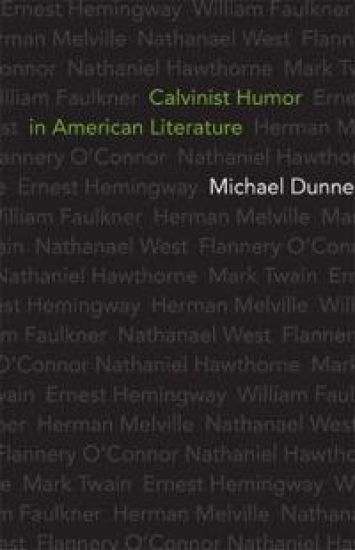
Calvinist Humor in American Literature

Calvinist Humor in American Literature

Michael Dunne

Louisiana State University Press
2007
sidottu
Though the phrase ""Calvinist humor"" may seem to be an oxymoron, Michael Dunne, in highly original and unfailingly interesting readings of major American fiction writers, uncovers and traces two recurrent strands of Calvinist humor descending from Puritan times far into the twentieth century. Calvinist doctrine views mankind as fallen, apt to engage in any number of imperfect behaviors. Calvinist humor, Dunne explains, consists in the perception of this imperfection. When we perceive that only others are imperfect, we participate in the form of Calvinist humor preferred by William Bradford and Nathanael West. When we perceive that others are imperfect, as we all are, we participate in the form preferred by Mark Twain and William Faulkner, for example. Either by noting their characters' inferiority or by observing ways in which we are all far from perfect, Dunne observes, American writers have found much to laugh about and many occasions for Calvinist humor.The two strains of Calvinist humor are alike in making the faults of others more important than their virtues. They differ in terms of what we might think of as the writer/perceiver's disposition: his or her willingness to recognize the same faults in him- or herself. In addition to Bradford, West, Twain and Faulkner, Dunne discovers Calvinist humor in the works of Flannery O'Connor, Herman Melville, Nathaniel Hawthorne, Ernest Hemingway, and many others. For these authors, the world -- and thus their fiction -- is populated with flawed creatures. Even after belief in orthodox Calvinism diminished in the twentieth century, Dunne discovers, American writers continued to mine these veins, irrespective of the authors' religious affiliations -- or lack of them. Dunne notes that even when these writers fail to accept the Calvinist view wholeheartedly, they still have a tendency to see some version of Calvinism as more attractive than an optimistic, idealistic view of life.With an eye for the telling detail and a wry humor of his own, Dunne clearly demonstrates that the fundamental Calvinist assumption -- that human beings are fallen from some putatively better state -- has had a surprising, lingering presence in American literature.
Hawthorne's Narrative Strategies

Hawthorne's Narrative Strategies

Michael Dunne

University Press of Mississippi
2007
nidottu
For more than 150 years readers have interpreted Nathaniel Hawthorne's fiction in a dazzling variety of ways. Instead of arguing in favor of or against what these readers conceive the fiction to mean, this examination of Hawthorne's narrative strategies demonstrates how he leads readers to reason as they do. Throughout his career Hawthorne manipulated and experimented with all the elements of narrative discourse, creating texts that continue to cry out for, yet defy, interpretation. In The Marble Faun. just as in his earliest tales and sketches, Hawthorne varies pronouns and verb tenses, often within the same paragraph. In all his works he affirms the factuality of invented incidents in one sentence, then undermines the affirmation in the next. His narrators often confess themselves uncertain about their own narratives. In some of his fictions elements of romantic ideology are proposed as alternatively irresistible and foolish. In others, domesticity is represented both as the only avenue to true happiness and as a wishful illusion. Thus, as this study reveals, in Hawthorne's works history proves to be no more reliable than some obvious Gothic convention. Close readers of Hawthorne's narratives feel the compulsion to interpret, although they can do so only by ignoring considerable contradictions. This ploy, however, is Hawthorne's narrative strategy that destabilizes the reader by offering interpretive choices that can be accepted only by rejecting other equally plausible choices.
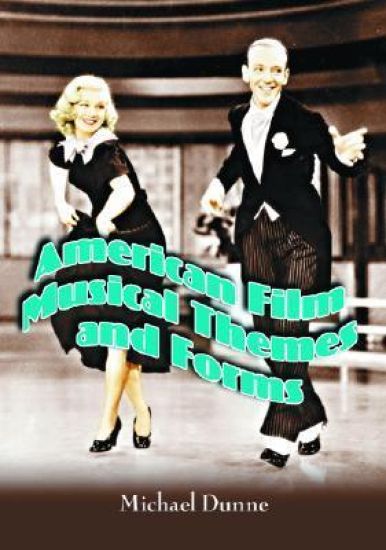
American Film Musical Themes and Forms

American Film Musical Themes and Forms

Michael Dunne

McFarland Co Inc
2004
pokkari
The musical has been called "the most popular form of entertainment in the world." This work examines the subjects, themes, and contemporary relevance of Hollywood musicals through their long popularity, placing each show in historical and political context and analyzing it in detail. A chapter is devoted to how Golddiggers of 1933 (1933) and Stand Up and Cheer (1934) deal with the economic crises of the Depressions. Another addresses race issues by examining the prevalence of blackface minstrelsy in the 1930s and 1940s, looking at productions like Swing Time (1936) and Dixie (1943). Rock and roll culture, which started in the 1950s and threatened America with teenage sex and rebellion, is addressed through such hits as Girl Crazy (1943), Bye Bye Birdie (1963), and Grease (1978). The work also explores dance as a signifier of character, the geography of musicals (such as New York or "the South"), fantasy settings, Fred Astaire and Gene Kelly, and the musical biopic (mentioning biographies of such figures as Ziegfeld, Cohan, Rogers and Hart, Cole Porter, and Jerome Kern). A later chapter discusses intertextuality in such shows as Singin' in the Rain (1952), which refers to many earlier musicals; Kiss Me Kate (1953) which refers to Taming of the Shrew; and All That Jazz (1970) which refers to the life and work of Bob Fosse. The work concludes with an examination of the continuing popularity of the musical with such hits as Moulin Rouge (2001) and Chicago (2002). Instructors considering this book for use in a course may request an examination copy here.
Citizenship and Rights in Multicultural Societies

Citizenship and Rights in Multicultural Societies

Michael Dunne; T. Bonazzi

Keele University Press
1996
sidottu
This topical book examines the debates around contemporary conflicts between liberal democracies and increasingly vociferous special interest groups within society. It analyses the way a new sense of difference and the growth of multi-culturalism are straining modern notions of citizenship and rights, looking in particular at how ethnic conflicts in Eastern Europe have escalated to international tragedies, while in the US and Canada, race, ethnicity and radical feminism are at the heart of a social conflict which challenges national identity and the unity of the state.