Kirjojen hintavertailu. Mukana 12 595 353 kirjaa ja 12 kauppaa.

Kirjailija

Michael E. Martinez

Kirjat ja teokset yhdessä paikassa: 3 kirjaa, julkaisuja vuosilta 2000-2015, suosituimpien joukossa Future Bright. Vertaile teosten hintoja ja tarkista saatavuus suomalaisista kirjakaupoista.

3 kirjaa

Kirjojen julkaisuhaarukka 2000-2015.

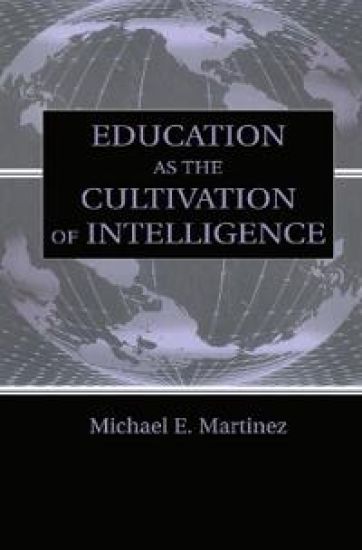
Education As the Cultivation of Intelligence
Martinez defines intelligence from a cognitive perspective as a repertoire of those skills, strategies, and knowledge structures that are most instrumental in human effectiveness. He posits that in today's complex, fast-paced, technologically dense, and information-rich society, intelligence is the supreme human resource. The current social context not only demands intelligence, but rewards it economically, psychically, and in other ways. His central argument in this book is this: The intellectual abilities that are crucial to modern life, including economic viability and effectiveness in daily living, correspond to the cognitive functions that are reasonably called intelligence; these intellectual abilities are learnable; we now know enough about the structure and mechanisms of intelligent thought and behavior to teach them directly. Martinez explicates his argument and provides research-based evidence to support his claim.
Future Bright

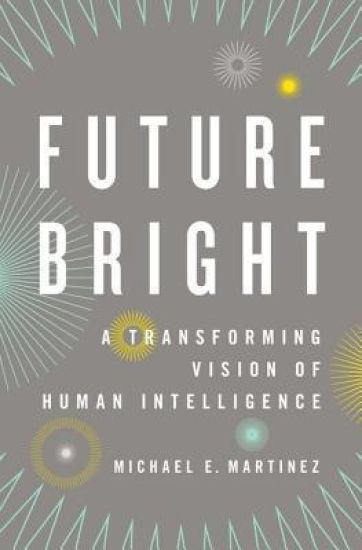
Future Bright

Michael E. Martinez

Oxford University Press Inc
2013
sidottu
Future Bright introduces a radical idea: Intelligence is learnable. This idea is tremendously important because it means that with the right environment, intelligence levels can be increased intentionally. Intelligence is essential to the survival and prosperity of not only individuals, but also organizations, nations, and the entire planet. Martinez first considers a seemingly simple question. What is intelligence? Examining some of the most fascinating stories in the history of cognitive science reveals the ways our ideas about intelligence have been shaped. Current research asks, "Is intelligence just one thing? Or are there many different ways of being intelligent?" For answers, we turn to the seat of intelligence, the brain. From the search for Einstein's brain to the curious case of a railroad worker whose frontal lobe was pierced by a tamping iron, researchers have sought to understand more about intelligence by understanding more about this mysterious organ. How do physical structures relate to how we think? How are memories made? How do the brain and the mind relate to one another? Finally, Future Bright explores the provocative finding from recent cognitive science research that intelligence can be learned. Genetics play only one part in an individual's intelligence potential. It is that part that is influenced by the environment that is most interesting, however, because if intelligence can be learned, then it can be taught. Future Bright explores ways that the environment and educational contexts can influence the growth of a more intelligent society - one that will lead us into a brighter future indeed.
Education As the Cultivation of Intelligence

Education As the Cultivation of Intelligence

Michael E. Martinez

Routledge Member of the Taylor and Francis Group
2000
sidottu
Martinez defines intelligence from a cognitive perspective as a repertoire of those skills, strategies, and knowledge structures that are most instrumental in human effectiveness. He posits that in today's complex, fast-paced, technologically dense, and information-rich society, intelligence is the supreme human resource. The current social context not only demands intelligence, but rewards it economically, psychically, and in other ways. His central argument in this book is this: The intellectual abilities that are crucial to modern life, including economic viability and effectiveness in daily living, correspond to the cognitive functions that are reasonably called intelligence; these intellectual abilities are learnable; we now know enough about the structure and mechanisms of intelligent thought and behavior to teach them directly. Martinez explicates his argument and provides research-based evidence to support his claim.