Kirjojen hintavertailu. Mukana 12 595 353 kirjaa ja 12 kauppaa.

Kirjailija

Michael Eric Dyson

Kirjat ja teokset yhdessä paikassa: 21 kirjaa, julkaisuja vuosilta 1993-2026, suosituimpien joukossa Prison Industrial Complex for Beginners. Vertaile teosten hintoja ja tarkista saatavuus suomalaisista kirjakaupoista.

21 kirjaa

Kirjojen julkaisuhaarukka 1993-2026.

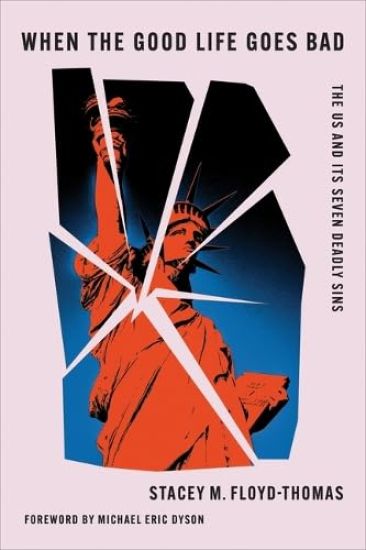
When the Good Life Goes Bad

When the Good Life Goes Bad

Stacey M. Floyd-Thomas; Michael Eric Dyson

UNIVERSITY OF ILLINOIS PRESS
2026
nidottu
The Seven Deadly Sins have become the seven markers of success in America. Lust, pride, greed, sloth, envy, gluttony, wrath—these once-condemned principles now guide people's pursuit of the good life. Stacey M. Floyd-Thomas examines how the Seven Deadly Sins have shaped the moral strivings and sociopolitical condition of American society and culture in the twenty-first century. Drawing on a multidimensional approach, Floyd-Thomas uses race, gender, class, and other lenses to break down the moral crises that define the American Dream. Her critique exposes the harm done by individual and collective practices of sexual objectification, capitalist materialism, wealth inequality, and technological hubris before pivoting to the rise of right-wing populism, white Christian nationalism, and the politics of cruelty. But Floyd-Thomas also proposes an ethic that emphasizes truth-telling, community engagement, and values rooted in humility, justice, and mercy—a new path for the US to overcome systemic oppression and create a more just society. Evocative and ambitious, When the Good Life Goes Bad takes readers on a wide-ranging journey through US life and culture to explain what corrupted the American dream.
When the Good Life Goes Bad

When the Good Life Goes Bad

Stacey M. Floyd-Thomas; Michael Eric Dyson

UNIVERSITY OF ILLINOIS PRESS
2026
sidottu
The Seven Deadly Sins have become the seven markers of success in America. Lust, pride, greed, sloth, envy, gluttony, wrath—these once-condemned principles now guide people's pursuit of the good life. Stacey M. Floyd-Thomas examines how the Seven Deadly Sins have shaped the moral strivings and sociopolitical condition of American society and culture in the twenty-first century. Drawing on a multidimensional approach, Floyd-Thomas uses race, gender, class, and other lenses to break down the moral crises that define the American Dream. Her critique exposes the harm done by individual and collective practices of sexual objectification, capitalist materialism, wealth inequality, and technological hubris before pivoting to the rise of right-wing populism, white Christian nationalism, and the politics of cruelty. But Floyd-Thomas also proposes an ethic that emphasizes truth-telling, community engagement, and values rooted in humility, justice, and mercy—a new path for the US to overcome systemic oppression and create a more just society. Evocative and ambitious, When the Good Life Goes Bad takes readers on a wide-ranging journey through US life and culture to explain what corrupted the American dream.
What Truth Sounds Like

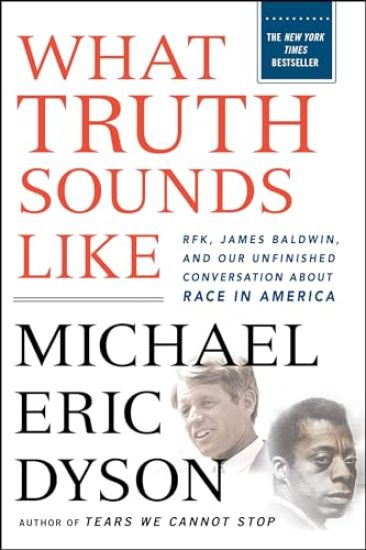
What Truth Sounds Like

Michael Eric Dyson

St Martin's Press
2025
nidottu
An electrifying and traumatic encounter in the sixties crystallised the fraught conflict between conscience and politics – between morality and power – in addressing race. In 1963 Attorney General Robert Kennedy sought out James Baldwin to explain the rage that threatened to engulf black America. Baldwin brought along some friends, including playwright Lorraine Hansberry, psychologist Kenneth Clark, and a valiant activist, Jerome Smith. Kennedy walked away from the nearly three-hour meeting angry – that the black folk assembled didn’t understand politics, and that they weren’t as easy to talk to as Martin Luther King. But especially that they were more interested in witness than policy. But Kennedy’s anger quickly gave way to empathy, especially for Smith. “I guess if I were in his shoes…I might feel differently about this country.” Kennedy set about changing policy – the meeting having transformed his thinking in fundamental ways. Every big argument about race that persists to this day got a hearing in that room. And we grapple still with the responsibility of black intellectuals and artists to bring about social change. This book exists at the tense intersection of the conflict between politics and prophecy – of whether we embrace political resolution or moral redemption to fix our fractured racial landscape.
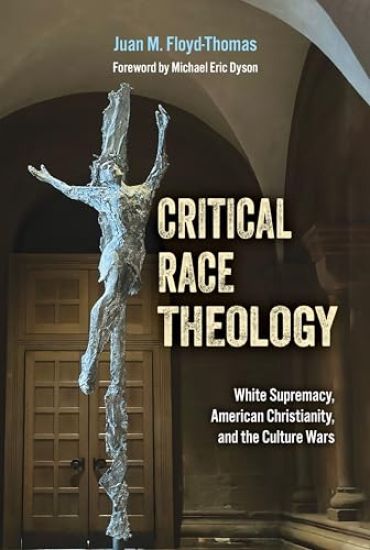
Critical Race Theology

Critical Race Theology

Juan M. Floyd-Thomas; Michael Eric Dyson

ORBIS BOOKS (USA)
2024
nidottu
Critical Race Theory, a legal concept that unmasks systemic racism, has become a lightning rod--attached uncritically to any discussion of race, white privilege, or racial injustice. What the author calls Critical Race Theology extends this critical lens to examination of the Christian church, to uncover its own complicity in reinforcing racial injustice.
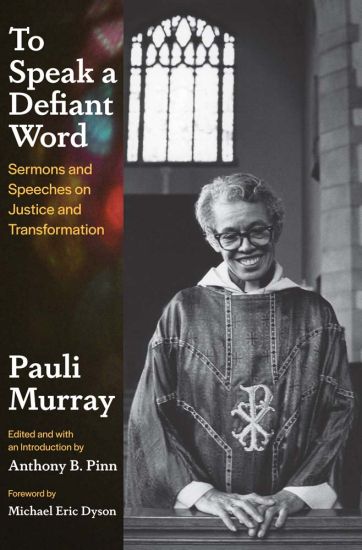
To Speak a Defiant Word

To Speak a Defiant Word

Pauli Murray; Michael Eric Dyson

YALE UNIVERSITY PRESS
2023
sidottu
Twenty-five years of writings by the religious thinker and activist Pauli Murray A Seminary Coop Notable Book of 2023 The religious thought and activism that shaped the late twentieth century is typically described in terms of Black men from the major Black denominations, a depiction that fails to account for the voices of those who not only challenged racism but also forced a confrontation with class and gender. Of these overlooked voices, none is more important than that of Pauli Murray (1910–1985), the nonbinary Black lawyer, activist, poet, and Episcopal priest who influenced such icons as Ruth Bader Ginsburg and Thurgood Marshall. Anthony B. Pinn has collected Murray’s most important sermons, lectures, and speeches from 1960 through 1985, showcasing her religious thought and activism as well as her original and compassionate literary voice. In highlighting major themes in Murray’s writing—including the strength and rights of women, faithfulness, religious community, and suffering—Pinn’s collection reveals the evolution in Murray’s religious ideas and her sense of ministry, unpacking her role in a tumultuous period of American history, as well as her thriving legacy.
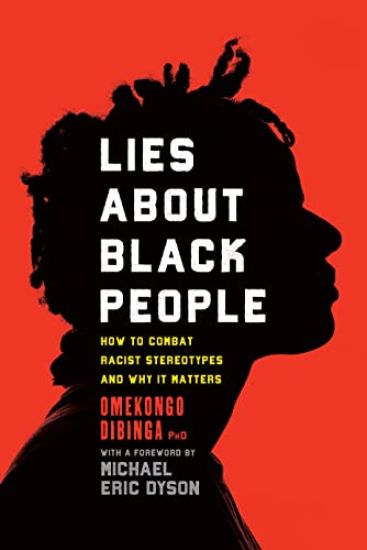
Lies about Black People

Lies about Black People

Omekongo Dibinga; Michael Eric Dyson

PROMETHEUS BOOKS
2023
sidottu
In many ways, race has come to the forefront of contemporary American life. From the Black Lives Matter movement sparked by unarmed police shootings of black people to the health and economic disparities exacerbated during the COVID-19 pandemic, Americans have been forced to reckon with our country’s fraught history – and present – of racial bias and inequality. Now that we have scratched the surface on courageous conversations about race, many are wondering: what is the next step towards healing and justice? Lies About Black People: Challenging Common Racist Stereotypes on Our Path to Common Antiracist Understanding is designed for anyone who wants to examine their own biases and behaviors with a deeper critical lens in order to take action, make change, and engage positively in the fight for racial equality. In this honest and welcoming book, diversity and inclusion expert, professor, and award-winning speaker Dr. Omekongo Dibinga argues that we must embark on a massive undertaking to re-educate ourselves on the stereotypes that have proven harmful, and too often deadly, to the black community. Through personal anecdotes, nuanced historical inquiry, and engaging analysis of modern-day events and their historical context and implications, this invaluable guide will break down some of the most powerful lies told about black people. Whether those lies are pernicious, like the idea that “most black people are criminals,” or seemingly innocuous, like “black people can’t swim,” all of the lies and stereotypes combatted in this book are rooted in hate and continue to undermine not only black people in America, but our society as a whole. Beyond combatting these harmful lies, Dr. Dibinga also provides readers with powerful insights on our racial vocabulary, reflective hands-on exercises that will allow readers to confront and change their own biases, and an honest discussion about how to move beyond misplaced shame and use privilege to serve others.Featuring personal surveys alongside real-life interviews with those who have been affected by racial biases first-hand, this open and thoughtful guide will lead readers on a path to understanding, action, and change.
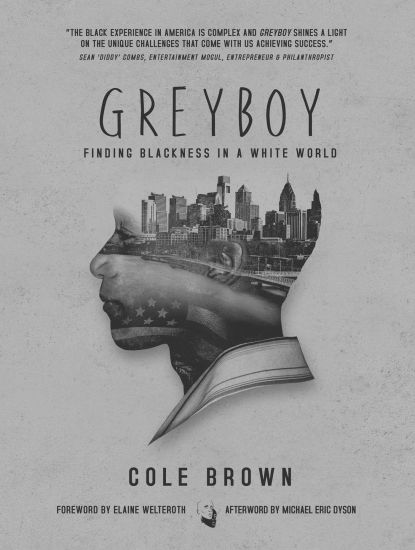
Greyboy

Greyboy

Cole Brown; Elaine Welteroth; Michael Eric Dyson

Skyhorse Publishing
2021
pokkari
An honest and courageous examination of what it means to navigate the in-between Cole has heard it all before—token, bougie, oreo, Blackish—the things we call the kids like him. Black kids who grow up in white spaces, living at an intersection of race and class that many doubt exists. He needed to get far away from the preppy site of his upbringing before he could make sense of it all. Through a series of personal anecdotes and interviews with his peers, Cole transports us to his adolescence and explores what it’s like to be young and in search of identity. He digs into the places where, in youth, a greyboy’s difference is most acutely felt: parenting, police brutality, Trumpism, depression, and dating, to name a few. Greyboy: Finding Blackness in a White World asks an important question: What is Blackness? It also provides the answer: Much more than you thought, dammit.
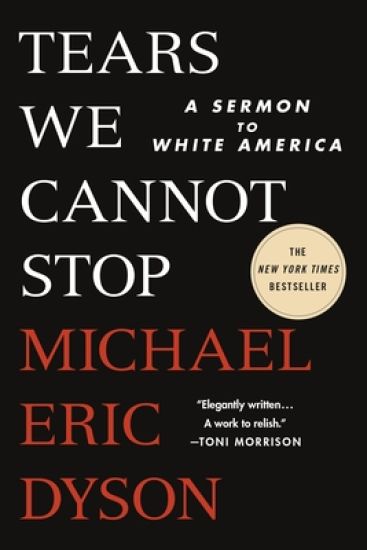
Tears We Cannot Stop

Tears We Cannot Stop

Michael Eric Dyson

Saint Martin's Griffin,U.S.
2021
nidottu
NOW A NEW YORK TIMES, PUBLISHER'S WEEKLY, INDIEBOUND, LOS ANGELES TIMES, WASHINGTON POST, CHRONICLE HERALD, SALISBURY POST, GUELPH MERCURY TRIBUNE, AND BOSTON GLOBE BESTSELLER NAMED A BEST/MOST ANTICIPATED BOOK OF 2017 BY: The Washington Post - Bustle - Men's Journal - The Chicago Reader - StarTribune - Blavity - The Guardian - NBC New York's Bill's Books - Kirkus - Essence "One of the most frank and searing discussions on race ... a deeply serious, urgent book, which should take its place in the tradition of Baldwin's The Fire Next Time and King's Why We Can't Wait. --The New York Times Book Review Toni Morrison hails Tears We Cannot Stop as Elegantly written and powerful in several areas: moving personal recollections; profound cultural analysis; and guidance for moral redemption. A work to relish. Stephen King says: Here's a sermon that's as fierce as it is lucid...If you're black, you'll feel a spark of recognition in every paragraph. If you're white, Dyson tells you what you need to know--what this white man needed to know, at least. This is a major achievement. I read it and said amen. Short, emotional, literary, powerful--Tears We Cannot Stop is the book that all Americans who care about the current and long-burning crisis in race relations will want to read. As the country grapples with racist division at a level not seen since the 1960s, one man's voice soars above the rest with conviction and compassion. In his 2016 New York Times op-ed piece Death in Black and White, Michael Eric Dyson moved a nation. Now he continues to speak out in Tears We Cannot Stop--a provocative and deeply personal call for change. Dyson argues that if we are to make real racial progress we must face difficult truths, including being honest about how black grievance has been ignored, dismissed, or discounted. The time is at hand for reckoning with the past, recognizing the truth of the present, and moving together to redeem the nation for our future. If we don't act now, if you don't address race immediately, there very well may be no future.
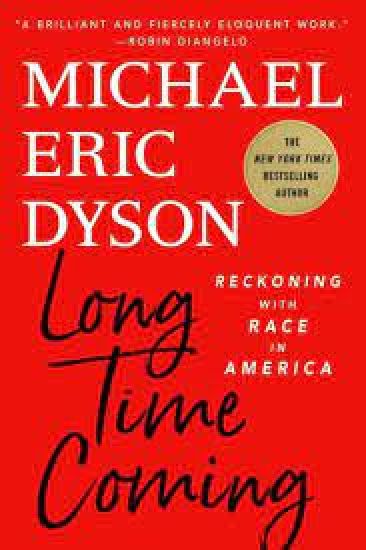
Long Time Coming

Long Time Coming

Michael Eric Dyson

St Martin's Press
2021
sidottu
The night of May 25, 2020 changed America. George Floyd, a 43-year-old Black man, was killed during an arrest in Minneapolis when a white cop suffocated him. The video of that night’s events went viral, sparking the largest protests in the nation’s history and the sort of social unrest we have not seen since the sixties. While Floyd’s death was certainly the catalyst, (heightened by the fact that it occurred during a pandemic whose victims were disproportionately of color) it was in truth the fuse that lit an ever-filling powder keg. Long Time Coming grapples with the cultural and social forces that have shaped our nation in the brutal crucible of race. In five beautifully argued chapters - each addressed to a black martyr from Breonna Taylor to Rev. Clementa Pinckney - Dyson traces the genealogy of anti-blackness from the slave ship to the street corner where Floyd lost his life - and where America gained its will to confront the ugly truth of systemic racism. Ending with a poignant plea for hope, Dyson’s exciting new book points the way to social redemption.
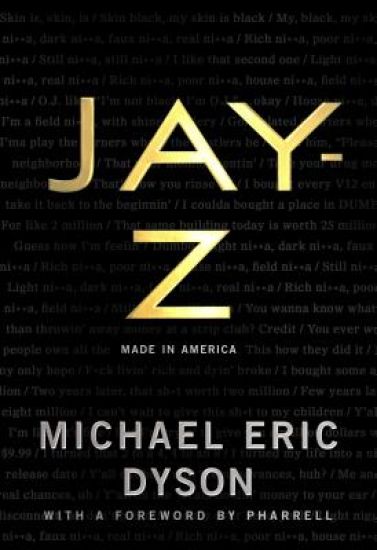
Jay-Z

Jay-Z

Michael Eric Dyson

St Martin's Press
2019
sidottu
"Dyson's incisive analysis of JAY-Z's brilliance not only offers a brief history of hip-hop's critical place in American culture, but also hints at how we can best move forward." --Questlove JAY-Z: Made in America is the fruit of Michael Eric Dyson's decade of teaching the work of one of the greatest poets this nation has produced, as gifted a wordsmith as Walt Whitman, Robert Frost and Rita Dove. But as a rapper, he's sometimes not given the credit he deserves for just how great an artist he's been for so long. This book wrestles with the biggest themes of JAY-Z's career, including hustling, and it recognizes the way that he's always weaved politics into his music, making important statements about race, criminal justice, black wealth and social injustice. As he enters his fifties, and to mark his thirty years as a recording artist, this is the perfect time to take a look at JAY-Z's career and his role in making this nation what it is today. In many ways, this is JAY-Z's America as much as it's Pelosi's America, or Trump's America, or Martin Luther King's America. JAY-Z has given this country a language to think with and words to live by.
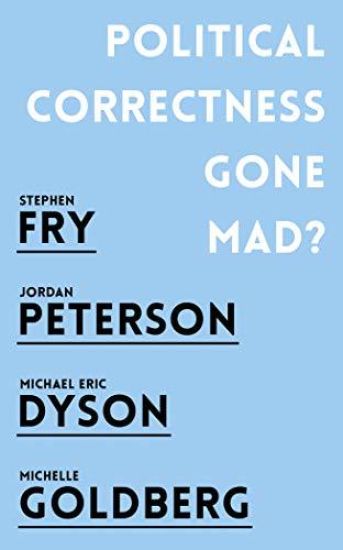
Political Correctness Gone Mad?

Political Correctness Gone Mad?

Jordan B. Peterson; Stephen Fry; Michael Eric Dyson; Michelle Goldberg

Oneworld Publications
2018
pokkari
‘Without free speech there is no true thought.’ –Jordan Peterson ‘If you’re white, this country is one giant safe space.’ –Michael Eric Dyson The Munk debate on political correctness Is political correctness an enemy of free speech, sparking needless conflict? Or is it a weapon in the fight for equality, restoring dignity to the downtrodden? How should we talk about the things that matter most in an era of rapid social change? Four thinkers take on one of the most heated debates in the culture wars of the twenty-first century.
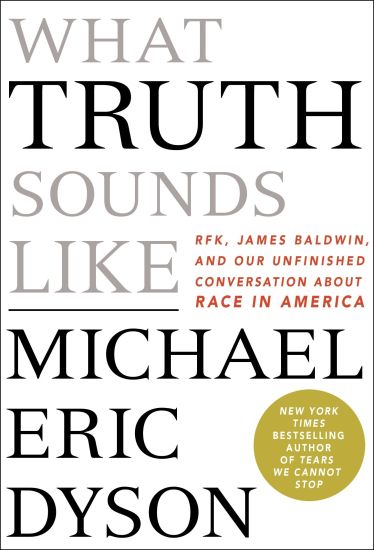
What Truth Sounds Like: Robert F. Kennedy, James Baldwin, and Our Unfinished Conversation about Race in America
Named a 2018 Notable Work of Nonfiction by The Washington Post NOW A NEW YORK TIMES BESTSELLER - Winner, The 2018 Southern Book PrizeNAMED A BEST/MOST ANTICIPATED BOOK OF 2018 BY: Chicago Tribune - Time - Publisher's Weekly A stunning follow up to New York Times bestseller Tears We Cannot Stop The Washington Post: "Passionately written."Chris Matthews, MSNBC: "A beautifully written book."Shaun King: "I kid you not-I think it's the most important book I've read all year..." Harry Belafonte: "Dyson has finally written the book I always wanted to read...a tour de force." Joy-Ann Reid: A work of searing prose and seminal brilliance... Dyson takes that once in a lifetime conversation between black excellence and pain and the white heroic narrative, and drives it right into the heart of our current politics and culture, leaving the reader reeling and reckoning." Robin D. G. Kelley: "Dyson masterfully refracts our present racial conflagration... he reminds us that Black artists and intellectuals bear an awesome responsibility to speak truth to power." President Barack Obama: "Everybody who speaks after Michael Eric Dyson pales in comparison." In 2015 BLM activist Julius Jones confronted Presidential candidate Hillary Clinton with an urgent query: "What in your heart has changed that's going to change the direction of this country?" "I don't believe you just change hearts," she protested. "I believe you change laws." The fraught conflict between conscience and politics - between morality and power - in addressing race hardly began with Clinton. An electrifying and traumatic encounter in the sixties crystallized these furious disputes. In 1963 Attorney General Robert Kennedy sought out James Baldwin to explain the rage that threatened to engulf black America. Baldwin brought along some friends, including playwright Lorraine Hansberry, psychologist Kenneth Clark, and a valiant activist, Jerome Smith. It was Smith's relentless, unfiltered fury that set Kennedy on his heels, reducing him to sullen silence. Kennedy walked away from the nearly three-hour meeting angry - that the black folk assembled didn't understand politics, and that they weren't as easy to talk to as Martin Luther King. But especially that they were more interested in witness than policy. But Kennedy's anger quickly gave way to empathy, especially for Smith. "I guess if I were in his shoes...I might feel differently about this country." Kennedy set about changing policy - the meeting having transformed his thinking in fundamental ways. There was more: every big argument about race that persists to this day got a hearing in that room. Smith declaring that he'd never fight for his country given its racist tendencies, and Kennedy being appalled at such lack of patriotism, tracks the disdain for black dissent in our own time. His belief that black folk were ungrateful for the Kennedys' efforts to make things better shows up in our day as the charge that black folk wallow in the politics of ingratitude and victimhood. The contributions of black queer folk to racial progress still cause a stir. BLM has been accused of harboring a covert queer agenda. The immigrant experience, like that of Kennedy - versus the racial experience of Baldwin - is a cudgel to excoriate black folk for lacking hustle and ingenuity. The questioning of whether folk who are interracially partnered can authentically communicate black interests persists. And we grapple still with the responsibility of black intellectuals and artists to bring about social change. What Truth Sounds Like exists at the tense intersection of the conflict between politics and prophecy - of whether we embrace political resolution or moral redemption to fix our fractured racial landscape. The future of race and democracy hang in the balance.
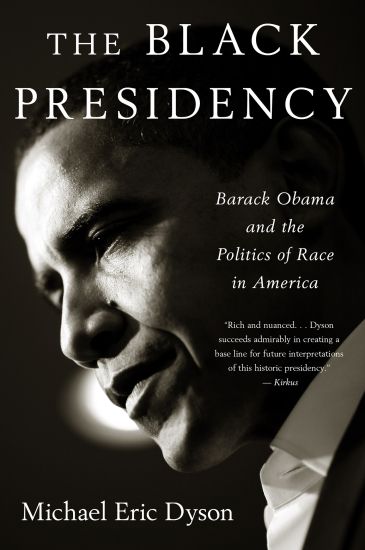
Black Presidency, The

Black Presidency, The

Michael Eric Dyson

Mariner Books,US
2017
nidottu
Dyson was granted an exclusive interview with the president for this book, and Obama's own voice shines through. Along with interviews with Eric Holder, Al Sharpton, Maxine Waters, and others, this intimate access provides a unique depth to this engrossing analysis of the nation's first black president, and how race shapes and will shape our understanding of his achievements and failures alike. "Michael Eric Dyson combines cutting-edge theoretical acuity with the passionate, engaged, and accessible stance of a public intellectual" - Henry Louis Gates, Jr.
Prison Industrial Complex for Beginners

Prison Industrial Complex for Beginners

James Braxton Peterson; Michael Eric Dyson

For Beginners
2016
nidottu
Prison Industrial Complex For Beginners is a graphic narrative project that attempts to distill the fundamental components of what scholars, activists, and artists have identified as the Mass Incarceration movement in the United States. Since the early 1990s, activist critics of the US prison system have marked its emergence as a "complex" in a manner comparable to how President Eisenhower described the Military Industrial Complex. Like its institutional "cousin," the Prison Industrial Complex features a critical combination of political ideology, far-reaching federal policy, and the neo-liberal directive to privatize institutions traditionally within the purview of the government. The result is that corporations have capital incentives to capture and contain human bodies. The Prison Industrial Complex relies on the "law and order" ideology fomented by President Nixon and developed at least partially in response to the unrest generated through the Civil Rights Movement. It is (and has been) enhanced and emboldened via the US "war on drugs," a slate of policies that by any account have failed to do anything except normalize the warehousing of nonviolent substance abusers in jails and prisons that serve more as criminal training centers then as redemptive spaces for citizens who might re-enter society successfully. Prison Industrial Complex For Beginners is a primer for how these issues emerged and how our awareness of the systems at work in mass incarceration might be the very first step in reforming an institution responsible for some of our most egregious contemporary civil rights violations.
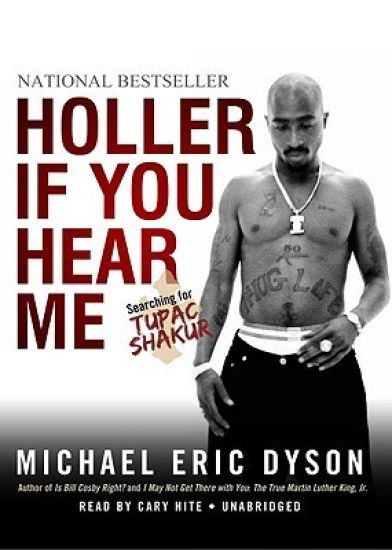
Holler If You Hear Me: Searching for Tupac Shakur

Holler If You Hear Me: Searching for Tupac Shakur

Michael Eric Dyson

Blackstone Audiobooks
2011
cd
Tupac Amaru Shakur (1971-1996) was an American rap artist, actor, and social activist. More than seventy-five million of his albums have sold worldwide, making him one of the bestselling music artists in the world. Rolling Stone magazine named him the 86th Greatest Artist of All Time.Shakur also gained notoriety for his conflicts with the law and time spent in prison.Most of Tupac's songs are about growing up amid violence and hardship in ghettos, racism, other social problems, and conflicts with other rappers during the East Coast-West Coast hip-hop rivalry.In September 1996, after attending a boxing match in Las Vegas, Shakur was shot four times and died several days later.Shakur's double album, All Eyez on Me, is one of the highest-selling rap albums of all time, with more than five million copies of the album sold in the United States alone. A Vibe magazine poll in 2004 rated Shakur "the greatest rapper of all time" as voted by fans. In 2010, he was inducted to the Library of Congress' National Recording Registry.More than a decade after his murder, Tupac Shakur is even more loved, contested, and celebrated than he was in life. His posthumously released albums, poetry, and motion pictures have catapulted him into the upper echelon of American cultural icons. In Holler If You Hear Me, "hip-hop intellectual" Michael Eric Dyson, acclaimed author of the bestselling Is Bill Cosby Right?, offers a wholly original way of looking at Tupac that will thrill those who already love the artist and enlighten those who want to understand him.*Produced by Buck 50 Productions
Pride

Pride

Michael Eric Dyson

Oxford University Press Inc
2006
sidottu
Of the seven deadly sins, pride is the only one with a virtuous side. When taken too far, as Michael Eric Dyson shows in "Pride," these virtues become deadly sins. Dyson probes the philosophical and theological roots of pride in examining its transformation in Western culture. "Pride goeth before destruction, a hoaughty spirit before a mighty fall." As the biblical fall of Satan suggests, pride as a defining symptom of self-preoccupation follows a paradoxical route at which end lies self-destruction. Dyson explores the fate of pride from Christian theology to the social responsibilities of self-regard and regard for the society as a whole. Pride is also vain glory, or the inordinate obsession with one's existence, body and intellect, which becomes the playground for human vanity. Dyson examines how pride, within black communities, becomes a necessary and ironic defense against a culture that at once formally rejected it in their vreligious beliefs but embraced it in their social realtions. As a result, blacks were ensconced, implicated, even embroiled, in the West's schizophrenic views of the deadly sin. Dyson will explore all these moments of pride, attempting to probe the contradictory facets of a vice that in some instances became a celebrated virtue, and a virtue among some cultures that ultimately became a vice.
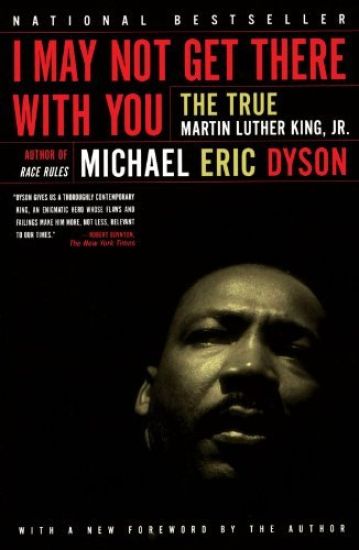
I May Not Get There With You

I May Not Get There With You

Michael Eric Dyson

Simon Schuster Ltd
2001
pokkari
Michael Eric Dyson, former welfare father, Princeton Ph.D. and Baptist preacher, reassesses the legacy of Martin Luther King in the years since his death. A legacy, he argues, which has been misappropriated by groups ranging from white conservatives, black church leaders to advertisers and even the King family. Dyson brings alive a true revolutionary, a hero willing to sacrifice his reputation for the sake of the poor, a Ph.D. willing to roll up his sleeves and work for justice, a prince of the black pulpit willing to go to gaol for his beliefs. He rescues from history a man who is as important today as he was in the 60's, a man as radical as Malcolm X, who has as much in common with the rap artists and church leaders of today. Unafraid to confront King's personal life, Dyson defends King from the forces of historical amnesia, in a book that is ultimately as moving as it is controversial.
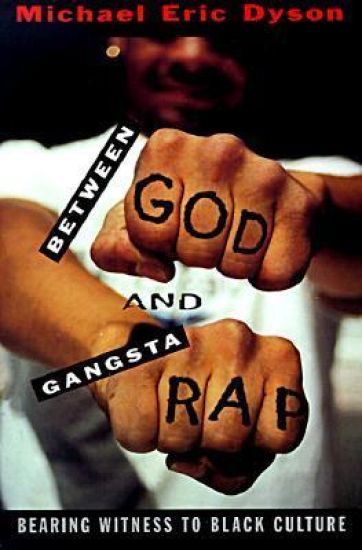
Between God and Gangsta' Rap

Between God and Gangsta' Rap

Michael Eric Dyson

Oxford University Press Inc
1997
nidottu
A former welfare father from the ghetto of Detroit, Michael Eric Dyson is today a critic, scholar, and ordained Baptist minister who has forged a unique role: he is a compelling spokesman for the concerns of the black community, and also a leader who has a genuine rapport with that community, particularly with urban youth. In his essays, lectures, sermons, and books, he has emerged as one of the leading African-American voices of our day. Dyson's passion for contemporary black culture informs Between God and Gangsta' Rap, his latest foray into the ongoing debate about African-American identity which embraces the hopes of the church and the cool reality of hip-hop. Bringing together writings on music, religion, politics, and identity, and offering a multi-faceted view of black life, the book charts the progress of Dyson's own soul, from his roots in the Detroit ghetto, to his current status as a Baptist minister, professor, cultural critic, husband, and father. Dyson opens with a letter to his brother, who is serving life in prison on a murder charge. This painful piece reveals a violence in the author's own family that sets the tone for themes that will emerge throughout these writings: violence on the black body and soul; the redemptive power of hope through school, church, and family; sexuality as a source of anguish and of joy; and the struggle with entrenched white racism. There is a section of wonderful profiles Dyson calls "Testimonials"--studies of black men, from O.J. Simpson to Marion Barry, and from Baptist preacher Gardner Taylor to Michael Jordan and Sam Cooke. In "Obsessed with O.J.," Dyson offers an extremely personal and insightful series of reflections on the case. In "Lessons," Dyson takes up the subjects of politics and racial identity. Newt Gingrich and moral panic, Quabiliah Shabazz, Carol Moseley Braun, the NAACP, Martin Luther King, Jr., and Malcolm X all figure in these insightful and accessible pieces. And "Songs of Celebration" draws from Dyson's writings for the popular press such as Rolling Stone and Vibe, and explores the joys and pitfalls of black expression, from the black vernacular bible to gospel music, R & B, and hip-hop. Dyson concludes with an essay framed as a letter to his wife, which offers a positive counterbalance to the opening address to his brother. The letter serves as a tribute to the redemptive powers of love, the black family, spirit, and change. Arguing that the richness of black culture today can be found in the interstices--between god and gangsta' rap--Dyson charts the progress and pain of African Americans over the past decade, showing that brilliance and beauty, pain and drudgery are components of this changing culture. As a compendium of his thinking about contemporary culture Between God and Gangsta' Rap will find a wide audience among black and white readers.