Kirjojen hintavertailu. Mukana 12 595 353 kirjaa ja 12 kauppaa.

Kirjailija

Michael F. DiPaola

Kirjat ja teokset yhdessä paikassa: 8 kirjaa, julkaisuja vuosilta 2003-2019, suosituimpien joukossa Principals Improving Instruction. Vertaile teosten hintoja ja tarkista saatavuus suomalaisista kirjakaupoista.

8 kirjaa

Kirjojen julkaisuhaarukka 2003-2019.

Evaluating School Superintendents

Evaluating School Superintendents

Michael F. DiPaola; Tracey L. Schneider; Steven R. Staples

Rowman Littlefield
2019
sidottu
This book provides guidelines to Boards of Education and the members of communities to conduct a high-quality, research-based evaluation of their school superintendent. It also includes examples of contemporary practices of evaluating superintendents practiced across the United States. In exploring the important issue of evaluation for the superintendent the complexities and aspects of the process that make it unique are highlighted. Issues addressed include: ?Existing state policies that require/govern superintendent evaluations & their impact on practice ?Evaluation models that should be considered for evaluating superintendents ?The consequences of not having a clear set of policies/procedures ?Determining the major roles and responsibilities upon which the superintendent's evaluation should be based ?Documenting the superintendent’s job performance ?The policy, procedures, and training required for board members to successfully implement a superintendent evaluation system The evaluation process proposed ensures fairness to the superintendent as well as providing accountability to the school district and community. The focus of all evaluations should be on improved performance. Evaluation is a means to an end. The ultimate purpose of superintendent evaluation is improving individual performance in order to ensure quality services and programs to students.

Evaluating School Superintendents

Evaluating School Superintendents

Michael F. DiPaola; Tracey L. Schneider; Steven R. Staples

Rowman Littlefield
2019
nidottu
This book provides guidelines to Boards of Education and the members of communities to conduct a high-quality, research-based evaluation of their school superintendent. It also includes examples of contemporary practices of evaluating superintendents practiced across the United States. In exploring the important issue of evaluation for the superintendent the complexities and aspects of the process that make it unique are highlighted. Issues addressed include: ?Existing state policies that require/govern superintendent evaluations & their impact on practice ?Evaluation models that should be considered for evaluating superintendents ?The consequences of not having a clear set of policies/procedures ?Determining the major roles and responsibilities upon which the superintendent's evaluation should be based ?Documenting the superintendent’s job performance ?The policy, procedures, and training required for board members to successfully implement a superintendent evaluation system The evaluation process proposed ensures fairness to the superintendent as well as providing accountability to the school district and community. The focus of all evaluations should be on improved performance. Evaluation is a means to an end. The ultimate purpose of superintendent evaluation is improving individual performance in order to ensure quality services and programs to students.
Improving Instruction Through Supervision, Evaluation, and Professional Development

Improving Instruction Through Supervision, Evaluation, and Professional Development

Michael F. DiPaola; Charles A. Wagner

Information Age Publishing
2018
nidottu
In this second edition of Improving Instruction Through Supervision, Evaluation, and Professional Development we’ve maintained the conceptual framework while updating sections to provide the most recent research on instructional strategies that have the most promise of helping all students learn. Modifications of the law resulting from the reauthorization of the 50-year-old Elementary and Secondary Education Act—Every Student Succeeds Act (ESSA) (2015)—and their implication for practice are embedded throughout this new edition. Updated data collection tools for classroom observations are also provided. We included a link to a website that contains all the observation tools in electronic format so that observers can have the opportunity to collect data on a tablet or laptop, save the observation data as a PDF file and e-mail those data to the teacher observed.This new edition recognizes the reality that all principals are responsible for supervision, evaluation, and professional development of their teachers—tasks that are neither simple nor without conflict. The primary audience of this text is aspiring and practicing principals. We hope to help them understand both the theory and practice of supervision, evaluation, and professional development. However, observing instruction, collecting data for reflection, and having conversations about teaching, are not the sole provinces of principals. Master teachers, teacher leaders, and teacher colleagues can also benefit from the supervisory sections of the book, especially the chapters on high-quality instruction, improving instruction, and the classroom data collecting tools.The book provides numerous tools specifically designed to collect a variety of data in classrooms to improve instruction. Embedded in each chapter are exercises to apply Theory into Practice by responding to a set of questions posed by the key issues of the chapter. After the explication and illustration of the key concepts and principles of the chapter, actual Instructional Leadership Challenges as described by a successful practicing principal for reflection and analysis.
Improving Instruction Through Supervision, Evaluation, and Professional Development

Improving Instruction Through Supervision, Evaluation, and Professional Development

Michael F. DiPaola; Charles A. Wagner

Information Age Publishing
2018
sidottu
In this second edition of Improving Instruction Through Supervision, Evaluation, and Professional Development we’ve maintained the conceptual framework while updating sections to provide the most recent research on instructional strategies that have the most promise of helping all students learn. Modifications of the law resulting from the reauthorization of the 50-year-old Elementary and Secondary Education Act—Every Student Succeeds Act (ESSA) (2015)—and their implication for practice are embedded throughout this new edition. Updated data collection tools for classroom observations are also provided. We included a link to a website that contains all the observation tools in electronic format so that observers can have the opportunity to collect data on a tablet or laptop, save the observation data as a PDF file and e-mail those data to the teacher observed.This new edition recognizes the reality that all principals are responsible for supervision, evaluation, and professional development of their teachers—tasks that are neither simple nor without conflict. The primary audience of this text is aspiring and practicing principals. We hope to help them understand both the theory and practice of supervision, evaluation, and professional development. However, observing instruction, collecting data for reflection, and having conversations about teaching, are not the sole provinces of principals. Master teachers, teacher leaders, and teacher colleagues can also benefit from the supervisory sections of the book, especially the chapters on high-quality instruction, improving instruction, and the classroom data collecting tools.The book provides numerous tools specifically designed to collect a variety of data in classrooms to improve instruction. Embedded in each chapter are exercises to apply Theory into Practice by responding to a set of questions posed by the key issues of the chapter. After the explication and illustration of the key concepts and principles of the chapter, actual Instructional Leadership Challenges as described by a successful practicing principal for reflection and analysis.
Improving Instruction Through Supervision, Evaluation, and Professional Development

Improving Instruction Through Supervision, Evaluation, and Professional Development

Michael F. DiPaola; Wayne K. Hoy

Information Age Publishing
2013
nidottu
This new book recognizes the reality that all principals are responsible for supervision, evaluation, and professional development of their teachers—tasks that are neither simple nor without conflict. The primary audience of this text is aspiring and practicing principals. We hope to help them understand both the theory and practice of supervision, evaluation, and professional development. Observing instruction, collection data for reflection, and having conversations about teaching however, are not sole provinces of principals. Master teachers, teacher leaders, and teacher colleagues can also benefit from the Supervisory sections of the book, especially the chapters on high-quality instruction, improving instruction, and the classroom data collecting tools.
Improving Instruction Through Supervision, Evaluation, and Professional Development

Improving Instruction Through Supervision, Evaluation, and Professional Development

Michael F. DiPaola; Wayne K. Hoy

Information Age Publishing
2013
sidottu
This new book recognizes the reality that all principals are responsible for supervision, evaluation, and professional development of their teachers—tasks that are neither simple nor without conflict. The primary audience of this text is aspiring and practicing principals. We hope to help them understand both the theory and practice of supervision, evaluation, and professional development. Observing instruction, collection data for reflection, and having conversations about teaching however, are not sole provinces of principals. Master teachers, teacher leaders, and teacher colleagues can also benefit from the Supervisory sections of the book, especially the chapters on high-quality instruction, improving instruction, and the classroom data collecting tools.
Principals Improving Instruction

Principals Improving Instruction

Michael F. DiPaola; Wayne K. Hoy

Information Age Publishing
2012
nidottu
This work integrates the core instructional leadership tasks of all principals: supervision, evaluation, and professional development. The text demonstrates a hands-on approach grounded in sound theory and rigorous research. It provides both a conceptual frame and realistic exercises that today’s principals and supervisors can use to improve their practice. The book highlights observation tools that focus on high-yield instructional strategies. Principals and supervisors are encouraged to collect data in classrooms and provide this instructional feedback so together with teachers they can reflect and identify areas for growth. The models of supervision, evaluation, and professional development are research-based and are consistent with contemporary challenges that confront principals and others committed to improving instruction.
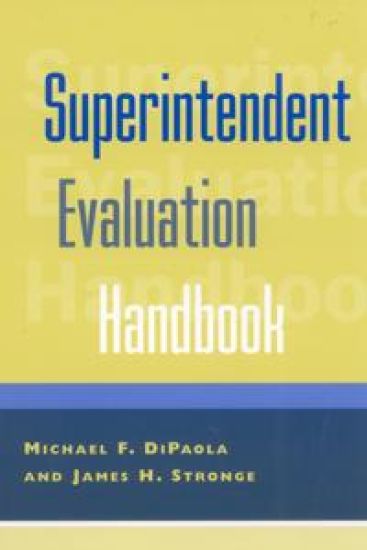
Superintendent Evaluation Handbook

Superintendent Evaluation Handbook

Michael F. DiPaola; James H. Stronge

Rowman Littlefield Education
2003
nidottu
Superintendent evaluation is a unique process that is often neglected but critical in this era of accountability. This invaluable guide provides an overview of the entire process, including: crafting board policy, criteria for good policy, and prototype policy. It identifies the unique challenges posed by the evaluation process and describes a three-tiered model of evaluation. This model is anchored in the professional standards for superintendency established by the American Association of School Administrators (AASA), the National School Boards Association (NSBA) Key Work of School Boards, the Interstate School Leaders Licensure Consortium (ISLLC) Standards, and the National Technology Standards for School Administrators. Numerous sample forms are included to assist school districts in creating a customized evaluation protocol to enhance performance. Suggestions on next steps for the reader conclude the book and additional resources are described in the annotated bibliography. This handbook will be of interest to superintendents, school board members, and professionals involved in the development and support of superintendents.