Kirjojen hintavertailu. Mukana 12 595 353 kirjaa ja 12 kauppaa.

Kirjailija

Michael Fleming

Kirjat ja teokset yhdessä paikassa: 22 kirjaa, julkaisuja vuosilta 2001-2023, suosituimpien joukossa In a Mirror Dimly. Vertaile teosten hintoja ja tarkista saatavuus suomalaisista kirjakaupoista.

22 kirjaa

Kirjojen julkaisuhaarukka 2001-2023.

In the Shadow of the Holocaust

In the Shadow of the Holocaust

Michael Fleming

Cambridge University Press
2023
pokkari
In the midst of the Second World War, the Allies acknowledged Germany's ongoing programme of extermination. In the Shadow of the Holocaust examines the struggle to attain post-war justice and prosecution. Focusing on Poland's engagement with the United Nations War Crimes Commission, it analyses the different ways that the Polish Government in Exile (based in London from 1940) agitated for an Allied response to German atrocities. Michael Fleming shows that jurists associated with the Government in Exile made significant contributions to legal debates on war crimes and, along with others, paid attention to German crimes against Jews. By exploring the relationship between the UNWCC and the Polish War Crimes Office under the authority of the Polish Government in Exile and later, from the summer of 1945, the Polish Government in Warsaw, Fleming provides a new lens through which to examine the early stages of the Cold War.
Bags and Tools

Bags and Tools

Michael Fleming

Green Writers Press
2022
pokkari
What is compelling about Bags and Tools is its reach for a “we.” The “we” was open enough and varied enough to encompass a wide swath of people(s) but did not assume a sameness—indeed, it sought in part to elucidate the matter of difference through questioning—it is nuanced and insightful. Much of this author’s work is the same, plain-spoken, but upon reading it presents its concerns. What is in the bag of the speaker who presents themself as a would-be vagabond, a wayward traveler? A curious mind, a passionate search for a larger framework (God, Love) through what the reader could think of as letters to beloveds as much as dedications where names are cited. This is a book to read again, then again. It is the speaker’s trying that is so relatable. The skein is thin here, so author and speaker are close. Michael Fleming effectively uses the tools of craft to take us along on this narrow path that widens and promises to open into broad understanding.
In the Shadow of the Holocaust

In the Shadow of the Holocaust

Michael Fleming

Cambridge University Press
2022
sidottu
In the midst of the Second World War, the Allies acknowledged Germany's ongoing programme of extermination. In the Shadow of the Holocaust examines the struggle to attain post-war justice and prosecution. Focusing on Poland's engagement with the United Nations War Crimes Commission, it analyses the different ways that the Polish Government in Exile (based in London from 1940) agitated for an Allied response to German atrocities. Michael Fleming shows that jurists associated with the Government in Exile made significant contributions to legal debates on war crimes and, along with others, paid attention to German crimes against Jews. By exploring the relationship between the UNWCC and the Polish War Crimes Office under the authority of the Polish Government in Exile and later, from the summer of 1945, the Polish Government in Warsaw, Fleming provides a new lens through which to examine the early stages of the Cold War.
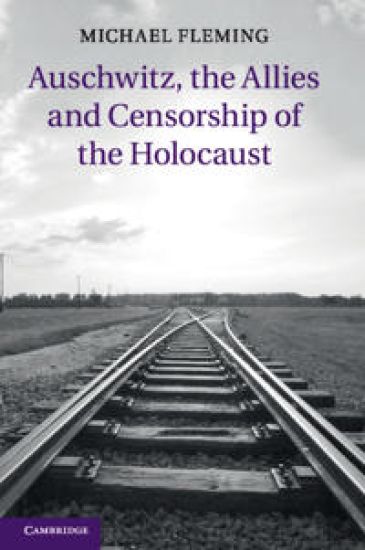
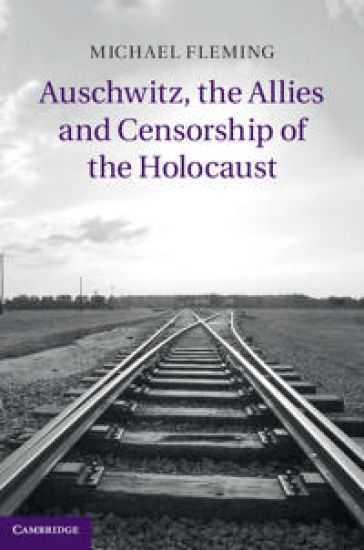
Auschwitz, the Allies and Censorship of the Holocaust

Auschwitz, the Allies and Censorship of the Holocaust

Michael Fleming

Cambridge University Press
2021
pokkari
What was the extent of allied knowledge regarding the mass murder of Jews at Auschwitz during the Second World War? The question is one which continues to prompt heated historical debate, and Michael Fleming's important new book offers a definitive account of just how much the Allies knew. By tracking Polish and other reports about Auschwitz from their source, and surveying how knowledge was gathered, controlled and distributed to different audiences, the book examines the extent to which information about the camp was passed on to the British and American authorities, and how the dissemination of this knowledge was limited by propaganda and information agencies in the West. In a fascinating new study, the author reveals that the Allies had extensive knowledge of the mass killing of Jews at Auschwitz much earlier than previously thought; but the publicising of this information was actively discouraged in Britain and the US.
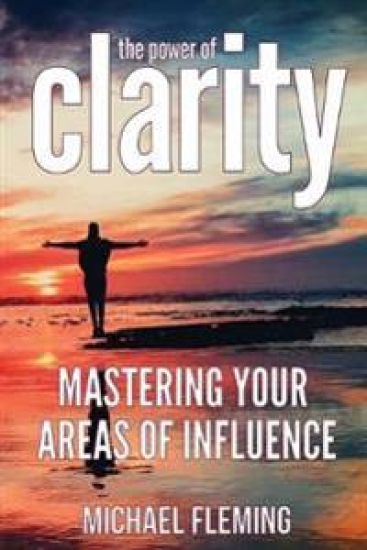
The Power of Clarity

The Power of Clarity

Michael Fleming

Lulu.com
2020
nidottu
The purpose of The Power of Clarity to create an opportunity for my friends to gain a tool that will help them gain an understanding of what exactly is within their control. This is created as a workbook to help participants engage with this concept and content.This content was originally created for my podcast, Find Your Voice, and I felt that a written workbook would be the perfect complement to you, the learner, so you could both read the course content as well as record your own relevant personal discoveries within this workbook.The course is not meant to be a "one and done" experience, instead it is meant to be revisited as you continue to develop yourself, and you are encouraged to revisit the course material to set another desired outcome so you can continue to improve your life!We are not defined by our goals, but we can improve our lives by setting a desired outcome and then tracking that progress.
Dental Marketing: Find Your Voice

Dental Marketing: Find Your Voice

Michael Fleming

Lulu.com
2019
nidottu
Marketing for a Dental Practice or Dental Organization can be very challenging because oftentimes a marketer will try to use techniques that have worked well in other industries, yet they don't generate the same positive response for their dental marketing message. After continued weak performance, this marketer can easily start to believe that "marketing just doesn't work for us", when the reality is, it was never the media that failed...it was just great effort spent in the wrong area's. In these pages, told in plain english and real life stories, you will discover:-How Marketing for Dentistry is completely different than any other industry, -How to "Find Your Voice" so you can craft a simple and trustworthy brand and brand story,-How to "Use Your Voice" by identifying target demographics and crafting messages that will resonate with them-How to "Listen to the Crowd" so you can analyze your ROI to see how your Voice is being received, and
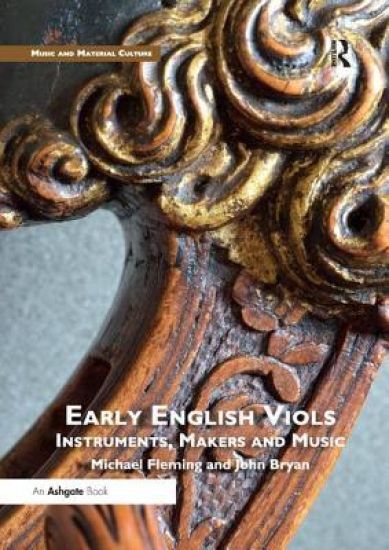
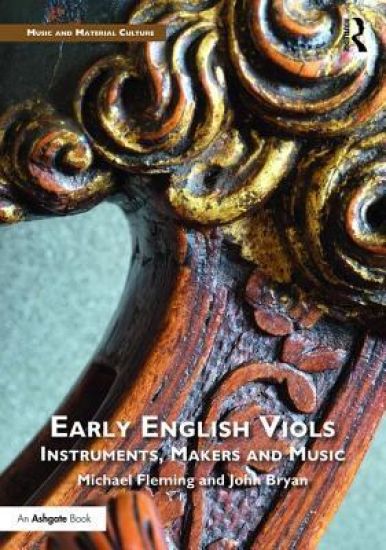
Early English Viols: Instruments, Makers and Music

Early English Viols: Instruments, Makers and Music

Michael Fleming; John Bryan

Routledge
2019
nidottu
Winner of the Nicholas Bessaraboff PrizeMusical repertory of great importance and quality was performed on viols in sixteenth- and early seventeenth-century England. This is reported by Thomas Mace (1676) who says that ’Your Best Provision’ for playing such music is a chest of old English viols, and he names five early English viol makers than which ’there are no Better in the World’. Enlightened scholars and performers (both professional and amateur) who aim to understand and play this music require reliable historical information and need suitable viols, but so little is known about the instruments and their makers that we cannot specify appropriate instruments with much precision. Our ignorance cannot be remedied exclusively by the scrutiny or use of surviving antique viols because they are extremely rare, they are not accessible to performers and the information they embody is crucially compromised by degradation and alteration. Drawing on a wide variety of evidence including the surviving instruments, music composed for those instruments, and the documentary evidence surrounding the trade of instrument making, Fleming and Bryan draw significant conclusions about the changing nature and varieties of viol in early modern England.
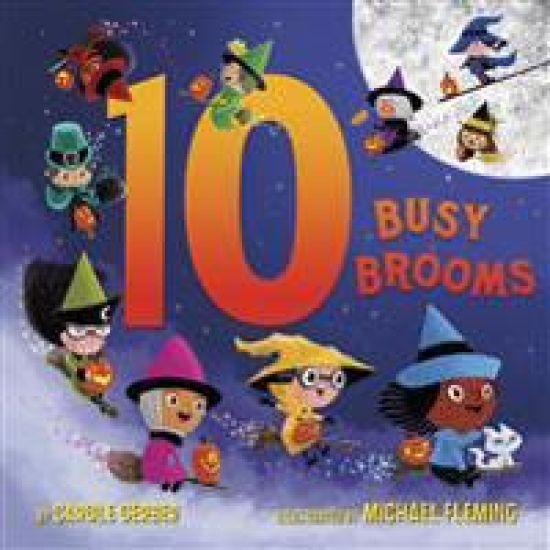
10 Busy Brooms

10 Busy Brooms

Carole Gerber; Michael Fleming

Ballantine Books Inc.
2018
pahvisivuinen
Celebrate Halloween with this fun and festive counting book, perfect for fans of Room on the Broom Young readers will want to fly the night sky with the ten little witches in this bright and adventurous Halloween story Whether zooming past rattling skeletons, buzzing by pie-stealing mummies, or soaring over a werewolf with bad breath, readers will be cheering for this exciting group of witches and their high-flying Halloween adventures Plus, play a game of I Spy and find the cat and owl on every page "An enjoyable celebration of witchy sisterhood." - Publisher's Weekly "Bright and cheerful." - School Library Journal
Early English Viols: Instruments, Makers and Music

Early English Viols: Instruments, Makers and Music

Michael Fleming; John Bryan

Routledge
2016
sidottu
Winner of the Nicholas Bessaraboff PrizeMusical repertory of great importance and quality was performed on viols in sixteenth- and early seventeenth-century England. This is reported by Thomas Mace (1676) who says that ’Your Best Provision’ for playing such music is a chest of old English viols, and he names five early English viol makers than which ’there are no Better in the World’. Enlightened scholars and performers (both professional and amateur) who aim to understand and play this music require reliable historical information and need suitable viols, but so little is known about the instruments and their makers that we cannot specify appropriate instruments with much precision. Our ignorance cannot be remedied exclusively by the scrutiny or use of surviving antique viols because they are extremely rare, they are not accessible to performers and the information they embody is crucially compromised by degradation and alteration. Drawing on a wide variety of evidence including the surviving instruments, music composed for those instruments, and the documentary evidence surrounding the trade of instrument making, Fleming and Bryan draw significant conclusions about the changing nature and varieties of viol in early modern England.
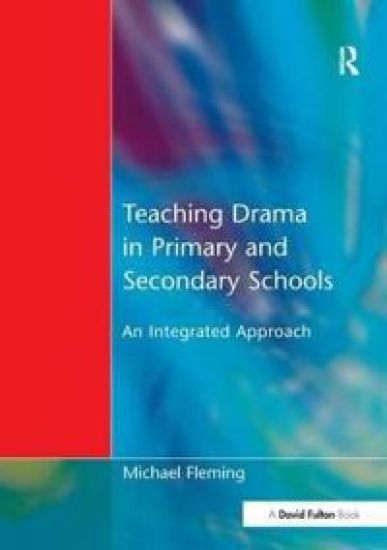
Teaching Drama in Primary and Secondary Schools
This book will be of major interest to student teachers, teachers, lecturers and researchers. It provides a case for an integrated approach to the teaching of drama in primary and secondary schools that will help practitioners develop a theoretical rationale for their work. It also offers practical examples of lesson plans and schemes of work designed to give pupils a broad and balanced experience of drama. These are presented within a framework that argues for an integration of content and form, means and ends, and internal and external experience.Whereas the author's previous work argued for an inclusive approach that reconciled polarized views about performance drama and improvisation, this book shows how those activities can be related to each other in practice in an integrated curriculum.
Auschwitz, the Allies and Censorship of the Holocaust

Auschwitz, the Allies and Censorship of the Holocaust

Michael Fleming

Cambridge University Press
2014
sidottu
What was the extent of allied knowledge regarding the mass murder of Jews at Auschwitz during the Second World War? The question is one which continues to prompt heated historical debate, and Michael Fleming's important new book offers a definitive account of just how much the Allies knew. By tracking Polish and other reports about Auschwitz from their source, and surveying how knowledge was gathered, controlled and distributed to different audiences, the book examines the extent to which information about the camp was passed on to the British and American authorities, and how the dissemination of this knowledge was limited by propaganda and information agencies in the West. In a fascinating new study, the author reveals that the Allies had extensive knowledge of the mass killing of Jews at Auschwitz much earlier than previously thought; but the publicising of this information was actively discouraged in Britain and the US.
Communism, Nationalism and Ethnicity in Poland, 1944-1950
This book fills a significant gap in the study of the establishment of communist rule in Poland in the key period of 1944–1950. It shows that nationalism and nationality policy were fundamentally important in the consolidation of communist rule, acting as a crucial nexus through which different groups were both coerced and were able to consent to the new unfolding social and political order. Drawing on extensive archival research, including national and regional archives in Poland, it provides a detailed and nuanced understanding of the early years of communist rule in Poland. It shows how after the war the communist Polish Workers Party (PPR) was able to redirect widespread anger resulting from the actions of the NKVD, Soviet Army and the communists to more ‘realistic’ targets such as minority communities, and that this displacement of anger helped the party to connect with a broader constituency and present itself as the only party able to protect Polish interests. It considers the role played by the West, including the endorsement by the Grand Alliance of homogenising policies such as population transfer. It also explores the relationship between the communists and other powerful institutions in Polish society, such as the Catholic Church which was treated fairly liberally until late 1947 as it played an important function in identifying who was Polish. Finally, the book considers important episodes – hitherto neglected by scholars – that shed new light upon the emergence of the Cold War and the contours of Cold War geopolitics, such as the ‘Westphalian incident’ of 1947–48, and the arrival of Greek refugees in Poland in the period 1948–1950.
Communism, Nationalism and Ethnicity in Poland, 1944-1950
This book fills a significant gap in the study of the establishment of communist rule in Poland in the key period of 1944–1950. It shows that nationalism and nationality policy were fundamentally important in the consolidation of communist rule, acting as a crucial nexus through which different groups were both coerced and were able to consent to the new unfolding social and political order. Drawing on extensive archival research, including national and regional archives in Poland, it provides a detailed and nuanced understanding of the early years of communist rule in Poland. It shows how after the war the communist Polish Workers Party (PPR) was able to redirect widespread anger resulting from the actions of the NKVD, Soviet Army and the communists to more ‘realistic’ targets such as minority communities, and that this displacement of anger helped the party to connect with a broader constituency and present itself as the only party able to protect Polish interests. It considers the role played by the West, including the endorsement by the Grand Alliance of homogenising policies such as population transfer. It also explores the relationship between the communists and other powerful institutions in Polish society, such as the Catholic Church which was treated fairly liberally until late 1947 as it played an important function in identifying who was Polish. Finally, the book considers important episodes – hitherto neglected by scholars – that shed new light upon the emergence of the Cold War and the contours of Cold War geopolitics, such as the ‘Westphalian incident’ of 1947–48, and the arrival of Greek refugees in Poland in the period 1948–1950.