Kirjojen hintavertailu. Mukana 12 595 353 kirjaa ja 12 kauppaa.

Kirjailija

Michael Foley

Kirjat ja teokset yhdessä paikassa: 61 kirjaa, julkaisuja vuosilta 1999-2025, suosituimpien joukossa Michael Foley. Vertaile teosten hintoja ja tarkista saatavuus suomalaisista kirjakaupoista.

61 kirjaa

Kirjojen julkaisuhaarukka 1999-2025.

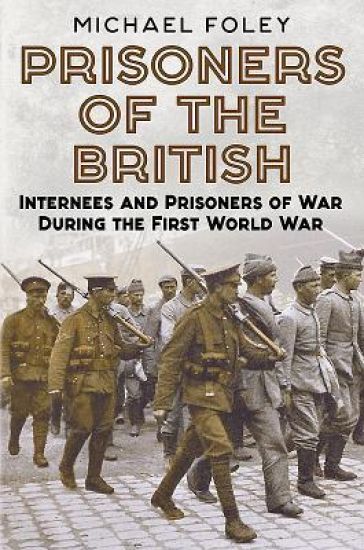
Prisoners of the British

Prisoners of the British

Michael Foley

Fonthill Media
2015
sidottu
Much of what has been written about the treatment of prisoners of war held by the British suggest that they have often been treated in a more caring and compassionate way than the prisoners of other countries. During the First World War, Germans held in Britain were treated leniently while there were claims of British prisoners being mistreated in Germany. Was the British sense of fair play present in the prison camps and did this sense of respect include the press and public who often called for harsher treatment of Germans in captivity? Were those seen as enemy aliens living in Britain given similar fair treatment? Were they sent to internment camps because they were a threat to the country or for their own protection to save them from the British public intent on inflicting violence on them? Prisoners of the British: Internees and Prisoners of War during the First World War examines the truth of these views while also looking at the number of camps set up in the country and the public and press perception of the men held here.
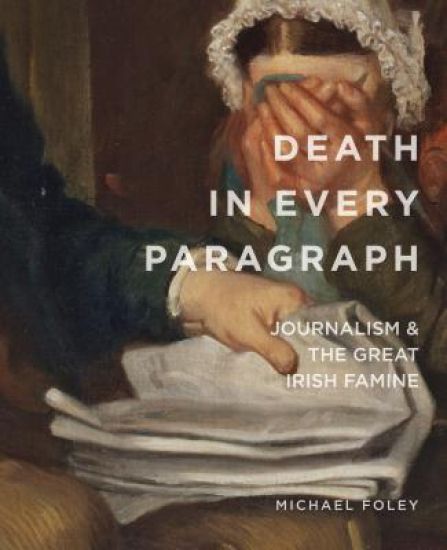
Death in Every Paragraph

Death in Every Paragraph

Michael Foley

Quinnipiac University Press
2015
nidottu
Ireland's Great Hunger Museum at Quinnipiac University publishes Famine Folios, a unique resource for students, scholars and researchers, as well as general readers, covering many aspects of the Famine in Ireland from 1845-1852 - the worst demographic catastrophe of nineteenth-century Europe. The essays are interdisciplinary in nature, and make available new research in Famine studies by internationally established scholars in history, art history, cultural theory, philosophy, media history, political economy, literature and music. Had the Great Famine not occurred, newspapers would still have gone through massive changes in the nineteenth century, precipitated by industrialization and urbanisation. But the Famine did take place, and the ways Irish journalists found to tell the story of unprecedented horror conditioned the evolution of journalism, not alone in Ireland, but abroad. The scale and complexity of the catastrophe forced journalists to find new ways of reporting news, to develop new techniques of interrogation, including the narration of the stories of ordinary people, rather than just reporting the speeches of important men.Whatever the political perspective of the journalist, the ideologies of his readers had to be taken into account, requiring him to develop new writing skills - forensic, contextual and emotional - that explained the Famine to the rest of the world. The stories that appeared in local Irish newspapers were often reprinted not only in the newspapers of Dublin, but London and other major cities, as far as America and Australia. It was the work of journalists that attracted other journalists from around the world who wanted to see for themselves how such a calamity could take place so close to the centre of the world's greatest empire. The Great Irish Famine was the worst humanitarian disaster of the nineteenth century and how it was reported by the press established many of the norms of disaster coverage to this day.
Get Off The Cow Now: My Simple Cure for Cancer

Get Off The Cow Now: My Simple Cure for Cancer

Michael Foley

Createspace Independent Publishing Platform
2015
nidottu
Do you want to lose weight, feel better and beat cancer? Diagnosed with prostate cancer in 2012, jump-started an alternative, healthy plan to beat this disgusting disease naturally without surgery, radiation or chemotherapy. After hundreds of hours of research and experimentation I have come up with a plan that heals/prevents cancer naturally and effectively without the use of supplements or expensive fads. You can achieve optimal health through a plant based eating arrangement and this book will show you how without a huge amount of aggravation. Did you know a vast majority of Oncologists would not use Chemotherapy if they got cancer themselves?
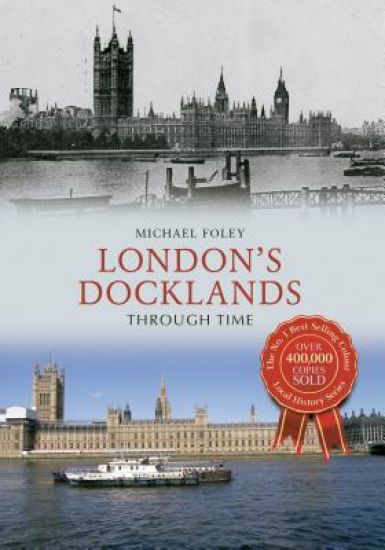
London's Docklands Through Time

London's Docklands Through Time

Michael Foley

Amberley Publishing
2014
nidottu
London’s Docklands have a rich and varied history. Dating from the Middle Ages, they developed into one of the biggest docks in the world. The riches of Britain’s Empire found its way into the country through the River Thames and into London. Unfortunately, the people who worked and lived in London’s Docklands rarely shared in the riches arriving from around the world. The area around the docks was one of the poorest in the country, with men working on a casual basis and often fighting other men for the few jobs available in the docks. As well as the docks, the area along the Thames was also a major shipbuilding site until the early twentieth century where many of the early warships were built.
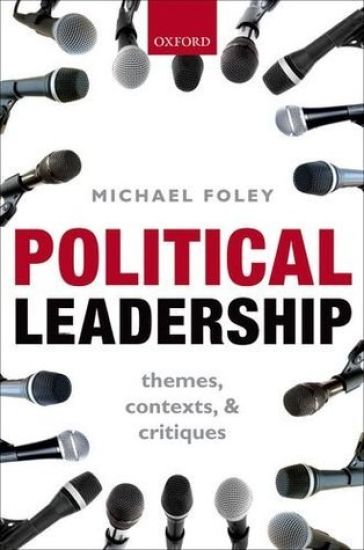
Political Leadership

Political Leadership

Michael Foley

Oxford University Press
2013
sidottu
Despite its recognized significance in social life, leadership is a notoriously elusive subject that generates a host of different points of explanatory focus. This is particularly so in the field of political leadership, which has been afflicted by an enduring split between the biographical idiosyncrasies of individual leaders and the specialist contributions from an array of social science disciplines. This new study is designed to establish an improved balance between this often myopic and confusing bifurcation of approaches. It engages with an expansive range of empirical, theoretical, and interpretive research into the issue of leadership but does so in a way that ensures that the political character of the subject is kept securely in the foreground. The project is therefore designed to maintain a clear emphasis upon leaders embedded in their political contexts and viscerally connected to high level issues of political location and status, political power and legitimacy, and political functions and contingencies. The book has a cumulative design that moves from an in-depth analysis of the basic components of political leadership to an examination of a series of key dimensions relating to leadership activity and development--namely the themes of representation, communication, marketing, business practice, and the issue of women leaders. It goes on to survey the developmental properties of the international sphere before concluding with a substantive review of the changing landscapes of contemporary leadership activity and the different ways that we come to terms with the theme of political leadership in an increasingly complex world.
Life Lessons from Bergson

Life Lessons from Bergson

Michael Foley; The School of Life

Macmillan
2013
pokkari
The School of Life offers radical ways to help us raid the treasure trove of human knowledge' Independent on Sunday Henri Bergson was a French professor and philosopher. Born in Paris in 1859 to a Polish composer and Yorkshire woman of Irish descent, his revelatory ideas of life as ceaseless becoming and the importance of attention, learning, humour and joy brought him incredible fame and media celebrity. Here you will find insights from his greatest works. The Life Lessons series from The School of Life takes a great thinker and highlights those ideas most relevant to ordinary everyday dilemmas. These books emphasize ways in which wise voices from the past have urgently important and inspiring things to tell us. 'thoroughly welcoming and approachable ... Perhaps the finest, certainly the most exuberant, of the volumes is Michael Foley's Life Lessons from Bergson ... If the six books in the Life Lessons series can teach even a few readers to pay passionate heed to the world - to notice things - they will have been an unquestionable success' John Banville, Prospect 'there is a good deal to be learned from these little primers' Observer
Martello Towers

Martello Towers

Michael Foley

Amberley Publishing
2013
nidottu
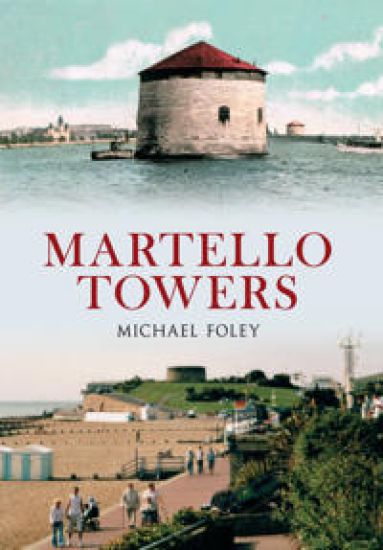
There are a number of strange buildings that stand on the south and east coasts of England, often thought to be water towers or ventilation shafts. They are, in fact, important historical defences, built to stop Napoleon's army invading our shores during the wars of the early nineteenth century. Any ship approaching the coast could come under fire from at least four of the buildings at once. They are the Martello towers. More than a hundred were built along the coasts of Kent, Sussex, Essex and Suffolk. Others were built in Ireland and other parts of the empire. Their creation caused severe differences of opinion between some of the best-known men of the period. Names such as Nelson, Wellington, Pitt and Cobbett all had something to say about them. Although never used in the Napoleonic Wars, they were in many cases updated and played a part in later conflicts, including both World Wars. Many have succumbed to coastal erosion and experiments by the Royal Artillery. Of those that remain, some have been converted into dwellings and others are now museums. They are still an important part of our military and social history, and here Michael Foley provides history, details and photographs of all the remaining Martello towers along England's coastline.
The Silence of Constitutions (Routledge Revivals)
First published in 1989, Michael’s Foley’s book deals with the ‘abeyances’ present in both written and unwritten constitutions, arguing that these gaps in the explicitness of a constitution, and the various ways they are preserved, provide the means by which constitutional conflict is continually postponed. Abeyances are valuable, therefore, not in spite of their obscurity, but because of it. The author illustrates his point with analyses of constitutional crises from both sides of the Atlantic. He examines the period leading up to the English civil war in the seventeenth century, and the ‘imperial presidency’ episode under Richard Nixon in the late 1960s and 1970s in the USA. In both cases there was no constitutionally correct solution available but, as the author demonstrates, the political skill of the participants in their use of constitutional devices allowed the anomalies of the American system to survive in a way that contrasted markedly with the plight of Charles I and the Stuart constitution. This reissue of a landmark study will be welcomed by all those interested in the interpretation and construction of constitutional law.
Essex at War From Old Photographs

Essex at War From Old Photographs

Michael Foley

Amberley Publishing
2012
nidottu
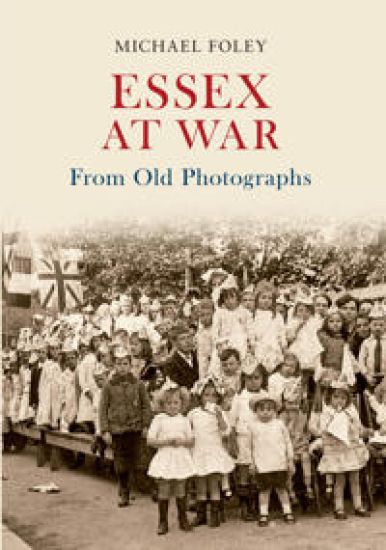
Essex is populated with defensive structures that have gone some way to combating the threat of invasion. From the remains of ancient castles through to Napoleonic Martello towers, nineteenth-century forts and Second World War defences, the perilous history of Essex can be seen in all corners of the county. Remains of what were once large military barracks can now mainly only be found hidden among more modern constructions. Many of the military structures of Essex are mentioned and illustrated in Essex at War. From ancient prints of thriving military settlements to the modern photographs of unused and often derelict buildings, this book will appeal to anyone interested in the history of the county.
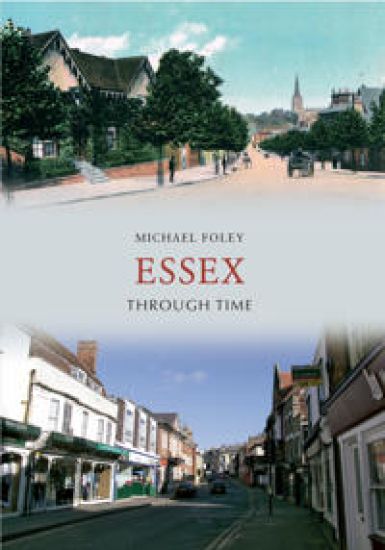
Essex Through Time

Essex Through Time

Michael Foley

Amberley Publishing
2012
nidottu
Essex is a county of contrasts. The west of the county is now seen as part of London with the London Boroughs of Barking and Dagenham, Redbridge and Havering actually positioned in Essex but almost indistinguishable from the rest of East London. Moving to the east, however, things are very different. Once past the end of the London Underground District Line at Upminster, the county becomes much more rural, green and pleasant. In many of these towns a small area of the old village survives, usually based round an old church. Many of the small villages have survived independently and stand alone surrounded by open countryside. It is not too difficult to find the odd thatched cottage or weather boarded house among the old buildings. Join Michael Foley on this nostalgic visual journey through the county, which will surprise and delight anyone who knows and loves this area.
Laws, Men and Machines (Routledge Revivals)
First published in 1990, Laws, Men and Machines is an original interpretation of the lasting influence that Newtonian mechanics has had on the design and operation of the American political system. The author argues that it is this mechanistic tradition that now instinctively shapes the way we conceive of, analyse, and evaluate American politics, and that the Newtonian conception of the world still finds expression in the 'checks and balances' of the American system.
The Silence of Constitutions (Routledge Revivals)
First published in 1989, Michael’s Foley’s book deals with the ‘abeyances’ present in both written and unwritten constitutions, arguing that these gaps in the explicitness of a constitution, and the various ways they are preserved, provide the means by which constitutional conflict is continually postponed. Abeyances are valuable, therefore, not in spite of their obscurity, but because of it. The author illustrates his point with analyses of constitutional crises from both sides of the Atlantic. He examines the period leading up to the English civil war in the seventeenth century, and the ‘imperial presidency’ episode under Richard Nixon in the late 1960s and 1970s in the USA. In both cases there was no constitutionally correct solution available but, as the author demonstrates, the political skill of the participants in their use of constitutional devices allowed the anomalies of the American system to survive in a way that contrasted markedly with the plight of Charles I and the Stuart constitution. This reissue of a landmark study will be welcomed by all those interested in the interpretation and construction of constitutional law.