
Kirjailija
Michael Freeman
Kirjat ja teokset yhdessä paikassa: 60 kirjaa, julkaisuja vuosilta 1995-2026, suosituimpien joukossa Lenten Journey Homilies - Liturgical Cycles A, B, C. Vertaile teosten hintoja ja tarkista saatavuus suomalaisista kirjakaupoista.
60 kirjaa
Kirjojen julkaisuhaarukka 1995-2026.
The eagerly awaited follow up to global bestseller The Photographer's Eye reveals the paths the greatest photographers took to excellence. By studying their work, readers can explore 50 "paths" to taking quality photos and developing their own original styles.

Originally published in hardback only in 1987, Michael Freeman's valuable guide to the history of Nazi Germany now returns to print in a substantially revised Second Edition. Dealing with all aspects of the Nazi regime, it is far more than just an atlas: the integration of the maps themselves with charts and other visually-displayed data, and an extensive and authoritative commentary, makes this a book to read as well as to refer to.
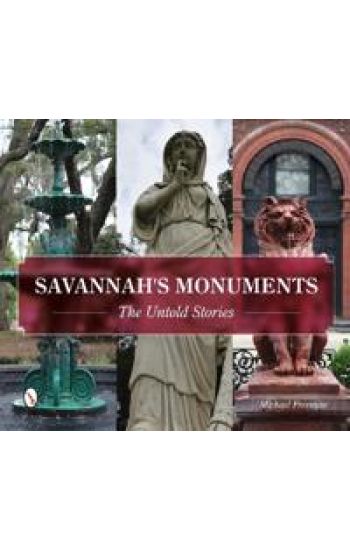
Learn the histories and behind-closed-door chronicles of 69 monuments in Savannah, Georgia. These shrines commemorate the Southern city’s people and events, celebrating sculptors and heroes, Savannah’s contributions to America’s wars, and its economic and innovative legacy. Discover various ethnic groups who have contributed to the city’s history through monuments such as the Jewish Burial Ground Marker, where people still lay pebbles to honor those who have passed before them. Stories are shared in an accessible, conversational, and engaging manner, with attention to historical detail, and are accompanied by more than 180 images. Use the included tour maps to enhance these accounts as you wander the beautiful squares, parks, and boulevards of Savannah and appreciate the “coastal empire” in a way you never have before.
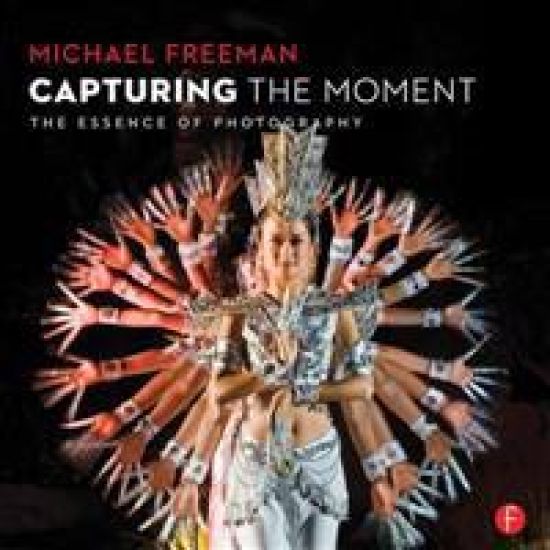
This is not a book about the fundamentals of shutter speed or how your camera works; it is a book that will teach photographers of all levels how to work with their cameras to capture moments whether they are occurring quickly or unfolding over many hours. Capturing the Moment is about a gesture, an expression, a ball in the net, a whale breaching, like Marilyn Monroe's skirt flying up or Alfred Eisenstaedt's image of a kiss between a soldier and nurse in Times Square. Moments in all forms are the true core of photography, and this book will explain how to anticipate them, recognise them, choose them, and capture them, through the eyes and wisdom of award-winning photographer and celebrated author Michael Freeman.
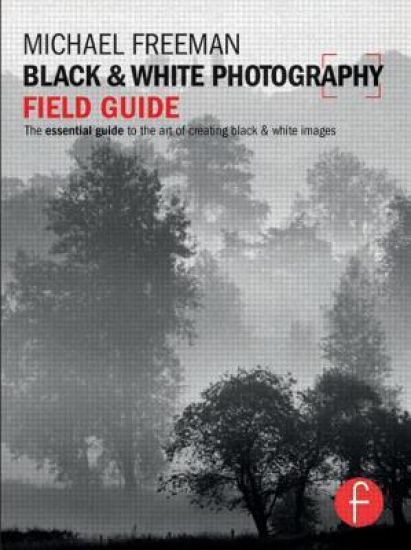
Black & White Photography Field Guide: The Essential Guide to the Art of Creating Black & White Images
Michael Freeman
ROUTLEDGE
2013
nidottu
In this pocket-sized, portable guide, renowned photographer Michael Freeman addresses one of photography's most popular--and challenging--areas: black and white. With advice on lighting, shooting, conversion, and post-production, this is know-how that no photographer can afford to be without. Perfect for the digital photographer who wants to shoot and process RAW files as black and whie images.
This volume collects together Michael Freeman's work on the family and society, and the part law plays in defining, structuring and controlling it. He questions the role of family law and its interface with family values, as well as the rights and best interests of children. Responsible parenthood is examined as well as the relationship between family law and medical law, examining surrogacy and saviour siblings. On adult relations the volume centres on domestic violence, same sex marriage, and alternative dispute resolution. Finally he examines the relationship between law and religion, focusing on Jewish divorce and the role of the state. The book is essential reading for scholars and students of family law, as well as those interested in gender and patriarchy, law and feminism, rights, and dispute resolution.

Over the past 20 years, cognitive neuroscience has revolutionized our ability to understand the nature of human thought. Working with the understandings of traditional psychology, the new brain science is transforming many disciplines, from economics to literary theory. These developments are now affecting the law and there is an upsurge of interest in the potential of neuroscience to contribute to our understanding of criminal and civil law and our system of justice in general. The international and interdisciplinary chapters in this volume are written by experts in criminal behaviour, civil law and jurisprudence. They concentrate on the potential of neuroscience to increase our understanding of blame and responsibility in such areas as juveniles and the death penalty, evidence and procedure, neurological enhancement and treatment, property, end-of-life choices, contracting and the effects of words and pictures in law. This collection suggests that legal scholarship and practice will be increasingly enriched by an interdisciplinary study of law, mind and brain and is a valuable addition to the emerging field of neurolaw.
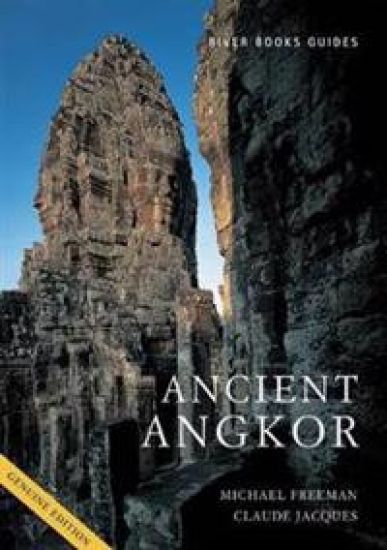
The Khmer civilization centered on Angkor was one of the most remarkable to flourish in Southeast Asia. Between the 8th and the 13th centuries, a succession of Hindu and Buddhist kings created magnificent temples in stone. Their elaborate carvings and intricate architecture amazed the first Europeans who visited in the 19th century and continue to fascinate today, when after many years of political turmoil, Angkor is once again accessible. The renowned French scholar, Claude Jacques, has studied Angkor and its history for the past 30 years, while Michael Freeman has made many photographic trips there during a 15 year period. Ancient Angkor embodies the fruits of their collaboration and includes the results of new research and discoveries made during recent excavations. Detailed plans and descriptions unravel the complex reliefs of Angkor Wat and the Bayon, while small but interesting temples not covered in other books are also described. Grouping the temples into easy-to-visit itineraries, and with useful hotel and travel information, Ancient Angkor will serve both as a history of the temples in its own right and an invaluable companion guide.
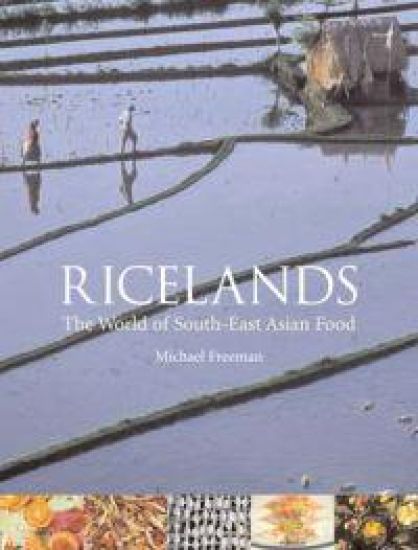
Pad thai, pho soup, bao: the cuisines of South East Asia have ardent enthusiasts far beyond their native lands, and are now among the most consumed dishes in the world. But the familiar take-away menus and thriving specialist shops rest atop a compelling history of food, culture and modernity, which award-winning photographer and writer Michael Freeman explores in this comprehensive and beautifully illustrated guide to South-east Asian cuisine. "Ricelands" takes the reader on a colourful and engaging tour through the richly layered food cultures of the region. Travelling across the landscapes of Thailand, Vietnam, Burma, Cambodia, Malaysia, Laos, Indonesia and the Philippines, Freeman explores the origins and defining characteristics of their respective cuisines, and their evolution as they entered foreign cultures. From birds' nests gathered in Thailand's coastal caves to the less familiar dishes of Burma and Cambodia, to the pungent durian fruit (and Westerners' often aghast reactions), the author unearths unexpected treasures and tantalizing facts about Southeast Asia and its social history. The book also examines the cooking techniques, complex spices, and agricultural economies that underpin the countries' food cultures, and considers how the informal nature of southeast Asian eating fits into the rhythms of modern-day living. A vibrantly illustrated and wide-ranging study, "Ricelands" takes us into the heart of tropical Asia and the delicious foods that define it the world over.

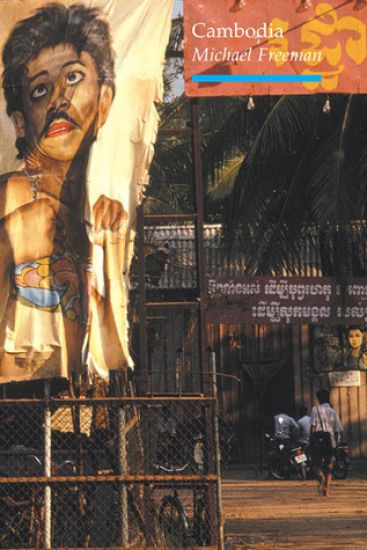
Cambodia has a long and rich history, first becoming an artistic and religious power in Southeast Asia in the Angkor period (802 - 1432), when its kings ruled from vast temple complexes at Angkor Wat and Angkor Thom. The cultural influence of Cambodia on other countries in the region has been enormous, quite out of keeping with its reduced territory and limited political and economic power today. In "Cambodia", writer and photographer Michael Freeman examines the country's present troubled situation in the light of its political and cultural history, looking at many aspects of modern Cambodia, including the psychological effect of the outrages of Pol Pot, and how Angkor Wat has become an icon and symbol for its tourist and heritage industry. In the process he relates personal stories and anecdotes from Cambodia's recent and more ancient history, such as royal white elephants and buffalo sacrifices in villages; how spiders are cooked and eaten; and the incidence of cannibalism in Cambodian warfare. Cambodia is sometimes shocking, often humorous, and always entertaining, and will give the reader a new insight into the history of this maltreated yet fascinating country.
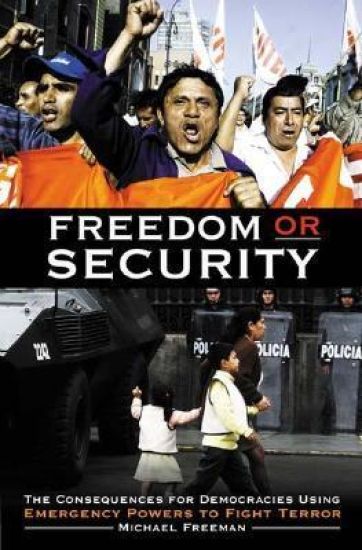
Several democratic countries have used emergency powers to restrict or suspend individual liberties in order to fight terrorism more effectively. Emergency powers are controversial in their potential to undermine democracy and civil liberties. Freeman challenges popular arguments of both the supporters of emergency powers, who focus on their expected effectiveness, and the critics, who focus on the dangers. In reality, the recent experiences of four different democratic states that have invoked emergency powers show that a positive outcome is just as likely as negative outcome. As the United States fights its war against terrorism, it should heed the lessons learned by other democracies in similar struggles, particularly Great Britain's relationship with Northern Ireland in the 70s and 80s, Uruguay's response to the Tupamaros in the late 60s and early 70s, Canada's dealings with the FLQ in 1970, and Peru's conflict with the Shining Path movement in the 80s and early 90s.
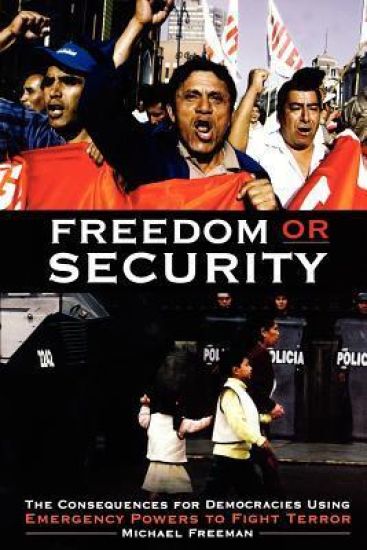
Several democratic countries have used emergency powers to restrict or suspend individual liberties in order to fight terrorism more effectively. Emergency powers are controversial in their potential to undermine democracy and civil liberties. Freeman challenges popular arguments of both the supporters of emergency powers, who focus on their expected effectiveness, and the critics, who focus on the dangers. In reality, the recent experiences of four different democratic states that have invoked emergency powers show that a positive outcome is just as likely as negative outcome. As the United States fights its war against terrorism, it should heed the lessons learned by other democracies in similar struggles, particularly Great Britain's relationship with Northern Ireland in the 70s and 80s, Uruguay's response to the Tupamaros in the late 60s and early 70s, Canada's dealings with the FLQ in 1970, and Peru's conflict with the Shining Path movement in the 80s and early 90s.
"Human Rights" is an introductory text that is both innovative and challenging. It invites students to think conceptually about one of the most important and influential political concepts of our time. In this unique interdisciplinary approach, Michael Freeman emphasizes the complex ways in which the experiences of the victims of human rights violations are related to legal, philosophical and social-scientific approaches to human rights. By tracing the history of the concept, the book shows that there is a fundamental tension between the philosophy of human rights and the way in which it is understood in the social sciences.This analysis throws light on some of the most controversial issues in the field: Is the idea of the universality of human rights consistent with respect for cultural difference? Are there collective human rights? Should feminists embrace, revise or reject the idea of human rights? Does the idea of human rights distract our attention from the structural causes of oppression and exploitation? What are the underlying causes of human rights violations? And why do some countries have much worse human rights records than others?The book will appeal to students in the social sciences, as well as students of human rights law who want an introduction to the non-legal aspects of their subject. It will also be read by scholars interested in ethics and the social sciences, as well as the general reader.
ESPN: The Uncensored History traces the first 24-hour sports network from its inception through its evolution into a slick media outlet reaching more than 60 million homes via more than 26,000 cable providers. Entertainment and Sports Programming Network, ESPN, has blazed a stunning path of achievement with its expansive coverage of broadcast sports—spinning off into ESPN2, ESPN Classic Sports, ESPNews, and ESPN Magazine—but has also experienced its share of controversy. Along the way, this American entrepreneurial triumph has alienated on-air talent, drawn charges of racial discrimination, and seen employees accused of blatant sexual harassment. ESPN's success story is no fairy tale. Among the colorful lore and amusing anecdotes lurk serious complications and controversies. Through information gleaned from internal documents, police and court records, and interviews with network employees, on-air talent, producers, and executives, ESPN: The Uncensored History probes the inside story of America's premiere sports network. Part corporate history, part media and cultural analysis, and part expose, the book examines both the positive developments effected by the network and the bad habits it has picked up from the business it covers. This paperback reveals the most recent developments at ESPN since the publication of the hardback, including the network's aggressive reactions to the book.
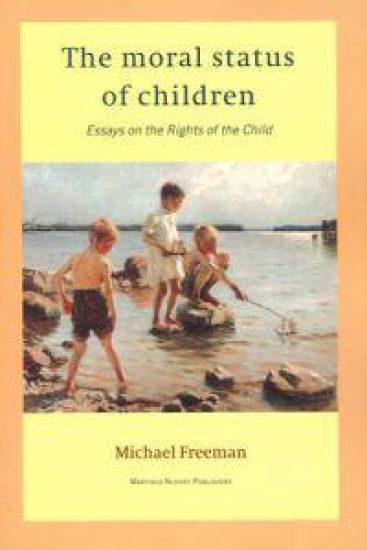
With the passing of the UN Convention in 1989 children's rights have been placed firmly on the political agenda. This book explores a variety of children's rights issues from the Convention and beyond. It examines the moral foundations of children's rights issues from the Convention and beyond, and offers insights into children's rights issues both old and new. Amongst the subjects covered are the history of children's rights, empowerment, cultural pluralism, sexual abuse, contact as a child's right, the reproduction revolution and the child's right to identity, and children's rights in the context of English law. This is a book which those interested in children, children's issues and children's rights will find stimulating and rewarding. The author is a Professor of English Law at University College London, a barrister and the author of thirty books including, The Rights and The Wrongs of Children, Children's Rights: A Comparative Perspective, Children, Their Families and The Law and Violence In the Home: A Socio-Legal Study. He is the founding co-editor of the International Journal of Children's Rights, the editor of Current Legal Problems and a former editor of the Annual Survey of Family Law. A prominent advocate of children's rights for over 20 years, he has lectured widely on the subject.

Originally published in hardback only in 1987, Michael Freeman's valuable guide to the history of Nazi Germany now returns to print in a substantially revised Second Edition. Dealing with all aspects of the Nazi regime, it is far more than just an atlas: the integration of the maps themselves with charts and other visually-displayed data, and an extensive and authoritative commentary, makes this a book to read as well as to refer to.