

Kirjailija
Michael Friedman
Kirjat ja teokset yhdessä paikassa: 27 kirjaa, julkaisuja vuosilta 1998-2024, suosituimpien joukossa Healing Diabetes. Vertaile teosten hintoja ja tarkista saatavuus suomalaisista kirjakaupoista.
Mukana myös kirjoitusasut: Michaël Friedman
27 kirjaa
Kirjojen julkaisuhaarukka 1998-2024.

This text introduces a new approach to the issue of radical scientific revolutions, or "paradigm-shifts", given prominence in the work of Thomas Kuhn. The book articulates a dynamic and historic version of the conception of scientific "a priori" principles first developed by the philosopher Immanuel Kant. Focusing on the development of "scientific philosophy" from Kant to Rudolf Carnap, along with the developments within science at the same time, the author provides a dynamic conception of relativized "a priori" principles. This idea within the physical sciences aims to show that rational intersubjective consensus is intricately preserved across radical scientific revolutions or "paradigm-shifts" and how this is achieved. This book defends the Enlightenment ideal of scientific objectivity and universality while also doing justice to the revolutionary changes within the sciences that have undermined Kant's original defense of this ideal.
This text introduces a new approach to the issue of radical scientific revolutions, or "paradigm-shifts", given prominence in the work of Thomas Kuhn. The book articulates a dynamic and historic version of the conception of scientific "a priori" principles first developed by the philosopher Immanuel Kant. Focusing on the development of "scientific philosophy" from Kant to Rudolf Carnap, along with the developments within science at the same time, the author provides a dynamic conception of relativized "a priori" principles. This idea within the physical sciences aims to show that rational intersubjective consensus is intricately preserved across radical scientific revolutions or "paradigm-shifts" and how this is achieved. This book defends the Enlightenment ideal of scientific objectivity and universality while also doing justice to the revolutionary changes within the sciences that have undermined Kant's original defense of this ideal.

Beginning with a confrontation in 1929 in Switzerland, Michael Friedman examines how the work of three pivotal philosophers evolved and intertwined over several years, ultimately giving rise to two very different schools of thought - analytic philosophy and continental. The author explores the clashes that set them apart as they developed their own radical new ideas.
In this collection of essays one of the preeminent philosophers of science writing today offers a reinterpretation of the enduring significance of logical positivism, the revolutionary philosophical movement centered around the Vienna Circle in the 1920s and 30s. Michael Friedman argues that the logical positivists were radicals not by presenting a new version of empiricism (as is often thought to be the case) but rather by offering a new conception of a priori knowledge and its role in empirical knowledge. This collection will be mandatory reading for any philosopher or historian of science interested in the history of logical positivism in particular or the evolution of modern philosophy in general.
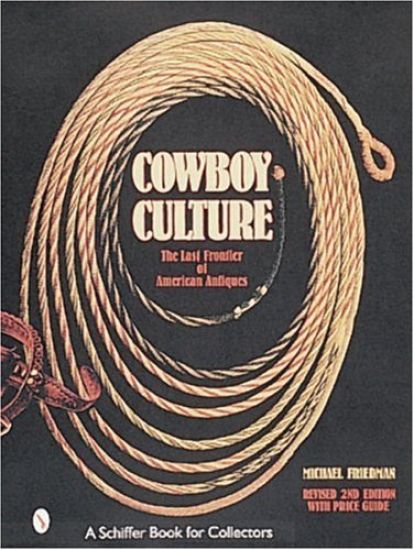
The American cowboy's unique life-style inspired tools, clothing, amusements, advertising, and more which are avidly sought by collectors today. They are presented here with over 1000 color photographs identified in text and captions. Each section of this beautiful new second edition is more complete and has better examples than earlier books devoted to each subject. In Cowboy Culture, these items are inspected in their many variations. Here are exquisite spurs, saddles, gambling tools, photography, guns, holsters, bits, chaps, gloves, boots, hats, badges, and knives. Objects related to Wild West shows-which popularized the myths and accomplishments of cowboys to town dwellers who fantasized life on the open range-are also included. That same fantasy endures to this day as people all over the world who today dream of being a "cowboy."
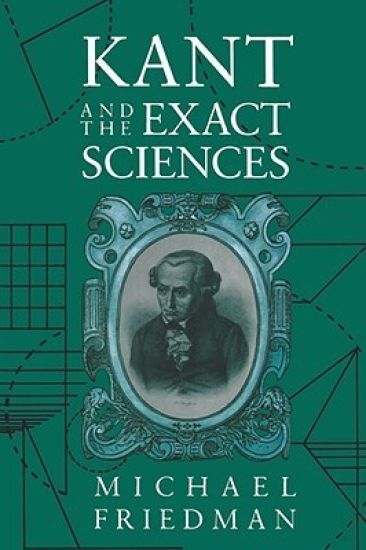
Kant sought throughout his life to provide a philosophy adequate to the sciences of his time—especially Euclidean geometry and Newtonian physics. In this new book, Michael Friedman argues that Kant’s continuing efforts to find a metaphysics that could provide a foundation for the sciences is of the utmost importance in understanding the development of his philosophical thought from its earliest beginnings in the thesis of 1747, through the Critique of Pure Reason, to his last unpublished writings in the Opus postumum.Previous commentators on Kant have typically minimized these efforts because the sciences in question have since been outmoded. Friedman argues that, on the contrary, Kant’s philosophy is shaped by extraordinarily deep insight into the foundations of the exact sciences as he found them, and that this represents one of the greatest strengths of his philosophy. Friedman examines Kant’s engagement with geometry, arithmetic and algebra, the foundations of mechanics, and the law of gravitation in Part One. He then devotes Part Two to the Opus postumum, showing how Kant’s need to come to terms with developments in the physics of heat and in chemistry formed a primary motive for his projected Transition from the Metaphysical Foundations of Natural Science to Physics.Kant and the Exact Sciences is a book of high scholarly achievement, argued with impressive power. It represents a great advance in our understanding of Kant’s philosophy of science.