Kirjojen hintavertailu. Mukana 12 595 353 kirjaa ja 12 kauppaa.
Kirjailija
Michael G. Smith
Kirjat ja teokset yhdessä paikassa: 11 kirjaa, julkaisuja vuosilta 1998-2024, suosituimpien joukossa Language and Power in the Creation of the USSR, 1917-1953. Vertaile teosten hintoja ja tarkista saatavuus suomalaisista kirjakaupoista.
This text looks at language planning in the USSR, covering the formative period under Lenin and Stalin. Based on party and state archival material, the book explores the tension between linguistic russification and nativization of the Soviet experience.
This engaging survey of the Space Age links science and technology with politics and popular culture, war and peace, and crises and controversies. It examines the history of spaceflight as a mirror of human thought and action across the Earth.The volume encompasses the new astronomy and sciences of the modern era, the early dreamers and pioneers after 1903, the national competitions of the First World War, the rocket states that prepared for the Second World War, the rivalries and “space race” of the Cold War between the US and USSR, as well as more recent developments including the Space Shuttle, the International Space Station, national space programs, orbital technologies, transhumanism, and military and commercial ventures in space. It also stresses the importance of geography in the geopolitics of spaceflight competition and in the nature of the planetary biosphere. Taking a chronological approach to lived human experience and threshold achievements, the chapters show how these themes have been reflected in literature, art, music, film, and our new digital worlds.This book is essential reading for students of the history of the Space Age, as well as an excellent companion to courses on twentieth-century science and technology, the Cold War, and American history.
This engaging survey of the Space Age links science and technology with politics and popular culture, war and peace, and crises and controversies. It examines the history of spaceflight as a mirror of human thought and action across the Earth.The volume encompasses the new astronomy and sciences of the modern era, the early dreamers and pioneers after 1903, the national competitions of the First World War, the rocket states that prepared for the Second World War, the rivalries and “space race” of the Cold War between the US and USSR, as well as more recent developments including the Space Shuttle, the International Space Station, national space programs, orbital technologies, transhumanism, and military and commercial ventures in space. It also stresses the importance of geography in the geopolitics of spaceflight competition and in the nature of the planetary biosphere. Taking a chronological approach to lived human experience and threshold achievements, the chapters show how these themes have been reflected in literature, art, music, film, and our new digital worlds.This book is essential reading for students of the history of the Space Age, as well as an excellent companion to courses on twentieth-century science and technology, the Cold War, and American history.
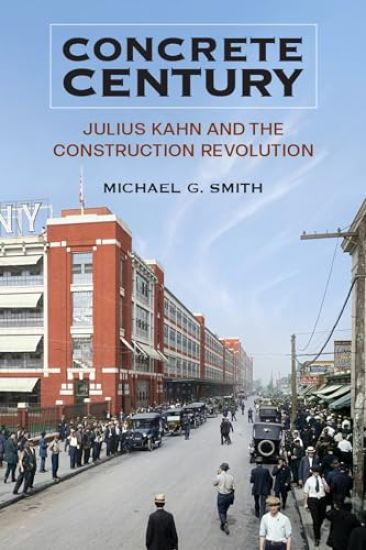
At the turn of the 20th century, industrial manufacturing was expanding dramatically while factory buildings remained fire-prone relics of an earlier age. That is, until a 28-year-old civil engineer finally achieved what engineers around the world had unsuccessfully attempted. Working in his brother’s basement in Detroit, Julius Kahn invented the first practical and scientific method of reinforcing concrete with steel bars, which finally made it possible to construct strong, fireproof buildings. After Kahn founded a company in 1903 to manufacture and sell his reinforcement bars, his system of construction became the most widely used throughout the world. Drawing upon Kahn’s personal correspondence, architectural drawings, company records, and contemporary news and journal articles, Michael G. Smith reveals how this man—whose family had immigrated to the US to escape antisemitism in Germany—played an important role in the rise of concrete. Concrete not only turned the tide against widespread destruction of buildings by fire, it also paved the way for our modern economy. Concrete Century will delight readers intrigued by architecture and construction technology alike with the true origin story of modern concrete buildings.
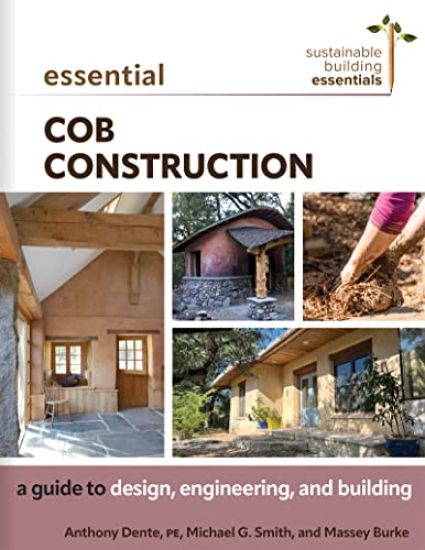
Setting the standard for modern cob construction – from design, engineering, and building code compliance, to sculpting beautiful structures Cob – a mix of clay, sand, and straw – is one of the most popular and well-known natural building methods. Yet cob is often difficult to permit and can be used in inappropriate ways due to a lack of sound engineering and design information. Recent research and a newly developed building code promise to make cob building more accessible than ever. Essential Cob Construction sets the new standard for cob construction. Incorporating rigorous, up-to-date engineering and building science and decades of practical lessons learned, coverage includes: Appropriate use of cob in different climates and contextsThermal performance and moisture managementStructural and architectural design considerations, including fire and earthquake resistance data from extensive laboratory testingHands-on cob construction, including mix design, testing, manual and mechanical mixing, wall building, strong connections with foundations, roofs, and other structural elements, and finishing optionsBuilding code development and the permitting process for cobPlanning, budgeting, and quality controlThe complete Cob Construction Appendix of the International Residential Code. Essential Cob Construction is required reading for engineers, architects, designers, contractors, and owner-builders working with this ancient, aesthetically pleasing, low-carbon building material.
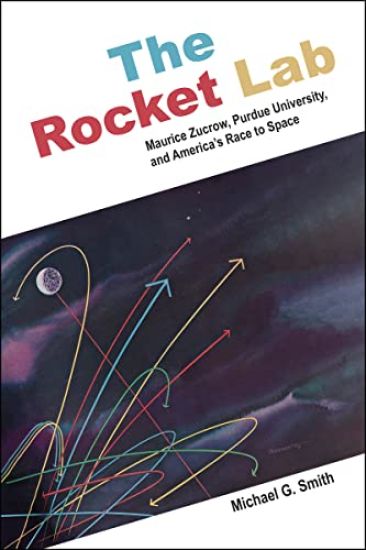
The Rocket Lab: Maurice Zucrow, Purdue University, and America's Race to Space focuses on the golden era of space exploration between 1946 and 1966, specifically the life and times of Purdue University's Dr. Maurice J. Zucrow, a pioneering teacher and researcher in aerospace engineering. Zucrow taught America's first university course in jet and rocket propulsion, wrote the field's first textbook, and established the country's first educational Rocket Lab. He was part of a small circle of innovators who transformed Purdue into the country's largest engineering university, which became a cradle of astronauts. Taking a chronological and thematic approach, The Rocket Lab weaves between the local and national, drawing in rival universities, especially Harvard, MIT, Princeton, and Caltech. Also covered is Zucrow's role in the national project system of research and development through World War II and the Cold War. At Aerojet, he was one of the country's original project engineers, dedicated to scientific-technical expertise and the stepwise approach. He made vanguard power plant contributions to the Northrop Flying Wing, as well as the Corporal, Nike, and Atlas missiles, among others. Zucrow's work in propulsion helped to improve the country's arsenal of ballistic missiles and space launchers, and as a teacher, he educated the first generation of aerospace engineers. This book elevates Zucrow and the central role he played in getting the United States to space.
The Rocket Lab: Maurice Zucrow, Purdue University, and America's Race to Space focuses on the golden era of space exploration between 1946 and 1966, specifically the life and times of Purdue University's Dr. Maurice J. Zucrow, a pioneering teacher and researcher in aerospace engineering. Zucrow taught America's first university course in jet and rocket propulsion, wrote the field's first textbook, and established the country's first educational Rocket Lab. He was part of a small circle of innovators who transformed Purdue into the country's largest engineering university, which became a cradle of astronauts. Taking a chronological and thematic approach, The Rocket Lab weaves between the local and national, drawing in rival universities, especially Harvard, MIT, Princeton, and Caltech. Also covered is Zucrow's role in the national project system of research and development through World War II and the Cold War. At Aerojet, he was one of the country's original project engineers, dedicated to scientific-technical expertise and the stepwise approach. He made vanguard power plant contributions to the Northrop Flying Wing, as well as the Corporal, Nike, and Atlas missiles, among others. Zucrow's work in propulsion helped to improve the country's arsenal of ballistic missiles and space launchers, and as a teacher, he educated the first generation of aerospace engineers. This book elevates Zucrow and the central role he played in getting the United States to space.
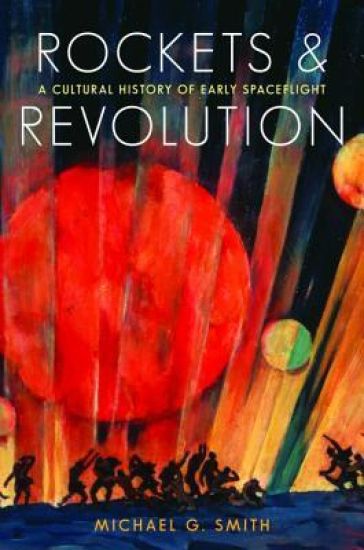
Rockets and Revolution offers a multifaceted study of the race toward space in the first half of the twentieth century, examining how the Russian, European, and American pioneers competed against one another in the early years to acquire the fundamentals of rocket science, engineer simple rockets, and ultimately prepare the path for human spaceflight. Between 1903 and 1953, Russia matured in radical and dramatic ways as the tensions and expectations of the Russian revolution drew it both westward and spaceward. European and American industrial capacities became the models to imitate and to surpass. The burden was always on Soviet Russia to catch up-enough to achieve a number of remarkable “firsts” in these years, from the first national rocket society to the first comprehensive surveys of spaceflight. Russia rose to the challenges of its Western rivals time and again, transcending the arenas of science and technology and adapting rocket science to popular culture, science fiction, political ideology, and military programs. While that race seemed well on its way to achieving the goal of space travel and exploring life on other planets, during the second half of the twentieth century these scientific advances turned back on humankind with the development of the intercontinental ballistic missile and the coming of the Cold War.