Kirjojen hintavertailu. Mukana 12 595 353 kirjaa ja 12 kauppaa.

Kirjailija

Michael G. Strawser

Kirjat ja teokset yhdessä paikassa: 6 kirjaa, julkaisuja vuosilta 2018-2023, suosituimpien joukossa Instructional Communication in Professional Contexts. Vertaile teosten hintoja ja tarkista saatavuus suomalaisista kirjakaupoista.

6 kirjaa

Kirjojen julkaisuhaarukka 2018-2023.

Instructional Communication in Professional Contexts
This volume continues a conversation that has been ongoing for decades: How do we as instructional communication researchers lend our expertise to help solve problems inside and outside of the academy?In Instructional Communication in Professional Contexts, communication scholar and volume editor Michael G. Strawser brings together various researchers and professionals in communication studies to address and explore the current state of instructional communication as it can be employed outside the academy in five key areas in industry: learning and development; organizational; health; technology; and risk and crisis.For each of these areas, an overview of the historical impact of instructional research is presented, followed by a discussion of current perspectives and future directions. Throughout, the book helps communication scholars, students, and practitioners better understand the innate ability of instructional communication research to solve problems beyond the walls of academe.
Conducting a Communication Audit

Conducting a Communication Audit

Michael G. Strawser

Cognella, Inc
2022
nidottu
Conducting a Communication Audit: Promoting Organizational Effectiveness through Communication Efficiency equips readers with the knowledge and skillsets they need to conduct successful communication audits and, in doing so, help organizations overcome their communication issues. The text teaches readers how to identify communication problems within organizations and then how to use this diagnostic information to enhance communication across the organization.Opening chapters provide readers with context for communication in the organization, as well as foundational determinations for beginning the audit process. The material discusses the importance of performing communication audits, the role of the communication consultant, setting goals and determining a strategy, and involving key stakeholders in the process. Additional chapters walk readers through the steps involved in an audit, including conducting a needs assessment, collecting data, analyzing data, and communicating results. Readers learn how to use audit results to create an internal communication strategy, infuse communication audits into organizational culture, and utilize results to inform organizational training. Closing chapters address the nuances of communication audits in a digital world and clearly summarize key ideas from each chapter.A dynamic, practical, and approachable handbook, Conducting a Communication Audit is an ideal resource for courses and programs in communication, business, and organizational communication and behavior.
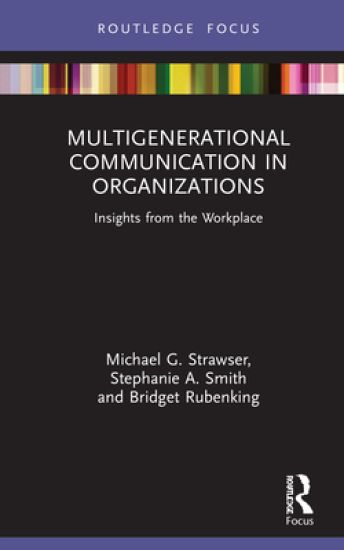
Multigenerational Communication in Organizations

Multigenerational Communication in Organizations

Michael G. Strawser; Stephanie A. Smith; Bridget Rubenking

Routledge
2021
sidottu
Multigenerational Communication in Organizations explores generational differences in the changing workplace from a communication perspective. Starting from the reality that a workplace can contain up to five different generations, these chapters examine topics like generational perceptions on the job search process; organizational culture; organizational identification; organizational crises; the dark side of workplace communication; remote working; and future challenges. Outlines of best practices and suggestions for application are provided based on the most recent data and corresponding literature. The authors also develop a data-forward understanding of Generation Z in context. This book is ideal for both scholars and practitioners in organizational communication and management, as well as for workplace managers and supervisors.
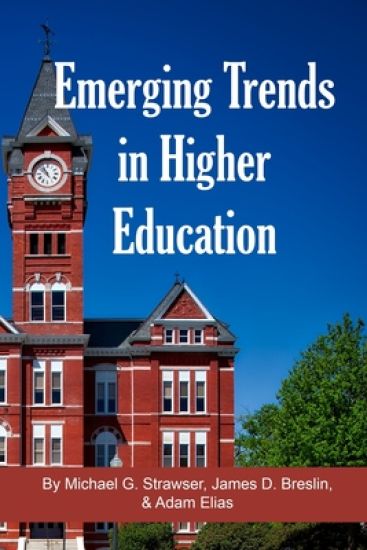
Emerging Trends in Higher Education

Emerging Trends in Higher Education

James D. Breslin; Adam Elias; Michael G. Strawser

New Forums Press
2019
nidottu
As the higher education market becomes more saturated with competition and as enrollment demographics continue to shift, universities must become more adept at developing, implementing, and promoting strategic initiatives. Recently, Bellarmine University, a private liberal arts institution in Louisville, KY, created a new strategic plan. The strategic planning process was a campus-wide initiative bringing together faculty, staff, and administrators. This resource was inspired by that strategic planning process. The authors played integral roles in the strategic planning process during their time at Bellarmine. Each author created a section that either connects directly to their expertise or is connected to their experiences during the strategic planning process. This resource is applicable for any institution and provides a structured, readable, and applicable strategic planning resource. As an overview of emerging trends, this book can be used by faculty, staff, and administrators alike to evaluate current institutional dynamics in light of national and international trends. The authors, like those in your own institutions, may not agree on every point, and you will see that play out across these pages, but differing perspectives provide value. This resource includes questions to ponder at the end of every chapter that can help small groups and work groups think strategically about next steps. The book is divided into three easy to read sections: Institutional Economics (exploring university finances); Student Services; and Teaching and Learning.
Engaging Millennial Faculty

Engaging Millennial Faculty

Russell Carpenter; Michael G. Strawser

New Forums Press
2019
nidottu
As a platform for discussing workplace effectiveness and workplace differences, generational differences help provide context. Unfortunately, generational differences in higher education can be a difficult subject to explore. For one, there is a broad spectrum represented by generations in higher ed. Comparatively, the retirement age of faculty is older than the traditional workplace and the starting age of new faculty is older as well because of the time it takes to complete degree requirements. This creates a unique and complex environment. It is important though, especially as we start to see a wave of millennial faculty, that we appropriately address how faculty demographics will change and how that will impact the higher education environment at large. For the purposes of this volume, the reader needs to think strategically about how to engage millennial faculty in what has been a typically anti-millennial infrastructure. The authors would ask that you be patient with this volume; it has been developed as a practical resource. Pause as you fume at generalized generational differences and remember that not everyone fits into one box: every millennial is different, every boomer is different, etc. Still, we hope this volume will be helpful, no matter your feelings on generational differences, as you look to serve and support all faculty.
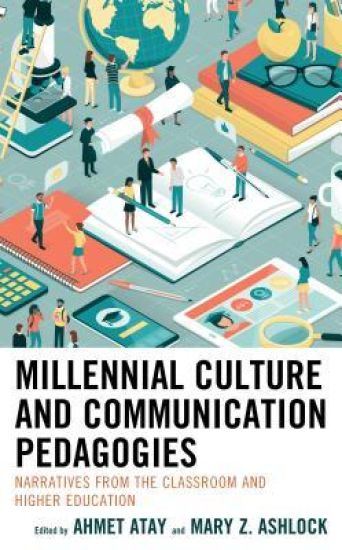
Millennial Culture and Communication Pedagogies

Millennial Culture and Communication Pedagogies

Andrew Sutherland; Michael G. Strawser

Lexington Books
2018
sidottu
This book examines the ways in which faculty and staff at the higher education level teach and communicate with their millennial students and colleagues. The contributors address how millennials' academic and non-academic interests and everyday performances within and outside of higher education influence how faculty and staff communicate with them. This book delves into how millennials can become more adaptable in their communication with others in society especially in higher education, be it from different generations, or cultures that may or may not communicate the way they do. The contributors argue that millennial culture should be carefully studied by instructors, researchers, and administrators to create a better classroom and educational experience and also improve the level of communication among these constituencies.