Kirjojen hintavertailu. Mukana 12 657 676 kirjaa ja 12 kauppaa.

Kirjailija

Michael Gehler

Kirjat ja teokset yhdessä paikassa: 9 kirjaa, julkaisuja vuosilta 2005-2028, suosituimpien joukossa Ein Europaisches Gewissen: Hans-Gert Pottering - Biografie. Vertaile teosten hintoja ja tarkista saatavuus suomalaisista kirjakaupoista.

9 kirjaa

Kirjojen julkaisuhaarukka 2005-2028.

Modelling Eu-Europe. a Non-Imperial Postmodern Empire?: A Handbook
Handelt es sich bei der Europ ischen Union um eine neue Supermacht mit imperialen Ambitionen? Ist es berhaupt ein Imperium? Diese Fragen wurden schon vor dem Krisenjahrzehnt (2008-2018) gestellt, aber auch in Folge. Sie werden analysiert und diskutiert mit Blick auf Realgeschichte (Entstehung, Struktur, Erweiterungen, Reaktionen durch Dritte, gr erer machthistorischer Kontext, Erosion und Zerfall) sowie der Rezeptionsgeschichte (konkrete Wirkungsgeschichte, Stilisierungen, Vernachl ssigungen, berinterpretationen, Unverh ltnism igkeiten in den Bedeutungszuschreibungen, Bezugnahmen auf geschichtliche Imperien, Vorl ufer, Erzeugung von historischem Bewu tsein und Tradition, imperiale Schein-Kontinuit ten, Historiographien, das Heilige R mische Reich als Vorl ufer?, moderner Forschungsstand und epochen bergreifende Vergleiche). Es folgen erste Befunde und sodann berlegungen zu weiteren Entwicklungsm glichkeiten der EU ("Lissabon-Strategie", Lissabon-Vertrag, die offene Frage der politischen Finalit t, Nationalstaaten als EU-Mitglieder im Kontext der Globalisierung, die NATO- und EU-"Osterweiterung" und die Beziehungen zur Russland) sowie zur Frage, was die EU zusammenh lt (der unvermeidliche kategorische Integrationsimperativ Deutschland, die deutsch-franz sische Partnerschaft als Voraussetzung, die integrierte Rechtsgemeinschaft, der Binnenmarkt, der Euro als Anker, die Mehrheit der Gemeinschaftsinstitutionen, au ervertragliche Regelungen, u ere Krisen als Stimultoren, die "Fl chtlingskrise" als L sungszwang und die soziale Dimension). Dr ngende Zukunftsaufgaben und die Voraussetzungen f r ein weiteres Funktionieren der EU werden ebenso analysiert (Glaubw rdigkeit durch Vertragstreue und St rkung der Legitimation, Selbstverantwortung und Solidarit t sowie die alles berragende Herausforderung China).
Deutschland

Deutschland

Michael Gehler

Bohlau Verlag
2020
sidottu
Entfremdung, Konfrontation und Systemwettbewerb pragten die beiden Nachkriegsstaaten, die Bundesrepublik und die DDR. Die "soziale Marktwirtschaft" stand mit dem "Wirtschaftswunder" der sozialistischen Planwirtschaft mit der "Neuen Wirtschaftsordnung" gegenuber. Beide Staaten reprasentierten die geteilte deutsche Nation. Die Unzufriedenheit mit den Nachwehen der Ara Adenauer artikulierte sich in der 1968er Protestbewegung. Eine sozial-liberale Ara unter Brandt und Schmidt folgte. Es kam zu einer pragmatischen Annaherung beider Staaten. Nach dem "Fall der Mauer" wurde das vereinte Deutschland in den verstarkten Rahmen der EU okonomisch und wahrungspolitisch sowie durch die NATO-Osterweiterung vollends sicherheitspolitisch eingebunden. Die Ara Kohl endete mit grossem Reformstau, aber die Berliner Republik begann Konturen anzunehmen. Rot-Grun unter Schroder und Fischer startete mit der "Agenda 2000", verlor allerdings die Wahlergunst. Die Ara Merkel war eine Kanzlerschaft im Krisenmodus voller Widerspruche: Sie ermoglichte unter deutscher EU-Prasidentschaft 2007 den Unionsvertrag von Lissabon und spielte mit Frankreich eine fuhrende Rolle beim Zusammenhalt der Eurozone. In der "Fluchtlingskrise" 2015 provozierte sie die Spaltung der EU-Mitglieder. Chancen fur eine neue Dynamik der Integration wurden 2017-2019 vertan. Die Corona-Krise 2020 hat die Grosse Koalition vor eine noch grossere Herausforderung als die Banken- und Finanzkrise von 2008/09 gestellt. Das Land ist 30 Jahre nach der Einheit gesellschaftlich und politisch gespalten. Aspekte der Aussen- und Innenpolitik sowie der Gesellschaft, Medien und Wirtschaft, aber auch des Alltags wie des Sports und der Unterhaltung werden in dieser Gesamtdarstellung von 1945 bis 2020 behandelt.
Ein Europaisches Gewissen: Hans-Gert Pottering - Biografie

Ein Europaisches Gewissen: Hans-Gert Pottering - Biografie

Michael Gehler; Marcus Gonschor

Verlag Herder
2020
sidottu
Die beiden Geschichtswissenschaftler Michael Gehler und Marcus Gonschor liefern eine fundierte Biografie des langjahrigen Europapolitikers und ehemaligen Vorsitzenden der Konrad-Adenauer-Stiftung, Hans-Gert Pottering. Sie zeichnen Potterings Lebenslauf und politische Entwicklung nach und wurdigen seine massgebliche Rolle beim Aufbau parlamentarischer Strukturen in der EU. Gehler und Gonschor schreiben damit zugleich ein wichtiges Stuck christdemokratischer, bundesrepublikanischer Geschichte.
Austrian Foreign Policy in Historical Context

Austrian Foreign Policy in Historical Context

Anton Pelinka; Gunter Bischof; Michael Gehler

Routledge
2018
sidottu
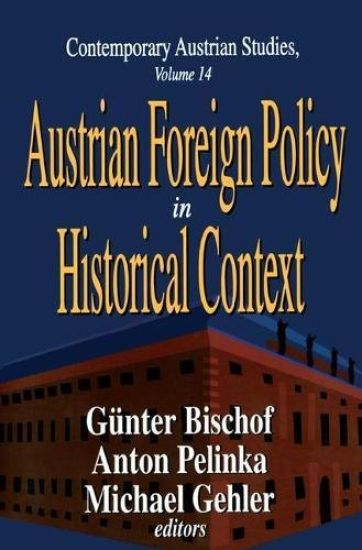
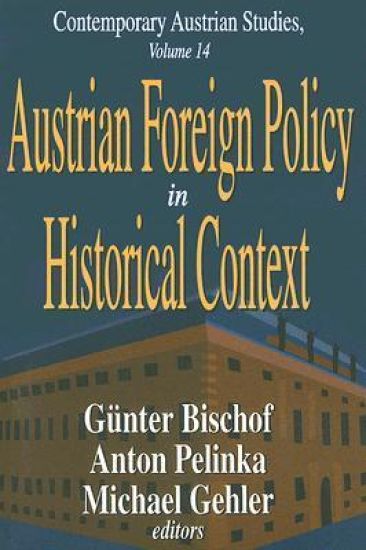
In 2005, Austria celebrated the sixtieth anniversary of its liberation from the Nazi regime and the fiftieth anniversary of the State Treaty that ended the occupation and returned full sovereignty to the country. This volume of Contemporary Austrian Studies covers foreign policy in the twentieth century. It offers an up-to-date status report of Austria's foreign policy trajectories and diplomatic options.Eva Nowotny, the current Austrian ambassador to the United States, introduces the volume with an analysis of the art and practice of Austrian diplomacy in historical perspective. Ambassador Wolfgang Petritsch analyzes recent Balkans diplomacy as an EU emissary in the Bosnian and Kosovo crises. Historians Günther Kronenbitter, Alexander Lassner, Günter Bischof, Joanna Granville, and Martin Kofler provide historical case studies of pre-and post-World War I and World War II Austrian diplomacy, Austria's dealings with the Hungarian crisis of 1956, and its mediation between Kennedy and Khrushchev in the early 1960s. Political scientists Romain Kirt, Stefan Mayer, and Gunther Hauser analyze small states' foreign policymaking in a globalizing world, Austrian federal states' separate regional policy initiatives abroad and Austria's role vis-à-vis current European security initiatives. Michael Gehler periodizes post-World War II Austrian foreign policy regimes and provides a valuable summary of both the available archival and printed diplomatic source collections. A "Historiography Roundtable" is dedicated to the Austrian Occupation decade. Günter Bischof reports on the state of occupation historiography; Oliver Rathkolb on the historical memory of the occupation; Michael Gehler on the context of the German question; and Wolfgang Mueller and Norman Naimark on Stalin's Cold War and Soviet policies towards Austria during those years. Review essays and book reviews on art theft, anti-Semitism, the Hungarian crisis of 1956, among other topics, complete the volume.
Austrian Foreign Policy in Historical Context

Austrian Foreign Policy in Historical Context

Anton Pelinka; Gunter Bischof; Michael Gehler

AldineTransaction
2005
nidottu
In 2005, Austria celebrated the sixtieth anniversary of its liberation from the Nazi regime and the fiftieth anniversary of the State Treaty that ended the occupation and returned full sovereignty to the country. This volume of Contemporary Austrian Studies covers foreign policy in the twentieth century. It offers an up-to-date status report of Austria's foreign policy trajectories and diplomatic options.Eva Nowotny, the current Austrian ambassador to the United States, introduces the volume with an analysis of the art and practice of Austrian diplomacy in historical perspective. Ambassador Wolfgang Petritsch analyzes recent Balkans diplomacy as an EU emissary in the Bosnian and Kosovo crises. Historians Günther Kronenbitter, Alexander Lassner, Günter Bischof, Joanna Granville, and Martin Kofler provide historical case studies of pre-and post-World War I and World War II Austrian diplomacy, Austria's dealings with the Hungarian crisis of 1956, and its mediation between Kennedy and Khrushchev in the early 1960s. Political scientists Romain Kirt, Stefan Mayer, and Gunther Hauser analyze small states' foreign policymaking in a globalizing world, Austrian federal states' separate regional policy initiatives abroad and Austria's role vis-à-vis current European security initiatives. Michael Gehler periodizes post-World War II Austrian foreign policy regimes and provides a valuable summary of both the available archival and printed diplomatic source collections. A "Historiography Roundtable" is dedicated to the Austrian Occupation decade. Günter Bischof reports on the state of occupation historiography; Oliver Rathkolb on the historical memory of the occupation; Michael Gehler on the context of the German question; and Wolfgang Mueller and Norman Naimark on Stalin's Cold War and Soviet policies towards Austria during those years. Review essays and book reviews on art theft, anti-Semitism, the Hungarian crisis of 1956, among other topics, complete the volume.