Kirjojen hintavertailu. Mukana 12 390 323 kirjaa ja 12 kauppaa.

Kirjailija

Michael Gordin

Kirjat ja teokset yhdessä paikassa: 3 kirjaa, julkaisuja vuosilta 2013-2017, suosituimpien joukossa Scientific Babel. Vertaile teosten hintoja ja tarkista saatavuus suomalaisista kirjakaupoista.

3 kirjaa

Kirjojen julkaisuhaarukka 2013-2017.

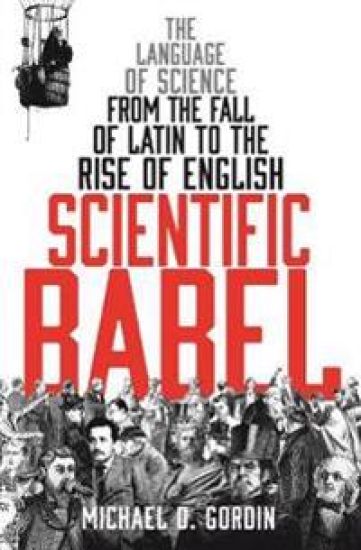
Scientific Babel

Scientific Babel

Michael Gordin

Profile Books Ltd
2017
pokkari
Today, the language of science is English. But the dominance of this particular language is a relatively recent phenomenon - and far from a foregone conclusion. In a sweeping history that takes us from antiquity to the modern day, Michael D. Gordin untangles the web of politics, money, personality and international conflict that created the monoglot world of science we now inhabit. Beginning with the rise of Latin, Gordin reveals how we went on to use (and then lose) Dutch, Italian, Swedish and many other languages on the way, and sheds light on just how significant language is in the nationalistic realm of science - just one word mistranslated into German from Russian triggered an inflammatory face-off between the two countries for the credit of having discovered the periodic table. Intelligent, revealing and full of compelling stories, Scientific Babel shows how the world has shaped science just as much as science has transformed the world.
How Reason Almost Lost Its Mind – The Strange Career of Cold War Rationality

How Reason Almost Lost Its Mind – The Strange Career of Cold War Rationality

Paul Erickson; Judy L. Klein; Lorraine Daston; Rebecca Lemov; Thomas Sturm; Michael Gordin

University of Chicago Press
2015
nidottu
In the United States at the height of the Cold War, roughly between the end of World War II and the early 1980s, a new project of redefining rationality commanded the attention of sharp minds, powerful politicians, wealthy foundations, and top military brass. Its home was the human sciences—psychology, sociology, political science, and economics, among others—and its participants enlisted in an intellectual campaign to figure out what rationality should mean and how it could be deployed. How Reason Almost Lost Its Mind brings to life the people—Herbert Simon, Oskar Morgenstern, Herman Kahn, Anatol Rapoport, Thomas Schelling, and many others—and places, including the RAND Corporation, the Center for Advanced Study in the Behavioral Sciences, the Cowles Commission for Research and Economics, and the Council on Foreign Relations, that played a key role in putting forth a \u201cCold War rationality.\u201d Decision makers harnessed this picture of rationality—optimizing, formal, algorithmic, and mechanical—in their quest to understand phenomena as diverse as economic transactions, biological evolution, political elections, international relations, and military strategy. The authors chronicle and illuminate what it meant to be rational in the age of nuclear brinkmanship.
How Reason Almost Lost Its Mind

How Reason Almost Lost Its Mind

Paul Erickson; Judy L. Klein; Lorraine Daston; Rebecca Lemov; Thomas Sturm; Michael Gordin

University of Chicago Press
2013
sidottu
In the United States at the height of the Cold War, roughly between the end of World War II and the early 1980s, a new project of redefining rationality commanded the attention of sharp minds, powerful politicians, wealthy foundations, and top military brass. Its home was the human sciences - psychology, sociology, political science, and economics, among others - and its participants enlisted in an intellectual campaign to figure out what rationality should mean and how it could be deployed. How Reason Almost Lost Its Mind brings to life the people - Herbert Simon, Oskar Morgenstern, Herman Kahn, Anatol Rapoport, Thomas Schelling, and many others - and places, including the RAND Corporation, the Center for Advanced Study in the Behavioral Sciences, the Cowles Commission for Research and Economics, and the Council on Foreign Relations, that played a key role in putting forth a "Cold War rationality." Decision makers harnessed this picture of rationality - optimizing, formal, algorithmic, and mechanical - in their quest to understand phenomena as diverse as economic transactions, biological evolution, political elections, international relations, and military strategy. The authors chronicle and illuminate what it meant to be rational in the age of nuclear brinkmanship.