
Kirjailija
Michael Hammond
Kirjat ja teokset yhdessä paikassa: 35 kirjaa, julkaisuja vuosilta 1988-2027, suosituimpien joukossa 1999. Vertaile teosten hintoja ja tarkista saatavuus suomalaisista kirjakaupoista.
35 kirjaa
Kirjojen julkaisuhaarukka 1988-2027.

In recent years, speech recognition devices have become central to our everyday lives. Systems such as Siri, Alexa, speech-to-text, and automated telephone services, are built by people applying expertise in sound structure and natural language processing to generate computer programmes that can recognise and understand speech. This exciting new advancement has led to a rapid growth in speech technology courses being added to linguistics programmes; however, there has so far been a lack of material serving the needs of students who have limited or no background in computer science or mathematics. This textbook addresses that need, by providing an accessible introduction to the fundamentals of computer speech synthesis and automatic speech recognition technology, covering both neural and non-neural approaches. It explains the basic concepts in non-technical language, providing step-by-step explanations of each formula, practical activities and ready-made code for students to use, which is also available on an accompanying website.

In recent years, speech recognition devices have become central to our everyday lives. Systems such as Siri, Alexa, speech-to-text, and automated telephone services, are built by people applying expertise in sound structure and natural language processing to generate computer programmes that can recognise and understand speech. This exciting new advancement has led to a rapid growth in speech technology courses being added to linguistics programmes; however, there has so far been a lack of material serving the needs of students who have limited or no background in computer science or mathematics. This textbook addresses that need, by providing an accessible introduction to the fundamentals of computer speech synthesis and automatic speech recognition technology, covering both neural and non-neural approaches. It explains the basic concepts in non-technical language, providing step-by-step explanations of each formula, practical activities and ready-made code for students to use, which is also available on an accompanying website.


The field of digital technology in education has long been under-theorised. This book will enable the reader to reflect on the use of theory when explaining technology use and set out ways in which we can theorise better. It explores the concept of theory and looks at how teaching, learning and technology itself have been theorised. With relatable international case studies, it shows how theories underpin optimistic and pessimistic accounts of technology in education. This innovative book will help readers to understand more deeply the use of digital technology in education, as well as the idea of theory and how to develop a distinctly educational approach to theorising.

The field of digital technology in education has long been under-theorised. This book will enable the reader to reflect on the use of theory when explaining technology use and set out ways in which we can theorise better. It explores the concept of theory and looks at how teaching, learning and technology itself have been theorised. With relatable international case studies, it shows how theories underpin optimistic and pessimistic accounts of technology in education. This innovative book will help readers to understand more deeply the use of digital technology in education, as well as the idea of theory and how to develop a distinctly educational approach to theorising.
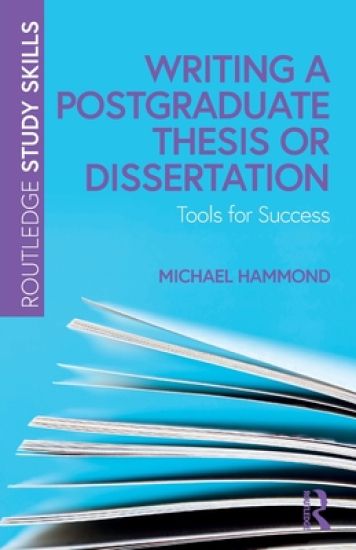
Writing a Postgraduate Thesis or Dissertation discusses the challenges that students encounter in their writing and provides thoughtful advice on how to address those challenges. It provides guidance on writing about literature, methodology and methods and shows the importance of stating a contribution to knowledge.Providing key insight into the process of writing a dissertation or thesis, this book: explains the process of writing and provides insight into strategies that support good writing considers the audience and purpose of a report as well as the voice of the writer discusses the structure and organisational features of theses and dissertations, highlighting the central role of the research questionWriting a Postgraduate Thesis or Dissertation is an ideal guide for doctoral and masters students in the social sciences.
Writing a Postgraduate Thesis or Dissertation discusses the challenges that students encounter in their writing and provides thoughtful advice on how to address those challenges. It provides guidance on writing about literature, methodology and methods and shows the importance of stating a contribution to knowledge.Providing key insight into the process of writing a dissertation or thesis, this book: explains the process of writing and provides insight into strategies that support good writing considers the audience and purpose of a report as well as the voice of the writer discusses the structure and organisational features of theses and dissertations, highlighting the central role of the research questionWriting a Postgraduate Thesis or Dissertation is an ideal guide for doctoral and masters students in the social sciences.

WHEN BENJAMIN SAUNDERS RECEIVES A MYSTERIOUS LETTER DISCUSSING HIS RECENT ACQUISITION OF THE OLD EVERETTE ESTATE, HE CAN HARDLY BELIEVE IT TO BE TRUE. COMPELLED BY HIS NEED TO REVISIT THE PROPERTY HE IS FORCED TO TAKE A LONG HARD LOOK AT THE PAST. AS HE WANDERS THE HOUSE AND THE SURROUNDING PROPERTY HE LEARNS THAT SOMETIMES IT TAKES A WALK THROUGH THE PAST IN ORDER TO CONFRONT THE PRESENT... IT MAY NOT BE THE WAY HE WANTED IT, BUT IT IS THE WAY IT HAS TO BE.
This book provides an overview of ninety key concepts which often trouble those who are new to researching within the social sciences. It covers theories of knowledge, methodologies and methods. Each entry offers a definition of a concept, shows how researchers have used that concept in their research and discusses difficulties that the concept presents. The book supports those undertaking their own social research projects by providing detailed critical commentary on key concepts in a particularly accessible way.In exploring these concepts, a wide range of research reports across many different fields are described. These include not only classic accounts, but also a broad selection of recent studies, some written by new researchers. The book will be useful for higher-education students carrying out projects within social science faculties at the end of their first degree or during a master's programme, though it will also be helpful for those undertaking doctoral research, and some entries have been written with the production of a thesis in mind. This second edition of Research Methods: The Key Concepts provides a more comprehensive and up-to-date coverage, as old entries have been updated and 19 new entries added. It helps new researchers to navigate the changing landscape of social research by recognising a) the changes in the ways researchers are thinking about knowledge and acquiring knowledge, b) the increasing use of digital tools to collect data, and c) the desire many contemporary researchers feel to promote social justice through their research.

This book provides an overview of ninety key concepts which often trouble those who are new to researching within the social sciences. It covers theories of knowledge, methodologies and methods. Each entry offers a definition of a concept, shows how researchers have used that concept in their research and discusses difficulties that the concept presents. The book supports those undertaking their own social research projects by providing detailed critical commentary on key concepts in a particularly accessible way.In exploring these concepts, a wide range of research reports across many different fields are described. These include not only classic accounts, but also a broad selection of recent studies, some written by new researchers. The book will be useful for higher-education students carrying out projects within social science faculties at the end of their first degree or during a master's programme, though it will also be helpful for those undertaking doctoral research, and some entries have been written with the production of a thesis in mind. This second edition of Research Methods: The Key Concepts provides a more comprehensive and up-to-date coverage, as old entries have been updated and 19 new entries added. It helps new researchers to navigate the changing landscape of social research by recognising a) the changes in the ways researchers are thinking about knowledge and acquiring knowledge, b) the increasing use of digital tools to collect data, and c) the desire many contemporary researchers feel to promote social justice through their research.

The Great War in Hollywood Memory, 1918-1939
Michael Hammond
State University of New York Press
2020
pokkari
Assesses how America's film industry remembered World War I during the interwar period.This is the definitive account of how America's film industry remembered and reimagined World War I from the Armistice in 1918 to the outbreak of World War II in 1939. Based on detailed archival research, Michael Hammond shows how the war and the sociocultural changes it brought made their way into cinematic stories and images. He traces the development of the war's memory in films dealing with combat on the ground and in the air, the role of women behind the lines, returning veterans, and through the social problem and horror genres. Hammond first examines movies that dealt directly with the war and the men and women who experienced it. He then turns to the consequences of the war as they played out across a range of films, some only tangentially related to the conflict itself. Hammond finds that the Great War acted as a storehouse of motifs and tropes drawn upon in the service of an industry actively seeking to deliver clearly told, entertaining stories to paying audiences. Films analyzed include The Big Parade, Grand Hotel, Hell's Angels, The Black Cat, and Wings. Drawing on production records, set designs, personal accounts, and the advertising and reception of key films, the book offers unique insight into a cinematic remembering that was a product of the studio system as it emerged as a global entertainment industry.
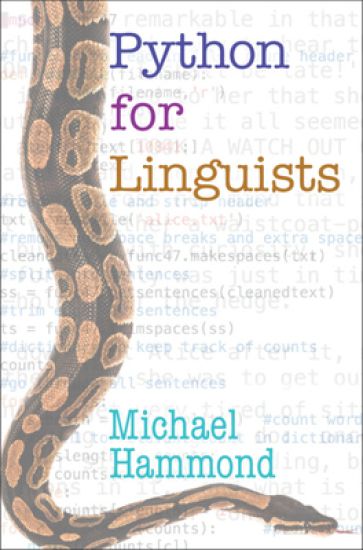
Specifically designed for linguists, this book provides an introduction to programming using Python for those with little to no experience of coding. Python is one of the most popular and widely-used programming languages as it's also available for free and runs on any operating system. All examples in the text involve language data and can be adapted or used directly for language research. The text focuses on key language-related issues: searching, text manipulation, text encoding and internet data, providing an excellent resource for language research. More experienced users of Python will also benefit from the advanced chapters on graphical user interfaces and functional programming.
Specifically designed for linguists, this book provides an introduction to programming using Python for those with little to no experience of coding. Python is one of the most popular and widely-used programming languages as it's also available for free and runs on any operating system. All examples in the text involve language data and can be adapted or used directly for language research. The text focuses on key language-related issues: searching, text manipulation, text encoding and internet data, providing an excellent resource for language research. More experienced users of Python will also benefit from the advanced chapters on graphical user interfaces and functional programming.
Concise, engaging and accessible, Education Research: The Basics discusses key ideas about the nature and purpose of education research: what it can and cannot achieve, how it has been used in the past and where and how it has an impact. Providing crucial insight into the work of education researchers, this book: Offers seven chapters, each representing a way of understanding the goals and methods of research conducted in the field Considers key thinkers in the field, such as Plato, Hirsch, Dewey, Montessori and Freire Explores case studies from a range of perspectives Provides key terms and further reading throughoutThe perfect pocket resource to dip into, Education Research: The Basics provides accessible support for those studying education as a subject, for practitioners concerned with developing their practice and for anyone who wants to know more about education and how it is researched.

Concise, engaging and accessible, Education Research: The Basics discusses key ideas about the nature and purpose of education research: what it can and cannot achieve, how it has been used in the past and where and how it has an impact. Providing crucial insight into the work of education researchers, this book: Offers seven chapters, each representing a way of understanding the goals and methods of research conducted in the field Considers key thinkers in the field, such as Plato, Hirsch, Dewey, Montessori and Freire Explores case studies from a range of perspectives Provides key terms and further reading throughoutThe perfect pocket resource to dip into, Education Research: The Basics provides accessible support for those studying education as a subject, for practitioners concerned with developing their practice and for anyone who wants to know more about education and how it is researched.
Teaching and Learning with Multimedia
Janet Collins; Michael Hammond; Jerry Wellington
Routledge
2017
sidottu
This book is an introduction to the issues and practicalities of using multimedia in classrooms - both primary and secondary, and across a range of subject areas. The book draws on material from a range of case studies and focuses on areas of concern for teachers and researchers. Using IT effectively continues to be a problem for many teachers, and there is still a long way to go toward organising this properly. The book takes a thorough look at IT in the school, discussing and examining issues such as: IT and the National Curriculum foreign language teaching differing curricular needs opportunities and constraints of groupwork talking books and primary reading ways in which multimedia supports readers. The book also looks at some of the more philosophical issues such as the implications of home-computers and the limits of independent learning, and the notion of "edutainment" - the relationship of motivation and enjoyment to learning. Finally, the book makes comparisons across the curriculum and between primary and secondary sectors and raises questions about the future of IT in schools, arguing that teachers should make a significant contribution to decisions about future development.

This guide charts the NQT's next steps in teaching from finishing a teacher training programme, through to the probationary year, and then into the comparatively settled routine of the second and third years of teaching. Suitable for all new teachers in secondary schools, this book aims to: help with navigating the pitfalls of teaching describe some of the possible challenges and difficulties faced in the classroom and provide advice based on the experiences of other teachers describe the successful strategies new teachers have used to develop teaching highlight the satisfaction of teaching. An important feature of the book is that it takes an extended view of the early years of a teaching career, looking beyond the short term 'What am I going to teach this class next week, or next lesson, or even right now?'. Next Steps in Teaching also presents interviews with new teachers that will help to show how others have been through similar experiences and came out as confident teachers.