

Kirjailija
Michael Hanna
Kirjat ja teokset yhdessä paikassa: 13 kirjaa, julkaisuja vuosilta 2003-2025, suosituimpien joukossa Misconceptualizations of Trauma. Vertaile teosten hintoja ja tarkista saatavuus suomalaisista kirjakaupoista.
13 kirjaa
Kirjojen julkaisuhaarukka 2003-2025.






Quantitative Analysis for Management, Global Edition + MyLab Operations Management with Pearson eText
Barry Render; Ralph Stair; Michael Hanna; Trevor Hale
pearson education limited
2025
muu

Quantitative Analysis for Management, Global Edition
Barry Render; Ralph Stair; Michael Hanna; Trevor Hale
pearson education limited
2024
muu
Quantitative Analysis for Management helps you develop a real-world understanding of business analytics, quantitative methods, and management science. It does this by using mathematical model building, tangible examples, and computer applications. You're first introduced to models and then you apply those models using step-by-step, how-to instructions and software.

Denis Brenan Bullen (1802-66) Inspector of Anatomy for the Province of Munster
Michael Hanna
Four Courts Press Ltd
2021
nidottu

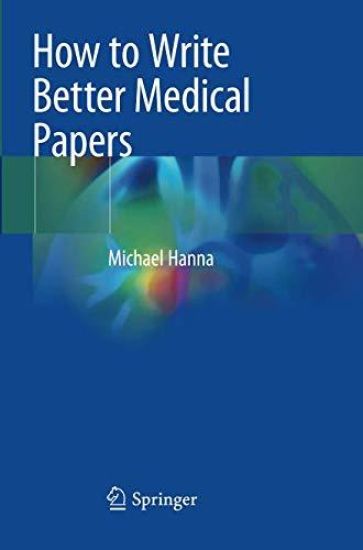
This book guides medical researchers through all stages of transforming their scientific data and ideas into a published paper. Many researchers in medicine, including the life sciences and health sciences, struggle to get their research written and published. Manuscripts are typically rejected and/or sent back for revisions several times before ever being published. One reason for this is that researchers have not received much instruction in the specific subjects and skills needed to write and publish scientific medical papers: research methodology, ethics, statistics, data visualization, writing, revising, and the practicalities of publishing. Instead of wasting the reader’s time discussing trivialities of punctuation, spelling, etc., this book tackles all the major scientific issues that routinely lead to manuscripts getting rejected from the journals. The section “Preparing” covers the range of methodological, ethical, and practical aspects that researchers need to address before starting to write their paper. The section “Analyzing” reviews commonplace problems in the statistical analysis and presentation, and how to resolve those problems. The section “Drafting” describes what to write in all the various parts of a paper (the Introduction, Methods, Results, Discussion, Abstract, etc.) The section “Revising” explains and illustrates how to improve the writing style of any manuscript. The section “Publishing” discusses how to navigate the peer review process and all other practical aspects of the publishing phase. This book draws on the author’s decade of experience as an independent medical writer and research consultant, but it is not written merely as the personal opinion of yet another expert. The entire book is grounded in the existing scientific and scholarly literature, with extensive references and a lengthy annotated bibliography, so readerscan quickly obtain more information on any aspect they want. Thus this book provides a more evidence-based, scholarly account of how medical scientific papers should be written, in order to improve medical communication and accelerate scientific progress. After reading this entire book cover to cover, medical researchers will know how to write better quality medical papers, and they will be able to publish their work in better journals with less time and struggle. This book is essential reading for anyone conducting research in clinical medicine, life sciences, or health sciences.

Learning the Git Bash Shell: Become a Windows Command Line Commando
Michael Hanna
Createspace Independent Publishing Platform
2014
nidottu
In recent decades, the study of trauma has been one of the fastest-growing fields of investigation in Clinical Psychology. But how do researchers and therapists themselves actually conceptualize "trauma"? Despite being an intangible, phenomena of relations between persons, which has an ever-evolving manifestation, many researchers and clinicians have a tendency to oversimplify trauma as just being some sort of thing, with a static and substantial existence of its own. The present work is an epistemological investigation of how Psychologists think about the phenomena called "trauma." One by one, 20 key articles from the international scientific literature on trauma are presented and examined. Using an approach of textual and logical analysis, it is shown how trauma is often implicitly misconceptualized in this overly simplifying way as being a tangible and static thing. This book also explains which negative consequences these oversimplifications would have in the actual therapy with patients. This investigation gives equal attention to the scientific literature in English, German, French, and Spanish. So moreover, it becomes apparent in the present work that American, German, French, and Latino researchers have rather different understandings of trauma, and even more so that they have different ideas about what are the best approaches to therapy. The present investigation is therefore the first work which allows readers a comparative look at all four of these culturally different understandings of trauma. The work concludes that regardless of a person's preferred orientations in Psychology, at an epistemological level a "dialectical-ecological" level of thinking is necessary to adequately understand the clinical phenomena of trauma in all its true complexity.