Kirjailija
Michael Hardt
Kirjat ja teokset yhdessä paikassa: 18 kirjaa, julkaisuja vuosilta 1985-2023, suosituimpien joukossa The President's House Is Empty. Vertaile teosten hintoja ja tarkista saatavuus suomalaisista kirjakaupoista.
18 kirjaa
Kirjojen julkaisuhaarukka 1985-2023.
A militant reading of struggles and developments in Bolivia form a balance sheet of possibility for a Left program in the country, hemisphere, and the world. Bolivia beyond the Impasse sketches the primary characteristics of the current political, social, and economic situation of Bolivia. Longtime militant researchers Michael Hardt and Sandro Mezzadra explain not only how this situation came about but also the obstacles that confront today's progressive forces and have led to an impasse. Right-wing political and social forces continue to gain strength and constantly hinder or thwart progressive initiatives. Obstacles also arise from within movements, including the vexed question of leadership, which has increasingly surfaced between Evo Morales as leader of the MAS party and Luis Arce as president of the government. Hardt and Mezzadra do not dwell on these obstacles, however, because they also recognize the extraordinary power and innovation that a new phase of political struggle in Bolivia could unleash beyond the impasse. The current situation, they argue, remains open to new political inventions rooted in the wide range of progressive and revolutionary forces both inside and outside the government and the MAS party. Firmly grounded in the Bolivian situation, Hardt and Mezzadra keep their eye on the Latin American context because they believe that, just as it was twenty years ago, many of today's most stubborn political and economic obstacles can only be overcome through mechanisms beyond national boundaries, by inventing effective mechanisms of regional cooperation. Although the path forward is not clear and that new and old right-wing forces constitute continuing and increasing threats throughout the region--from Brazil to Argentina and from Colombia to Chile--Hardt and Mezzadra offer a reading of the struggles that form the balance sheet of possibility for a Left program in the country, and consequently the hemisphere, and world. Despite all the threats and obstacles that feed the impasse, however, dynamics of insurgency and struggle continue to resonate and circulate throughout Latin America. As they powerfully demonstrate, discovering how to defend against violent reactionary forces while furthering democratic initiatives and projects for liberation will be a key task for social movements and progressive governments. Bolivia beyond the Impasse makes the claim with passion and rigor that this regional space of political action and innovation is where the potential for moving beyond the impasse is most promising.
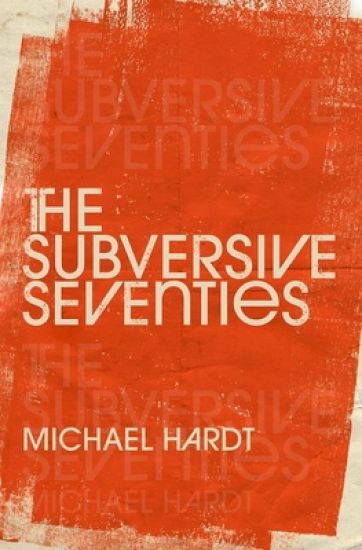
A thought-provoking reconsideration of how the revolutionary movements of the 1970s set the mold for today's activism. The 1970s was a decade of "subversives". Faced with various progressive and revolutionary social movements, the forces of order--politicians, law enforcement, journalists, and conservative intellectuals--saw subversives everywhere. From indigenous peasant armies and gay liberation organizations, to anti-nuclear activists and Black liberation militants, subversives challenged authority, laid siege to the established order, and undermined time-honored ways of life. Every corner of the left was fertile ground for subversive elements, which the forces of order had to root out and destroy--a project they pursued with zeal and brutality. In The Subversive Seventies, Michael Hardt sets out to show that popular understandings of the political movements of the seventies--often seen as fractious, violent, and largely unsuccessful--are not just inaccurate, but foreclose valuable lessons for the political struggles of today. While many accounts of the 1970s have been written about the regimes of domination that emerged throughout the decade, Hardt approaches the subversive from the perspectives of those who sought to undermine the base of established authority and transform the fundamental structures of society. In so doing, he provides a novel account of the theoretical and practical projects of liberation that still speak to us today, too many of which have been all but forgotten. Departing from popular and scholarly accounts that focus on the social movements of the 1960s, Hardt argues that the 1970s offers an inspiring and useful guide for contemporary radical political thought and action. Although we can still learn much from the movements of the sixties, that decade's struggles for peace, justice, and freedom fundamentally marked the end of an era. The movements of the seventies, in contrast, responded directly to emerging neoliberal frameworks and other structures of power that continue to rule over us today. They identified and confronted political problems that remain central for us. The 1970s, in this sense, marks the beginning of our time. Looking at a wide range of movements around the globe, from the United States, to Guinea Bissau, South Korea, Chile, Turkey, and Italy, The Subversive Seventies provides a reassessment of the political action of the 1970s that sheds new light not only on our revolutionary past but also on what liberation can be and do today.
Protestkritik
Mikkel Bolt; Tania Ørum; Michael Hardt; Antonio Negri; Kirsten Hyldgaard; Kristian Thorup; Katrin Hjort; Gry Worre Halberg; Sisters Hope; Gustav Johannes Hoder; Rasmus Bro Clemmensen; Brian Benjamin Hansen
-
2020
sidottu
PROTESTKRITIK samler en række kritiske, analytiske, eksperimentelle og teoretiske tekster i lyset og den lange historiske skygge af oprøret i '68. Gennem elleve forskellige bidrag formuleres nye historiske analyser og aktuelle protestbevægelser såsom klimabevægelsen, #MeToo, De Gule Veste, Nuit Debout, Et andet universitet og Occupy analyseres.Bogen er en flertydig og fælles refleksion over protestens væsen, et møde mellem generationer, erfaringer og fagligheder, og en anledning til at reflektere over, hvordan vi kan bringe arven fra '68 med ind i fremtiden.MED BIDRAG FRA: Mikkel Bolt, Kirsten Hyldgaard, Michael Hardt & Antonio Negri, Tania Ørum, Brian Benjamin Hansen, Gry Worre Hallberg & Sisters Hope, Arkivaristerne, Katrin Hjort, Kristian Thorup, Rasmus Bro Clemmensen og Gustav Johannes Hoder.
In recent years "leaderless" social movements have proliferated around the globe, from North Africa and the Middle East to Europe, the Americas, and East Asia. Some of these movements have led to impressive gains: the toppling of authoritarian leaders, the furthering of progressive policy, and checks on repressive state forces. They have also been, at times, derided by journalists and political analysts as disorganized and ineffectual, or suppressed by disoriented and perplexed police forces and governments who fail to effectively engage them. Activists, too, struggle to harness the potential of these horizontal movements. Why have the movements, which address the needs and desires of so many, not been able to achieve lasting change and create a new, more democratic and just society? Some people assume that if only social movements could find new leaders they would return to their earlier glory. Where, they ask, are the new Martin Luther Kings, Rudi Dutschkes, and Stephen Bikos? With the rise of right-wing political parties in many countries, the question of how to organize democratically and effectively has become increasingly urgent. Although today's leaderless political organizations are not sufficient, a return to traditional, centralized forms of political leadership is neither desirable nor possible. Instead, as Michael Hardt and Antonio Negri argue, familiar roles must be reversed: leaders should be responsible for short-term, tactical action, but it is the multitude that must drive strategy. In other words, if these new social movements are to achieve meaningful revolution, they must invent effective modes of assembly and decision-making structures that rely on the broadest democratic base. Drawing on ideas developed through their well-known Empire trilogy, Hardt and Negri have produced, in Assembly, a timely proposal for how current large-scale horizontal movements can develop the capacities for political strategy and decision-making to effect lasting and democratic change. We have not yet seen what is possible when the multitude assembles.
Varje år bevittnar vi fortfarande hur ”ledarlösa” sociala rörelser bryter fram. Från Nordafrika och Mellanöstern till Europa, från Nordamerika till Ostasien, har dessa rörelser överraskat och förbryllat journalister, analytiker, politiska aktörer, poliskårer och regeringar. Också aktivisterna själva har ofta haft svårt att förstå och bedöma styrkan och effektiviteten i de nya horisontella rörelserna. Varför har dessa rörelser, som ger uttryck för behoven och begären hos så många människor, inte lyckats uppnå bestående förändringar och ett mer rättvist samhälle? Somliga tror att om de sociala rörelserna bara kunde hitta nya ledare skulle de återfå sin forna glans och kunna förverkliga projekt för social omvandling och frigörelse. Var, frågar de sig, kan vi idag hitta en ny Martin Luther King Jr, en Rudi Dutschke, en Patrice Lumumba eller en Steve Biko? Vart har alla ledare tagit vägen? Även om dagens ledarlösa och spontana politiska organisationer inte räcker, är det varken möjligt eller önskvärt att återgå till mer traditionella och centraliserade former av politiskt ledarskap. Vad som i stället krävs, menar Michael Hardt och Antonio Negri, är en omkastning av rollerna mellan multituden och ledarna i de politiska rörelserna. Ledarna bör hålla sig till det kortsiktiga, taktiska agerandet, medan multituden styr över strategin. Med andra ord bör de långsiktiga målen formuleras av kollektivet, snarare än av vissa utvalda förgrundsfigurer. Genom att vidareutveckla idéerna från sin välkända Imperiet-trilogi har Hardt och Negri i Samling utarbetat ett angeläget förslag om hur dagens stora horisontella rörelser kan utveckla en kollektiv förmåga till strategiskt tänkande och politiskt beslutsfattande för att uppnå bestående demokratiska förändringar.
Each year a new eruption of "leaderless" social movements -- from North Africa and the Middle East to Europe, the Americas, and East Asia -- leaves journalists, political analysts, police forces, and governments disoriented and perplexed. Activists too struggle to understand and evaluate the power and effectiveness of horizontal movements. Why have the movements, which address the needs and desires of so many, not been able to achieve lasting change and create a new, more democratic and just society? Some people assume that if only social movements could find new leaders they would return to their earlier glory. Where, they ask, are the new Martin Luther Kings, Rudi Dutschkes, and Steven Bikos? Although today's leaderless and spontaneous political organizations are not sufficient, a return to traditional, centralized forms of political leadership is neither desirable nor possible. Necessary, instead, as Michael Hardt and Antonio Negri argue, is an inversion of the roles of the multitude and leadership in political organizations. Leaders should be confined to short-term, tactical action, while the multitude drives strategy. In other words, the formulation of long-term goals and objectives must come from the collective, rather than designated figureheads. Drawing on the ideas developed through their well-known Empire trilogy, Hardt and Negri have produced, in Assembly, a timely proposal for how current large-scale, horizontal movements can develop collectively the capacities for political strategy and decision-making to effect lasting and democratic change.
The President's House Is Empty
Michael Hardt; Bonnie Honig; Elaine Kamarck; Tracey Meares; K. Sabeel Rahman; Marshall Steinbaum
Boston Review/Boston Critic Inc.
2017
pokkari
The President's House is Empty: Losing and Gaining Public Goods explores the question of what we--the public--owe each other as free and equal members of a democratic society. With essays by writers and thinkers like Bonnie Honig, this collection attempts to make sense of the current administration's disdain for public things like the White House, public education, and clean water.
Detta är inte ett manifest. Manifest erbjuder en skymt av en värld som komma skall och åkallar det subjekt som för närvarande bara är ett spöke men som måste materialiseras för att bli förändringens aktör. Manifest fyller samma funktion som antikens profeter, vilka genom kraften i sina visioner skapade sitt eget folk. Dagens sociala rörelser har kastat om ordningen och gjort manifest och profeter överspelade. Förändringens aktörer har redan vällt ut på gatorna och ockuperat städernas torg, där de inte bara har hotat och störtat härskare utan också skapat visioner om en ny värld. Ännu viktigare är kanske att multituderna genom sina logiker och praktiker, genom sina slagord och begär, har uttalat en förklaring om en ny uppsättning principer och sanningar. Hur kan deras förklaring läggas till grund för uppbyggnaden av ett nytt och hållbart samhälle? Hur kan dessa principer och sanningar vägleda oss när vi försöker återuppfinna nya sätt att förhålla oss till varandra och vår omvärld? I sitt uppror måste multituderna upptäcka passagen från förklaring till konstitution.
When Empire appeared in 2000, it defined the political and economic challenges of the era of globalization and, thrillingly, found in them possibilities for new and more democratic forms of social organization. Now, with Commonwealth, Michael Hardt and Antonio Negri conclude the trilogy begun with Empire and continued in Multitude, proposing an ethics of freedom for living in our common world and articulating a possible constitution for our common wealth. Drawing on scenarios from around the globe and elucidating the themes that unite them, Hardt and Negri focus on the logic of institutions and the models of governance adequate to our understanding of a global commonwealth. They argue for the idea of the “common” to replace the opposition of private and public and the politics predicated on that opposition. Ultimately, they articulate the theoretical bases for what they call “governing the revolution.”Though this book functions as an extension and a completion of a sustained line of Hardt and Negri’s thought, it also stands alone and is entirely accessible to readers who are not familiar with the previous works. It is certain to appeal to, challenge, and enrich the thinking of anyone interested in questions of politics and globalization.
Multituden : krig och demokrati i imperiets tidsålder
Antonio Negri; Michael Hardt
Tankekraft förlag
2007
sidottu
Världen befinner sig sedan en tid tillbaka i ett permanent krigstillstånd. Konstitutionella garantier och skyddsmekanismer sätts ur spel, medborgerliga rättigheter suspenderas och det politiska styret underordnas de militära behoven. Undantagstillståndet har blivit ordningen för dagen. I en sådan situation kan det förefalla hopplöst att ens drömma om verklig demokrati. Ändå är det just i detta läge som möjligheten av en demokrati i global skala börjar framträda på allvar. I Multituden fortsätter Michael Hardt och Antonio Negri den brett upplagda analys av samtidens politiska villkor som inleddes i deras mycket uppmärksammade bok Imperiet. Där föregångaren var fokuserad på de nya suveränitetsformer och maktstrukturer som framträder i och med globaliseringen, riktar denna uppföljare i stället sökarljuset mot motståndets möjligheter. De senaste årens politiska, ekonomiska och sociala utveckling har inte bara skapat nya hierarkier och dominansförhållanden, utan också öppnat möjligheter för ett radikalt alternativ till imperiets globala maktordning. Under det rådande krigstillståndets våld och förtyck gror ett okuvligt begär efter en demokratisk och fredlig värld. Multituden är namnet på den gränslösa kraft som bär upp detta projekt.
Imperialismen er borte slik vi kjenner til den i dag. Men i følge forfatterne av boken består imperiet. Globaliseringen gjør at makten ikke lenger avgrenses til et bestemt sted eller territorium. Overnasjonale selskaper og postindustrielle arbeidsformer preger en ny imperialistisk verdensorden der selv ikke USA kan sies å inneha verdensherredømme. Disse kulturelle og økonomiske endringene gir nye former for identitet og nye nettverk for kommunikasjon og kontroll. Boken gir et overblikk over globaliseringens historie og filosofi, den gjennomgår viktige begreper i dagens politiske debatt, og skaper begeper for en ny verdensorden. Med navneregister.
Multitude: War and Democracy in the Age of Empire
Michael Hardt; Antonio Negri
PENGUIN BOOKS
2005
nidottu
In their international bestseller Empire, Michael Hardt and Antonio Negri presented a grand unified vision of a world in which the old forms of imperialism are no longer effective. But what of Empire in an age of American empire ? Has fear become our permanent condition and democracy an impossible dream? Such pessimism is profoundly mistaken, the authors argue. Empire, by interconnecting more areas of life, is actually creating the possibility for a new kind of democracy, allowing different groups to form a multitude, with the power to forge a democratic alternative to the present world order.Exhilarating in its optimism and depth of insight, Multitude consolidates Hardt and Negri s stature as two of the most important political philosophers at work in the world today."
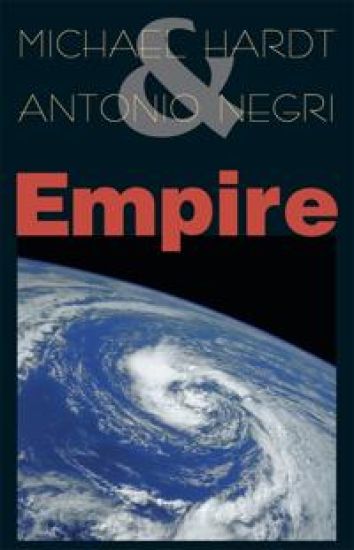
Imperialism as we knew it may be no more, but Empire is alive and well. It is, as Michael Hardt and Antonio Negri demonstrate in this bold work, the new political order of globalization. It is easy to recognize the contemporary economic, cultural, and legal transformations taking place across the globe but difficult to understand them. Hardt and Negri contend that they should be seen in line with our historical understanding of Empire as a universal order that accepts no boundaries or limits. Their book shows how this emerging Empire is fundamentally different from the imperialism of European dominance and capitalist expansion in previous eras. Rather, today’s Empire draws on elements of U.S. constitutionalism, with its tradition of hybrid identities and expanding frontiers.Empire identifies a radical shift in concepts that form the philosophical basis of modern politics, concepts such as sovereignty, nation, and people. Hardt and Negri link this philosophical transformation to cultural and economic changes in postmodern society—to new forms of racism, new conceptions of identity and difference, new networks of communication and control, and new paths of migration. They also show how the power of transnational corporations and the increasing predominance of postindustrial forms of labor and production help to define the new imperial global order.More than analysis, Empire is also an unabashedly utopian work of political philosophy, a new Communist Manifesto. Looking beyond the regimes of exploitation and control that characterize today’s world order, it seeks an alternative political paradigm—the basis for a truly democratic global society.
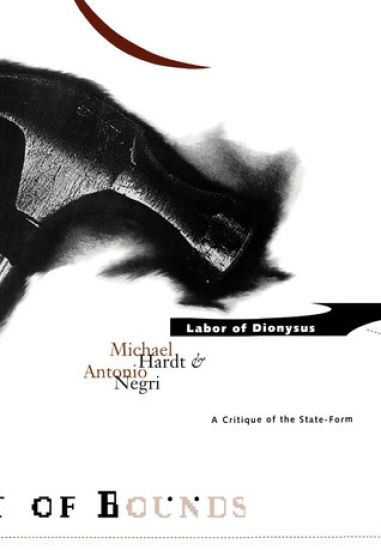
“Labor is the living, form-giving fire,” Marx wrote. “It is the transitoriness of things, their temporality, as their transformation by living time.” How is it, then, that labor, with all its life-affirming potential, has become the means of capitalist discipline, exploitation, and domination in modern society? The authors expose and pursue this paradox through a systematic analysis of the role of labor in the processes of capitalist production and in the establishment of capitalist legal and social institutions. Critiquing liberal and socialist notions of labor and institutional reform from a radical democratic perspective, Hardt and Negri challenge the state-form itself.In the twentieth century, labor has become central to the material and formal constitution of the State, as a complex nexus of value and right. And yet, in living labor and social cooperation, which cut across the divisions of workdays and wage relations, the authors identify a total critique of capitalist practice as well, presenting not only the negation of the present social order but also the affirmation of an alternative system of value, norms, and desires. The forms in which this potential is expressed, from the social movements of the 1960s to those of the 1990s, are the “prerequisites of communism” already existing in contemporary society.
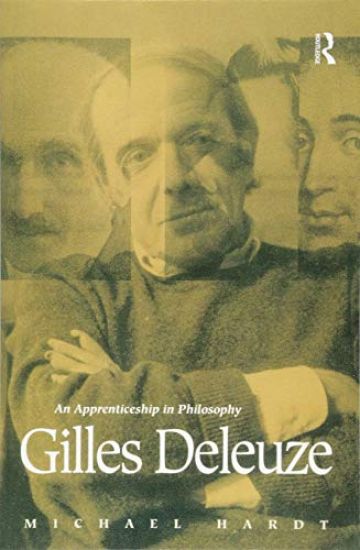
First published in 2005. Gilles Deleuze, a major figure in the intellectual history of the late 20th century, inaugurated the radical non-Hegelianism that has marked French intellectual life during the past three decades. Many poststructuralist and postmodernist practices can be traced to Deleuze's 1962 resurrection of Nietzsche against Hegel. Hardt shows how Deleuze's early analysis of Bergson's critique of ontology and determination led him to a conception of a positive movement of differentiation and becoming, which in turn led him to the field of forces, sense, value, and the thematic of power and affirmation in Nietzsche. The theory of power in Nietzsche provided the link for Deleuze to an ethics of active expression in Spinoza. Deleuze's discovery and analysis of Spinoza's cultivation of joy and practice at the center of ontology finally resulted in a complete break from the Hegelian paradigm that had reigned over continental philosophy and history. Michael Hardt is the translator of Antonio Negri's "The Savage Anomaly: The Power of Spinoza's Metaphysics and Politics" (Minnesota, 1990), Giorgio Agamben's "The Coming Community" (Minnesota, 1993), and co-author (with Antonio Negri) of "Labor of Dionysus" (Minnesota).
The key to understanding Deleuze's complete body of work."A coherent and systematic reading of a philosopher who has consistently courted the incoherent and systematic. What we must avoid are encounters with those who cultivate sad passions (the men of ressentiment in the Nietzschean formulation); and we must increase our power to compose new relationships with compatible bodies with whom we share a common notion. Hardt's exceptional book is one such joyful encounter." -Times Literary Supplement"An excellent book. The project of Gilles Deleuze is to situate Deleuze squarely in the camp of those who seek to deepen and transform our philsophical understanding and political situation. Hardt seems to me to be directly on target." -Substance"Both for its object and its method of study, here is a work that will mark the future of the field of Deleuzian studies." -Eric Alliez, Critique"Hardt's reading of Deleuze is complex and precise. He follows the intricacies of the argument and of the shifting positions with considerable skill, thus providing us with a study not only of the Deleuzian way of doing philosophy, but of Deleuzian reading-of the selectivity of its targets, of its agonistic approach to philosophy, through indirect attack on one main opponent. Reading Hardt reading Deleuze reading, we can understand, for instance, why Deleuze's exposition usually takes the form not of a dialectic but of a correlation, of a system of differences." -Radical Philosophy"How can we forget the dialectic? How an we affirm a constitutive ontology? Through its efforts to respond to these questions, Gilles Deleuze's philosophical apprenticeship presents the Bildungsroman of any contemporary philosophy that wants to break away from the destiny of modernity. Michael Hardt unravels the guiding thread of this philosophy of the future." -Antonio Negri"Hardt's interpretations are exceptionally well-grounded in the history of philosophical discourse, a discourse he exercises with discipline and rare insight. As the only major work on Deleuze in English, this book will undoubtedly set the standard for any future study of one of France's most important thinkers-and it is a very high standard, indeed." -Peggy Kamuf
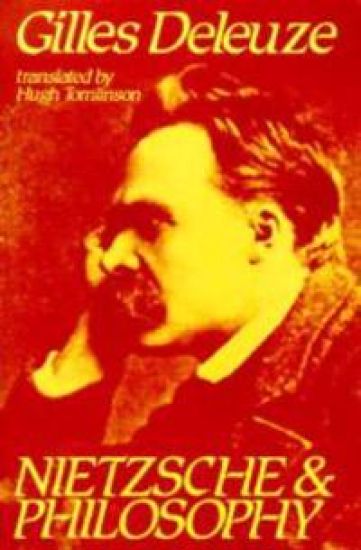
Nietzsche and Philosophy has long been recognized as one of the most important accounts of Nietzsche's philosophy, acclaimed for its rare combination of scholarly rigour and imaginative interpretation. Yet this is more than a major work on Nietzsche: the book opened a whole new avenue in post-war thought. Here Deleuze shows how Nietzsche began a new way of thinking which breaks with the dialectic as a method and escapes the confines of philosophy itself.