
Kirjailija
Michael Haschke
Kirjat ja teokset yhdessä paikassa: 5 kirjaa, julkaisuja vuosilta 2014-2021, suosituimpien joukossa Röntgenfluoreszenzanalyse in der Laborpraxis. Vertaile teosten hintoja ja tarkista saatavuus suomalaisista kirjakaupoista.
5 kirjaa
Kirjojen julkaisuhaarukka 2014-2021.
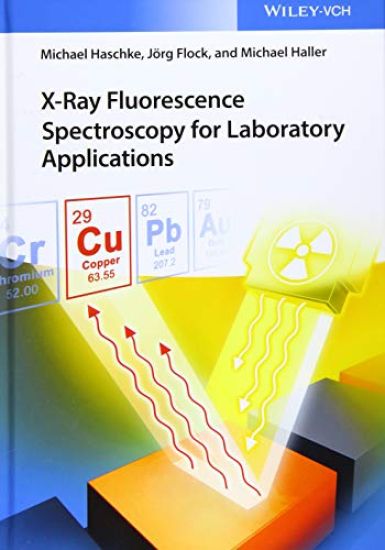
X-Ray Fluorescence Spectroscopy for Laboratory Applications
Michael Haschke; Jörg Flock; Michael Haller
Wiley-VCH Verlag GmbH
2021
sidottu
Provides comprehensive coverage on using X-ray fluorescence for laboratory applications This book focuses on the practical aspects of X-ray fluorescence (XRF) spectroscopy and discusses the requirements for a successful sample analysis, such as sample preparation, measurement techniques and calibration, as well as the quality of the analysis results. X-Ray Fluorescence Spectroscopy for Laboratory Applications begins with a short overview of the physical fundamentals of the generation of X-rays and their interaction with the sample material, followed by a presentation of the different methods of sample preparation in dependence on the quality of the source material and the objective of the measurement. After a short description of the different available equipment types and their respective performance, the book provides in-depth information on the choice of the optimal measurement conditions and the processing of the measurement results. It covers instrument types for XRF; acquisition and evaluation of X-Ray spectra; analytical errors; analysis of homogeneous materials, powders, and liquids; special applications of XRF; process control and automation. An important resource for the analytical chemist, providing concrete guidelines and support for everyday analysesFocuses on daily laboratory work with commercially available devicesOffers a unique compilation of knowledge and best practices from equipment manufacturers and usersCovers the entire work process: sample preparation, the actual measurement, data processing, assessment of uncertainty, and accuracy of the obtained results X-Ray Fluorescence Spectroscopy for Laboratory Applications appeals to analytical chemists, analytical laboratories, materials scientists, environmental chemists, chemical engineers, biotechnologists, and pharma engineers.

Röntgenfluoreszenzanalyse in der Laborpraxis
Michael Haschke; Jörg Flock
Wiley-VCH Verlag GmbH
2017
nidottu
Bereits seit vielen Jahren wird die Röntgenfluoreszenzenzanalyse eingesetzt für die Untersuchung kompakter, homogener Proben wie Metallen oder Gläsern, aber auch für die Analyse pulverförmiger Proben wie etwa geologische Proben, Zement und Eisenlegierungen. In den letzten Jahren haben sich viele neue Applikationsgebiete für diese Methode eröffnet. Im vorliegenden Buch erfolgt zunächst eine kurze Darstellung der physikalischen Zusammenhänge bei der Erzeugung und Wechselwirkung von Röntgenstrahlung in der zu untersuchenden Probe. Dann werden die verschiedenen Methoden der Probenpräparation in Abhängigkeit von der Qualität des Ausgangsmaterials sowie von der analytischen Zielstellung vorgestellt. Nach einer kurzen Beschreibung der verschiedenen Gerätetypen, die in der Röntgenanalytik existieren, und deren Leistungsfähigkeit wird auf die Auswahl optimaler Messbedingungen eingegangen sowie die Aufbereitung der Messdaten erläutert, angefangen von deren Korrektur über die Bestimmung der Intensitäten bis hin zum endgültigen Analysenergebnis, auch unter Berücksichtigung, Vermeidung und Korrektur möglicher auftretender Fehler. Nach einer kurzen Beschreibung der Gefahren einer Schädigung durch Röntgenstrahlung und der Anforderungen zu denen Verhinderung werden die verschiedenen Applikationen der Röntgenfluoreszenz beschrieben.
Laboratory Micro-X-Ray Fluorescence Spectroscopy
Michael Haschke
Springer International Publishing AG
2016
nidottu
Micro-X-ray fluorescence offers the possibility for a position- sensitive and non-destructive analysis that can be used for the analysis of non-homogeneous materials and layer systems. This analytical technique has shown a dynamic development in the last 15 years and is used for the analysis of small particles, inclusions, of elemental distributions for a wide range of different applications both in research and quality control. The first experiments were performed on synchrotrons but there is a requirement for laboratory instruments which offers a fast and immediate access for analytical results. The book discuss the main components of a µ-XRF instrument and the different measurement modes, it gives an overview about the various instruments types, considers the special requirements for quantification of non-homogeneous materials and presents a wide range of application for single point and multi-point analysis as well as for distribution analysis in one, two and three dimensions.
Laboratory Micro-X-Ray Fluorescence Spectroscopy
Michael Haschke
Springer International Publishing AG
2014
sidottu
Micro-X-ray fluorescence offers the possibility for a position- sensitive and non-destructive analysis that can be used for the analysis of non-homogeneous materials and layer systems. This analytical technique has shown a dynamic development in the last 15 years and is used for the analysis of small particles, inclusions, of elemental distributions for a wide range of different applications both in research and quality control. The first experiments were performed on synchrotrons but there is a requirement for laboratory instruments which offers a fast and immediate access for analytical results. The book discuss the main components of a µ-XRF instrument and the different measurement modes, it gives an overview about the various instruments types, considers the special requirements for quantification of non-homogeneous materials and presents a wide range of application for single point and multi-point analysis as well as for distribution analysis in one, two and three dimensions.