Kirjailija
Michael Head
Kirjat ja teokset yhdessä paikassa: 39 kirjaa, julkaisuja vuosilta 2000-2026, suosituimpien joukossa Revolution, Marxism and Law. Vertaile teosten hintoja ja tarkista saatavuus suomalaisista kirjakaupoista.
39 kirjaa
Kirjojen julkaisuhaarukka 2000-2026.
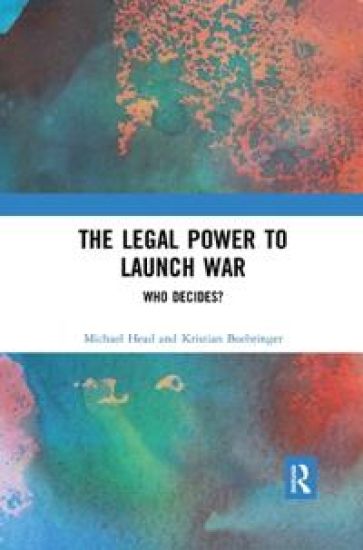
The issue of who has the power to declare war or authorise military action in a democracy has become a major legal and political issue, internationally, and is set to become even more pertinent in the immediate future, particularly in the wake of military action in Syria, ongoing wars in the Middle East, and tense discussions between the United States and its allies, and Russia and China. This book comparatively examines the executive and prerogative powers to declare war or launch military action, focusing primarily on the United States, Britain and Australia. It explores key legal and constitutional questions, including: who currently has the power/authority to declare war?who currently has the power to launch military action without formally declaring war?how, if at all, can those powers be controlled, legally or politically?what are the domestic legal consequences of going to war? In addition to probing the extensive domestic legal consequences of going to war, the book also reviews various proposals that have been advanced for interrogating the power to commence armed conflict, and explores the reasons why these propositions have failed to win support within the political establishment.
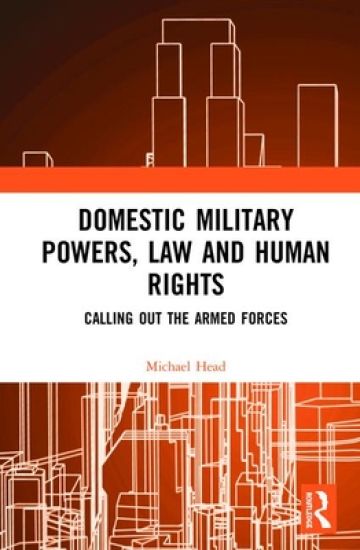
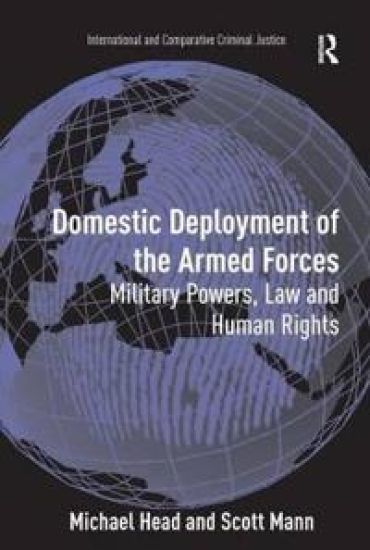
This book examines the national and international law, human rights and civil liberties issues involved in governments calling out the armed forces to deal with civil unrest or terrorism. The introduction of domestic military powers has become an international trend. Troops already have been seen on the streets in major Western democracies. These developments raise major political, constitutional and related problems. Examining the changes underway in eight comparable countries—the United States, Canada, Britain, France, Italy, Germany, Japan and Australia—this book provides a review and analysis of this trend, including its implications for legal and political rights. The book will be of interest to the general public, as well as students, academics and policy-makers in the areas of human rights and civil liberties, constitutional law, criminal justice and security studies.
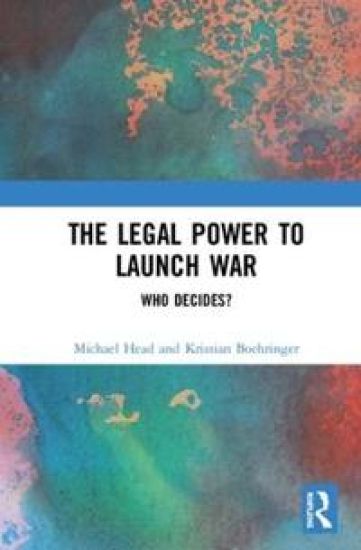
The issue of who has the power to declare war or authorise military action in a democracy has become a major legal and political issue, internationally, and is set to become even more pertinent in the immediate future, particularly in the wake of military action in Syria, ongoing wars in the Middle East, and tense discussions between the United States and its allies, and Russia and China. This book comparatively examines the executive and prerogative powers to declare war or launch military action, focusing primarily on the United States, Britain and Australia. It explores key legal and constitutional questions, including: who currently has the power/authority to declare war?who currently has the power to launch military action without formally declaring war?how, if at all, can those powers be controlled, legally or politically?what are the domestic legal consequences of going to war? In addition to probing the extensive domestic legal consequences of going to war, the book also reviews various proposals that have been advanced for interrogating the power to commence armed conflict, and explores the reasons why these propositions have failed to win support within the political establishment.
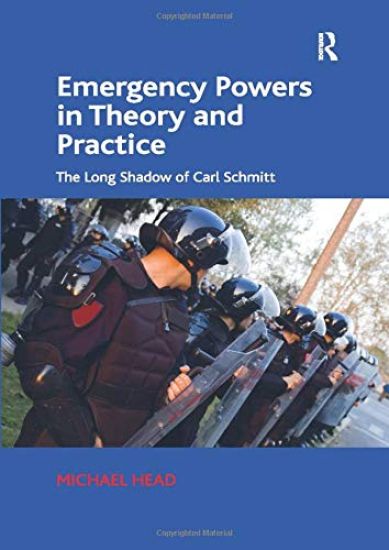
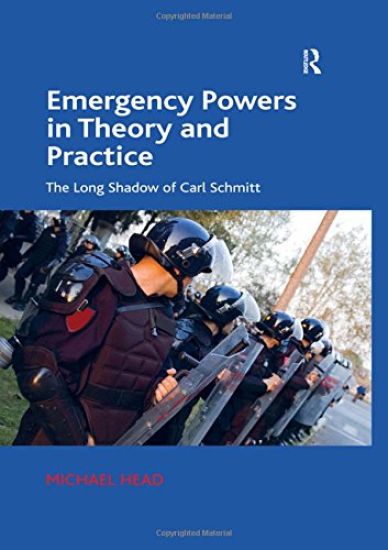
Why have the early years of the 21st century seen increasing use of emergency-type powers or claims of supra-legal executive authority, particularly by the Western countries regarded as the world's leading democracies, notably the United States? This book examines the extraordinary range of executive and prerogative powers, emergency legislation, martial law provisos and indemnities in countries with English-derived legal systems, primarily the UK, the US and Australia. The author challenges attempts by legal and academic theorists to relativise, rationalise, legitimise or propose supposedly safe limits for the use of emergency powers, especially since the September 2001 terrorist attacks. This volume also considers why the reputation of Carl Schmitt, the best-known champion of 'exceptional' dictatorial powers during the post-1919 Weimer Republic in Germany, and who later enthusiastically served and sanctified the Nazi dictatorship, is being rehabilitated, and examines why his totalitarian doctrines are thought to be of relevance to modern society. This diverse book will be of importance to politicians, the media, the legal profession, as well as academics and students of law, humanities and politics.
One day, two men with a wheelbarrow settled on this block of land and laid out a farm, built a small house and planted some vines. 170 years later, one of the outstanding wineries in the region and historic buildings that include a gracious church and spiritual retreat centre are the results of their efforts. This book tells the story of their struggle and their legacy. It is about Sevenhill Cellars in the Clare Valley of South Australia, as well as the Jesuits and their mission at Sevenhill, which once extended for hundreds of kilometres and now reaches beyond Australia.
Until recently, internal use of the armed forces has been generally regarded by the public, as well as academic commentators, as conduct to be expected of a military or autocratic regime, not a democratic government. There is however growing concern that the 'war on terror' has been used to condition public opinion to accept the internal deployment of the armed forces, including for broader industrial and political purposes. This book examines the national and international law, human rights and civil liberties issues involved in governments calling out troops to deal with civil unrest or terrorism. As the introduction of military call-out legislation has become an emerging global trend in the opening years of the 21st century, there is considerable and growing interest in the constitutional and related problems surrounding the deployment of military forces for domestic purposes. Examining the changes underway in six comparable countries, the United States, Canada, Britain, Germany, Japan and Australia, this book provides a review and analysis of this trend, including its implications for legal and political rights.
In the post-2001 context of economic and political conflict, this book presents a timely and detailed examination of the role of the criminal law in the protection of the existing order from political dissent and destabilization. It reviews offences such as rebellion, treason, mutiny, espionage, sedition, terrorism, riot and unlawful assembly in the UK, US, Canada and Australia from a comparative perspective and investigates leading cases in their historical and political contexts. Also examining the impact on human rights and civil liberties, this book covers a neglected area of English-derived law and will encourage debate about crimes against states and governments.
Why have the early years of the 21st century seen increasing use of emergency-type powers or claims of supra-legal executive authority, particularly by the Western countries regarded as the world's leading democracies, notably the United States? This book examines the extraordinary range of executive and prerogative powers, emergency legislation, martial law provisos and indemnities in countries with English-derived legal systems, primarily the UK, the US and Australia. The author challenges attempts by legal and academic theorists to relativise, rationalise, legitimise or propose supposedly safe limits for the use of emergency powers, especially since the September 2001 terrorist attacks. This volume also considers why the reputation of Carl Schmitt, the best-known champion of 'exceptional' dictatorial powers during the post-1919 Weimer Republic in Germany, and who later enthusiastically served and sanctified the Nazi dictatorship, is being rehabilitated, and examines why his totalitarian doctrines are thought to be of relevance to modern society. This diverse book will be of importance to politicians, the media, the legal profession, as well as academics and students of law, humanities and politics.
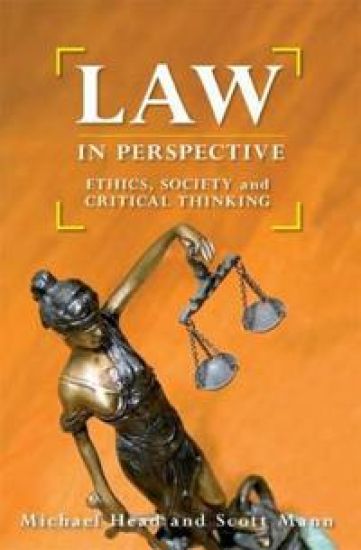
This fully updated third edition of Law in Perspectivefocuses on a range of powerful critical thinking tools drawn from logic, science, ethics, and political and social theory. Sections on terrorism and refugee law have been expanded, climate change is discussed throughout, and new chapters have been added on law and Indigenous people, lawyers’ ethics and corporate power.The book considers the relationship between legal theory, social theory and empirical research methods, as a guide for students taking on higher degrees in legal research. It also analyses key theories of the nature and social role of law, including legal positivism, natural law theory and Marxist theory of law.
In the post-2001 context of economic and political conflict, this book presents a timely and detailed examination of the role of the criminal law in the protection of the existing order from political dissent and destabilization. It reviews offences such as rebellion, treason, mutiny, espionage, sedition, terrorism, riot and unlawful assembly in the UK, US, Canada and Australia from a comparative perspective and investigates leading cases in their historical and political contexts. Also examining the impact on human rights and civil liberties, this book covers a neglected area of English-derived law and will encourage debate about crimes against states and governments.
Domestic Deployment of the Armed Forces
Michael Head; Scott Mann
Ashgate Publishing Limited
2009
sidottu
Until recently, internal use of the armed forces has been generally regarded by the public, as well as academic commentators, as conduct to be expected of a military or autocratic regime, not a democratic government. There is however growing concern that the 'war on terror' has been used to condition public opinion to accept the internal deployment of the armed forces, including for broader industrial and political purposes. This book examines the national and international law, human rights and civil liberties issues involved in governments calling out troops to deal with civil unrest or terrorism. As the introduction of military call-out legislation has become an emerging global trend in the opening years of the 21st century, there is considerable and growing interest in the constitutional and related problems surrounding the deployment of military forces for domestic purposes. Examining the changes underway in six comparable countries, the United States, Canada, Britain, Germany, Japan and Australia, this book provides a review and analysis of this trend, including its implications for legal and political rights.
Law in Perspective is intended to encourage critical, responsible and creative thinking about law as a system of ideas and a social institution. This second edition has been revised to include new chapters on human rights, liberal democracy, economic efficiency, problems of the market, and distributive justice. As well, the information provided on terrorism and refugees has been updated and a new chapter has been added on just and unjust wars.
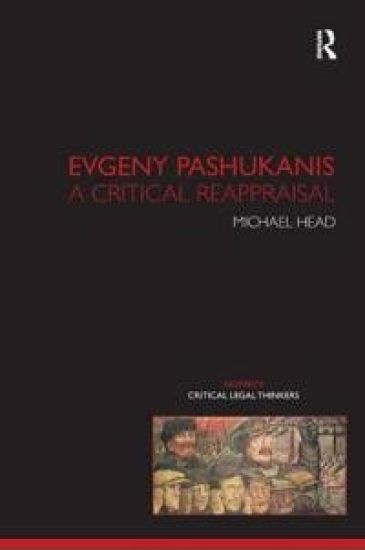
A thorough examination of Pashukanis’ writings, this book is a significant contribution to a proper assessment of Pashukanis’ work, the value of his theoretical legacy and the contemporary relevance of Marxist legal theory.Interest in the best-known Soviet legal scholar, Evgeny Pashukanis, remains widespread and his work retains considerable relevance. His writings provide a rich source of material on the Marxist theory of law and the state, as well as the attempts to apply that doctrine in Soviet Russia. In this book, Michael Head considers Pashukanis’ work both within its historical context and in relation to contemporary legal theory, answering a range of questions including: How and why did Pashukanis emerge as the pre-eminent Soviet jurist from 1924 to 1930?Why did he come under only minor criticism from 1930 to 1936 and then be denounced and executed in 1937 as a 'Trotskyite saboteur'?Why have many Western scholars generally praised the quality and originality of Pashukanis’ work, yet also drawn the conclusion that his fate illustrates the intrinsic impossibility of the entire communist project? Serving as an introduction to Pashukanis and Marxist legal theory and a timely contribution in light of the universal assault on civil liberties in the indefinite 'War on Terror' and the constant escalation of 'law and order' measures in Western societies, this volume is an invaluable resource for those interested in jurisprudence and critical thought.
Teacher-Led School Improvement
Judith Durrant; David Frost; Michael Head; Gary Holden
Routledge Falmer
2000
nidottu
A fresh look at school improvement from the perspective of professional development. There are many things that teachers can do to improve the conditions for learning and teaching in their own schools. This book shows how staff can take the initiative and identify areas in their school in need of attention, and tackle them. It provides case-study accounts of schemes in a number of schools, together with accounts of the action research based development work undertaken by teachers to improve their schools. The studies illuminate issues such as: improving the quality of learning and teaching; developing an effective school council; building partnerships and community schemes; developing economic and industrial understanding.
Teacher-Led School Improvement
Judith Durrant; David Frost; Michael Head; Gary Holden
Routledge Falmer
2000
sidottu
A fresh look at school improvement from the perspective of professional development. There are many things that teachers can do to improve the conditions for learning and teaching in their own schools. This book shows how staff can take the initiative and identify areas in their school in need of attention, and tackle them. It provides case-study accounts of schemes in a number of schools, together with accounts of the action research based development work undertaken by teachers to improve their schools. The studies illuminate issues such as: improving the quality of learning and teaching; developing an effective school council; building partnerships and community schemes; developing economic and industrial understanding.