Kirjojen hintavertailu. Mukana 12 595 353 kirjaa ja 12 kauppaa.

Kirjailija

Michael Heinrich

Kirjat ja teokset yhdessä paikassa: 23 kirjaa, julkaisuja vuosilta 1996-2026, suosituimpien joukossa Tausch und Täuschung - Wie wir Geld machen. Vertaile teosten hintoja ja tarkista saatavuus suomalaisista kirjakaupoista.

23 kirjaa

Kirjojen julkaisuhaarukka 1996-2026.

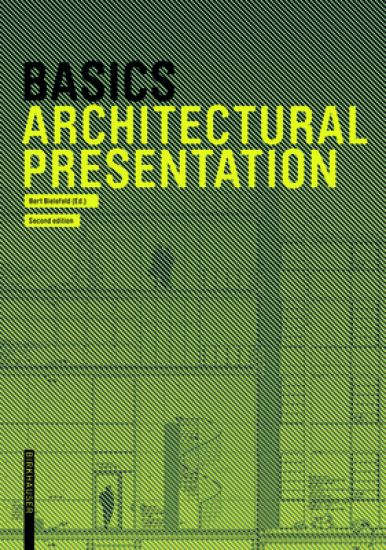
Basics Architectural Presentation

Basics Architectural Presentation

Bert Bielefeld; Isabella Skiba; Florian Afflerbach; Michael Heinrich; Jan Krebs; Alexander Schilling

Birkhauser
2021
isokokoinen pokkari
At the beginning of their studies students of architecture are confronted with a wealth of different ways in which to visually present their designs. Expressing ideas in the form of drawings and models is usually required in the early stages of studying: “learning by doing” is the only way for students to quickly develop a repertoire for their design work.However, there are important issues to consider between the phases of devising the spatial concept and recreating it in a two- or three-dimensional drawing or physical model: How to construct a perspective freehand drawing? What plan drawings are necessary to present my design? What scale should my model be and what materials should I use to construct it?Basics Architectural Presentation combines the highly successful single volumes Technical Drawing, Freehand Drawing, CAD, Modelbuilding (new edition) and Architectural Photography from the series BASICS in a new volume. Step-by-step, it conveys possible ways to present architectural projects throughout the various project phases. In an informative and practical approach, the publication discusses the basics of architectural representation from freehand drawing, which is especially important in the design phase, to the plan drawing, model, and architecture photography. The student architect learns the tools necessary for presenting his or her work, supported by many concrete examples and practical tips that are directly applicable.
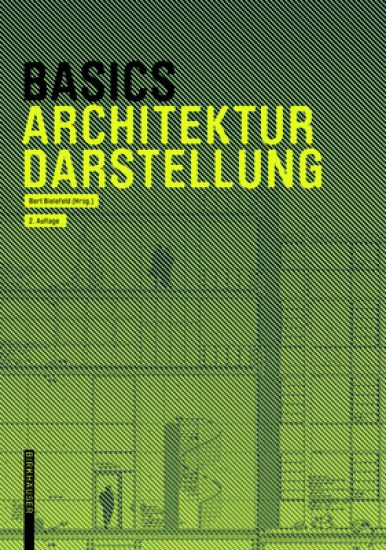
Basics Architekturdarstellung

Basics Architekturdarstellung

Bert Bielefeld; Isabella Skiba; Florian Afflerbach; Michael Heinrich; Jan Krebs; Alexander Schilling

Birkhauser
2021
isokokoinen pokkari
At the beginning of their studies students of architecture are confronted with a wealth of different ways in which to visually present their designs. Expressing ideas in the form of drawings and models is usually required in the early stages of studying: "learning by doing" is the only way for students to quickly develop a repertoire for their design work.However, there are important issues to consider between the phases of devising the spatial concept and recreating it in a two- or three-dimensional drawing or physical model: How to construct a perspective freehand drawing? What plan drawings are necessary to present my design? What scale should my model be and what materials should I use to construct it?Basics Architectural Presentation combines the highly successful single volumes Technical Drawing, CAD, Modelbuilding, and Architectural Photography from the series BASICS with a yet to be published volume entitled Freehand Drawing. Step-by-step, it conveys possible ways to present architectural projects throughout the various project phases. In an informative and practical approach, the publication discusses the basics of architectural representation from freehand drawing, which is especially important in the design phase, to the plan drawing, model, and architecture photography. The student architect learns the tools necessary for presenting his or her work, supported by many concrete examples and practical tips that are directly applicable.
How to Read Marx's Capital

How to Read Marx's Capital

Michael Heinrich

Monthly Review Press,U.S.
2021
nidottu
With the recent revival of Karl Marx's theory, a general interest in reading Capital has also increased. But Capital – Marx’s foundational nineteenth century work on political economy – is by no means considered an easily understood text. Central concepts such as abstract labor, the value form, or the fetishism of commodities, can seem opaque to us as first time readers, and the prospect of comprehending Marx’s thought can be truly daunting. Until, that is, we pick up Michael Heinrich’s How to Read Marx's Capital. Paragraph by paragraph, Heinrich provides extensive commentary and lucid explanations of questions and quandaries that arise when encountering Marx’s original text. Suddenly, such seemingly gnarly chapters as “The Labor Process and the Valorization Process” and “Money or the Circulation of Capital” become refreshingly clear, as Heinrich explains just what we need to keep in mind when reading such a complex text. Deploying multiple appendices referring to other pertinent writings by Marx, Heinrich reveals what is relevant about Capital, and why we need to engage with it today. How to Read Marx's Capital provides an illuminating and indispensable guide to sorting through cultural detritus of a world whose political and economic systems are simultaneously imploding and exploding.
How to Read Marx's Capital

How to Read Marx's Capital

Michael Heinrich

Monthly Review Press,U.S.
2021
sidottu
With the recent revival of Karl Marx's theory, a general interest in reading Capital has also increased. But Capital – Marx’s foundational nineteenth century work on political economy – is by no means considered an easily understood text. Central concepts such as abstract labor, the value form, or the fetishism of commodities, can seem opaque to us as first time readers, and the prospect of comprehending Marx’s thought can be truly daunting. Until, that is, we pick up Michael Heinrich’s How to Read Marx's Capital. Paragraph by paragraph, Heinrich provides extensive commentary and lucid explanations of questions and quandaries that arise when encountering Marx’s original text. Suddenly, such seemingly gnarly chapters as “The Labor Process and the Valorization Process” and “Money or the Circulation of Capital” become refreshingly clear, as Heinrich explains just what we need to keep in mind when reading such a complex text. Deploying multiple appendices referring to other pertinent writings by Marx, Heinrich reveals what is relevant about Capital, and why we need to engage with it today. How to Read Marx's Capital provides an illuminating and indispensable guide to sorting through cultural detritus of a world whose political and economic systems are simultaneously imploding and exploding.
Basics Architectural Presentation

Basics Architectural Presentation

Bielefeld Bert; Skiba Isabella; Afflerbach Florian; Michael Heinrich; Krebs Jan; Schilling Alexander

Birkhauser
2014
isokokoinen pokkari
At the beginning of their studies students of architecture are confronted with a wealth of different ways in which to visually present their designs. Expressing ideas in the form of drawings and models is usually required in the early stages of studying: ”learning by doing“ is the only way for students to quickly develop a repertoire for their design work. However, there are important issues to consider between the phases of devising the spatial concept and recreating it in a two- or three-dimensional drawing or physical model: How to construct a perspective freehand drawing? What plan drawings are necessary to present my design? What scale should my model be and what materials should I use to construct it? Basics Architectural Presentation combines the highly successful single volumesTechnical Drawing, CAD, Modelbuilding, and Architectural Photography from the series BASICS with a yet to be published volume entitled Freehand Drawing. Step-by-step, it conveys possible ways to present architectural projects throughout the various project phases. In an informative and practical approach, the publication discusses the basics of architectural representation from freehand drawing, which is especially important in the design phase, to the plan drawing, model, and architecture photography. The student architect learns the tools necessary for presenting his or her work, supported by many concrete examples and practical tips that are directly applicable.
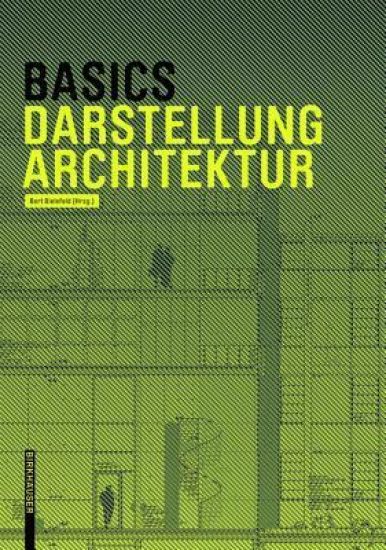
Basics Architekturdarstellung

Basics Architekturdarstellung

Bert Bielefeld; Isabella Skiba; Florian Afflerbach; Michael Heinrich; Jan Krebs; Alexander Schilling

Birkhauser
2014
isokokoinen pokkari
At the beginning of their studies students of architecture are confronted with a wealth of different ways in which to visually present their designs. Expressing ideas in the form of drawings and models is usually required in the early stages of studying: ”learning by doing“ is the only way for students to quickly develop a repertoire for their design work.However, there are important issues to consider between the phases of devising the spatial concept and recreating it in a two- or three-dimensional drawing or physical model: How to construct a perspective freehand drawing? What plan drawings are necessary to present my design? What scale should my model be and what materials should I use to construct it?Basics Architectural Presentation combines the highly successful single volumes Technical Drawing, CAD, Modelbuilding, and Architectural Photography from the series BASICS with a yet to be published volume entitled Freehand Drawing. Step-by-step, it conveys possible ways to present architectural projects throughout the various project phases. In an informative and practical approach, the publication discusses the basics of architectural representation from freehand drawing, which is especially important in the design phase, to the plan drawing, model, and architecture photography. The student architect learns the tools necessary for presenting his or her work, supported by many concrete examples and practical tips that are directly applicable.
Basics Architekturfotografie

Basics Architekturfotografie

Michael Heinrich

Birkhauser
2013
sidottu
Architectural photography is an important tool for studying built architecture and documenting students own projects.Basics Architectural Photography provides a practically based explanation of the key technical aspects of photography, image analysis and photo editing, and includes helpful tips on how to take and process photographs.Topics: Photographic concepts (focal length, image circle, angle of view, depth of focus, exposure time, contrast range, etc.) Equipment (camera, lens, tripod, light meter, etc.) Photographing architecture (perspectives, architectural models, etc.) Stylistic devices in architectural photography Exterior shots Interior shots Image editing, scanning, image correction
Introduktion till de tre volymerna av Marx Kapitalet

Introduktion till de tre volymerna av Marx Kapitalet

Michael Heinrich

Tankekraft Förlag
2013
nidottu
Den globala ekonomiska kris och recession som inleddes 2008 fick en oväntad effekt i form av en kraftig försäljningsökning för Karl Marx Kapitalet. Trots att mainstreamekonomerna tidigare avfärdade Marx verk som förlegat och behäftat med allvarliga fel, är en del av dem nu på väg att omvärdera en analys som ser kapitalismen som ett ohållbart system. Dessutom finns det sådana som Michael Heinrich, som alltid har insett värdet av Marx skrifter och har en unik position när det gäller att förklara Marx intrikata tänkande. Heinrichs moderna tolkning av Kapitalet presenteras härmed för en svensk läsekrets. I Tyskland har boken kommit i nio upplagor och är flitigt använd vid universitet och högskolor. Författaren går systematiskt igenom samtliga Kapitalets tre band och förklarar på ett koncist sätt alla de grundläggande aspekterna av den kritik som Marx riktar mot kapitalismen. Boken tar även upp viktiga frågor som ligger utanför ramarna för Kapitalet, såsom klasskampen, förhållandet mellan staten och kapitalet, anklagelserna om historiedeterminism samt Marx syn på kommunismen. Heinrich är unik såtillvida att han utöver det traditionella fokuset på arbetsvärdeläran också betonar den monetära dimensionen av Marx verk, vilket understryker Kapitalets relevans i vår tid av finansiella explosioner och implosioner. Michael Heinrich undervisar i nationalekonomi i Berlin och är chefredaktör för tidskriften PROKLA: Journal for Critical Social Science. Föreliggande bok är det första av hans verk som ges ut på svenska.