Kirjojen hintavertailu. Mukana 12 595 353 kirjaa ja 12 kauppaa.

Kirjailija

Michael Hensel

Kirjat ja teokset yhdessä paikassa: 5 kirjaa, julkaisuja vuosilta 2008-2015, suosituimpien joukossa Diffusion von Innovationen. Vertaile teosten hintoja ja tarkista saatavuus suomalaisista kirjakaupoista.

5 kirjaa

Kirjojen julkaisuhaarukka 2008-2015.

Diffusion von Innovationen

Diffusion von Innovationen

Michael Hensel; Prof. Dr. Klaus Bellmann; Jan Wirsam; Thorsten Müller

Gabler Verlag
2008
nidottu
Michael Hensel und Jan Wirsam analysieren und bewerten unterschiedliche Diffusionsmodelle und prüfen ihre Anwendbarkeit auf VoIP. Entsprechend der Modellanalyse werden Erkenntnisse in Bezug auf die Technologieauswahl abgeleitet und auf strategisch-taktischer Ebene Denkanstöße in Form von absatzpolitischen Überlegungen angeboten.

Constructions

Constructions

Michael Hensel; Christian Hermansen Cordua

John Wiley Sons Inc
2015
nidottu
The current trend for constructing experimental structures is now an international phenomenon. It has been taken up worldwide by design professionals, researchers, educators and students alike. There exist, however, distinct and significant tendencies within this development that require further investigation. This issue of AD takes on this task by examining one of the most promising trajectories in this area, the rise of intensely local architectures. In his seminal essay of 1983, Kenneth Frampton redefined Critical Regionalism by calling for an intensely local approach to architectural design. Today, Frampton’s legacy is regaining relevance for a specific body of work in practice and education focused on the construction of experimental structures. Could this ultimately provide the seeds for a compelling and alternative approach to sustainable design? Contributors include: Barbara Ascher, Peter Buchanan, Karl Otto Ellefsen, David Jolly Monge, Lisbet Harboe, David Leatherbarrow, Areti Markopoulou, Philip Nobel, Rodrigo Rubio, Søren S Sørensen, Defne Sunguroðlu Hensel. Featured practices: Renzo Piano Building Workshop, Rintala Eggertsson, SHoP, Studio Mumbai, TYIN tegnestue.
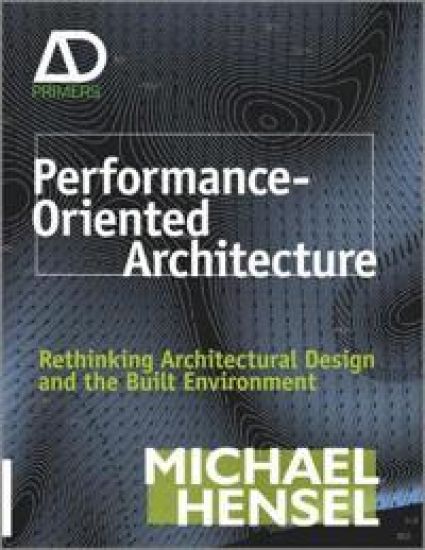
Performance-Oriented Architecture

Performance-Oriented Architecture

Michael Hensel

John Wiley Sons Inc
2013
nidottu
Architecture is on the brink. It is a discipline in crisis. Over the last two decades, architectural debate has diversified to the point of fragmentation and exhaustion. What is called for is an overarching argument or set of criteria on which to approach the design and construction of the built environment. Here, the internationally renowned architect and educator Michael Hensel advocates an entirely different way of thinking about architecture. By favouring a new focus on performance, he rejects longstanding conventions in design and the built environment. This not only bridges the gap between academia and practice, but, even more significantly, the treatment of form and function in design. It also has a far-reaching impact on knowledge production and development, placing an important emphasis on design research in architecture and the value of an interdisciplinary approach. Though ‘performance’ first evolved as a concept in the humanities in the 1940s and 1950s, it has never previously been systematically applied in architecture in an inclusive manner. Here Michael Hensel offers Performance-Orientated Architecture as an integrative approach to architectural design, the built environment and questions of sustainability. He highlights how core concepts and specific traits, such as climate, material performance and settlement patterns, can put architecture in the service of the natural environment. A wide range of examples are cited to support his argument, from traditional sustainable buildings, such as the Kahju Bridge in Isfahan and the Topkapí Palace in Istanbul to more contemporary works by Cloud 9, Foreign Office Architects, Steven Holl and OCEAN.
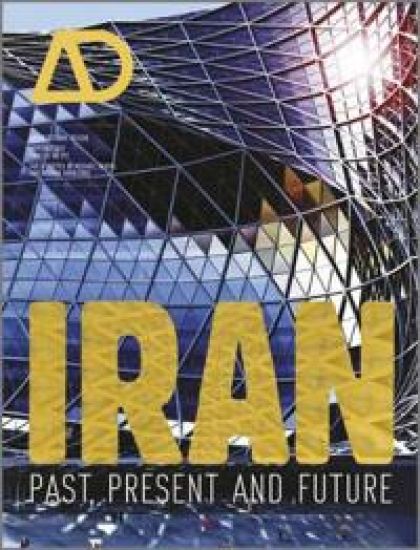
Iran

Iran

Michael Hensel; Mehran Gharleghi

John Wiley Sons Inc
2012
nidottu
Over the last few decades, Iranian architects have made a significant contribution to architectural design. This has, however, remained largely unrecognised internationally, as architects in Iran have had little exposure in publications abroad and the diaspora of well-known Iranian designers working in the West, such as Hariri & Hariri and Nader Tehrani of NADAAA, are not necessarily associated with their cultural background. Moreover Iran, or rather Persia, has one of the richest and longest architectural heritages, which has a great deal of untapped potential for contemporary design. The intention of this issue is both to introduce key works and key architects from a range of generations – at home and abroad – and to highlight the potential of historical structures for contemporary architecture. Features Hariri & Hariri, Nader Tehrani of NADAAA, Farjadi Architects, and studio INTEGRATE.Places the spotlight on emerging practices in Iran: Arsh Design Studio, Fluid Motion Architects, Pouya Khazaeli Parsa and Kourosh Rafiey (Asar).Contributors include: Reza Daneshmir and Catherine Spiridonoff, Farrokh Derakhshani, Darab Diba, Dr Nasrine Faghih and Amin Sadeghy, Farshad Farahi, Mehran Gharleghi and Michael Hensel.Looks at garden and landscape design as well as the urban fabric in Iran from a historical and contemporary context.Includes articles on the work of post-revolutionary architecture.
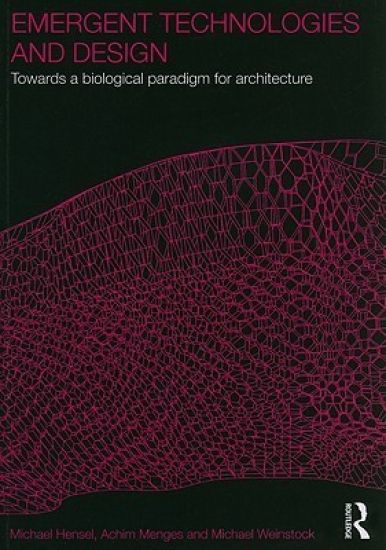
Emergent Technologies and Design

Emergent Technologies and Design

Michael Hensel; Achim Menges; Michael Weinstock

Routledge
2010
nidottu
Emergence - the process by which new and coherent structures, patterns and properties ‘emerge’ from within complex systemsTraditional architecture starts from the premise that architectural structures are singular and fixed, and however well integrated are separate from their environment and context. Emergence requires that the opposite is true – that those structures are complex energy and material systems that have a lifespan, exist as part of an environment of other active systems, and develop in an evolutionary way.This book, based on the authors’ internationally renowned Emergent Technologies and Design course at the Architectural Association in London, introduces a new approach to the practice of architecture. The authors use essays and projects to demonstrate the interrelationship of concepts such as emergence and self-organisation with the latest technologies in design, manufacturing and construction.With projects from their course, and critiques and commentary from some of the world’s leading design theorists and practitioners, the authors of Emergent Technologies and Design have introduced a radical new way of understanding the way in which architecture is conceived, designed and produced.