Kirjojen hintavertailu. Mukana 12 136 441 kirjaa ja 12 kauppaa.

Kirjailija

Michael Herman

Kirjat ja teokset yhdessä paikassa: 14 kirjaa, julkaisuja vuosilta 1996-2024, suosituimpien joukossa Under the Sabbath Lamp. Vertaile teosten hintoja ja tarkista saatavuus suomalaisista kirjakaupoista.

14 kirjaa

Kirjojen julkaisuhaarukka 1996-2024.

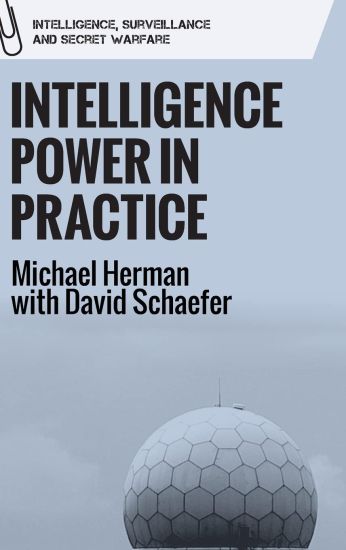
Intelligence Power in Practice

Intelligence Power in Practice

Michael Herman; David Schaefer

EDINBURGH UNIVERSITY PRESS
2024
nidottu
This volume draws on Herman's professional experience and personal recollections to examine the past and present of British intelligence. In twenty-one chapters he offers an insider's perspective on the Cold War intelligence contest against the Soviet Union and its continuing legacy today. This includes proposals for intelligence ethics and reform in the twenty-first century, and the declassified copy of his evidence to the 2004 Butler Review. Herman also discusses the role of personalities in the British intelligence community, producing sketches of Cold War contemporaries on the JIC and several Directors of GCHQ. The combination of operational experience and academic reflection makes this volume a unique contribution to intelligence scholarship.Michael Herman (1929-2021) was the world's leading intelligence practitioner-academic. Among his senior roles during a thirty-five year career in Her Majesty's Civil Service, he was Secretary of the Joint Intelligence Committee from 1972-75, and Head of several GCHQ Divisions in the 1970s-80s. After his professional retirement, he was a Gwilym Gibbon Research Fellow at Nuffield College Oxford and founding director of the Oxford Intelligence Group.
Intelligence Power in Practice

Intelligence Power in Practice

Michael Herman; David Schaefer

EDINBURGH UNIVERSITY PRESS
2022
sidottu
Michael Herman (1929 2021) was the world's leading intelligence practitioner academic. Among his senior roles during a thirty-five year career in Her Majesty's Civil Service, he was Secretary of the Joint Intelligence Committee from 1972 75, and Head of several GCHQ Divisions in the 1970s 80s. After his professional retirement, he was a Gwilym Gibbon Research Fellow at Nuffield College Oxford and founding director of the Oxford Intelligence Group.This volume draws on Herman's professional experience and personal recollections to examine the past and present British intelligence. In twenty-one chapters he offers an insider's perspective on the Cold War intelligence contest against the Soviet Union and its continuing legacy today. This includes proposals for intelligence ethics and reform in the twenty-first century, and the declassified copy of his evidence to the 2004 Butler Review. Herman also discusses the role of personalities in the British intelligence community, producing sketches of Cold War contemporaries on the JIC and several Directors of GCHQ. The combination of operational experience and academic reflection makes this volume a unique contribution to intelligence scholarship.
Oh God: The Journey

Oh God: The Journey

Michael Herman

Rosedog Books
2021
nidottu
Oh God: The JourneyBy: Michael HermanHave you ever really thought about whether GOD exists? Most of us have grown up with a belief in a specific religion, usually that of our parents. If you follow a religion or belief system that promotes an afterlife, then it probably is based on the existence of GOD. Your belief system is the very basic foundation of your life. All of us will die at some point, and we will make this passage alone; no one can stand in for us. Therefore, you should take the Journey to determine for yourself if GOD exists. You need to be totally honest with yourself about GOD and what you believe in your soul. This decision is too important to leave for others to make for you. Oh God: The Journey will take you along author Michael Herman's Journey to find GOD; hopefully, it will be helpful in encouraging you to take your own Journey to find GOD.About the AuthorMichael Herman is probably your typical father figure in an American family with children. A civil engineer by education (BSCE-Michigan Tech and MSCE-Purdue University), he was raised in the Baptist religion and currently is a member of the United Methodist Church. He spent his working life as the city manager in three Michigan cities. He claims no specific expertise in the areas of religion, science, or philosophy. His Journey to find GOD is based on his personal concerns and curiosity about why mankind is here and what is mankind's purpose. He believes it is important for every human being to have the opportunity to take their Journey to find GOD. He lives in Hudsonville, Michigan, and is married to Mary Melissa Herman, and they have three grown children and eight grandchildren.
The Cholent Brigade

The Cholent Brigade

Michael Herman

Kar-Ben Copies Ltd
2017
nidottu
When a big snowstorm hits, Monty Nudelman happily shovels his neighbors' sidewalks, driveways, cars, and steps--until he hurts his back. Now he can barely move He can't even make his Shabbat lunch. Luckily, his neighbors have all made cholent--a delicious Shabbat stew. The neighborhood kids form a "cholent brigade" to bring Monty Nudelman a tasty feast. Cholent to the rescue
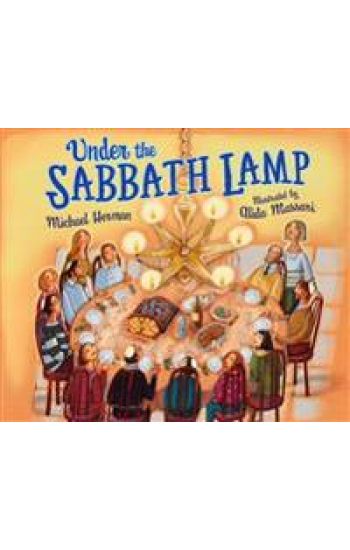
Under the Sabbath Lamp

Under the Sabbath Lamp

Michael Herman

Kar-Ben Publishing (R)
2017
sidottu
When Izzy and Olivia Bloom invite their neighbors over for Shabbat dinner, everyone is shocked to find out that the Blooms don't have Shabbat candles. Instead, they have something much more unusual: an antique Sabbath lamp that's been passed down from generation to generation. How did the Sabbath lamp get to America? That's a good story . . .
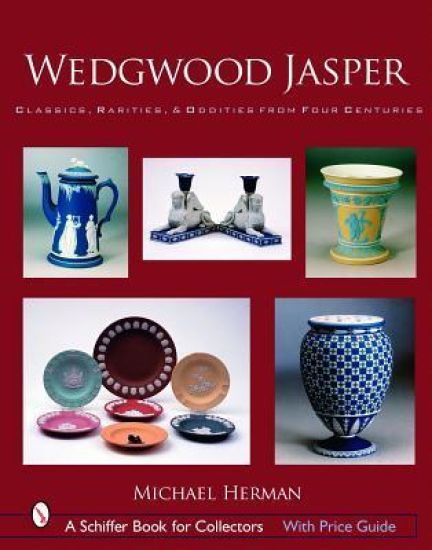
Wedgwood Jasper

Wedgwood Jasper

Michael Herman

Schiffer Publishing Ltd
2006
sidottu
Wedgwood Jasper predates the American Declaration of Independence by one year having been introduced to the public by Josiah Wedgwood in 1775. Of all the many types of ceramics produced by the Wedgwood Company in the last two and a half centuries, Jasper is most immediately recognizable. This second book on this fascinating subject by the author traces Jasper’s long history and almost infinite variety. It covers the entire range of Wedgwood's Jasper pieces, from items of museum quality to those found in most collections. After an informative introduction to Wedgwood history and marks, the photographic delineation covers the various types: Diceware, Strapware, Sgraffito, Sage Green and Lilac on White Jasper, Jasper Mounted on Metal, Crimson Jasper, and more. This is followed by a wonderful photographic gallery, organized by shapes., including biscuit barrels, bowls, boxes, candleholders, cups and saucers, figures inkwells, jewelry, jugs and mugs, lamps, medallions, perfume bottles, plates and trays, tea and coffee sets, vases, and more. All of this is illustrated with over 750 color photos. Important private collections are featured as well as one of the finest museum collections in the United States and auction houses. Wedgwood Jasper is well represented in all the finest ceramics collections around the world.
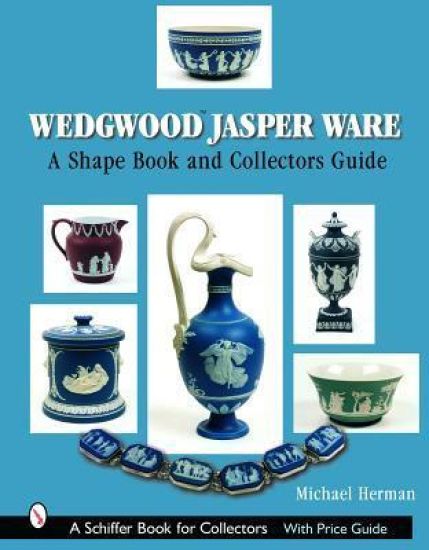
Wedgwood Jasper Ware

Wedgwood Jasper Ware

Michael Herman

Schiffer Publishing Ltd
2003
sidottu
A lavishly illustrated collector’s volume, this book is a wonderful introduction to the historic and ever-popular line of Wedgwood ceramics called Jasper Ware. The bas-reliefs on matte porcelain grounds make these products instantly recognizable. Featuring fine pieces from private and museum collections, it has been written especially for novice and moderately advanced collectors and concentrates on pieces produced mostly from the mid-nineteenth to the early twentieth centuries. Included are chapters on Wedgwood Jasper history, colors, and marks as well as supplements about Wedgwood Jasper jewelry and the classical mythology used for the bas-relief figures. A significant portion of the book illustrates many of the hundreds of shapes that Wedgwood produced, including biscuit barrels, bud vases, candlesticks, cruet sets, bowls, inkwells, and jardinières, to name only a few. Over 500 vivid photographs illustrate these shapes, and detailed information as well as current values are included in each caption. This is an important book about a time period in Wedgwood Jasper history that has not been researched before. It will be a welcomed addition to the library of all Wedgwood Jasper enthusiasts.
Intelligence Services in the Information Age
Intelligence was a central element of the Cold War and the need for it was expected to diminish after the USSR's collapse, yet in recent years it has been in greater demand than ever. The atrocities of 11 September and the subsequent "war on terrorism" now call for an even more intensive effort. Important questions arise on how intelligence fits into the world of increased threats, globalization and expanded international action. This volume contains the recent work on this subject by Michael Herman, British intelligence professional for 35 years and Oxford University academic. It compares intelligence with other government information services, and discusses the British intelligence system and the case for its reform. It also addresses the ethical issues raised by intelligence's methods and results: "do they on balance make for a better world or a worse one?". Other chapters explore a wide range of intelligence topics past and present, including the transatlantic relationship, the alliance strategies of Norway and New Zealand, Mrs Thatcher's "de-unionization" of British Sigint, and personal memories of the British Cabinet Office in the 1970s. Michael Herman argues for intelligence professionalism as a contribution to international security and for its encouragement as a world standard. The modern challenge is for intelligence to support international cooperation in ways originally developed to advance national interests, while at the same time developing some restraint and international "rules of the game", in the use of intrusive and covert methods on its traditional targets. The effects of 11 September on this challenge are discussed in a thoughtful afterword.
Intelligence Services in the Information Age
Intelligence was a central element of the Cold War and the need for it was expected to diminish after the USSR's collapse, yet in recent years it has been in greater demand than ever. The atrocities of 11 September and the subsequent "war on terrorism" now call for an even more intensive effort. Important questions arise on how intelligence fits into the world of increased threats, globalization and expanded international action. This volume contains the recent work on this subject by Michael Herman, British intelligence professional for 35 years and Oxford University academic. It compares intelligence with other government information services, and discusses the British intelligence system and the case for its reform. It also addresses the ethical issues raised by intelligence's methods and results: "do they on balance make for a better world or a worse one?". Other chapters explore a wide range of intelligence topics past and present, including the transatlantic relationship, the alliance strategies of Norway and New Zealand, Mrs Thatcher's "de-unionization" of British Sigint, and personal memories of the British Cabinet Office in the 1970s. Michael Herman argues for intelligence professionalism as a contribution to international security and for its encouragement as a world standard. The modern challenge is for intelligence to support international cooperation in ways originally developed to advance national interests, while at the same time developing some restraint and international "rules of the game", in the use of intrusive and covert methods on its traditional targets. The effects of 11 September on this challenge are discussed in a thoughtful afterword.
Intelligence Power in Peace and War

Intelligence Power in Peace and War

Michael Herman

Cambridge University Press
1996
sidottu
Intelligence services form an important but controversial part of the modern state. Drawing mainly on British and American examples, this book provides an analytic framework for understanding the 'intelligence community' and assessing its value. The author, a former senior British intelligence officer, describes intelligence activities, the purposes which the system serves, and the causes and effects of its secrecy. He considers 'intelligence failure' and how organisation and management can improve the chances of success. Using parallels with the information society and the current search for efficiency in public administration as a whole, the book explores the issues involved in deciding how much intelligence is needed and discusses the kinds of management necessary. In his conclusions Michael Herman discusses intelligence's national value in the post-Cold War world. He also argues that it has important contributions to make to international security, but that its threat-inducing activities should be kept in check.
Intelligence Power in Peace and War

Intelligence Power in Peace and War

Michael Herman

Cambridge University Press
1996
pokkari
Intelligence services form an important but controversial part of the modern state. Drawing mainly on British and American examples, this book provides an analytic framework for understanding the ‘intelligence community’ and assessing its value. The author, a former senior British intelligence officer, describes intelligence activities, the purposes which the system serves, and the causes and effects of its secrecy. He considers ‘intelligence failure’ and how organisation and management can improve the chances of success. Using parallels with the information society and the current search for efficiency in public administration as a whole, the book explores the issues involved in deciding how much intelligence is needed and discusses the kinds of management necessary. In his conclusions Michael Herman discusses intelligence’s national value in the post-Cold War world. He also argues that it has important contributions to make to international security, but that its threat-inducing activities should be kept in check.