Kirjojen hintavertailu. Mukana 12 595 353 kirjaa ja 12 kauppaa.
Kirjailija
Michael Holroyd
Kirjat ja teokset yhdessä paikassa: 15 kirjaa, julkaisuja vuosilta 2001-2019, suosituimpien joukossa Basil Street Blues: A Memoir. Vertaile teosten hintoja ja tarkista saatavuus suomalaisista kirjakaupoista.
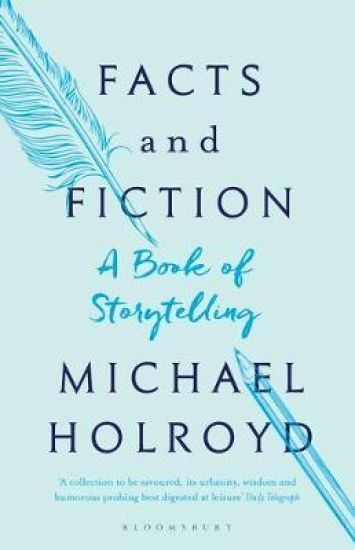
'As deft and devastating as a piece of non-fiction writing in miniature as you’re ever likely to read ... A collection to be savoured, its urbanity, wisdom and humorous probing best digested at leisure' Daily TelegraphIn Facts and Fiction, Michael Holroyd reflects on the eccentricities of the art of writing about others. With characteristic playfulness and guilefulness, he considers the ways in which lives can be written about, with all the subtle differences of design and intention that this entails.From Rudyard Kipling to forgetfulness, the glories of Mary Norton’s Borrowers books to fellow biographers like Richard Holmes and Alexander Masters, Holroyd tackles an eclectic range of topics with wit, warmth and humour. This is a unique insight into the mind of a master.
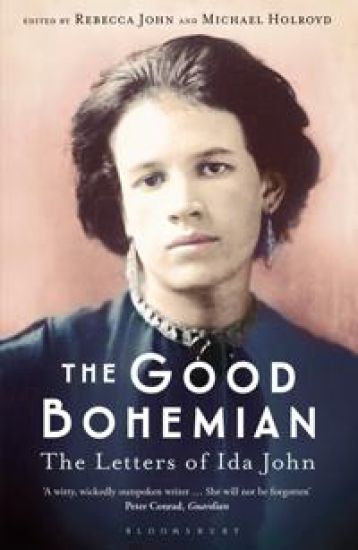
'It is right that, after more than one hundred years, she should have her say' John Carey, Sunday TimesTwelve days before her twenty-fourth birthday, on the foggy morning of Saturday 12 January 1901, Ida Nettleship married Augustus John in a private ceremony at St Pancras Registry Office. The union went against the wishes of Ida’s parents, who aspired to an altogether more conventional match for their eldest daughter. But Ida was in love with Augustus, a man of exceptional magnetism also studying at the Slade, and who would become one of the most famous artists of his time. Ida’s letters – to friends, to family and to Augustus – reveal a young woman of passion, intensity and wit. They tell of the scandal she brought on the Nettleship family and its consquences; of hurt and betrayal as the marriage evolved into a three-way affair when Augustus fell in love with another woman, Dorelia; of Ida’s remarkable acceptance of Dorelia, their pregnancies and shared domesticity; of self-doubt, happiness and despair; and of finding the strength and courage to compromise and navigate her unorthodox marriage. Ida is a naturally gifted writer, and it is with a candour, intimacy and social intelligence extraordinary for a woman of her period that her correspondence opens up her world. Ida John died aged just thirty of puerperal fever following the birth of her fifth son, but in these vivid, funny and sometimes devastatingly sad letters she is startlingly alive on the page.
Michael Holroyd, perhaps the most distinguished of contemporary biographers, has in recent years turned his attention to the stories hidden within his own fascinating (not to say eccentric) family. In Ancestors in the Attic he teases out two especially intriguing episodes, the tales of his great-grandmother and his aunt, which he categorizes respectively as tragedy and comedy. He tells their stories not only in words but also in pictures, through two very different collections made by the women, which he discovered in the attic of a house in Maidenhead: the ferns preserved and stitched into beautiful, intricate patterns by his tragic greatgrandmother, Anne Eliza Holroyd, in the 1870s; and the photographs of silent movie actors collected by his lively young aunt, Yolande Holroyd, in the 1920s. Included here are two volumes - My Great-Grandmother’s Book of Ferns and My Aunt’s Book of Silent Actors - a fascinating record of a very special family history. My Great-Grandmother’s Book of Ferns includes a foreword by leading pteridologist Martin Rickard. Christopher Fraser-Jenkins, world expert on Indian ferns, has identified, and provided a commentary on, the ferns used by Anne Eliza Holroyd.
Eustace is undisputed patriarch of the Farquhar family. That is, he would be if everyone stopped mumbling, let him get on with his shaving and find his way downstairs. It's not Henry's fault that he snores and that his marriage has collapsed. Or that he failed to get into the cricket team. But he has made up for it and is now a faster motorist than ever he was bowler. He is a good father too and one day, when he wakes up from day-dreaming, his son Kenneth will thank him. It is good that Anne sleeps with a whistle in her mouth - how else could she terrify the burglars? As for Mathilda she would love to like her mother, but prefers going for long walks with the dog. But what will happen to them all if the dog dies? A devastating postscript follows the story. Placing this eccentric family in isolation after two world wars and at the beginning of our aggressive financial culture, it turns comedy into tragedy. This novel brings a very personal addition to the biographer's remarkable career.
Michael Holroyd confronts an army of automobiles in this charming book. Weaving together memoir and historical anecdote, he traces his relationship with cars through a lifetime of biography.Learning to drive was no easy matter for Michael: the lessons required military precision when practising how to get in and out of his car correctly. His biographical subjects also had their difficulties: Bernard Shaw drove with reckless gusto when overtaking his eightieth year; Vita Sackville-West’s car became a chamber for sudden romantic assignations and getaways; while Augustus John and his family careered through vulnerable villages as the poor vehicle, piled high with bohemian friends, stuttered and jerked along in first gear.Wry, thoughtful and very funny, On Wheels is an elegy to the glamour of the car. Subtle and perceptive, Michael Holroyd finds surprising ways to understand the past and challenge our view of the future.
A Time Top Ten Nonfiction Book of 2011A Seattle Times Best Book of 2011 On a hill above the Italian village of Ravello sits the Villa Cimbrone, a place of fantasy and make-believe. The characters who move through Michael Holroyd's A Book of Secrets are destined never to meet, yet the Villa Cimbrone and one man unite them all. This elegiac work is about the quest of unearthing and recounting the stories of women always on the periphery of the respectable world--from Alice Keppel, the mistress of both the second Lord Grimthorpe and the Prince of Wales; to Eve Fairfax, a muse of Auguste Rodin; to the novelist Violet Trefusis, the lover of Vita Sackville-West. Also on the margins is the elusive biographer, who on occasion turns an appraising eye upon himself as part of his investigations in the maze of biography.
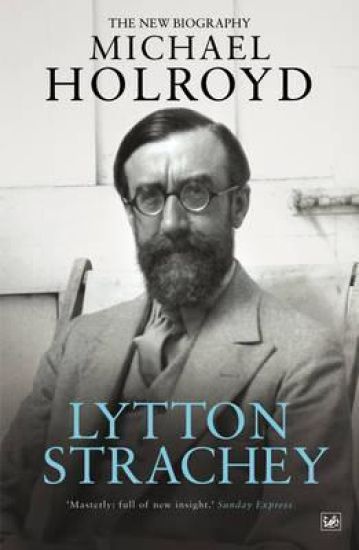
Lytton Strachey, genius, wit, iconoclast, biographer, pacifist, and homosexual campaigner, was at the nexus of the literary and artistic life of Bloomsbury.
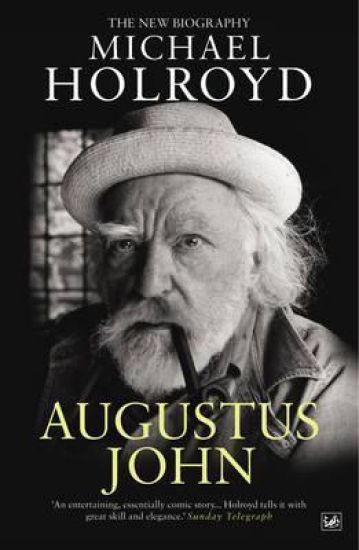
This 1997 revised and updated biography of the celebrated artist, using the mass of new material which has come to light since Holroyd's two-volume first edition in the mid 1970s, reveals the complete story of John and his circle, from one of our great biographers.
Taking the reader on a journey of discovery from Ravello to Paris, from Kirkstall Grange in Yorkshire to Vita Sackville-West's home at Knole, A Book of Secrets lucidly gives voice to fragile human connections.
After writing the definitive biographies of Lytton Strachey and George Bernard Shaw, Michael Holroyd turned his hand to a more personal subject: his own family. The result was Basil Street Blues, published in 1999. But rather than the story being over, it was in fact only beginning. As letters from readers started to pour in, the author discovered extraordinary narratives that his own memoir had only touched on. Mosaic is Holroyd's piecing together of these remarkable stories: the murder of the fearsome headmaster of his school; the discovery that his Swedish grandmother was the mistress of the French anarchist Jacques Prevert; and a letter about the beauty of his mother that provides a clue to a decade-long affair. Funny, touching, and wry, Mosaic shows how other people's lives, however eccentric or extreme, echo our own dreams and experiences."
In A Strange Eventful History, one of our greatest living biographers turns his attention to a gruop of history's most influential performers, a remarkable dynasty that presided over the golden age of theater. Ellen Terry was ther era's most powerful actress. George Bernard Shaw was so besotted that he wrote her letters almost daily, but could not bear to meet her, lest the spell she cast from the stage be broken. Henry Irving was a merchant's clerk who by force of will and wit became one of the greatest actor-managers in the history of the theater. Together, Irving and Terry presided over a powerhouse of the arts in London's Lyceum Theatre and revived English theater as a popular art form. Exactingly researched and bursting with charismatic life, this epic story follows Terry and Irving and their brilliant but volatile children--among them Terry's son, Edward Gordon Craig, the revolutionary theatrical designer. A Strange Eventful History is more than an account of the great classical age of London theater; it is a potrait of nineteenth-century society on the precipice of great change.
Henry Irving - a merchant's clerk who became the saviour of British theatre - and Ellen Terry, who made her first theatre appearance as soon as she could walk, were the king and queen of the Victorian stage.
Hugh Kingsmill should be better known. Here is a striking passage from Richard Ingrams' God's Apology. 'In Malcolm's (Muggeridge) study there was a row of books more thumbed and battered than the rest and a rather blurred photograph showing a man striding through a park, his arm swung forward, his air confident and jaunty. Malcolm called him Hughie. In his conversation he referred to him constantly, with great affection and in a manner quite unlike his usual rather disparaging one when talking of his friends. He seemed to be almost the only man in Malcolm's life of whom he had not a harsh word to say.' Hugh Kingsmill was a novelist, a biographer of note and a talker of outstanding verve and brilliance. He died in 1949 and to mark the sixtieth anniversary Faber Finds is reissuing Michael Holroyd's biography. It was Michael Holroyd's first book, originally published in 1964. 'A remarkably good book .' John Davenport, The Observer'It is a positive pleasure to recommend Michael Holroyd's splendid biography of this exceptional personality.' Kay Dick, BBC 'The World of Books''A well-written study of a laughing, witty, clearly lovable man behind whose wreathed smiles despair lurked.' Anthony Hern, Evening Standard 'An admirably balanced and complete portrait, the criticism fair, the likeness true . . . I congratulate the author on a remarkably good book.' Hesketh Pearson, in a letter' . . . impressively authoritative . . . entrancing and singularly profound.' William Gerhardie, The Spectator
Renowned biographer Michael Holroyd had always assumed that his own family was perfectly English, or at least perfectly ordinary. But an investigation into the Holroyd past--guided by old photograph albums, crumbling documents, and his parents' wildly divergent accounts of their lives--gradually yields clues to a constellation of startling events and eccentric characters: a slow decline from English nobility on one side, a dramatic Scandinavian ancestry on the other. Fires, suicides, bankruptcies, divorces, unconsummated longings, and the rumor of an Indian tea fortune permeate this wry, candid memoir, "part multiple biography, part autobiography, but principally an oblique investigation of the biographer's art" (New York Times Book Review). " A] perfect example of a memoir that entrances me."--Katherine A. Powers, Boston Sunday Globe " O]ne of the few biographers] who can convey what makes ordinary as well as extraordinary mortals live in our minds."--Los Angeles Times