Kirjojen hintavertailu. Mukana 12 595 353 kirjaa ja 12 kauppaa.
Kirjailija
Michael Horn
Kirjat ja teokset yhdessä paikassa: 7 kirjaa, julkaisuja vuosilta 1992-2022, suosituimpien joukossa Studien Zur Geschichte Papst Eugens III. (1145-1153). Vertaile teosten hintoja ja tarkista saatavuus suomalaisista kirjakaupoista.
Et omfattende opslagsværk om lov om kollektiv forvaltning af ophavsretLov om kollektiv forvaltning af ophavsret er en implementering af direktivet om kollektiv forvaltning af ophavsret og beslægtede rettigheder samt multiterritoriale licenser for rettigheder til musikværker med henblik på onlineanvendelse i det indre marked.Denne bog er en klassisk lovkommentar om loven om kollektiv forvaltning af ophavsret. Loven trådte i kraft i 2016 som konsekvens af implementering af EU-direktiv herom. Udover den klassiske lovkommentar indeholder bogen en gennemgang af organisationerne inden for området og meget af den baggrundsret, som er relevant for området.Denne lovkommentar er opbygget sådan, at der er et indledningskapitel, hvor der er en kort introduktion til forvaltningsorganisationers virksomhed og en kort beskrivelse af de danske forvaltningsorganisationer. Selve lovkommentaren følger lovens opbygning. Sidst er der en omtale af de bestemmelser i ophavsretsloven, der er en implementering af forvaltningsdirektivet.
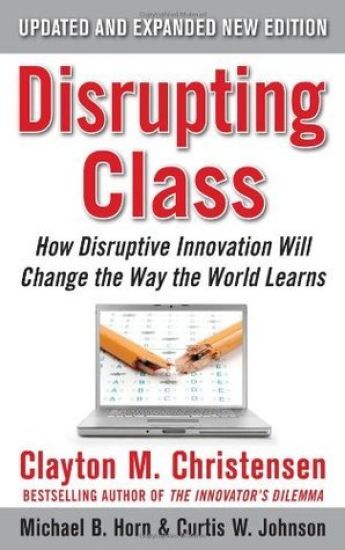
THE BOOK THAT’S CHANGING THE FUTURE OF EDUCATION“A brilliant teacher, Christensen brings clarity to a muddled and chaotic world of education.”-Jim Collins, bestselling author of Good to Great“A terrific read; it must become a blueprint for educational transformation.”-Joel Klein, former Chancellor of the New York City Department of EducationStudies in neuroscience reveal that the way we learn doesn’t always match up with the way we are taught. To stay competitive-academically, economically, and technologically-we need to apply the proven principles of disruptive innovation to our educational system. Disrupting Class will show you how to:• Help more students succeed through customized learning • Meet the demand for new technology, especially computers, in student-centric classrooms• Use disruptive innovation to circumvent roadblocks that have stood in the way of reform• Compete in the global classroom—and help students get ahead in the global marketFilled with fresh and surprising ideas, outside-the-box strategies, and straight-A success stories, Disrupting Class will make you rethink your understanding of intelligence, reevaluate your current school program, and reinvigorate your commitment to learning. The future is now. Class is in session.
Administrators of museums and other informal-learning centers often need to demonstrate, in some tangible way, the effectiveness of their institutions as teaching tools. Practical Evaluation Guide discusses specific methods for analyzing audience learning and behavior in museums, zoos, botanic gardens, nature centers, camps, and youth programs. Evaluation is essential because it allows you to answer critical questions like: ·How can one measure the impacts of educational experiences in a museum, zoo, or aquarium? ·Are digital technologies more effective than traditional exhibits for enhancing visitor interest and understanding? ·How does one measure learning in these informal environments where visitors themselves decide what they will experience? ·Since we know many visitors come to informal institutions for social interaction and play, how does one access these social impacts? The Practical Evaluation Guide is an all-in-one resource to guide professionals working in museums and other informal educational institutions. This new edition includes updates throughout and features a brand-new chapter on evaluating digital interactive exhibits. The section on observational tools includes a new section on using video recordings and the section on interviews includes recent studies from countries outside the U.S. Practical Evaluation Guide serves as a basic, easy-to-follow guide for museum professionals and students who want to understand the effects of such public institutions on the people who visit them.
Administrators of museums and other informal-learning centers often need to demonstrate, in some tangible way, the effectiveness of their institutions as teaching tools. Practical Evaluation Guide discusses specific methods for analyzing audience learning and behavior in museums, zoos, botanic gardens, nature centers, camps, and youth programs. Evaluation is essential because it allows you to answer critical questions like: ·How can one measure the impacts of educational experiences in a museum, zoo, or aquarium? ·Are digital technologies more effective than traditional exhibits for enhancing visitor interest and understanding? ·How does one measure learning in these informal environments where visitors themselves decide what they will experience? ·Since we know many visitors come to informal institutions for social interaction and play, how does one access these social impacts? The Practical Evaluation Guide is an all-in-one resource to guide professionals working in museums and other informal educational institutions. This new edition includes updates throughout and features a brand-new chapter on evaluating digital interactive exhibits. The section on observational tools includes a new section on using video recordings and the section on interviews includes recent studies from countries outside the U.S. Practical Evaluation Guide serves as a basic, easy-to-follow guide for museum professionals and students who want to understand the effects of such public institutions on the people who visit them.
Clay Christensen's groundbreaking bestselling work in education now updated and expanded, including a new chapter on Christensen's seminal "Jobs to Be Done" theory applied to education."Provocatively titled, Disrupting Class is just what America's K-12 education system needs--a well thought-through proposal for using technology to better serve students and bring our schools into the 21st Century. Unlike so many education 'reforms,' this is not small-bore stuff. For that reason alone, it's likely to be resisted by defenders of the status quo, even though it's necessary and right for our kids. We owe it to them to make sure this book isn't merely a terrific read; it must become a blueprint for educational transformation."—Joel Klein, Chancellor of the New York City Department of Education"A brilliant teacher, Christensen brings clarity to a muddled and chaotic world of education."—Jim Collins, bestselling author of Good to Great“Just as iTunes revolutionized the music industry, technology has the potential to transform education in America so that every one of the nation’s 50 million students receives a high quality education. Disrupting Class is a must-read, as it shows us how we can blaze that trail toward transformation.” —Jeb Bush, former Governor of FloridaAccording to recent studies in neuroscience, the way we learn doesn't always match up with the way we are taught. If we hope to stay competitive-academically, economically, and technologically-we need to rethink our understanding of intelligence, reevaluate our educational system, and reinvigorate our commitment to learning. In other words, we need "disruptive innovation."Now, in his long-awaited new book, Clayton M. Christensen and coauthors Michael B. Horn and Curtis W. Johnson take one of the most important issues of our time-education-and apply Christensen's now-famous theories of "disruptive" change using a wide range of real-life examples. Whether you're a school administrator, government official, business leader, parent, teacher, or entrepreneur, you'll discover surprising new ideas, outside-the-box strategies, and straight-A success stories. You'll learn how:Customized learning will help many more students succeed in schoolStudent-centric classrooms will increase the demand for new technologyComputers must be disruptively deployed to every studentDisruptive innovation can circumvent roadblocks that have prevented other attempts at school reformWe can compete in the global classroom-and get ahead in the global marketFilled with fascinating case studies, scientific findings, and unprecedented insights on how innovation must be managed, Disrupting Class will open your eyes to new possibilities, unlock hidden potential, and get you to think differently. Professor Christensen and his coauthors provide a bold new lesson in innovation that will help you make the grade for years to come.The future is now. Class is in session.
Eugen III. gehort zu den weniger bekannten Personen auf dem Thron der Nachfolger des Heiligen Petrus. Dennoch markiert sein Pontifikat in der Mitte des 12. Jahrhunderts das Ende eines Zeitalters und den Beginn einer neuen Zeit. Die vorliegende Studie beleuchtet die Politik des Zisterzienserpapstes gegenuber den abendlandischen Herrschern seiner Zeit, die Vorgeschichte des Zweiten Kreuzzuges und die Entwicklung des Kardinalkollegiums und der kurialen Verwaltung. Die Bemuhungen des Papstes um die Verbreitung des christlichen Glaubens und die Erweiterung der romischen Oboedienz werden aufgezeigt. Die Politik Eugens III. gegenuber der stadtischen Opposition in Rom und der Lehre Arnolds von Brescia zeigen die Kontinuitat von Eugen III. auf Hadrian IV. und Alexander III."