Kirjojen hintavertailu. Mukana 12 339 392 kirjaa ja 12 kauppaa.

Kirjailija

Michael Howard

Kirjat ja teokset yhdessä paikassa: 61 kirjaa, julkaisuja vuosilta 1978-2025, suosituimpien joukossa Tillämpad historia : Klassiska texter. Vertaile teosten hintoja ja tarkista saatavuus suomalaisista kirjakaupoista.

61 kirjaa

Kirjojen julkaisuhaarukka 1978-2025.

24 Deadly Sins of Software Security: Programming Flaws and How to Fix Them

24 Deadly Sins of Software Security: Programming Flaws and How to Fix Them

Michael Howard; David LeBlanc; John Viega

McGraw-Hill Professional
2009
nidottu
Publisher's Note: Products purchased from Third Party sellers are not guaranteed by the publisher for quality, authenticity, or access to any online entitlements included with the product.Eradicate the Most Notorious Insecure Designs and Coding VulnerabilitiesFully updated to cover the latest security issues, 24 Deadly Sins of Software Security reveals the most common design and coding errors and explains how to fix each one-or better yet, avoid them from the start. Michael Howard and David LeBlanc, who teach Microsoft employees and the world how to secure code, have partnered again with John Viega, who uncovered the original 19 deadly programming sins. They have completely revised the book to address the most recent vulnerabilities and have added five brand-new sins. This practical guide covers all platforms, languages, and types of applications. Eliminate these security flaws from your code: SQL injection Web server- and client-related vulnerabilitiesUse of magic URLs, predictable cookies, and hidden form fieldsBuffer overrunsFormat string problemsInteger overflowsC++ catastrophesInsecure exception handlingCommand injectionFailure to handle errorsInformation leakageRace conditionsPoor usabilityNot updating easilyExecuting code with too much privilegeFailure to protect stored dataInsecure mobile codeUse of weak password-based systemsWeak random numbersUsing cryptography incorrectlyFailing to protect network trafficImproper use of PKITrusting network name resolution
War in European History

War in European History

Michael Howard

Oxford University Press
2009
nidottu
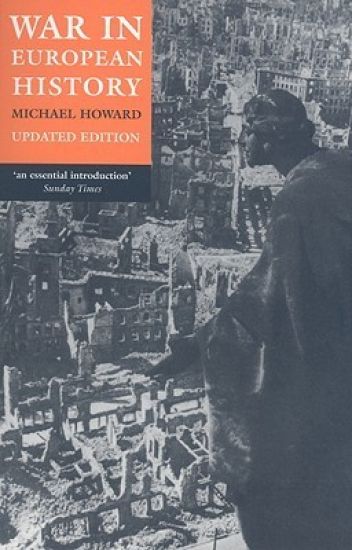
First published over thirty years ago, War in European History is a brilliantly written survey of the changing ways that war has been waged in Europe, from the Norse invasions to the present day. Far more than a simple military history, the book serves as a succinct and enlightening overview of the development of European society as a whole over the last millennium. From the Norsemen and the world of the medieval knights, through to the industrialized mass warfare of the twentieth century, Michael Howard illuminates the way in which warfare has shaped the history of the Continent, its effect on social and political institutions, and the ways in which technological and social change have in turn shaped the way in which wars are fought. This new edition includes a fully updated further reading and a new final chapter bringing the story into the twenty-first century, including the invasion of Iraq and the so-called 'War against Terror'.
War and the Liberal Conscience

War and the Liberal Conscience

Michael Howard

C Hurst Co Publishers Ltd
2008
nidottu
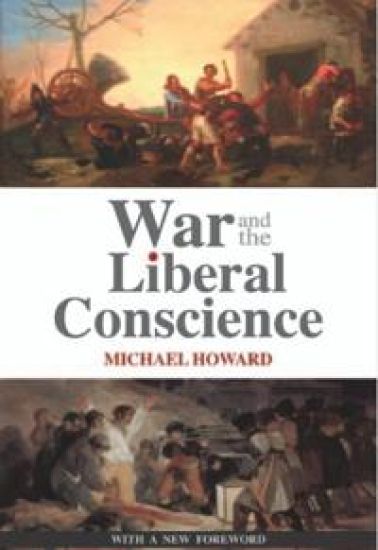
Isn't war rooted in the vested interests of the ruling classes? (But have not democracies proved as bellicose as other states?) Should not political disputes be settled by civilised negotiations? (But what if the adversary is not, by your standards, 'civilised'?) Ought states to steer clear of other states' internal conflicts? (Or should they help liberate oppressed peoples?) Which is better, appeasement or a war to end war? Such questions reflect the confusion that still besets liberal-minded men and women in the face of war, despite centuries during which they have tried to discover its causes and secure its abolition. Sir Michael Howard traces the pattern in their attitudes from Erasmus to the Americans after Vietnam, and concludes that peacemaking 'is a task which has to be tackled afresh every day of our lives'.
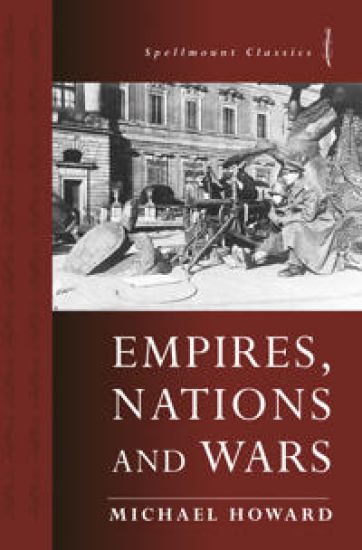
Empires, Nations and Wars

Empires, Nations and Wars

Michael Howard

Spellmount Publishers Ltd
2007
nidottu
Brings together the articles and lectures of Sir Michael Howard during his time as Regius Professor of Modern History in the University of Oxford between 1980 and 1989. Some of the articles in this work reflect on contemporary events, but most are concerned with the historical process which underlies international politics.
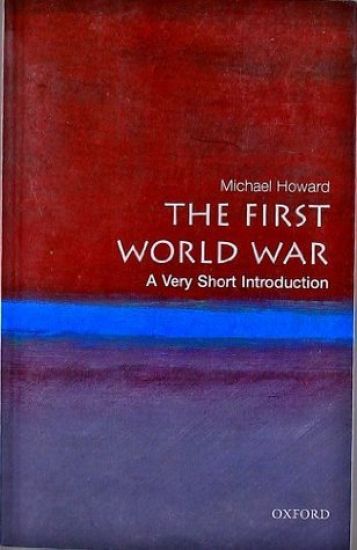
The First World War

The First World War

Michael Howard

Oxford University Press
2007
nidottu
By the time the First World War ended in 1918, eight million people had died in what had been perhaps the most apocalyptic episode the world had known. This Very Short Introduction provides a concise and insightful history of the 'Great War', focusing on why it happened, how it was fought, and why it had the consequences it did. It examines the state of Europe in 1914 and the outbreak of war; the onset of attrition and crisis; the role of the US; the collapse of Russia; and the weakening and eventual surrender of the Central Powers. Looking at the historical controversies surrounding the causes and conduct of war, Michael Howard also describes how peace was ultimately made, and the potent legacy of resentment left to Germany. ABOUT THE SERIES: The Very Short Introductions series from Oxford University Press contains hundreds of titles in almost every subject area. These pocket-sized books are the perfect way to get ahead in a new subject quickly. Our expert authors combine facts, analysis, perspective, new ideas, and enthusiasm to make interesting and challenging topics highly readable.
Vääristynyt evankeliumi

Vääristynyt evankeliumi

Michael Howard

Out of Africa
2007
nidottu
Paavalin evankeliumi ei ollut kiehtovia ihmisviisauden sanoja vaan Pyhän Hengen voiman osoittamista. Hänen sanomansa ei myöskään ollut ihmismielen mukainen, sillä uskomme ei tulisi perustua inhimilliseen viisauteen, vaan Jumalan voimaan. Jumalan todellisen voiman tulisi olla uskomme ja kristillisen elämämme perusta, silti näemme Jumalan liikkuvan ja toimivan ihmeellisessä voimassaan hyvin harvoin. Voisiko syy löytyä siitä, että sanomamme on vesittynyt? Olemmeko vaihtaneet ristin hullutuksen ihmisiin vetoavaan puolitotuuteen ja samalla menettäneet Jumalan voiman? Jos näin on, niin mikä sitten on todellinen evankeliumi ja kuinka sitä tulisi julistaa? Michael Howard ottaa kirjassaan rohkeasti kantaa kysymykseen sanomamme ytimestä.
Captain Professor

Captain Professor

Michael Howard

Continuum International Publishing Group Ltd.
2006
sidottu
Michael Howard's ancestry, part Quaker, part German Jew, made him unpromising material for a commission in the Brigade of Guards. The three years he spent with his regiment were equally inappropriate perparation for the university chairs that he went on to hold at London, Oxford and Yale. In this autobiography he describes how these varied strands in his life came together. First there was a childhood in a world of privilege almost as remote from today as is that of the Roman Antonines. Then there came war service in Italy, a mixture of terror, tedium and Lucullan enjoyment. Finally, he was to persue an academic career in which he would pioneer the study both of war as an aspect of 'total history' and of international relations in the nuclear age. In addition to holding the Regius Chair of Modern History at Oxford he was to play a leading role in founding both the International Institute for Strategic Studies and the world-famous Department of War Studies at King's College London. His works (some translated into sizxteen languages) have him the Duff Cooper Prize,the Wolfson History Prize and the Chesney Gold Medal of the Royal United Services Institute.He ended up as a Fellow of the British Academy, a Companion of Honour and a member of the Order of Merit. So the discordant elements in his background and experience eventually harmonized very well. Professor Sir Michael Howard was Regius Professor of Modern History at Oxford and Robert A. Lovett Professor of Military and Naval History at Yale University. Amongst his most celebrated books are The Franco-Prussian War, War in European History and The Invention of Peace.
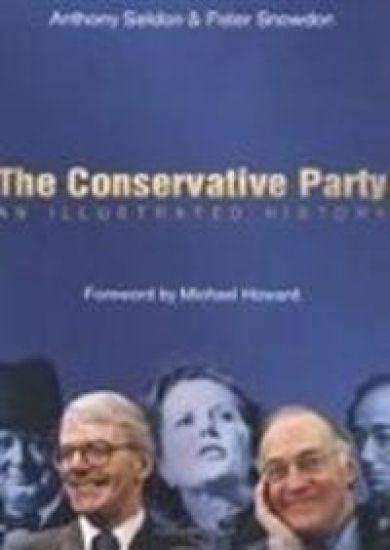
The Conservative Party

The Conservative Party

Anthony Seldon; Peter Snowdon; Michael Howard

The History Press Ltd
2004
nidottu
The Conservative Party is Britain's most successful political party. For large parts of modern British history it has been the dominant party, though it has always suffered from internal division and periods of defeat. This colourful account of the Party's history since the late 18th century takes the reader on a voyage of discovery.
Clausewitz

Clausewitz

Michael Howard

Oxford University Press
2002
nidottu
Karl von Clausewitz's study On War was described by the American strategic thinker Bernard Brodie as 'not simply the greatest, but the only great book about war'. It is hard to disagree. Even though he wrote his only major work at a time when the range of firearms was fifty yards, much of what he had to say remains relevant today. Michael Howard explains Clausewitz's ideas in terms both of his experiences as a professional soldier in the Napoleonic Wars, and of the intellectual background of his time. ABOUT THE SERIES: The Very Short Introductions series from Oxford University Press contains hundreds of titles in almost every subject area. These pocket-sized books are the perfect way to get ahead in a new subject quickly. Our expert authors combine facts, analysis, perspective, new ideas, and enthusiasm to make interesting and challenging topics highly readable.
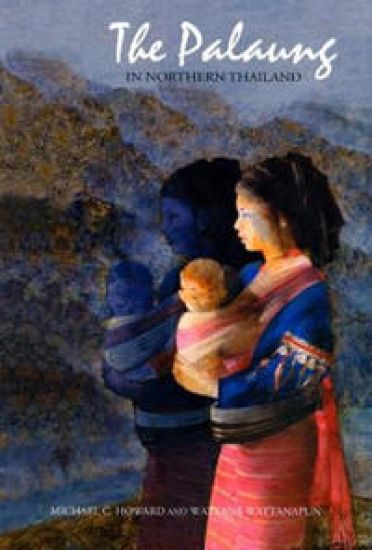
The Palaung in Northern Thailand

The Palaung in Northern Thailand

Michael Howard; Wattana Wattanapun

University of Washington Press
2002
pokkari
Today over 2000 Palaung--a group of mountain peoples speaking Mon-Khmer--live in a handful of villages north of Chiang Mai in Thailand. They fled from Burma in the 1980s to escape the fighting between communist insurgents and Burmese army troops. Though granted sanctuary, in the late 1990s many of the Palaung in Thailand found themselves involved in a new conflict over land use in northern Thailand's environmentally degraded highlands.This is the first book written on the Palaung in Thailand, a compelling collaborative effort by anthropologist Michael Howard and Thai artist Wattana Wattanapun. They introduce the Palaung culture and way of life, telling the story of the Palaung's flight from Burma and settlement in Thailand. Howard's photographs and Wattana's drawings enliven the account.
The Invention of Peace: Reflections on War and International Order
Throughout history the overwhelming majority of human societies have taken war for granted and made it the basis for their legal and social structures. Not until the Enlightenment in the eighteenth century did war come to be regarded as an unmitigated evil and one that could be abolished by rational social organization, and only after the massive slaughter of the two world wars did this become the declared objective of civilized states. Nevertheless, war in one form or another continues unabated. In this elegantly written book, a preeminent military historian considers why this is so. Is war in some sense still a necessary element in international order? Are war and peace in fact complementary? Does not peace itself breed the conditions that will ultimately lead to war? And if nuclear weapons have made war ultimately suicidal for mankind, what can be done about it? Having devoted half a century largely to studying these questions, Michael Howard offers us his reflections. Unless they can be answered, he notes, the twenty-first century is unlikely to be any more peaceful than the centuries that preceded it.
Strategic Deception in the Second World War

Strategic Deception in the Second World War

Michael Howard

W. W. Norton Company
1996
nidottu
A volume in the British Government's Official History of Intelligence in the Second World War, the book has been written by a master historian renowned for his eloquence as well as for his learning. The success of these operations can be measured by the fact that by 1943 the Germans were almost wholly dependent on double agents for news of what was going on in the United Kingdom; intercepted and decrypted radio traffic showed the Allies how extensively the enemy was accepting disinformation and acting on it. In Britain, extremely tight communications security made possible the apprehension and control of virtually all active enemy agents. Sir Michael Howard explains how the British were able to deceive the Germans about the strategic intentions of the Allies and make them greatly overestimate Allied resources. Here is the most authoritative account available of such classic deception operations as Operation Mincemeat, which preceded the invasion of Sicily; the nonexistent U.S. Army group that pinned down an entire German Army in the Pas de Calais until Montgomery's forces had achieved a secure foothold in Normandy; and the amazing trick played on the German intelligence authorities by the great double agent Garbo.
Public Finance in Small Open Economies

Public Finance in Small Open Economies

Michael Howard

Praeger Publishers Inc
1992
sidottu
This book presents an analysis of Caribbean fiscal problems, with particular emphasis on the relationship between high levels of public expenditure and balance of payments problems. The study examines deficit financing, public expenditure growth, and IMF stabilization policies. Other issues raised relate to income distribution and problems of taxation and tax reform. The work focuses on Jamaica, Guyana, Barbados, and Trinidad and Tobago. The economies of the Organization of Eastern Caribbean States are also considered.This work will interest scholars in economics and economic policy-making, especially those in developing countries.
The Lessons of History

The Lessons of History

Michael Howard

Yale University Press
1992
nidottu
"The vital questions which confront not only students of war but all concerned with peace and security are, why wars happen; how, if necessary, they should be fought; and above all how they can be prevented...An understanding [of these issues] is impossible without some insight into the way in which societies have developed in the past and with them their cultures and their value systems."--Michael HowardThis important book by one of the most eminent military historians in the world discusses the processes of historical change that spawned the European wars of the twentieth century. In a series of elegantly written essays, Michael Howard ponders the continuing significance of nationalism and its relationship to the growth of industrial societies, modernization, and war. He explores the conflicting ideologies that arose from industrialism, tracing the development of new political organisms and attitudes as mass communications and universal education raised and transformed the level of political consciousness throughout the world.Howard argues that, although industrialization may tend to reduce belligerence by producing societies dedicated to material welfare rather than heroic achievement, organized violence remains a norm. In an introduction, he links these themes with the emergence of perestroika and glasnost in the Soviet sphere, with the difficulties experienced by Third World countries in creating viable political and economic communities, and with a Western bloc in which social tensions continue to increase.
Causes of Wars and Other Essays

Causes of Wars and Other Essays

Michael Howard

Harvard University Press
1984
pokkari
Public consciousness of the threat of nuclear war is rising steadily. Responses to the nuclear dilemma are conflicting and often confusing. Never have we been more in need of information and perspective, for if we wish to avoid war we must understand it. Michael Howard offers an analysis of our present predicament by discussing those issues that cause war and make peace. His book includes an examination of nuclear strategy today, views of the past about the conduct of international relations, ethics, modes of defense, and studies of military thinkers and leaders. The Causes of Wars illuminates the interrelationship between men and ideas, between war and other social forces, and between our present situation and its roots in the past.