Kirjojen hintavertailu. Mukana 12 152 606 kirjaa ja 12 kauppaa.

Kirjailija

Michael J. A. Howe

Kirjat ja teokset yhdessä paikassa: 6 kirjaa, julkaisuja vuosilta 1997-2001, suosituimpien joukossa The Psychology of High Abilities. Vertaile teosten hintoja ja tarkista saatavuus suomalaisista kirjakaupoista.

Mukana myös kirjoitusasut: Michael J A Howe, Michael J.A. Howe

6 kirjaa

Kirjojen julkaisuhaarukka 1997-2001.

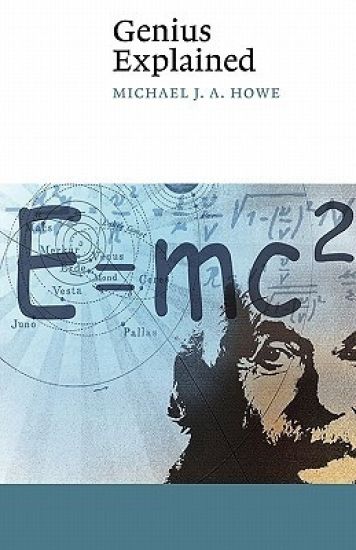
Genius Explained

Genius Explained

Michael J. A. Howe

Cambridge University Press
2001
pokkari
In Genius Explained Michael J. A. Howe addresses the commonly held belief that genius is born not made. Controversially he suggests that genius is not a mysterious and mystical gift but the product of a combination of environment, personality and sheer hard work. The exceptional talents of those we call geniuses are the result of a unique set of circumstances and opportunities, but in every case they are pursued and exploited with a characteristic drive, determination and focus which the rest of us rarely show. Michael J. A. Howe develops these ideas through a series of case studies focusing on famous figures such as Charles Darwin, George Eliot, George Stevenson, the Brontë sisters, Michael Faraday and Albert Einstein in this fascinating and accessible book which will be of interest to academics, students and the interested lay reader.
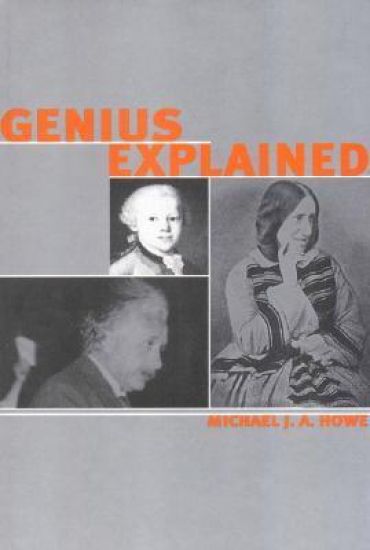
Genius Explained

Genius Explained

Michael J. A. Howe

Cambridge University Press
1999
pokkari
In Genius Explained Michael J. A. Howe addresses the commonly held belief that genius is born not made. Controversially he suggests that genius is not a mysterious and mystical gift but the product of a combination of environment, personality and sheer hard work. The exceptional talents of those we call geniuses are the result of a unique set of circumstances and opportunities but in every case they are pursued and exploited with a characteristic drive, determination and focus which the rest of us rarely show. Michael J. A. Howe develops these ideas through a series of case studies focusing on famous figures such as Charles Darwin, George Eliot, George Stevenson, the Bronte sisters, Michael Faraday and Albert Einstein in this fascinating and accessible book which will be of interest to academics and students of intelligence and the interested lay reader.
The Psychology of High Abilities

The Psychology of High Abilities

Michael J. A. Howe

Palgrave Macmillan
1999
nidottu
People's capabilities form the most crucial of all mankind's resources. High abilities help their possessors to enjoy productive and fruitful lives, and the expertise gained by competent men and women makes wider contributions to human progress. The Psychology of High Abilities reveals the causes of impressive accomplishments, discovering how and why people differ in their capabilities. Topics covered include prodigies, geniuses, the acceleration of development in young people, and the influences of family backgrounds on young people.
Principles Of Abilities And Human Learning

Principles Of Abilities And Human Learning

Michael J.A. Howe

Psychology Press Ltd
1998
nidottu
This book is about human abilities and the ways in which people acquire and extend them. It contains many useful facts about people's learning and the mental processes that make it possible. Chapter one looks at the kinds of events that create learning, and identifies some important general principles of human learning. Chapter two examines the capabilities that children gain in their early years. They acquire a number of basic capacities that they can draw upon throughout life. These include language, reading, and numerical abilities. The acceleration of early abilities is also considered. Chapter three raises a number of intriguing questions about abilities. What exactly are they? What are their most important charactersitics? How can different capabilities and items of knowledge become joined to one another? The answers are surprisingly different from what common sense predicts.; Chapter four Considers The Important Contributions Of Motivation. A Person Has To Have good reasons for engaging in learning activities. Motivation supplies incentives for doing whatever is necessary in order to make learning happen. Chapter five investigates more advanced attainments. It looks at the effects of practising and other ways in which individuals extend their expertise. The use of memory aids and learning techniques is examined. Other topics include the influence of intelligence, creativity, the possible roles of innate gifts and talents, and child prodigies and geniuses. The best way to apply discoveries concerning learning and the acquisition of abilities is to use them for our own daily activities. Chapter six addresses the question of how to learn and study more effectively. It introduces ways of reading more effectively, and gives advice on improving writing skills and studying for exams. The aim here is to help the reader to succeed better at gaining needed capabilities.
IQ in Question

IQ in Question

Michael J A Howe

SAGE Publications Inc
1997
nidottu
`In this remarkably economical, clear and informed book, Mike Howe... sets about unravelling the formidable semantic, logical and empirical knots into which IQ testers and their supporters have tied themselves.... Howe suggests that we have, for decades, been asking the wrong kinds of questions. He points to the number of alternative, theoretically richer, views of human intelligence that don't reduce all to a single dimension... this is rendered with an easy, readable style which assumes no previous technical knowledge' - British Journal of Educational Psychology In this provocative and accessible book, Michael Howe exposes serious flaws in our most widely accepted beliefs about intelligence. He shows that crucial assumptions are simply wrong and have had destructive social consequences. IQ is real enough, but the common idea that a quality of intelligence is the underlying cause of people's differing abilities is based on poor science as well as faulty reasoning. Offering a powerful case for a better understanding of human intelligence, IQ in Question contradicts erroneous and destructive claims such as: IQ tests provide a measure of inherent mental capacities; intelligence and `race' are linked; IQ measures are good predictors of a person's success; intelligence cannot be changed; there is a `gene for intelligence'; and low IQ always means restricted capabilities.