Kirjojen hintavertailu. Mukana 12 311 914 kirjaa ja 12 kauppaa.

Kirjailija

Michael J. Blouin

Kirjat ja teokset yhdessä paikassa: 13 kirjaa, julkaisuja vuosilta 2016-2025, suosituimpien joukossa King Noir. Vertaile teosten hintoja ja tarkista saatavuus suomalaisista kirjakaupoista.

13 kirjaa

Kirjojen julkaisuhaarukka 2016-2025.

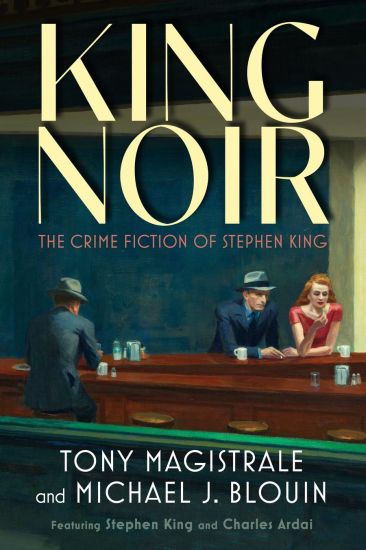
King Noir

King Noir

Tony Magistrale; Michael J. Blouin

UNIVERSITY PRESS OF MISSISSIPPI
2025
pokkari
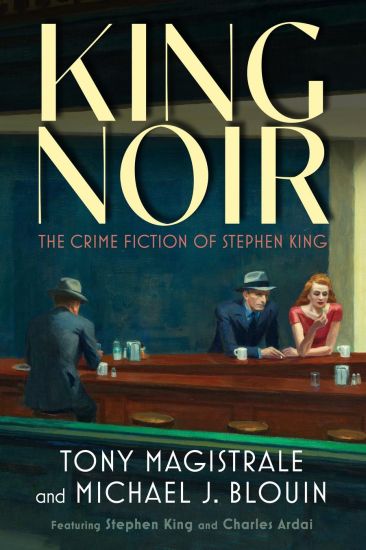
Over the past thirty years, Stephen King has received enormous attention from both the popular press as well as academics seeking to explain the unique phenomenon of his success. Books on King explore his canon in religious contexts, in political and historical contexts, in mythic—specifically Jungian—contexts, in Gothic/horror (especially American literary) contexts, and in a wide variety of other contexts appropriate to a writer who, over the past half century, has become "America’s Storyteller." Beginning with a never-published chapter authored by Stephen King himself on the influence of the genre on his own writing, King Noir makes an invaluable contribution to King scholarship by placing King’s works in conversation with American crime fiction.This is the third book that Tony Magistrale and Michael J. Blouin have coauthored on the work of Stephen King, and the first to consider King’s canon through the lens of crime fiction. King Noir examines not only King’s own efforts at writing in the detective genre, but also how the detective genre finds its way into work typically regarded as horror fiction. In interviews, King has acknowledged his debt to earlier writers in the genre, such as Ed McBain and Raymond Chandler, and he much more often references hardboiled writers than he does horror writers. One could speculate that King became a writer because of his love of pulpy crime fiction, which he continues to hold in high esteem. From The Dead Zone to Mr. Mercedes, from the crime fiction of his pseudonym Richard Bachman to his most recent novel Holly, King returns obsessively to patterns established by American sleuths of every stripe, paying homage to them at the same time as he innovates on the formulas he has inherited. To focus upon a hardboiled Stephen King is to discover exciting new avenues for inquiry into one of America’s most enduring, and adaptable, storytellers.
King Noir

King Noir

Tony Magistrale; Michael J. Blouin

UNIVERSITY PRESS OF MISSISSIPPI
2025
sidottu
Over the past thirty years, Stephen King has received enormous attention from both the popular press as well as academics seeking to explain the unique phenomenon of his success. Books on King explore his canon in religious contexts, in political and historical contexts, in mythic—specifically Jungian—contexts, in Gothic/horror (especially American literary) contexts, and in a wide variety of other contexts appropriate to a writer who, over the past half century, has become "America’s Storyteller." Beginning with a never-published chapter authored by Stephen King himself on the influence of the genre on his own writing, King Noir makes an invaluable contribution to King scholarship by placing King’s works in conversation with American crime fiction.This is the third book that Tony Magistrale and Michael J. Blouin have coauthored on the work of Stephen King, and the first to consider King’s canon through the lens of crime fiction. King Noir examines not only King’s own efforts at writing in the detective genre, but also how the detective genre finds its way into work typically regarded as horror fiction. In interviews, King has acknowledged his debt to earlier writers in the genre, such as Ed McBain and Raymond Chandler, and he much more often references hardboiled writers than he does horror writers. One could speculate that King became a writer because of his love of pulpy crime fiction, which he continues to hold in high esteem. From The Dead Zone to Mr. Mercedes, from the crime fiction of his pseudonym Richard Bachman to his most recent novel Holly, King returns obsessively to patterns established by American sleuths of every stripe, paying homage to them at the same time as he innovates on the formulas he has inherited. To focus upon a hardboiled Stephen King is to discover exciting new avenues for inquiry into one of America’s most enduring, and adaptable, storytellers.
Democracy and the American Gothic

Democracy and the American Gothic

Michael J. Blouin

Cambridge University Press
2024
sidottu
While the political undercurrent of the American Gothic has been firmly established, few scholars have surveyed the genre's ambivalent relationship to democracy. The American Gothic routinely undercuts centralised authority by exposing the dark underbelly of the status quo; at the same time, the American Gothic tends to reflect a widespread mistrust of the masses. American readers are too afraid of democracy – and not yet fearful enough. This concise Element theorises the democratic and anti-democratic elements of the American Gothic by surveying the conflicted imaginaries of the genre's mainstays, including Charles Brockden Brown, Edgar Allan Poe, Shirley Jackson, and Stephen King.
Democracy and the American Gothic

Democracy and the American Gothic

Michael J. Blouin

Cambridge University Press
2024
pokkari
While the political undercurrent of the American Gothic has been firmly established, few scholars have surveyed the genre's ambivalent relationship to democracy. The American Gothic routinely undercuts centralised authority by exposing the dark underbelly of the status quo; at the same time, the American Gothic tends to reflect a widespread mistrust of the masses. American readers are too afraid of democracy – and not yet fearful enough. This concise Element theorises the democratic and anti-democratic elements of the American Gothic by surveying the conflicted imaginaries of the genre's mainstays, including Charles Brockden Brown, Edgar Allan Poe, Shirley Jackson, and Stephen King.
The Presidents of American Fiction

The Presidents of American Fiction

Michael J. Blouin

BLOOMSBURY PUBLISHING PLC
2022
nidottu
The Presidents of American Fiction brings together American literature, history, and political science to explore the most influential fictionalized accounts of the presidency from the early 19th century to the time of Trump. Of late, popular understandings of the presidency are being radically re-written—consider, for example, the distinctive myths that accompanied the ascent of the Obama and Trump administrations—and many readers of all stripes are radically reimagining the office and its holder. Placing these changes within a broader cultural context, Michael J. Blouin investigates narratives involving fictional presidents, from the supposedly factual to the outright fantastical, within their distinct literary and historical moments.The author considers representative texts including works penned by James Fenimore Cooper from the Jacksonian moment, Gore Vidal in the age of Nixon and Vietnam, and Philip Roth in the neoliberal period. Through detailed readings that question how American presidents function as characters within the popular imagination, this book examines the presidency as a complex, ever-evolving trope, and in so doing enhances our appreciation of American literature’s inextricable link with American politics.
The Presidents of American Fiction

The Presidents of American Fiction

Michael J. Blouin

BLOOMSBURY PUBLISHING PLC
2022
sidottu
The Presidents of American Fiction brings together American literature, history, and political science to explore the most influential fictionalized accounts of the presidency from the early 19th century to the time of Trump. Of late, popular understandings of the presidency are being radically re-written—consider, for example, the distinctive myths that accompanied the ascent of the Obama and Trump administrations—and many readers of all stripes are radically reimagining the office and its holder. Placing these changes within a broader cultural context, Michael J. Blouin investigates narratives involving fictional presidents, from the supposedly factual to the outright fantastical, within their distinct literary and historical moments.The author considers representative texts including works penned by James Fenimore Cooper from the Jacksonian moment, Gore Vidal in the age of Nixon and Vietnam, and Philip Roth in the neoliberal period. Through detailed readings that question how American presidents function as characters within the popular imagination, this book examines the presidency as a complex, ever-evolving trope, and in so doing enhances our appreciation of American literature’s inextricable link with American politics.
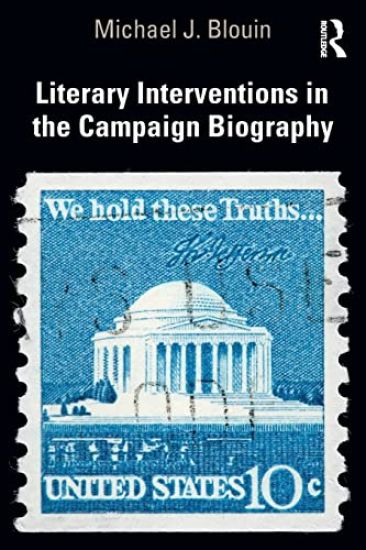
Literary Interventions in the Campaign Biography
Literary Interventions in the Campaign Biography considers campaign biographies written by major authors including Nathaniel Hawthorne, William Dean Howells, Lew Wallace, Jacob Riis, and Rose Wilder Lane. Whereas a number of cultural historians have previously considered campaign biographies to be marginal or isolated from the fictional output of these figures, this volume revisits the biographies in order to understand better how they inform, and are informed by, seismic shifts in the literary landscape. The book illuminates the intersection of American literature and politics while charting how the Presidency has developed in the public imagination. In so doing, it poses questions of increasing significance about how we understand the office as well as its occupants today.
Literary Interventions in the Campaign Biography
Literary Interventions in the Campaign Biography considers campaign biographies written by major authors including Nathaniel Hawthorne, William Dean Howells, Lew Wallace, Jacob Riis, and Rose Wilder Lane. Whereas a number of cultural historians have previously considered campaign biographies to be marginal or isolated from the fictional output of these figures, this volume revisits the biographies in order to understand better how they inform, and are informed by, seismic shifts in the literary landscape. The book illuminates the intersection of American literature and politics while charting how the Presidency has developed in the public imagination. In so doing, it poses questions of increasing significance about how we understand the office as well as its occupants today.
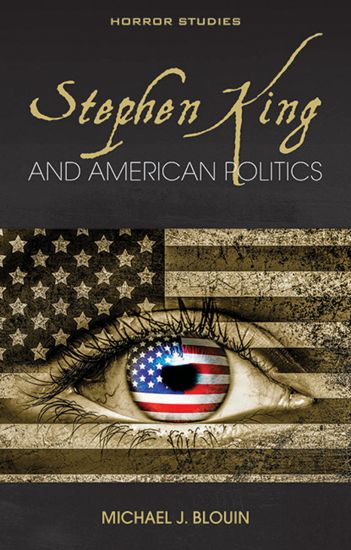
Stephen King and American Politics

Stephen King and American Politics

Michael J. Blouin

University of Wales Press
2021
nidottu
From The Long Walk to The Outsider, Stephen King's output reflects the major political concerns of the previous fifty years. This book, Stephen King and American Politics, is the first sustained study of the complex ways in which King's texts speak to their unique political moments. By exploring this aspect of the author's popular works, readers might better understand the numerous crises that Americans currently face in a book that surveys King's corpus to address a wide range of issues - including the spread of neoliberalism, the Bush-Cheney doctrine, and the chaos of the populist present. Although his fiction outwardly declares itself to be anti-political - thus reflecting a widespread shift away from democracy in the aftermath of the 1960s - political energies persist just beneath the surface. Given the possibility of a political resurgence that haunts so many of his page-turners, Stephen King produces horror and hope in equal measure.
Mass-Market Fiction and the Crisis of American Liberalism, 1972–2017

Mass-Market Fiction and the Crisis of American Liberalism, 1972–2017

Michael J. Blouin

Springer Nature Switzerland AG
2019
nidottu
Mass-Market Fiction and the Crisis of American Liberalism, 1972–2017 tracks the transformation of liberal thought in the contemporary United States through the unique lens of the popular paperback. The book focuses on cultural shifts as they appear in works written by some of the most widely-read authors of the last fifty years: the idea of love within a New Economy (Danielle Steel), the role of government in scientific inquiry (Michael Crichton), entangled political alliances and legacies in the aftermath of the 1960s (Tom Clancy), the restructured corporation (John Grisham), and the blurred line between state and personal empowerment (Dean Koontz). To address the current crisis, this book examines how the changed character of American liberalism has been rendered legible for a mass audience.
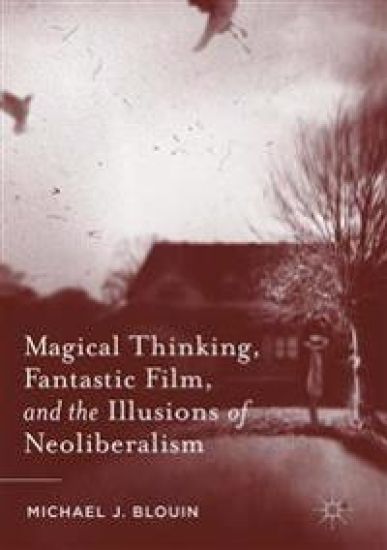
Magical Thinking, Fantastic Film, and the Illusions of Neoliberalism
?This book analyzes how contemporary popular films with fantastic themes, including Candyman, Frozen, The Cabin in the Woods, and The Incredible Burt Wonderstone, cultivate neoliberal subjectivities. These films promise dramatic change, but they too often deliver more of the same. Although proponents maintain the illusion that the militant enforcement of freemarket economics will resolve racism, climate change, and imperialism, their magical thinking actually fuels the crises. Magical Thinking, Fantastic Film, and the Illusions of Neoliberalism explores the ways in which the visual economies of Hollywood fantasy compliment this particular political economy.
Mass-Market Fiction and the Crisis of American Liberalism, 1972–2017

Mass-Market Fiction and the Crisis of American Liberalism, 1972–2017

Michael J. Blouin

Springer International Publishing AG
2018
sidottu
Mass-Market Fiction and the Crisis of American Liberalism, 1972–2017 tracks the transformation of liberal thought in the contemporary United States through the unique lens of the popular paperback. The book focuses on cultural shifts as they appear in works written by some of the most widely-read authors of the last fifty years: the idea of love within a New Economy (Danielle Steel), the role of government in scientific inquiry (Michael Crichton), entangled political alliances and legacies in the aftermath of the 1960s (Tom Clancy), the restructured corporation (John Grisham), and the blurred line between state and personal empowerment (Dean Koontz). To address the current crisis, this book examines how the changed character of American liberalism has been rendered legible for a mass audience.
Magical Thinking, Fantastic Film, and the Illusions of Neoliberalism
?This book analyzes how contemporary popular films with fantastic themes, including Candyman, Frozen, The Cabin in the Woods, and The Incredible Burt Wonderstone, cultivate neoliberal subjectivities. These films promise dramatic change, but they too often deliver more of the same. Although proponents maintain the illusion that the militant enforcement of freemarket economics will resolve racism, climate change, and imperialism, their magical thinking actually fuels the crises. Magical Thinking, Fantastic Film, and the Illusions of Neoliberalism explores the ways in which the visual economies of Hollywood fantasy compliment this particular political economy.