Kirjailija
Michael J Broyde
Kirjat ja teokset yhdessä paikassa: 13 kirjaa, julkaisuja vuosilta 2014-2026, suosituimpien joukossa Sharia Tribunals, Rabbinical Courts, and Christian Panels. Vertaile teosten hintoja ja tarkista saatavuus suomalaisista kirjakaupoista.
Mukana myös kirjoitusasut: Michael J. Broyde
13 kirjaa
Kirjojen julkaisuhaarukka 2014-2026.
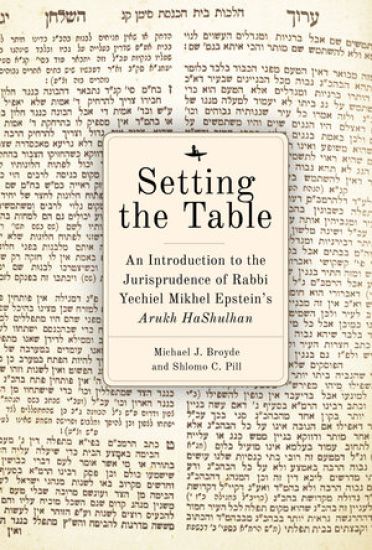
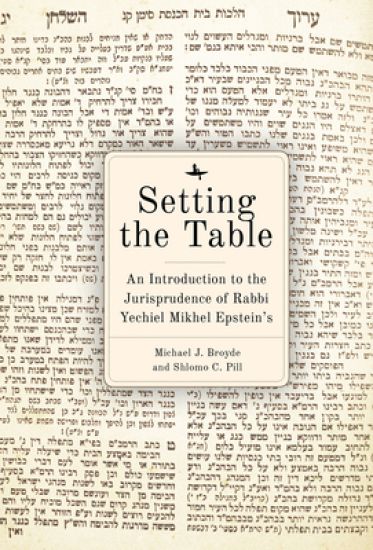
One of the most basic questions for any legal system is that of methodology: how one interprets, analyzes, weighs, and applies a mass of often competing legal rules, precedents, practices, customs, and traditions to reach final determinations and practical guidance about the correct legal-prescribed course of action in any given situation. Questions of legal methodology raise not only practical concerns, but theoretical and philosophical ones as well. We expect law to be more than the arbitrary result of a given decision maker’s personal preferences, and so we demand that legal methodologies be principled as well as practical. These issues are especially acute in religious legal systems, where the stakes are raised by concerns for respecting not just human, but divine law. Despite this, the major scholars and codifiers of halakhah, or Jewish law, have only rarely explicated their own methods for reaching principled legal decisions. This book explains the major jurisprudential factors driving the halakhic jurisprudence of Rabbi Yehiel Mikhel Epstein, twentieth-century author of the Arukh Hashulchan—the most comprehensive, seminal, and original modern restatement of Jewish law since Maimonides. Reasoning inductively from a broad review of hundreds of rulings from the Orach Chaim section of the Arukh Hashulchan, the book teases out and explicates ten core halakhic principles that animate Rabbi Epstein’s halakhic decision-making. Along the way, it compares the Arukh Hashulchan methodology to that of the Mishna Berura. This book will help any reader understand important methodological issues in both Jewish and general jurisprudence.
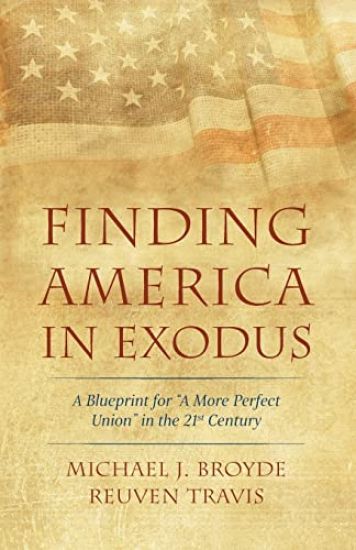
God's charge to the Jewish people at Sinai was to be a kingdom of priests and a holy nation. Nowhere is freedom found in this exhortation, even though the Jews had been freed from slavery only seven weeks prior. That is because the Jews were not liberated merely to become a free people. God wanted them and expected them to evolve into a nation committed to creating a law-abiding society. From this perspective, freedom is just a necessary precondition to achieving this. America's founders understood this and wove this idea into the basic fabric of the democracy they were creating. What has for centuries set America apart from other nations is its synergistic linking between freedom and the law, which, of course, is something that goes to the heart of the Exodus story. The first of the national goals enumerated in the preamble to the US Constitution is to form a more perfect Union, followed by to establish Justice. We truly believe that America is and always has been a great country. Yet greatness does not equate to perfection, and America's history is marked by episodes, slavery foremost among them, that were far from the founder's stated goals for their emerging nation. Falling short of the mark, as the American and Jewish people have done more times than either would like to remember, does not negate their aspirational national goals. It just means that we must be prepared to honestly assess morally challenging situations when they arise and then recommit ourselves to our goals, be it becoming a kingdom of priests and a holy nation or creating a more perfect Union. Never losing sight of this is the true enduring lesson of Exodus.
One of the most basic questions for any legal system is that of methodology: how one interprets, analyzes, weighs, and applies a mass of often competing legal rules, precedents, practices, customs, and traditions to reach final determinations and practical guidance about the correct legal-prescribed course of action in any given situation. Questions of legal methodology raise not only practical concerns, but theoretical and philosophical ones as well. We expect law to be more than the arbitrary result of a given decision maker's personal preferences, and so we demand that legal methodologies be principled as well as practical. These issues are especially acute in religious legal systems, where the stakes are raised by concerns for respecting not just human, but divine law. Despite this, the major scholars and codifiers of halakhah, or Jewish law, have only rarely explicated their own methods for reaching principled legal decisions. This book explains the major jurisprudential factors driving the halakhic jurisprudence of Rabbi Yehiel Mikhel Epstein, twentieth-century author of the Arukh Hashulchan-the most comprehensive, seminal, and original modern restatement of Jewish law since Maimonides. Reasoning inductively from a broad review of hundreds of rulings from the Orach Chaim section of the Arukh Hashulchan, the book teases out and explicates ten core halakhic principles that animate Rabbi Epstein's halakhic decision-making. Along the way, it compares the Arukh Hashulchan methodology to that of the Mishna Berura. This book will help any reader understand important methodological issues in both Jewish and general jurisprudence.

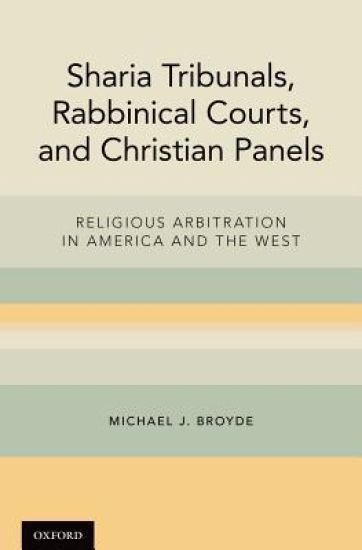
Sharia Tribunals, Rabbinical Courts, and Christian Panels
Michael J. Broyde
Oxford University Press Inc
2017
sidottu
This book explores the rise of private arbitration in religious and other values-oriented communities, and it argues that secular societies should use secular legal frameworks to facilitate, enforce, and also regulate religious arbitration. It covers the history of religious arbitration; the kinds of faith-based dispute resolution models currently in use; how the law should perceive them; and what the role of religious arbitration in the United States and the western world should be. Part One examines why religious individuals and communities are increasingly turning to private faith-based dispute resolution to arbitrate their litigious disputes. It focuses on why religious communities feel disenfranchised from secular law, and particularly secular family law. Part Two looks at why American law is so comfortable with faith-based arbitration, given its penchant for enabling parties to order their relationships and resolve their disputes using norms and values that are often different from and sometimes opposed to secular standards. Part Three weighs the proper procedural, jurisdictional, and contractual limits of arbitration generally, and of religious arbitration particularly. It identifies and explains the reasonable limitations on religious arbitration. Part Four examines whether secular societies should facilitate effective, legally enforceable religious dispute resolution, and it argues that religious arbitration is not only good for the religious community itself, but that having many different avenues for faith-based arbitration which are properly limited is good for any vibrant pluralistic democracy inhabited by diverse faith groups.
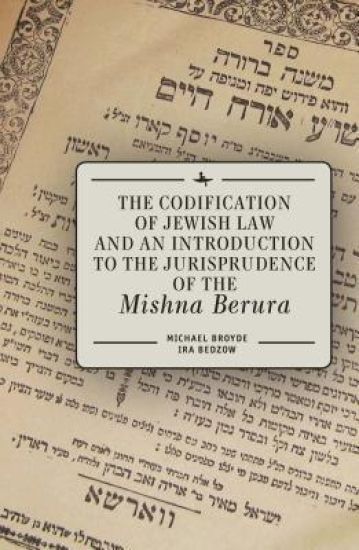
The Codification of Jewish Law and an Introduction to the Jurisprudence of the Mishna Berura
Michael J. Broyde; Ira Bedzow
Academic Studies Press
2014
sidottu
The Codification of Jewish Law and an Introduction to the Jurisprudence of the Mishna Berura, analyses the jurisprudential methodology of Rabbi Israel Meir Kagan of Radin, the author of the Mishna Berura. It also provides an introduction to the codification of Jewish law and the methodology of codification more generally. The authors demonstrate that Rabbi Kagan had a unique approach in that he tried to balance opposing forces of tradition and modernity. He also attempted to provide definitive halakhic guidance to every question of Jewish law, based on four central questions and ten halakhic principles. After a comprehensive introduction, the authors provide 250 examples from the Mishna Berura to demonstrate their findings and to clarify their thesis in practical and clear terms.
In Splitting Hairs, Rabbi Michael J. Broyde delves into the intricate history and nuanced legal discussions surrounding the Jewish laws of modesty, with a particular focus on the practice of women's hair covering. Through a meticulous examination of sources spanning nearly 3,000 years-from the Bible, Talmud, and medieval commentaries to modern responsa-Broyde challenges the commonly held views within the Orthodox Jewish community, arguing that many of the traditional norms around modesty are not as immutable as they appear. Broyde makes a compelling case that the dominant approach to modesty in recent centuries, which has insisted on objective and absolute standards, is a departure from the more flexible and culturally responsive interpretations that characterized Jewish legal thought for most of its history. He presents the argument that Jewish law requires women to dress modestly according to the norms of the society they live in, rather than adhering to rigid, universally fixed standards. Splitting Hairs is more than just a scholarly analysis; it is a thought-provoking exploration of how Jewish law evolves and adapts in response to changing societal values. This work invites readers to reconsider long-standing traditions and to engage in a broader conversation about the role of cultural norms in shaping religious practice.
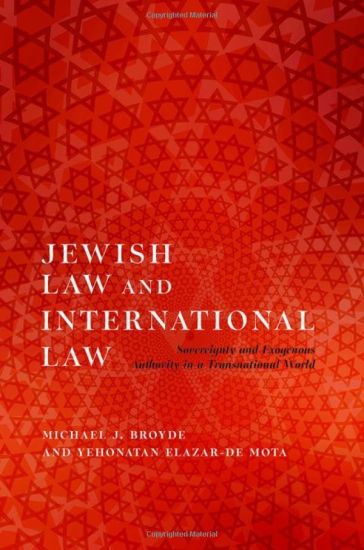
Jewish Law and International Law
Michael J. Broyde; Yehonatan Elazar-De Mota
OXFORD UNIVERSITY PRESS INC
2025
sidottu
Jewish Law and International Law offers a timely exploration of the intricate relationship between Jewish law (or halakhah) and international legal systems. In an era marked by rising antisemitism and increasing tensions between the Israel and the international community, the book offers a deeper understanding of Jewish law's contributions to the broader legal landscape. Offering relevant analysis and a forward-looking approach, Jewish Law and International Law illuminates the significant jurisprudential and methodological parallels between the two systems. Its eight chapters weave together the connections between Jewish law and international law, from the foundational concepts and histories of both legal systems to their shared values and transnational nature. The book delves into how Jewish law incorporates local and international legal principles in areas such as war, humanitarian law, copyright law, and governance. Envisioning a future where Jewish law and international law work in concert rather than conflict, the book offers a more nuanced perspective on both systems and looks toward promoting global justice.
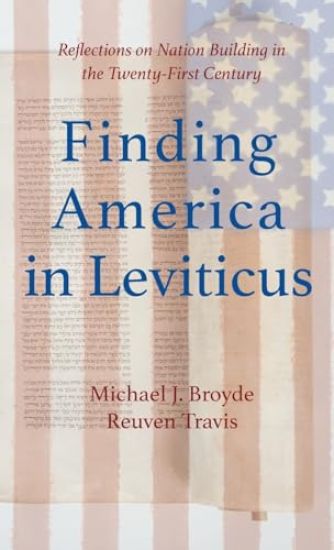
It would seem that we have taken on an impossible task in this book: trying to demonstrate to modern Americans, be they secular or religious, Jews or Christians, that the sacrificial rites found in Leviticus have any germaneness to their lives. After all, to the extent that any modern reader turns to the pages of Leviticus at all, the notion that they would be inspired by the text and pine for the restoration of animal sacrifices is ludicrous However, Leviticus is more than laws of sacrifices. As we demonstrate, Leviticus sets forth a template for nation-building via large, regularly-scheduled communal gatherings intended to foster national unity and identity among the Jewish people.