Kirjojen hintavertailu. Mukana 12 390 323 kirjaa ja 12 kauppaa.

Kirjailija

Michael J Collins

Kirjat ja teokset yhdessä paikassa: 11 kirjaa, julkaisuja vuosilta 1992-2025, suosituimpien joukossa All Bleeding Stops. Vertaile teosten hintoja ja tarkista saatavuus suomalaisista kirjakaupoista.

Mukana myös kirjoitusasut: Michael J. Collins

11 kirjaa

Kirjojen julkaisuhaarukka 1992-2025.

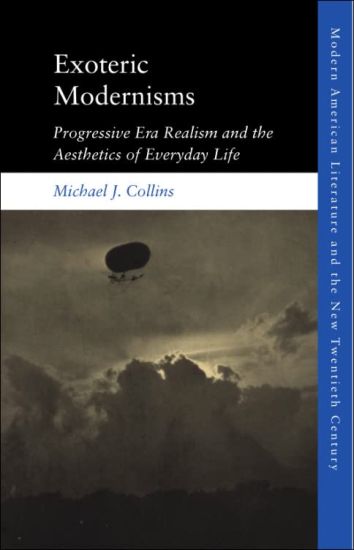
Exoteric Modernisms

Exoteric Modernisms

Michael J. Collins

EDINBURGH UNIVERSITY PRESS
2025
nidottu
This book is an account of how American realism in the Progressive Era contributed to debates about modernity. It uses the anthropological theories of Franz Boas, and Jacques Ranciere's work on aesthetics and politics to develop a mode of reading class and culture that challenges conventional interpretations that pit the two modes of representation in opposition. It paints a picture of the late-nineteenth century, prior to modernism, as an aesthetically exciting, original, and politically radical stage in American life to reinvigorate realism as a radical aesthetic practice, with implications for understandings of American literature both in the past and into the future.
An Umbrella of Lies

An Umbrella of Lies

Michael J Collins

Independently Published
2025
pokkari
An Umbrella of Lies: Second EditionAvailable in both Color and Black & White EditionsFor over 60 years, the world has been deceived. The assassination of John F. Kennedy was not the act of a lone gunman but a military-style operation-a sophisticated, choreographed event, covered up using advanced cinematic deception.The Zapruder film is a forgery.Have you ever noticed how the foreground spectators appear eerily frozen-like mannequins-while the background moves naturally? This is no coincidence. The film was altered. But why?Because the sniper's nest in the Texas School Book Depository was never the true vantage point of an assassin.The real execution was concealed by a simple but brilliant trick-a diversionary shot from the sixth floor, timed precisely as JFK's limousine passed under an Elm tree, momentarily blocking the Secret Service's view of the sniper's nest. This maneuver effectively disabled Kennedy's security detail, disorienting them while covert shooters, armed with silenced weapons, struck unseen.But the conspirators had planned for this from the start. They knew the Elm tree would obstruct the sniper's nest at the critical moment, so they engineered the perfect solution-a composite film-a seamless illusion designed to fabricate a clear shot from the sixth floor and cement the lone gunman myth.Now, through careful scientific analysis, telltale clues emerge-parallax errors in the extant film, a silent detective revealing the unmistakable earmarks of this composite.What we see is not the real assassination but a cinematic illusion-a seamless blend of Zapruder's footage and that of a covert filmer, the Umbrella Man.This is not history. This is Hollywood.And for over six decades, the world has believed a lie.Now, in this newly revised second edition, fresh evidence and enhanced analysis further expose the deception-revealing the true mechanics of the assassination, the role of the Umbrella Man's covert filming, and the forensic clues hidden in plain sight.
Exoteric Modernisms

Exoteric Modernisms

Michael J. Collins

EDINBURGH UNIVERSITY PRESS
2023
sidottu
Applies new understandings of realism as a political aesthetic to Progressive Era Literature, arguing for its radicalism politically and culturally Offers an original interpretation of the contribution of American anthropology and social science to the development of literature and culture in the 20th century New readings of canonical and non-canonical texts of the period 1880 1930, placing Edith Wharton, WD Howells, Stephen Crane Jose Mart and others alongside works by other working-class reformers, journalists, political radicals and anthropologists working in the Progressive Era U.S.A. New approach to realism that explores it as a form of modernism in the arts Develops a theory of the intersections of class and culture in U.S. literature that contributes to ongoing discussions in the method wars This book is an account of how American realism in the Progressive Era contributed to debates about modernity. It uses the anthropological theories of Franz Boas, and Jacques Ranciere's work on aesthetics and politics to develop a mode of reading class and culture that challenges conventional interpretations that pit the two modes of representation in opposition. It paints a picture of the late-nineteenth century, prior to modernism, as an aesthetically exciting, original, and politically radical stage in American life to reinvigorate realism as a radical aesthetic practice, with implications for understandings of American literature both in the past and into the future.
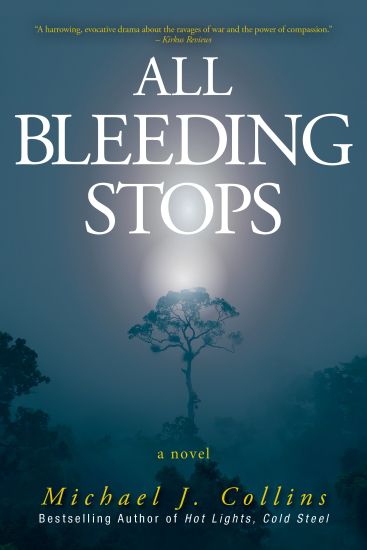
All Bleeding Stops

All Bleeding Stops

Michael J Collins

Friesenpress
2021
sidottu
What does a doctor do when he thinks his best is not good enough? Matthew Barrett, thirty-one years old and fresh out of residency, is drafted and sent to Vietnam as a combat surgeon in 1967 at the heightof the Vietnam War. Compassionate and sensitive to a fault, he is determined to make a difference but quickly finds his idealism crushed by the pain, suffering, and indifference that surround him. Shamed by his inexperience and tormented by his failures, he slowly unravels. Only the love of Therese Hopkins, a nurse, keeps him from falling apart. But will their love survive the grinding horror of war?Matthew's journey of redemption takes him from combat surgeon in Vietnam to transplant doctor in Ohio and, finally, to physician in a relief camp in Biafra, exploring how the caring and compassion that draws young people to pursue the healing arts can also sow the seeds of their own destruction, and how love may be the only thing that can finally make all bleeding stop.
All Bleeding Stops

All Bleeding Stops

Michael J Collins

Friesenpress
2021
pokkari
What does a doctor do when he thinks his best is not good enough? Matthew Barrett, thirty-one years old and fresh out of residency, is drafted and sent to Vietnam as a combat surgeon in 1967 at the heightof the Vietnam War. Compassionate and sensitive to a fault, he is determined to make a difference but quickly finds his idealism crushed by the pain, suffering, and indifference that surround him. Shamed by his inexperience and tormented by his failures, he slowly unravels. Only the love of Therese Hopkins, a nurse, keeps him from falling apart. But will their love survive the grinding horror of war?Matthew's journey of redemption takes him from combat surgeon in Vietnam to transplant doctor in Ohio and, finally, to physician in a relief camp in Biafra, exploring how the caring and compassion that draws young people to pursue the healing arts can also sow the seeds of their own destruction, and how love may be the only thing that can finally make all bleeding stop.
The Drama of the American Short Story, 1800-1865

The Drama of the American Short Story, 1800-1865

Michael J. Collins

The University of Michigan Press
2016
sidottu
The Drama of the American Short Story, 1800–1865 argues that to truly understand the short story form, one must look at how it was shaped by the lively, chaotic, and deeply politicized world of 19th-century transatlantic theater and performance culture. By resurrecting long-neglected theatrical influences on representative works of short fiction, Michael J. Collins demonstrates that it was the unruly culture of the stage that first energized this most significant of American art forms. Whether it was Washington Irving’s first job as theater critic, Melville’s politically controversial love of British drama, Alcott’s thwarted dreams of stage stardom, Poe and Lippard’s dramatizations of peculiarly bloodthirsty fraternity hazings, or Hawthorne’s fascination with automata, theater was a key imaginative site for the major pioneers of the American short story. The book shows how perspectives from theater studies, anthropology, and performance studies can enrich readings of the short-story form. Moving beyond arbitrary distinctions between performance and text, it suggests that this literature had a social life and was engaged with questions of circumatlantic and transnational culture. It suggests that the short story itself was never conceived as a nationalist literary form, but worked by mobilizing cosmopolitan connections and meanings. In so doing, the book resurrects a neglected history of American Federalism and its connections to British literary forms.
Blue Collar, Blue Scrubs

Blue Collar, Blue Scrubs

Michael J Collins

St Martin's Press
2010
pokkari
It looked for a while as if Michael Collins would spend his life breaking concrete and throwing rocks for the Vittorio Scalese Construction Company. He liked the work and he liked the pay. But a chance remark by one of his coworkers made him realize that he wanted to involve himself in something bigger, something more meaningful than crushing rocks and drinking beer. In his acclaimed first memoir, Hot Lights, Cold Steel, Collins wrote passionately about his four-year surgical residency at the prestigious Mayo Clinic. Blue Collar, Blue Scrubs turns back the clock, taking readers from his days as a construction worker to his entry into medical school, expertly infusing his journey to become a doctor with humanity, compassion, and humor. From the first time he delivers a baby to being surrounded by death and pain on a daily basis, Collins compellingly writes about how medicine makes him confront, in a very deep and personal way, the nature of God and suffering--and how delicate life can be.
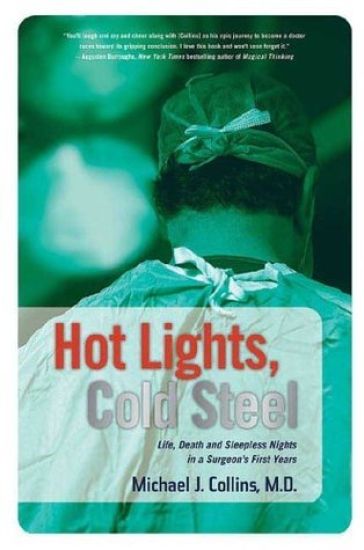
Hot Lights, Cold Steel

Hot Lights, Cold Steel

Michael J Collins

St Martin's Press
2006
pokkari
When Michael Collins decides to become a surgeon, he is totally unprepared for the chaotic life of a resident at a major hospital. A natural overachiever, Collins' success, in college and medical school led to a surgical residency at one of the most respected medical centers in the world, the famed Mayo Clinic. But compared to his fellow residents Collins feels inadequate and unprepared. All too soon, the euphoria of beginning his career as an orthopedic resident gives way to the feeling he is a counterfeit, an imposter who has infiltrated a society of brilliant surgeons. This story of Collins' four-year surgical residency traces his rise from an eager but clueless first-year resident to accomplished Chief Resident in his final year. With unparalleled humor, he recounts the disparity between people's perceptions of a doctor's glamorous life and the real thing: a succession of run down cars that are towed to the junk yard, long weekends moonlighting at rural hospitals, a family that grows larger every year, and a laughable income.Collins' good nature helps him over some of the rough spots but cannot spare him the harsh reality of a doctor's life. Every day he is confronted with decisions that will change people's lives-or end them-forever. A young boy's leg is mangled by a tractor: risk the boy's life to save his leg, or amputate immediately? A woman diagnosed with bone cancer injures her hip: go through a painful hip operation even though she has only months to live? Like a jolt to the system, he is faced with the reality of suffering and death as he struggles to reconcile his idealism and aspiration to heal with the recognition of his own limitations and imperfections. Unflinching and deeply engaging, "Hot Lights, Cold Steel" is a humane and passionate reminder that doctors are people too. This is a gripping memoir, at times devastating, others triumphant, but always compulsively readable.
Western European Integration

Western European Integration

Michael J. Collins

Praeger Publishers Inc
1992
sidottu
Startling changes are taking place in Western Europe; this study argues that the U.S. strategic response should be no less dramatic. Michael J. Collins describes a creation of a new type of political organization--a new way for nations to integrate themselves politically in Western Europe--and contends that this new model is dynamic enough to rival older historical paradigms. Western Europeans are making massive changes in their international arrangements, with each other and the outside world, to permit a natural evolution of national cultures along with the development of an intra-European culture. This changing political and economic situation in Europe has already affected the way the United States looks at the world diplomatically, and it may soon alter the general thrust of U.S. military strategy with regard to NATO. Europeans and Americans alike are questioning how much longer a united Europe can expect American troops to defend them against the Soviet Union, now that the Cold War era has ended. U.S. military strategy must change because the world is changing, and the increasing power of Western Europe is a major factor in the equation.Collins concludes that the Common Market Countries can no longer be understood as a simple collection of nation-states joined in a cartel or economic alliance, calling for a change in U.S. foreign policy and strategy. Chapter 1 describes the developments in Western Europe since World War II. Chapters 2 and 3 discuss how the new Western European alliance interacts along both military and political lines. Chapter Four describes the character of Western Europe and the replacement of the nation-state concept with a new flexibility in dealing with each other and the surrender of sovereignty by the constituent states in limited but decisive areas. The final two chapters suggest possible policy and strategic responses by the United States. A chapter on strategic implications is bound to be controversial, particularly to traditional military strategists. These thought-provoking analyses and policy implementations will interest scholars and students of European History and Politics, Comparative Politics, United States Foreign Policy and Defense, as well as government policy makers and decision makers in international business.