Kirjojen hintavertailu. Mukana 12 390 323 kirjaa ja 12 kauppaa.

Kirjailija

Michael J. Graetz

Kirjat ja teokset yhdessä paikassa: 8 kirjaa, julkaisuja vuosilta 1999-2025, suosituimpien joukossa The Wolf at the Door. Vertaile teosten hintoja ja tarkista saatavuus suomalaisista kirjakaupoista.

8 kirjaa

Kirjojen julkaisuhaarukka 1999-2025.

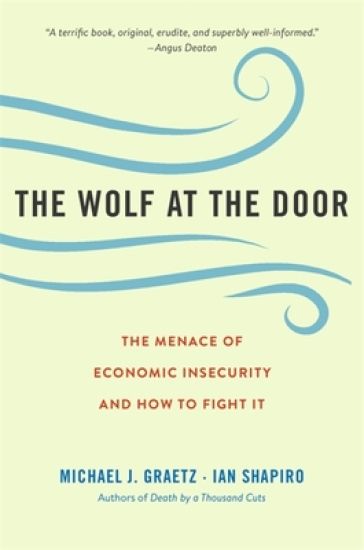
The Wolf at the Door

The Wolf at the Door

Michael J. Graetz; Ian Shapiro

Harvard University Press
2021
nidottu
“Deep, informed, and reeks of common sense.”—Norman Ornstein“It is now beyond debate that rising inequality is not only leaving millions of Americans living on a sharp edge but also is threatening our democracy…For activists and scholars alike who are struggling to create a more equitable society, this is an essential read.”—David GergenWe are in an age of crisis. That much we can agree on. But a crisis of what, exactly? And how do we get out of it?In a follow up to their influential and much debated Death by a Thousand Cuts, Michael Graetz and Ian Shapiro focus on what really worries people: not what the rich are making or the government is taking from them but their own insecurity. Americans are worried about losing their jobs, their status, and the safety of their communities. They fear the wolf at the door. The solution is not protectionism or class warfare but better jobs, higher wages, greater protection for families suffering from unemployment, better health insurance, and higher quality childcare. And it turns out those goals are more achievable than you might think. The Wolf at the Door is one of those rare books that doesn’t just diagnose our problems, it shows how to address them.“This is a terrific book, original, erudite, and superbly well-informed, and full of new wisdom about what might and what might not help the majority of Americans who have not shared in our growing prosperity, but are left facing the wolf at the door…Everyone interested in public policy should read this book.”—Angus Deaton, Princeton University“Graetz and Shapiro wrestle with a fundamental question of our day: How do we address a system that makes too many Americans anxious that economic security is slipping out of reach? Their cogent call for sensible and achievable policies…should be read by progressives and conservatives alike.”—Jacob J. Lew, former Secretary of the Treasury

The Power to Destroy

The Power to Destroy

Michael J. Graetz

PRINCETON UNIVERSITY PRESS
2025
pokkari
How the antitax fringe went mainstream—and now threatens America’s futureThe postwar United States enjoyed large, widely distributed economic rewards—and most Americans accepted that taxes were a reasonable price to pay for living in a society of shared prosperity. Then in 1978 California enacted Proposition 13, a property tax cap that Ronald Reagan hailed as a “second American Revolution,” setting off an antitax, antigovernment wave that has transformed American politics and economic policy. In The Power to Destroy, Michael Graetz tells the story of the antitax movement and how it holds America hostage—undermining the nation’s ability to meet basic needs and fix critical problems.In 1819, Chief Justice John Marshall declared that the power to tax entails “the power to destroy.” But The Power to Destroy argues that tax opponents now wield this destructive power. Attacking the IRS, protecting tax loopholes, and pushing tax cuts from Reagan to Donald Trump, the antitax movement is threatening the nation’s social safety net, increasing inequality, ballooning the national debt, and sapping America’s financial strength. The book chronicles how the movement originated as a fringe enterprise promoted by zealous outsiders using false economic claims and thinly veiled racist rhetoric, and how—abetted by conservative media and Grover Norquist’s “taxpayer protection pledge"—it evolved into a mainstream political force.The important story of how the antitax movement came to dominate and distort politics, and how it impedes rational budgeting, equality, and opportunities, The Power to Destroy is essential reading for understanding American life today.
The Power to Destroy

The Power to Destroy

Michael J. Graetz

PRINCETON UNIVERSITY PRESS
2024
sidottu
How the antitax fringe went mainstream—and now threatens America’s futureThe postwar United States enjoyed large, widely distributed economic rewards—and most Americans accepted that taxes were a reasonable price to pay for living in a society of shared prosperity. Then in 1978 California enacted Proposition 13, a property tax cap that Ronald Reagan hailed as a “second American Revolution,” setting off an antitax, antigovernment wave that has transformed American politics and economic policy. In The Power to Destroy, Michael Graetz tells the story of the antitax movement and how it holds America hostage—undermining the nation’s ability to meet basic needs and fix critical problems.In 1819, Chief Justice John Marshall declared that the power to tax entails “the power to destroy.” But The Power to Destroy argues that tax opponents now wield this destructive power. Attacking the IRS, protecting tax loopholes, and pushing tax cuts from Reagan to Donald Trump, the antitax movement is threatening the nation’s social safety net, increasing inequality, ballooning the national debt, and sapping America’s financial strength. The book chronicles how the movement originated as a fringe enterprise promoted by zealous outsiders using false economic claims and thinly veiled racist rhetoric, and how—abetted by conservative media and Grover Norquist’s “taxpayer protection pledge"—it evolved into a mainstream political force.The important story of how the antitax movement came to dominate and distort politics, and how it impedes rational budgeting, equality, and opportunities, The Power to Destroy is essential reading for understanding American life today.
The Burger Court and the Rise of the Judicial Right

The Burger Court and the Rise of the Judicial Right

Michael J. Graetz; Linda Greenhouse

SIMON SCHUSTER
2017
nidottu
A revelatory look at the Warren Burger Supreme Court finds that it was not moderate or transitional, but conservative--and it shaped today's constitutional landscape. It is an "important book...a powerful corrective to the standard narrative of the Burger Court" (The New York Times Book Review). When Richard Nixon campaigned for the presidency in 1968 he promised to change the Supreme Court. With four appointments to the court, including Warren E. Burger as the chief justice, he did just that. In 1969, the Burger Court succeeded the famously liberal Warren Court, which had significantly expanded civil liberties and was despised by conservatives across the country. The Burger Court is often described as a "transitional" court between the Warren Court and the Rehnquist and Roberts Courts, a court where little of importance happened. But as this "landmark new book" (The Christian Science Monitor) shows, the Burger Court veered well to the right in such areas as criminal law, race, and corporate power. Authors Graetz and Greenhouse excavate the roots of the most significant Burger Court decisions and in "elegant, illuminating arguments" (The Washington Post) show how their legacy affects us today. "Timely and engaging" (Richmond Times-Dispatch), The Burger Court and the Rise of the Judicial Right draws on the personal papers of the justices as well as other archives to provide "the best kind of legal history: cogent, relevant, and timely" (Publishers Weekly).
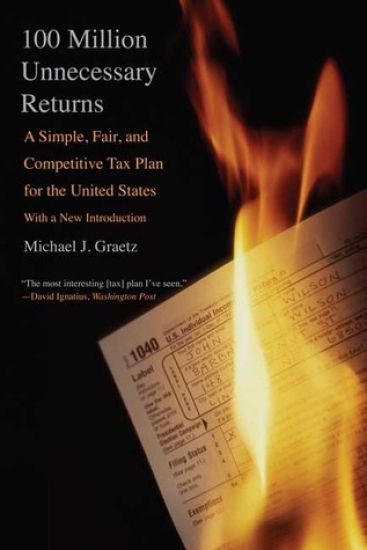
100 Million Unnecessary Returns

100 Million Unnecessary Returns

Michael J. Graetz

Yale University Press
2010
pokkari
To most Americans, the United States tax code has become a vast and confounding puzzle. In 1940, the instructions to the form 1040 were about four pages long. Today they have ballooned to more than a hundred pages, and the form itself contains more than ten schedules and twenty worksheets. The complete tax code totals about 2.8 million words—about four times the length of War and Peace. In this intriguing book, Michael Graetz maintains that our tax code has become a tangle of loopholes, paperwork, and inconsistencies—a massive social program that fails tests of simplicity and fairness. More important, our tax system has failed to keep pace with the changing economy, creating burdens and wastes of resources that weigh our nation down. Graetz offers a solution. Imagine a world in which most Americans pay no income tax at all, and those who do enjoy a far simpler tax process—all this without decreasing government revenues or removing key incentives for employer-sponsored health care plans and pensions. As Graetz adeptly and clearly describes, this world is within our grasp.
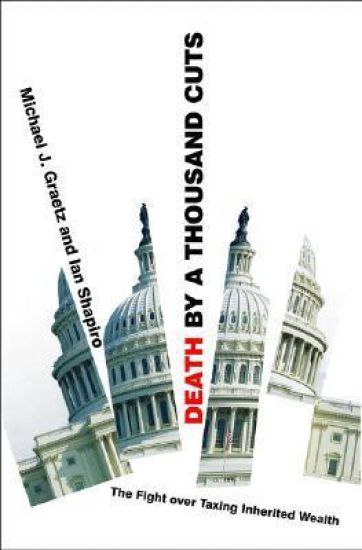
Death by a Thousand Cuts

Death by a Thousand Cuts

Michael J. Graetz; Ian Shapiro

Princeton University Press
2006
pokkari
This fast-paced book by Yale professors Michael Graetz and Ian Shapiro unravels the following mystery: How is it that the estate tax, which has been on the books continuously since 1916 and is paid by only the wealthiest two percent of Americans, was repealed in 2001 with broad bipartisan support? The mystery is all the more striking because the repeal was not done in the dead of night, like a congressional pay raise. It came at the end of a multiyear populist campaign launched by a few individuals, and was heralded by its supporters as a signal achievement for Americans who are committed to the work ethic and the American Dream. Graetz and Shapiro conducted wide-ranging interviews with the relevant players: members of congress, senators, staffers from the key committees and the Bush White House, civil servants, think tank and interest group representatives, and many others. The result is a unique portrait of American politics as viewed through the lens of the death tax repeal saga. Graetz and Shapiro brilliantly illuminate the repeal campaign's many fascinating and unexpected turns--particularly the odd end result whereby the repeal is slated to self-destruct a decade after its passage. They show that the stakes in this fight are exceedingly high; the very survival of the long standing American consensus on progressive taxation is being threatened. Graetz and Shapiro's rich narrative reads more like a political drama than a conventional work of scholarship. Yet every page is suffused by their intimate knowledge of the history of the tax code, the transformation of American conservatism over the past three decades, and the wider political implications of battles over tax policy.
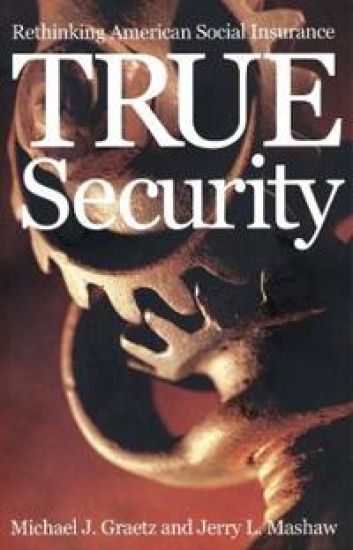
True Security

True Security

Michael J. Graetz; Jerry L. Mashaw

Yale University Press
1999
pokkari
Social insurance in the United States—including the Social Security Act of 1935 and the Medicare, Medicaid, and disability insurance programs that were added later—may be the greatest triumph of American domestic policy. But true security has not been achieved. As Michael J. Graetz and Jerry L. Mashaw show in this pathbreaking book, the nation's system of social insurance is riddled with gaps, inefficiencies, and inequities. Even the most popular and successful programs, Medicare and Social Security, face serious financial challenges from the coming retirement of the baby boom generation and the aging of the population. This book challenges the notion that American social insurance must remain inadequate, unaffordable, or both. In sharp contrast to policymakers and analysts who debate only one income security program at a time, Graetz and Mashaw examine social insurance whole to assess its crucial role in providing economic security in a dynamic market economy. They recognize that, notwithstanding a proper emphasis on individual freedom and responsibility, Americans share a common fate that binds them together in a common enterprise. The authors offer us a new vision of the social insurance contract and concrete proposals to make the nation's families more secure without increasing costs.