Kirjojen hintavertailu. Mukana 12 390 323 kirjaa ja 12 kauppaa.

Kirjailija

Michael J. Hightower

Kirjat ja teokset yhdessä paikassa: 9 kirjaa, julkaisuja vuosilta 2008-2025, suosituimpien joukossa Justice for All. Vertaile teosten hintoja ja tarkista saatavuus suomalaisista kirjakaupoista.

Mukana myös kirjoitusasut: Michael J Hightower

9 kirjaa

Kirjojen julkaisuhaarukka 2008-2025.

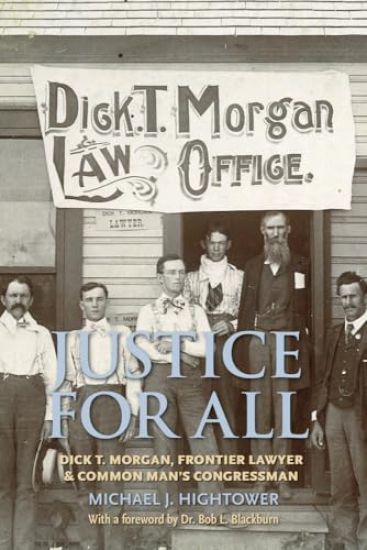
Justice for All

Justice for All

Michael J. Hightower; Bob L. Blackburn

2 Cities Press
2025
nidottu
Justice for All chronicles the career of Dick T. Morgan, an Oklahoma founding father whose public service reflects a passion for fairness that was sorely lacking in Gilded Age America. After arriving in the Unassigned Lands (later, central Oklahoma) with the first wave of non-Indian settlers on April 22, 1889, Morgan developed a reputation as the go-to lawyer for land disputes, built a substantial real estate business, and promoted church-building across Oklahoma Territory. During his tenure in Congress from 1909 until his death in 1920, he helped create institutions that were central to progressivism in the post-frontier period and have shaped modern America, including the Federal Reserve System, the Federal Trade Commission, and the Federal Farm Credit System. Morgan's adeptness in working across the aisle in a perpetually divided Congress serves as a wake-up call to politicians in thrall to ideology and identity politics at the expense of the public welfare. His speeches, publications, correspondence, newspaper interviews, and congressional testimonies reveal him as a public servant whose bedrock principles were rooted in the Republican Party--that is, the party of Lincoln. In both public and private life, Morgan demonstrated a deep allegiance to what one of his role models, President James A. Garfield, defined as the heart and soul of the nation and the basis of a free government: the church, the school, and the home. Justice for All owes its existence to Dick T. Morgan's great-grandsons, David and Kenyon Morgan, who resolved to rescue their ancestor from a century of undeserved obscurity. Traveling, literally and figuratively, in their great-grandfather's footsteps, the Morgan brothers combined their talents in a journey of discovery that helped this biographer illuminate the Progressive Era through the experiences of a native Hoosier who became one of his adopted state's most beloved and influential citizens. Also included is a 24" x 28" sectional map of Oklahoma Territory that Dick T. Morgan sold to homesteaders to help them file their claims.
At War with Corruption

At War with Corruption

Michael J. Hightower; Frank Keating

2 Cities Press
2021
sidottu
At War with Corruption began as a biography of Bill Price, the U.S. attorney and Republican candidate for high office who spearheaded prosecutions in the most pervasive public corruption spectacle in American history: the Oklahoma county commissioner scandal. Price's determination to root out the rascals and restore faith in governance branded him as the biggest corruption buster in the state's history. Price's career in law and politics serves as a portal into corruption in Oklahoma. Episodes in that narrative include land swindles (soonerism) at the dawn of Oklahoma history; theft of Native Americans' property and steamrolling of their cultures that reached a nadir in the Osage murders; the Supreme Court scandal of 1964-65; Leo Winters' alleged misuse of state taxes (what was the treasurer doing with the people's money?); Governor David Hall's trial and conviction on charges of extortion; prosecutions of drug syndicates, Penn Square Bank insiders, and Oklahoma Corporation Commissioners on the take; and the systemic bribery in county governance that inspired this book. Price shatters the myth that Oklahomans have been uniquely tolerant of, and susceptible to, corruption. He blames structural flaws and inadequate legislation for tempting law-abiding citizens to heed the call of their darker angels. Although Price failed in his gubernatorial and congressional campaigns, he has influenced policy through philanthropies that set a high bar for civic engagement. At War with Corruption reveals the sinister side of human nature. Yet its intention is not to depress, but rather to uplift and to show what is possible when public servants work together to frame effective laws and promote justice.
1889

1889

Michael J. Hightower

University of Oklahoma Press
2018
nidottu
After immigrants flooded into central Oklahoma during the land rush of 1889 and the future capital of Oklahoma City sprang up ""within a fortnight,"" the city's residents adopted the slogan ""born grown"" to describe their new home. But the territory's creation was never so simple or straightforward. The real story, steeped in the politics of the Gilded Age, unfolds in 1889, Michael J. Hightower's revealing look at a moment in history that, in all its turmoil and complexity, transcends the myth. Hightower frames his story within the larger history of Old Oklahoma, beginning in Indian Territory, where displaced tribes and freedmen, wealthy cattlemen, and prospective homesteaders became embroiled in disputes over public land and federal government policies. Against this fraught background, 1889 travels back and forth between Washington, D.C., and the Oklahoma frontier to describe the politics of settlement, public land use, and the first stirrings of urban development. Drawing on eyewitness accounts, Hightower captures the drama of the Boomer incursions and the Run of '89, as well as the nascent urbanization of the townsite that would become Oklahoma City. All of these events played out in a political vacuum until Congress officially created Oklahoma Territory in the Organic Act of May 1890. The story of central Oklahoma is profoundly American, showing the region to have been a crucible for melding competing national interests and visions of the future. Boomers, businessmen, cattlemen, soldiers, politicians, pundits, and African and Native Americans squared off - sometimes peacefully, often not - in disagreements over public lands that would resonate in western history long after 1889.
Banking in Oklahoma, 1907-2000

Banking in Oklahoma, 1907-2000

Michael J. Hightower; Frank Keating

University of Oklahoma Press
2014
sidottu
The story of banking in twentieth-century Oklahoma is also the story of the Sooner State's first hundred years, as Michael J. Hightower's new book demonstrates. Oklahoma statehood coincided with the Panic of 1907, and both events signaled seismic shifts in state banking practices. Much as Oklahoma banks shed their frontier persona to become more tightly integrated in the national economy, so too was decentralized banking revealed as an anachronism, utterly unsuited to an increasingly global economy. With creation of the Federal Reserve System in 1913 and subsequent choice of Oklahoma City as the location for a branch bank, frontier banking began yielding to systems commensurate with the needs of the new century. Through meticulous research and personal interviews with bankers statewide, Hightower has crafted a compelling narrative of Oklahoma banking in the twentieth century. One of the first acts of the new state legislature was to guarantee that depositors in state-chartered banks would never lose a penny. Meanwhile, land and oil speculators and the bankers who funded their dreams were elevating get-rich-quick (and often get-poor-quick) schemes to an art form. In defense of country banks, the Oklahoma Bankers Association dispatched armed vigilantes to stop robbers in their tracks. Subsequent developments in Oklahoma banking include adaptation to regulations spawned by the Great Depression, the post-World War II boom, the 1980s depression in the oil patch, and changes fostered by rapid-fire advances in technology and communication. The demise of Penn Square Bank offers one of history's few unambiguous lessons, and it warrants two chapters - one on the rise, and one on the fall. Increasing regulation of the banking industry, the survival of family banks, and the resilience of community banking are consistent themes in a state that is only a few generations removed from the frontier.
Banking in Oklahoma Before Statehood

Banking in Oklahoma Before Statehood

Michael J. Hightower

UNIVERSITY OF OKLAHOMA PRESS
2024
nidottu
This lively book takes Oklahoma history into the world of Wild West capitalism. It begins with a useful survey of banking from the early days of the American republic until commercial patterns coalesced in the East. It then follows the course of American expansion westward, tracing the evolution of commerce and banking in Oklahoma from their genesis to the eve of statehood in 1907.Banking in Oklahoma before Statehood is not just a story of men sitting behind desks. Author Michael J. Hightower describes the riverboat trade in the Arkansas and Red River valleys and freighting on the Santa Fe Trail. Shortages of both currency and credit posed major impediments to regional commerce until storekeepers solved these problems by moving beyond barter to open ad hoc establishments known as merchant banks.Banking went through a wild adolescence during the territorial period. The era saw robberies and insider shenanigans, rivalries between banks with territorial and national charters, speculation in land and natural resources, and land fraud in the Indian Territory. But as banking matured, the better-capitalized institutions became the nucleus of commercial culture in the Oklahoma and Indian Territories.To tell this story, the author blends documentary historical research in both public and corporate archives with his own interviews and those that WPA field-workers conducted with old-timers during the New Deal. Bankers were never far from the action during the territorial period, and the institutions they built were both cause and effect of Oklahoma’s inclusion in national networks of banking and commerce. The no-holds-barred brand of capitalism that breathed life into the Oklahoma frontier has remained alive and well since the days of the fur traders. As one knowledgable observer said in the 1980s, “You’ve always had the gambling spirit in Oklahoma.”
Banking in Oklahoma, 1907-2000

Banking in Oklahoma, 1907-2000

Michael J. Hightower; Frank Keating

University of Oklahoma Press
2019
nidottu
The story of banking in twentieth-century Oklahoma is also the story of the Sooner State's first hundred years, as Michael J. Hightower's new book demonstrates. Oklahoma statehood coincided with the Panic of 1907, and both events signaled seismic shifts in state banking practices. Much as Oklahoma banks shed their frontier persona to become more tightly integrated in the national economy, so too was decentralized banking revealed as an anachronism, utterly unsuited to an increasingly global economy. With creation of the Federal Reserve System in 1913 and subsequent choice of Oklahoma City as the location for a branch bank, frontier banking began yielding to systems commensurate with the needs of the new century. Through meticulous research and personal interviews with bankers statewide, Hightower has crafted a compelling narrative of Oklahoma banking in the twentieth century. One of the first acts of the new state legislature was to guarantee that depositors in state-chartered banks would never lose a penny. Meanwhile, land and oil speculators and the bankers who funded their dreams were elevating get-rich-quick (and often get-poor-quick) schemes to an art form. In defense of country banks, the Oklahoma Bankers Association dispatched armed vigilantes to stop robbers in their tracks. Subsequent developments in Oklahoma banking include adaptation to regulations spawned by the Great Depression, the post-World War II boom, the 1980s depression in the oil patch, and changes fostered by rapid-fire advances in technology and communication. The demise of Penn Square Bank offers one of history's few unambiguous lessons, and it warrants two chapters - one on the rise, and one on the fall. Increasing regulation of the banking industry, the survival of family banks, and the resilience of community banking are consistent themes in a state that is only a few generations removed from the frontier.
Banking in Oklahoma Before Statehood

Banking in Oklahoma Before Statehood

Michael J. Hightower

University of Oklahoma Press
2013
sidottu
This lively book takes Oklahoma history into the world of Wild West capitalism. It begins with a useful survey of banking from the early days of the American republic until commercial patterns coalesced in the East. It then follows the course of American expansion westward, tracing the evolution of commerce and banking in Oklahoma from their genesis to the eve of statehood in 1907.Banking in Oklahoma before Statehood is not just a story of men sitting behind desks. Author Michael J. Hightower describes the riverboat trade in the Arkansas and Red River valleys and freighting on the Santa Fe Trail. Shortages of both currency and credit posed major impediments to regional commerce until storekeepers solved these problems by moving beyond barter to open ad hoc establishments known as merchant banks.Banking went through a wild adolescence during the territorial period. The era saw robberies and insider shenanigans, rivalries between banks with territorial and national charters, speculation in land and natural resources, and land fraud in the Indian Territory. But as banking matured, the better-capitalized institutions became the nucleus of commercial culture in the Oklahoma and Indian Territories.To tell this story, the author blends documentary historical research in both public and corporate archives with his own interviews and those that WPA field-workers conducted with old-timers during the New Deal. Bankers were never far from the action during the territorial period, and the institutions they built were both cause and effect of Oklahoma's inclusion in national networks of banking and commerce. The no-holds-barred brand of capitalism that breathed life into the Oklahoma frontier has remained alive and well since the days of the fur traders. As one knowledgable observer said in the 1980s, ""You've always had the gambling spirit in Oklahoma.
Inventing Tradition

Inventing Tradition

Michael J Hightower

AV Akademikerverlag
2012
pokkari
Revision with unchanged content. As a one-time working cowboy in the American Southwest, the author was intrigued to find cowboy sports in his adopted state of Virginia. Blending scholarship and horsemanship, he competed in dozens of cowboy contests and collected data on a group whose members (himself included) he dubbed "Old Dominion cowboys." Through a close reading of his fieldnotes, he identified themes that emerge from a typical day of penning, sorting, and cutting cattle. He analyzes these themes in the context of frontier history, identity formation, the Western genre of entertainment, social memory studies, and sport sociology, all in an effort to situate cowboy sports in a cultural and historical context. Dr. Hightower frames these rowdy sports as frontier relics that were appropriated and modified by turn-of-the-twentieth-century cultural leaders to mitigate the disruptive effects of modernity. Cowboy sports thus fall under the rubric of invented tradition. Today, they serve as avenues of identity formation and cultural expression in ways that are both representative of and resistant to postmodernity.