Kirjojen hintavertailu. Mukana 12 390 323 kirjaa ja 12 kauppaa.
Kirjailija
Michael J. Nelson
Kirjat ja teokset yhdessä paikassa: 6 kirjaa, julkaisuja vuosilta 2003-2025, suosituimpien joukossa Mike Nelson's Death Rat!. Vertaile teosten hintoja ja tarkista saatavuus suomalaisista kirjakaupoista.
Downsized from his day job with a publisher of obscure journals, Pontius Foeb, the aging author of inaccessible non-fiction books, is desperate for a commercial hit and comes up with a horror tale about a giant rat that terrorized a Minnesota hamlet in the nineteenth century.
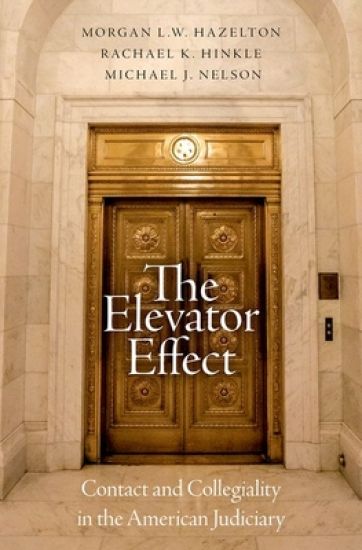
Appellate judges wield enormous influence in the United States. Their decisions define the scope of legislative and executive power, adjudicate relationships between the federal government and the states, and determine the breadth of individuals' rights and liberties. But, compared to their colleagues on trial courts, they face a significant constraint on their power: their colleagues. The Elevator Effect: Contact and Collegiality in the American Judiciary presents a comprehensive, first of its kind examination of the importance of interpersonal relationships among judges for judicial decision-making and legal development. Regarding decision-making, the authors demonstrate that more frequent interpersonal contact among judges diminishes the role of ideology in judicial decision-making to the point where it is both substantively and statistically imperceptible. This finding stands in stark contrast to judicial decision-making accounts that present ideology as an unwavering determinant of judicial choice. With regard to legal development, the book shows that collegiality affects both the language that judges use to express their disagreement with one another and the precedents they choose to support their arguments. Thus, the overriding argument of The Elevator Effect is that collegiality affects nearly every aspect of judicial behavior. The authors draw on an impressive and unique original collection of data to untangle the relationship between judges' interpersonal relationships and the law they produce. The Elevator Effect presents a clear and highly readable narrative backed by analysis of judicial behavior throughout the U.S. federal judicial hierarchy to demonstrate that the institutional structure in which judges operate substantially tempers judicial behavior. Written in a broad and accessible style, this book will captivate students across a range of disciplines, such as law, political sciences, and empirical legal studies, and also policymakers and the public.
Over the past century, countries around the globe have empowered constitutional courts to safeguard the rule of law. But when can courts effectively perform this vital task? Drawing upon a series of survey experiments fielded in the United States, Germany, Hungary, and Poland, this book demonstrates that judicial independence is critical for judicial efficacy. Independent courts can empower citizens to punish executives who flout the bounds of constitutional rule; weak courts are unable to generate public costs for transgressing the law. Although judicial efficacy is neither universal nor automatic, courts – so long as they are viewed by the public as independent – can provide an effective check on executives and promote the rule of law.
Social scientists have convincingly documented soaring levels of political, legal, economic, and social inequality in the United States. Missing from this picture of rampant inequality, however, is any attention to the significant role of state law and courts in establishing policies that either ameliorate or exacerbate inequality. In Judging Inequality, political scientists James L. Gibson and Michael J. Nelson demonstrate the influential role of the fifty state supreme courts in shaping the widespread inequalities that define America today, focusing on court-made public policy on issues ranging from educational equity and adequacy to LGBT rights to access to justice to worker's rights. Drawing on an analysis of an original database of nearly 6,000 decisions made by over 900 judges on 50 state supreme courts over a quarter century, Judging Inequality documents two ways that state high courts have crafted policies relevant to inequality: through substantive policy decisions that fail to advance equality and by rulings favoring more privileged litigants (typically known as "upperdogs"). The authors discover that whether court-sanctioned policies lead to greater or lesser inequality depends on the ideologies of the justices serving on these high benches, the policy preferences of their constituents (the people of their state), and the institutional structures that determine who becomes a judge as well as who decides whether those individuals remain in office. Gibson and Nelson decisively reject the conventional theory that state supreme courts tend to protect underdog litigants from the wrath of majorities. Instead, the authors demonstrate that the ideological compositions of state supreme courts most often mirror the dominant political coalition in their state at a given point in time. As a result, state supreme courts are unlikely to stand as an independent force against the rise of inequality in the United States, instead making decisions compatible with the preferences of political elites already in power. At least at the state high court level, the myth of judicial independence truly is a myth. Judging Inequality offers a comprehensive examination of the powerful role that state supreme courts play in shaping public policies pertinent to inequality. This volume is a landmark contribution to scholarly work on the intersection of American jurisprudence and inequality, one that essentially rewrites the "conventional wisdom" on the role of courts in America's democracy.
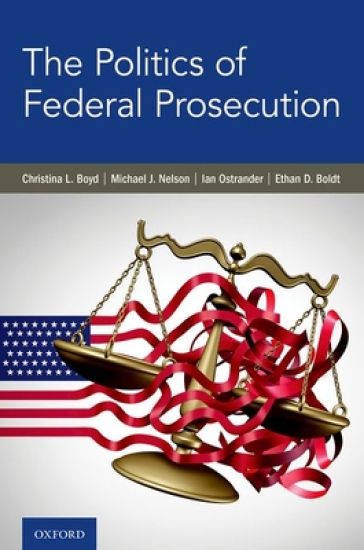
Federal prosecutors have immense power and discretion to decide when to bring criminal charges, what plea bargains to offer, and how to implement the federal government's legal priorities in their districts. While U.S. Attorneys take pains to emphasize their independence, we know relatively little about the extent to which politics colors federal prosecutorial staffing and decision making. The Politics of Federal Prosecution draws upon a wealth of data from 1990s to the present to examine the interplay of political factors and federal prosecution. First, the authors find that congressional and presidential politics affect who becomes federal prosecutors and how long those individuals serve. Second, the book demonstrates that signals of presidential and congressional preferences, along with local priorities, affect key prosecutorial decisions: whether to bring prosecutions, how to approach plea bargaining negotiations, and when to utilize criminal asset forfeiture to cripple criminal activities. In short, the book demonstrates that politics affects the behavior of U.S. Attorneys at nearly every stage of their service.