Kirjojen hintavertailu. Mukana 12 266 434 kirjaa ja 12 kauppaa.
Kirjailija
Michael J. O'Brien
Kirjat ja teokset yhdessä paikassa: 30 kirjaa, julkaisuja vuosilta 1937-2026, suosituimpien joukossa The Importance of Small Decisions. Vertaile teosten hintoja ja tarkista saatavuus suomalaisista kirjakaupoista.
Mukana myös kirjoitusasut: Michael J O'Brien, Michael J. O Brien
While the great wave of Irish immigrants which arrived on our shores in the mid- to late-nineteenth century is well known, and their role in the industrialization of the United States is widely recognized, the important role they played in the original settlement of this country is frequently overlooked. The author's purpose in compiling this volume was to show beyond any doubt the magnitude of the Irish involvement in the founding of the United States. To that end he discusses the various causes of Irish immigration, both voluntary and involuntary, and proceeds to identify at least six hundred Irish men and women who were in America before 1700. The bulk of the text concerns New England, although there is some mention of Virginia and other colonies. There is a wealth of biographical data given in this well documented and fully indexed volume.
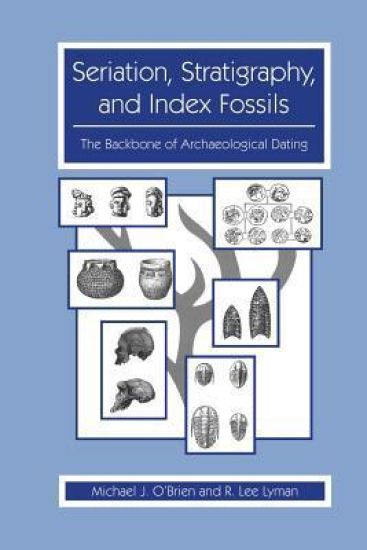
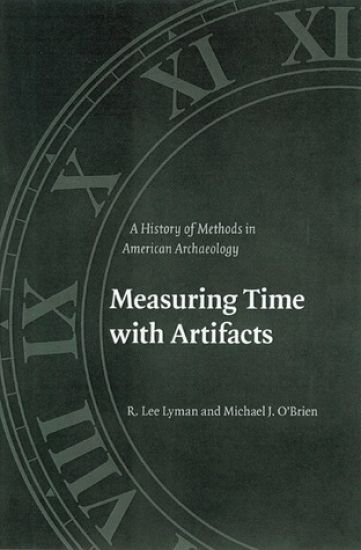
It is difficult for today's students of archaeology to imagine an era when chronometric dating methods were unavailable. However, even a casual perusal of the large body of literature that arose during the first half of the twentieth century reveals a battery of clever methods used to determine the relative ages of archaeological phenomena, often with considerable precision. Stratigraphic excavation is perhaps the best known of the various relative-dating methods used by prehistorians. Although there are several techniques of using artifacts from superposed strata to measure time, these are rarely if ever differentiated. Rather, common practice is to categorize them under the heading `stratigraphic excavation'. This text distinguishes among the several techniques and argues that stratigraphic excavation tends to result in discontinuous measures of time - a point little appreciated by modern archaeologists. Although not as well known as stratigraphic excavation, two other methods of relative dating have figured important in Americanist archaeology: seriation and the use of index fossils. The latter (like stratigraphic excavation) measures time discontinuously, while the former - in various guises - measures time continuously. Perhaps no other method used in archaeology is as misunderstood as seriation, and the authors provide detailed descriptions and examples of each of its three different techniques. Each method and technique of relative dating is placed in historical perspective, with particular focus on developments in North America, an approach that allows a more complete understanding of the methods described, both in terms of analytical technique and disciplinary history. This text will appeal to all archaeologists, from graduate students to seasoned professionals, who want to learn more about the backbone of archaeological dating.
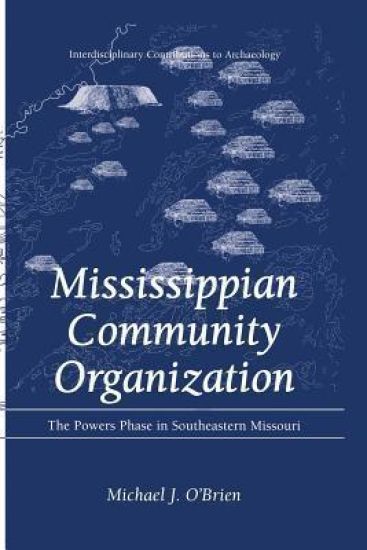
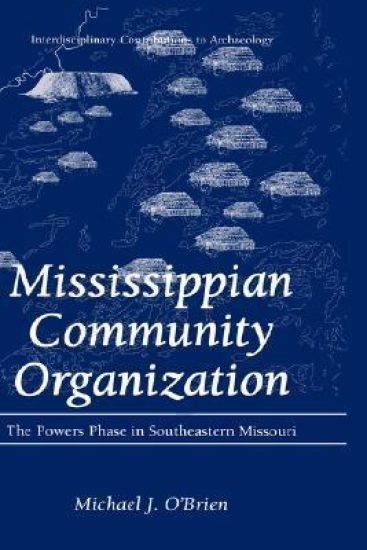
The Powers Phase Project was a multiyear archaeological program undertaken in southeastern Missouri by the University of Michigan in the late 1960s and early 1970s. The project focused on the occupation of a large Pleistocene-age terrace in the Little Black River Lowland—a large expanse of lowlying land just east of the Ozark Highland—between roughly A. D. 1250 and A. D. 1400. The largest site in the region is Powers Fort—a palisaded mound center that - ceived archaeological attention as early as the late nineteenth century. Archa- logical surveys conducted south of Powers Fort in the 1960s revealed the pr- ence of numerous smaller sites of varying size that contained artifact assemblages similar to those from the larger center. Collectively the settlement aggregation became known as the Powers phase. Test excavations indicated that at least some of the smaller sites contained burned structures and that the burning had sealed household items on the floors below the collapsed architectural e- ments. Thus there appeared to be an opportunity to examine a late prehistoric settlement system to a degree not possible previously. Not only could the s- tial relation of communities in the system be ascertained, but the fact that str- tures within the communities had burned appeared to provide a unique opp- tunity to examine such things as differences in household items between and among structures and where various activities had occurred within a house. With these ideas in mind, James B. Griffin and James E.
Combining historical research with a lucid explication of archaeological methodology and reasoning, Measuring Time with Artifacts examines the origins and changing use of fundamental chronometric techniques and procedures and analyzes the different ways American archaeologists have studied changes in artifacts, sites, and peoples over time. In highlighting the underpinning ontology and epistemology of artifact-based chronometers—cultural transmission and how to measure it archaeologically—this volume covers issues such as why archaeologists used the cultural evolutionism of L. H. Morgan, E. B. Tylor, L. A. White, and others instead of biological evolutionism; why artifact classification played a critical role in the adoption of stratigraphic excavation; how the direct historical approach accomplished three analytical tasks at once; why cultural traits were important analytical units; why paleontological and archaeological methods sometimes mirror one another; how artifact classification influences chronometric method; and how graphs illustrate change in artifacts over time.An understanding of the history of artifact-based chronometers enables us to understand how we know what we think we know about the past, ensures against modern misapplication of the methods, and sheds light on the reasoning behind archaeologists' actions during the first half of the twentieth century.
Combining historical research with a lucid explication of archaeological methodology and reasoning, Measuring Time with Artifacts examines the origins and changing use of fundamental chronometric techniques and procedures and analyzes the different ways American archaeologists have studied changes in artifacts, sites, and peoples over time. In highlighting the underpinning ontology and epistemology of artifact-based chronometers—cultural transmission and how to measure it archaeologically—this volume covers issues such as why archaeologists used the cultural evolutionism of L. H. Morgan, E. B. Tylor, L. A. White, and others instead of biological evolutionism; why artifact classification played a critical role in the adoption of stratigraphic excavation; how the direct historical approach accomplished three analytical tasks at once; why cultural traits were important analytical units; why paleontological and archaeological methods sometimes mirror one another; how artifact classification influences chronometric method; and how graphs illustrate change in artifacts over time.An understanding of the history of artifact-based chronometers enables us to understand how we know what we think we know about the past, ensures against modern misapplication of the methods, and sheds light on the reasoning behind archaeologists' actions during the first half of the twentieth century.
Cladistics is a method used in biology and paleobiology to establish phylogeny: what produced what and in what order. It is a very specific method, developed in Germany in the 1950s and currently the primary phylogenetic method in the world. Cladistics has also been applied to such fields as historical linguistics and manuscript history. If things evolve in a nonrandom way, they may be appropriately studied using this method.In Cladistics and Archaeology, Michael O’Brien and Lee Lyman explore the application of cladistics to archaeology by considering artifacts as human phenotypic characters. Their fundamental premise is that particular kinds of characters (style, artifact type, tool) can be used to create historically meaningful nested taxa. Further, they argue that this approach offers a means of building connections and 'life histories' of archaeological artifacts.In order to make a potentially difficult topic more readily comprehensible, the authors have organized the book as something of a primer. Cladistics and Archaeology includes many figures to illustrate basic concepts, as well as a case study that shows a step-by-step application of cladistics to archaeology.
The Powers Phase Project was a multiyear archaeological program undertaken in southeastern Missouri by the University of Michigan in the late 1960s and early 1970s. The project focused on the occupation of a large Pleistocene-age terrace in the Little Black River Lowland—a large expanse of lowlying land just east of the Ozark Highland—between roughly A. D. 1250 and A. D. 1400. The largest site in the region is Powers Fort—a palisaded mound center that - ceived archaeological attention as early as the late nineteenth century. Archa- logical surveys conducted south of Powers Fort in the 1960s revealed the pr- ence of numerous smaller sites of varying size that contained artifact assemblages similar to those from the larger center. Collectively the settlement aggregation became known as the Powers phase. Test excavations indicated that at least some of the smaller sites contained burned structures and that the burning had sealed household items on the floors below the collapsed architectural e- ments. Thus there appeared to be an opportunity to examine a late prehistoric settlement system to a degree not possible previously. Not only could the s- tial relation of communities in the system be ascertained, but the fact that str- tures within the communities had burned appeared to provide a unique opp- tunity to examine such things as differences in household items between and among structures and where various activities had occurred within a house. With these ideas in mind, James B. Griffin and James E.