Kirjojen hintavertailu. Mukana 12 595 353 kirjaa ja 12 kauppaa.

Kirjailija

Michael J. Reiss

Kirjat ja teokset yhdessä paikassa: 9 kirjaa, julkaisuja vuosilta 1989-2023, suosituimpien joukossa Cognitive and Metacognitive Problem-Solving Strategies in Post-16 Physics. Vertaile teosten hintoja ja tarkista saatavuus suomalaisista kirjakaupoista.

9 kirjaa

Kirjojen julkaisuhaarukka 1989-2023.

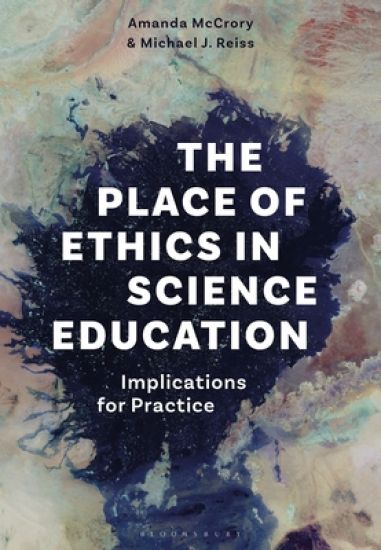
The Place of Ethics in Science Education

The Place of Ethics in Science Education

Amanda McCrory; Michael J. Reiss

BLOOMSBURY PUBLISHING PLC
2023
sidottu
Science education, particularly school science education, has long had an uneasy relationship with ethics, being unsure whether to embrace ethics or leave it to others. In this book, the authors argue that while the methods of science and of ethics are very different, ethics plays a key role in how science is undertaken and used. And so, ethics has a central place in science education, whether we are talking of school science education, for students of all ages, or the informal science education that takes place in through internet, books, magazines, TV and radio, or in places such as hospitals and zoos.Written for science educators based in schools and elsewhere, the authors make no assumptions that the reader has any knowledge of ethics beyond the background understandings of morality that virtually all of us have. Empowered with the knowledge shared in this book, readers will feel confident about the place that ethics has in science education. The authors provide a rich array of examples as to how science education, both in school and out of school, and for all ages, can be enhanced through including teaching about ethics.
The Place of Ethics in Science Education

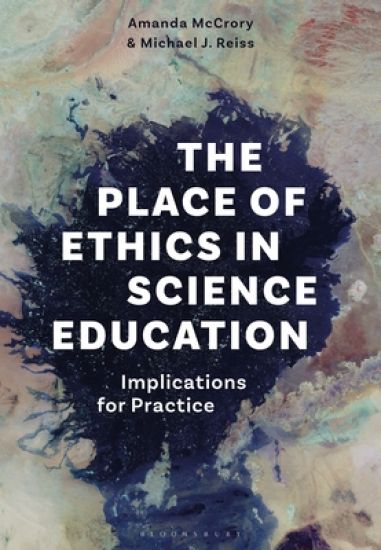
The Place of Ethics in Science Education

Amanda McCrory; Michael J. Reiss

BLOOMSBURY PUBLISHING PLC
2023
nidottu
Science education, particularly school science education, has long had an uneasy relationship with ethics, being unsure whether to embrace ethics or leave it to others. In this book, the authors argue that while the methods of science and of ethics are very different, ethics plays a key role in how science is undertaken and used. And so, ethics has a central place in science education, whether we are talking of school science education, for students of all ages, or the informal science education that takes place in through internet, books, magazines, TV and radio, or in places such as hospitals and zoos.Written for science educators based in schools and elsewhere, the authors make no assumptions that the reader has any knowledge of ethics beyond the background understandings of morality that virtually all of us have. Empowered with the knowledge shared in this book, readers will feel confident about the place that ethics has in science education. The authors provide a rich array of examples as to how science education, both in school and out of school, and for all ages, can be enhanced through including teaching about ethics.
The New Biology

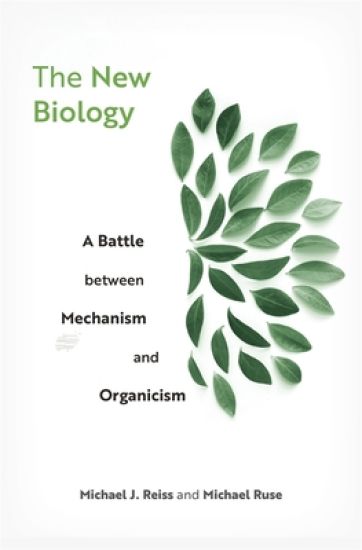
The New Biology

Michael J. Reiss; Michael Ruse

HARVARD UNIVERSITY PRESS
2023
sidottu
In this accessible analysis, a philosopher and a science educator look at biological theory and society through a synthesis of mechanistic and organicist points of view to best understand the complexity of life and biological systems. The search for a unified framework for biology is as old as Plato's musings on natural order, which suggested that the universe itself is alive. But in the twentieth century, under the influence of genetics and microbiology, such organicist positions were largely set aside in favor of mechanical reductionism, by which life looks like a more complicated version of physics, one that can be reduced to the behavior of organic molecules. But can organisms truly be understood in mechanical terms, or do we need to view life from the perspective of whole organisms to make sense of biological complexity? The New Biology argues for the validity of holistic treatments of nature from the perspectives of philosophy, history, and biology and outlines the largely unrecognized undercurrent of organicism that has persisted. Mechanistic biology has been invaluable in understanding a range of biological issues, but Michael Reiss and Michael Ruse contend that reductionism alone cannot answer all our questions about life. Whether we are considering human health, ecology, or the relationship between sex and gender, we need to draw from both organicist and mechanistic frameworks. It's not always a matter of combining organicist and mechanistic perspectives, Reiss and Ruse argue. There is scope for a range of ways of understanding the complexity of life and biological systems. Organicist and mechanistic approaches are not simply hypotheses to be confirmed or refuted, but rather operate as metaphors for describing a universe of sublime intricacy.
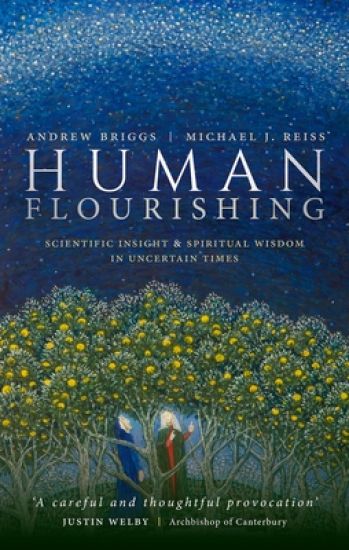
Human Flourishing

Human Flourishing

Andrew Briggs; Michael J. Reiss

Oxford University Press
2021
sidottu
'A careful and thoughtful provocation' (Justin Welby, Archbishop of Canterbury) Ambitiously placed at the intersection of scientific insights and spiritual wisdom, Human Flourishing prompts us to reflect on what constitutes a good life and the choices that can help achieve it. For thousands of years, humans have asked 'Why we are here?' and 'What makes for a good life?' At different times, different answers have held sway. Nowadays, there are more answers proposed than ever. Much of humanity still finds the ultimate answers to such questions in religion. But in countries across the globe, secular views are widely held. In any event, whether religious or secular, individuals, communities and governments still have to make decisions about what people get from life. This book therefore examines what is meant by human flourishing and see what it has to offer for those seeking after truth, meaning and purpose. This is a book written for anyone who wants a future for themselves, their children, and their fellow humans - a future that enables flourishing, pays due consideration to issues of truth and helps us find meaning and purpose in our lives. At a time when most of us are bombarded with messages about what we should or should not do to live healthily, attain a work-life balance and find meaning, a careful consideration of the contributions of both scientific insight and spiritual wisdom provides a new angle. This is therefore a book that not only helps readers clarify their views and see things afresh but also help them improve their own well-being in an age of AI and other new technologies.
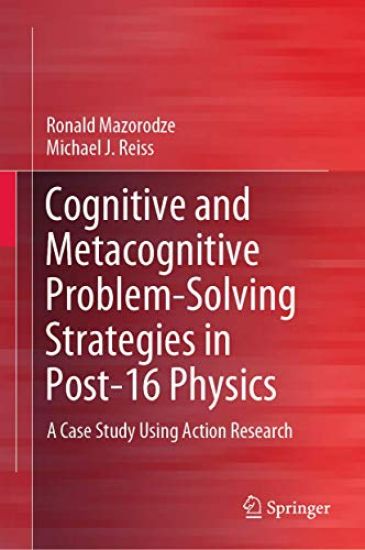
Cognitive and Metacognitive Problem-Solving Strategies in Post-16 Physics

Cognitive and Metacognitive Problem-Solving Strategies in Post-16 Physics

Ronald Mazorodze; Michael J. Reiss

Springer Nature Switzerland AG
2019
sidottu
This book reports on a study on physics problem solving in real classrooms situations.Problem solving plays a pivotal role in the physics curriculum at all levels. However, physics students’ performance in problem solving all too often remains limited to basic routine problems, with evidence of poor performance in solving problems that go beyond equation retrieval and substitution. Adopting an action research methodology, the study bridges the `research-practical divide´ by explicitly teaching physics problem-solving strategies through collaborative group problem-solving sessions embedded within the curriculum. Data were collected using external assessments and video recordings of individual and collaborative group problem-solving sessions by 16-18 year-olds. The analysis revealed a positive shift in the students’ problem-solving patterns, both at group and individual level. Students demonstrated a deliberate, well-planned deployment of the taught strategies. The marked positiveshifts in collaborative competences, cognitive competences, metacognitive processing and increased self-efficacy are positively correlated with attainment in problem solving in physics. However, this shift proved to be due to different mechanisms triggered in the different students.
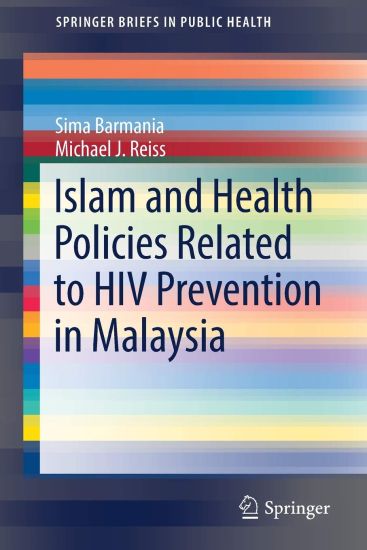
Islam and Health Policies Related to HIV Prevention in Malaysia

Islam and Health Policies Related to HIV Prevention in Malaysia

Sima Barmania; Michael J. Reiss

Springer International Publishing AG
2017
nidottu
This salient text presents a culturally aware public health approach to the HIV epidemic in Malaysia, a country emblematic of the Muslim world's response to the crisis. It explores complex interactions of religion with health as a source of coping as well as stigma and denial, particularly as Islam plays a central role in Malaysian culture, politics, and policy. At the heart of the book, a groundbreaking study analyzes attitudes and behaviors toward prevention among diverse people living with HIV, faith leaders, and government health officials. From these findings, readers gain insight into how health professionals, policymakers, and organizations can create appropriate prevention programs in Malaysia, with implications for other Muslim countries. This timely volume: Situates Malaysia and the Asian Pacific region in the context of the HIV epidemic.Analyzes ways Islamic beliefs can shape perceptions of HIV and prevention policy.Reviews a unique study of stakeholder opinions and practices regarding HIV.Discusses the consequences of Islamic rulings on sex outside marriage.Offers recommendations for effective HIV prevention practice and policy. Islam and Health Policies Related to HIV Prevention in Malaysia is of immediate relevance to researchers studying HIV prevention, social aspects of religion, sexuality, and sex education. Policymakers in health promotion and health education as well as graduate students in sex education, sociology, psychology, and cultural studies should also find it useful.
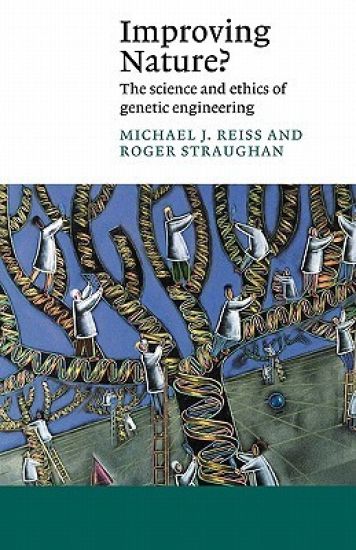
Improving Nature?

Improving Nature?

Michael J. Reiss; Roger Straughan

Cambridge University Press
2001
pokkari
Little more than a decade ago the term 'genetic engineering' was hardly known outside research laboratories. By now, though, its use is widespread. Those in favour of genetic engineering - and those against it - tell us that it has the potential to change our lives perhaps more than any other scientific or technological advance. But what are the likely consequences of genetic engineering? Is it ethically acceptable? Should we be trying to improve on nature? The authors, a biologist and a moral philosopher, examine the implications of genetic engineering in every aspect of our lives. The underlying science is explained in a way easily understood by a general reader, and the moral and ethical considerations that arise are fully discussed. Throughout, the authors clarify the issues involved so that readers can make up their own minds about these controversial issues.
The Allometry of Growth and Reproduction

The Allometry of Growth and Reproduction

Michael J. Reiss

Cambridge University Press
1991
pokkari
The technique of allometry investigates the effects of size on such variables as food intake, energy requirements, growth rates and age at first reproduction. This book brings together much of what is known about the consequences of size and provides a new and mathematically rigorous framework within which many quantitative predictions are made and tested using published and unpublished data. Explanations are proposed for many previously unexplained phenomena such as why in some species females are thousands of times heavier than males, whereas in no species are males more than about eight times heavier than females. The models presented afford a synthesis of the effects of size and open up pathways for further theoretical investigation and experimental testing. Care has been taken to give verbal presentations of all the mathematical conclusions to ensure that the text is widely intelligible.
The Allometry of Growth and Reproduction

The Allometry of Growth and Reproduction

Michael J. Reiss

Cambridge University Press
1989
sidottu
The technique of allometry investigates the effects of size on such variables as food intake, energy requirements, growth rates and age at first reproduction. This book brings together much of what is known about the consequences of size and provides a new and mathematically rigorous framework within which many quantitative predictions are made and tested using published and unpublished data. Explanations are proposed for many previously unexplained phenomena such as why in some species females are thousands of times heavier than males, whereas in no species are males more than about eight times heavier than females. The models presented afford a synthesis of the effects of size and open up pathways for further theoretical investigation and experimental testing. Care has been taken to give verbal presentations of all the mathematical conclusions to ensure that the text is widely intelligible.