Kirjojen hintavertailu. Mukana 12 316 169 kirjaa ja 12 kauppaa.

Kirjailija

Michael J. Sandel

Kirjat ja teokset yhdessä paikassa: 23 kirjaa, julkaisuja vuosilta 1998-2025, suosituimpien joukossa The Tyranny of Merit. Vertaile teosten hintoja ja tarkista saatavuus suomalaisista kirjakaupoista.

23 kirjaa

Kirjojen julkaisuhaarukka 1998-2025.

The Case against Perfection

The Case against Perfection

Michael J. Sandel

The Belknap Press
2009
nidottu
“Sandel explores a paramount question of our era: how to extend the power and promise of biomedical science to overcome debility without compromising our humanity. His arguments are acute and penetrating, melding sound logic with compassion.”—Jerome Groopman, author of How Doctors ThinkBreakthroughs in genetics present us with a promise and a predicament. The promise is that we will soon be able to treat and prevent a host of debilitating diseases. The predicament is that our newfound genetic knowledge may enable us to manipulate our nature—to enhance our genetic traits and those of our children. Although most people find at least some forms of genetic engineering disquieting, it is not easy to articulate why. What is wrong with re-engineering our nature?The Case against Perfection explores these and other moral quandaries connected with the quest to perfect ourselves and our children. Michael Sandel argues that the pursuit of perfection is flawed for reasons that go beyond safety and fairness. The drive to enhance human nature through genetic technologies is objectionable because it represents a bid for mastery and dominion that fails to appreciate the gifted character of human powers and achievements. Carrying us beyond familiar terms of political discourse, this book contends that the genetic revolution will change the way philosophers discuss ethics and will force spiritual questions back onto the political agenda.In order to grapple with the ethics of enhancement, we need to confront questions largely lost from view in the modern world. Since these questions verge on theology, modern philosophers and political theorists tend to shrink from them. But our new powers of biotechnology make these questions unavoidable. Addressing them is the task of this book, by one of America’s preeminent moral and political thinkers.

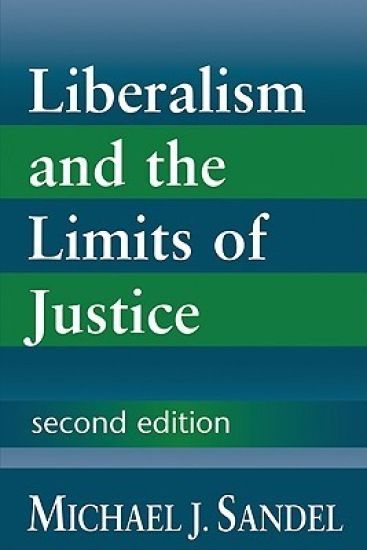
Liberalism and the Limits of Justice

Liberalism and the Limits of Justice

Michael J. Sandel

Cambridge University Press
1998
sidottu
A liberal society seeks not to impose a single way of life, but to leave its citizens as free as possible to choose their own values and ends. It therefore must govern by principles of justice that do not presuppose any particular vision of the good life. But can any such principles be found? And if not, what are the consequences for justice as a moral and political ideal? These are the questions Michael Sandel takes up in this penetrating critique of contemporary liberalism. Sandel locates modern liberalism in the tradition of Kant, and focuses on its most influential recent expression in the work of John Rawls. In the most important challenge yet to Rawls' theory of justice, Sandel traces the limits of liberalism to the conception of the person that underlies it, and argues for a deeper understanding of community than liberalism allows.
Liberalism and the Limits of Justice

Liberalism and the Limits of Justice

Michael J. Sandel

Cambridge University Press
1998
pokkari
A liberal society seeks not to impose a single way of life, but to leave its citizens as free as possible to choose their own values and ends. It therefore must govern by principles of justice that do not presuppose any particular vision of the good life. But can any such principles be found? And if not, what are the consequences for justice as a moral and political ideal? These are the questions Michael Sandel takes up in this penetrating critique of contemporary liberalism. Sandel locates modern liberalism in the tradition of Kant, and focuses on its most influential recent expression in the work of John Rawls. In the most important challenge yet to Rawls’ theory of justice, Sandel traces the limits of liberalism to the conception of the person that underlies it, and argues for a deeper understanding of community than liberalism allows.