

Kirjailija
Michael J. Scott
Kirjat ja teokset yhdessä paikassa: 41 kirjaa, julkaisuja vuosilta 1995-2024, suosituimpien joukossa Nicholas. Vertaile teosten hintoja ja tarkista saatavuus suomalaisista kirjakaupoista.
Mukana myös kirjoitusasut: Michael J Scott
41 kirjaa
Kirjojen julkaisuhaarukka 1995-2024.

Developing Cognitive-Behavioural Counselling
Michael J Scott; Stephen G Stradling; Windy Dryden
SAGE Publications Ltd
1995
nidottu
Seminars by Professor Windy Dryden. See the man live and in action. To find out more and to book your place go to www.cityminds.com ________________________________________ `[This book has] many useful insights for other therapists... make a copy of the competency checklist: if we all scored highly and consistently, there would be no need for talk of "national registration" ' - The Therapist In this volume the authors develop the cognitive-behavioural counselling approach by offering newer conceptualizations of many common client problems. It is suggested that effective interventions will often need to take account of early maladaptive interpretations of situations and of the presence of personality disorders. The specifics of tackling problems as diverse as surviving in a family with a personality disordered member and post-traumatic stress disorder are elaborated, and recent developments in the counselling of clients with anxiety and depression are also incorporated. Hitherto neglected issues such as the use of groups and the assessment of counsellor competence are also highlighted.
Extreme trauma can have devastating emotional, relational, physical and legal effects. This book offers hope, providing survivors, family and friends with a roadmap for managing obstacles to recovery.This second edition shifts the focus from reliving the trauma to 12 rules for ‘moving on after trauma’ by making the centrality accorded to the trauma the pre-eminent target rather than the traumatic experience itself. In this approach, the trauma victim’s intense desire not to talk or think about the trauma is no longer seen as pathological. The book also addresses the wider concerns of the traumatised about justice, group treatments and medication; with suggested strategies tailored to a wide range of possible traumatic responses including PTSD, specific phobias, panic disorder, depression and body dysmorphic disorder. An important focus in this new edition is the restoration of the sense of self. For those traumatised earlier on in life guidance is given on the creation of a stable sense of self.This one-of-a-kind trauma survivor guide will be beneficial for any survivor of trauma along with their fellow travellers to recovery, including family, friends, therapists, managers, clergy and lawyers. It can also serve as a companion volume to Personalising Trauma Treatment: Reframing and Reimagining (2022) for mental health professionals.
Extreme trauma can have devastating emotional, relational, physical and legal effects. This book offers hope, providing survivors, family and friends with a roadmap for managing obstacles to recovery.This second edition shifts the focus from reliving the trauma to 12 rules for ‘moving on after trauma’ by making the centrality accorded to the trauma the pre-eminent target rather than the traumatic experience itself. In this approach, the trauma victim’s intense desire not to talk or think about the trauma is no longer seen as pathological. The book also addresses the wider concerns of the traumatised about justice, group treatments and medication; with suggested strategies tailored to a wide range of possible traumatic responses including PTSD, specific phobias, panic disorder, depression and body dysmorphic disorder. An important focus in this new edition is the restoration of the sense of self. For those traumatised earlier on in life guidance is given on the creation of a stable sense of self.This one-of-a-kind trauma survivor guide will be beneficial for any survivor of trauma along with their fellow travellers to recovery, including family, friends, therapists, managers, clergy and lawyers. It can also serve as a companion volume to Personalising Trauma Treatment: Reframing and Reimagining (2022) for mental health professionals.

The author is in his 90th decade. Throughout his long life dealing with many different types of people he wondered how it was that some people having the worst of starts in life, with poverty and abuse as their companions achieved their own success whilst others who were born with the proverbial silver spoon in their mouths failed completely in their goals. The research into the causes took nearly 30 years. This book is the result.
Personalising Trauma Treatment is about helping trauma victims back to their old selves and focuses on altering the perception of the centrality of the trauma.In this book, clients are taught to rediscover their sense of self by reframing the trauma. Within this new framework the focus is on the client’s mental time travel from the trauma to today and reimagining their future. The therapeutic targets are the thoughts and images (cognitions) that interfere with day-to-day functioning. It does not assume that arrested information processing lies at the heart of the development of PTSD, with a consequent need for the client to re-live the trauma. For those clients who were abused in childhood, their experiences are viewed through a particular central window, but other ‘windows’ may make for more appropriate engagement with their personal world and a reimagining of their view of themselves. Treatment delivery options from telephone consultation, group work and videoconferencing are discussed. With illustrative examples, the author highlights the pathway to recovery for a wide range of clients with the comorbidity often found in real-world settings. The book will be essential reading for therapists and other mental health professionals working with trauma survivors.
Personalising Trauma Treatment is about helping trauma victims back to their old selves and focuses on altering the perception of the centrality of the trauma.In this book, clients are taught to rediscover their sense of self by reframing the trauma. Within this new framework the focus is on the client’s mental time travel from the trauma to today and reimagining their future. The therapeutic targets are the thoughts and images (cognitions) that interfere with day-to-day functioning. It does not assume that arrested information processing lies at the heart of the development of PTSD, with a consequent need for the client to re-live the trauma. For those clients who were abused in childhood, their experiences are viewed through a particular central window, but other ‘windows’ may make for more appropriate engagement with their personal world and a reimagining of their view of themselves. Treatment delivery options from telephone consultation, group work and videoconferencing are discussed. With illustrative examples, the author highlights the pathway to recovery for a wide range of clients with the comorbidity often found in real-world settings. The book will be essential reading for therapists and other mental health professionals working with trauma survivors.

IT'S THE END OF THE ROAD FOR PETER BAIRD After so much killing Peter Baird is mentally exhausted, ready to call it quits, and go home. But can he really lay down his weapons while his country is still in flames? As the second civil war rages on, Peter is once more dragged into the conflict. First into West Virginia, and then once more to the Midwest, Peter is pulled farther and farther from home. But this time, he aims to bring the fighting to an end. Will his brothers-in-arms support his cease-fire, or will they see it as a fundamental betrayal of all they've fought for? And can the President's assassin really bring about peace, or will he lose his own mind first?

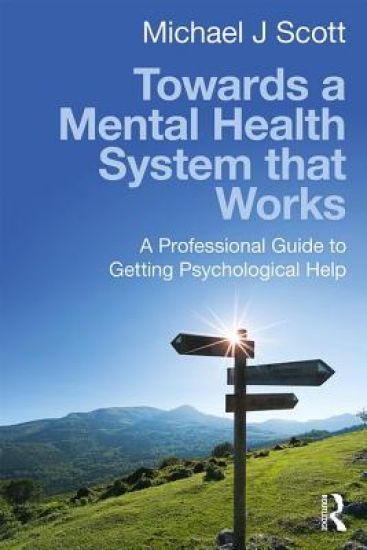
Research has established that there are efficacious psychological therapies for most common mental disorders. In Towards a Mental Health System That Works, psychologist Michael J Scott details the reforms necessary to ensure that consumers of services receive an evidence-based treatment.This book examines: the social significance of interventions that target mental-wellbeing and psychological disorder why treatments are ‘lost in translation’ from research to routine practice steps that can be taken towards a translation that better recognises the complexity of research and ensures fidelity to an evidence-based treatment protocol the deleterious effects of current provision on clients and therapists. Towards a Mental Health System that Works is a valuable resource for therapists, mental health practitioners, Clinical Commissioning Groups and politicians, enabling them to critically evaluate service provision, distil what constitutes cost-effective evidence-based mental health practice across the whole spectrum of disorders and client populations, and chart a new direction. It also serves as a guide to consumers of mental health services, as well as their friends and family, allowing them to understand what they are likely to experience and what they can demand.

Research has established that there are efficacious psychological therapies for most common mental disorders. In Towards a Mental Health System That Works, psychologist Michael J Scott details the reforms necessary to ensure that consumers of services receive an evidence-based treatment.This book examines: the social significance of interventions that target mental-wellbeing and psychological disorder why treatments are ‘lost in translation’ from research to routine practice steps that can be taken towards a translation that better recognises the complexity of research and ensures fidelity to an evidence-based treatment protocol the deleterious effects of current provision on clients and therapists. Towards a Mental Health System that Works is a valuable resource for therapists, mental health practitioners, Clinical Commissioning Groups and politicians, enabling them to critically evaluate service provision, distil what constitutes cost-effective evidence-based mental health practice across the whole spectrum of disorders and client populations, and chart a new direction. It also serves as a guide to consumers of mental health services, as well as their friends and family, allowing them to understand what they are likely to experience and what they can demand.

The Liberator of Detroit, Peter Baird has been arrested for treason by the Free Militia of Michigan. But unknown assailants are already attempting to kill him. Will he even make it to trial? Things quickly go awry in this fifth mile of the Jefferson's Road saga. Not only must Peter uncover the deadly source of the government sponsored plague and ally himself with the remnant of the men who've been manipulating him from the beginning, he must do so under the constant threat of death while wrestling with a dark and portentous dream that spells a final judgment for the country.
A Cognitive-Behavioural Approach to Clients' Problems (Psychology Revivals)
Michael J. Scott
Routledge
2016
nidottu
The most useful therapy is one that can be applied to a wide range of client problems, is easy to learn, and produces lasting results following a brief intervention. The cognitive-behavioural approaches described in this volume probably come nearest to this ideal.Originally published in 1989, this book begins with a description of the cognitive-behavioural revolution that had taken place in the decade prior to publication and provides therapists with the specifics of helping in four major areas: child behaviour problems, emotional disorders (depression and anxiety), interpersonal problems and addictive disorders.Coverage of the major areas of concern begins in each case with an overview of theory and research in the specific domain, followed by detailed guidance for practice. The volume represents a synthesis of the author’s research and practice with patients in inner city Liverpool and with employees referred by major employers. The strategies described have been devised to take account of a wide variety of client social contexts and service delivery settings, and the strengths, pitfalls and practicalities of group cognitive-behavioural approaches are also discussed.The reader is finally led into largely uncharted waters, the application of cognitive-behavioural approaches to schizophrenia, people with learning difficulties and the elderly.Back in print, this title will still be of interest to students and practitioners in social work, clinical psychology, and community psychiatry.
A Cognitive-Behavioural Approach to Clients' Problems (Psychology Revivals)
Michael J. Scott
Routledge
2015
sidottu
The most useful therapy is one that can be applied to a wide range of client problems, is easy to learn, and produces lasting results following a brief intervention. The cognitive-behavioural approaches described in this volume probably come nearest to this ideal.Originally published in 1989, this book begins with a description of the cognitive-behavioural revolution that had taken place in the decade prior to publication and provides therapists with the specifics of helping in four major areas: child behaviour problems, emotional disorders (depression and anxiety), interpersonal problems and addictive disorders.Coverage of the major areas of concern begins in each case with an overview of theory and research in the specific domain, followed by detailed guidance for practice. The volume represents a synthesis of the author’s research and practice with patients in inner city Liverpool and with employees referred by major employers. The strategies described have been devised to take account of a wide variety of client social contexts and service delivery settings, and the strengths, pitfalls and practicalities of group cognitive-behavioural approaches are also discussed.The reader is finally led into largely uncharted waters, the application of cognitive-behavioural approaches to schizophrenia, people with learning difficulties and the elderly.Back in print, this title will still be of interest to students and practitioners in social work, clinical psychology, and community psychiatry.






Smoke that does not rise. Hens that do not lay eggs. Cows that give sour milk. And a little girl abducted from her bed in the middle of the night. For the girl's father, it's clear evidence the Fey have breached the geas that bound them beyond the veil between worlds. For Lucas Veritatus, ex-Sheriff of the North Country, it is just enough to draw him out of retirement to investigate. For Aveny of the Ronami, a lawless tribe beyond the reach of the king, it is evidence that whoever is abducting Ronami children, her sister included, has now struck the realm as well. First to the Witch of the Great Wood, and then across the Dragon's Ridge mountains into the territory of the lawless, Lucas and Aveny must join forces in an unlikely pairing to solve the mystery. Who is stealing the children, murdering their parents, and leaving the mysterious Eye of Darkness marks throughout the land? Have the Fey found a way to cross the veil? Or is some other darkness at work? And will Lucas and Aveny 's own dark secrets drive them into each other's arms, or thrust them forever apart?