Kirjojen hintavertailu. Mukana 12 595 353 kirjaa ja 12 kauppaa.

Kirjailija

Michael K. Salemi

Kirjat ja teokset yhdessä paikassa: 2 kirjaa, julkaisuja vuosilta 2005-2006, suosituimpien joukossa Discussing Economics. Vertaile teosten hintoja ja tarkista saatavuus suomalaisista kirjakaupoista.

2 kirjaa

Kirjojen julkaisuhaarukka 2005-2006.

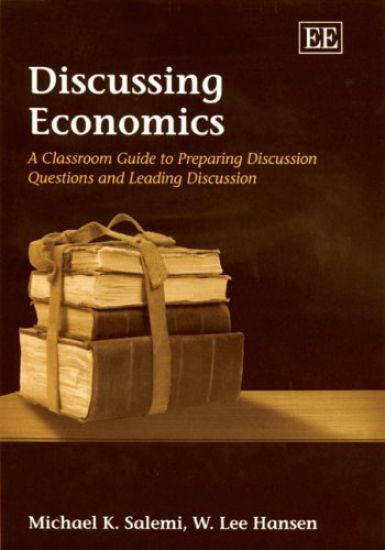
Discussing Economics

Discussing Economics

Michael K. Salemi; W. L. Hansen

Edward Elgar Publishing Ltd
2006
nidottu
Discussing Economics treats discussion - meaning formal consideration of questions about a reading - as a new approach to learning economics. Setting out a detailed approach modeled on the ideas of Mortimer Adler and the Great Books Foundation, the authors explain why instructors should organize discussion around interpretive questions, how to plan and lead discussion, and how to integrate it into a course. They then provide a guide to over 60 classic and contemporary readings that span much of the undergraduate economics curriculum. For each, they provide a synopsis, learning objectives, recommended questions, and discussion suggestions. The authors make the case for discussion as a productive, cost-effective pedagogy that provides students with the opportunity to improve their economic literacy. As students form and revise their interpretations, they use the concepts the authors used in ways that deepen their understanding, lengthen their retention and enable them to transfer their mastery to new contexts. An invaluable resource for undergraduate and high school economics instructors, this volume will also be a useful tool for economic educators and those interested in classic economic writings.
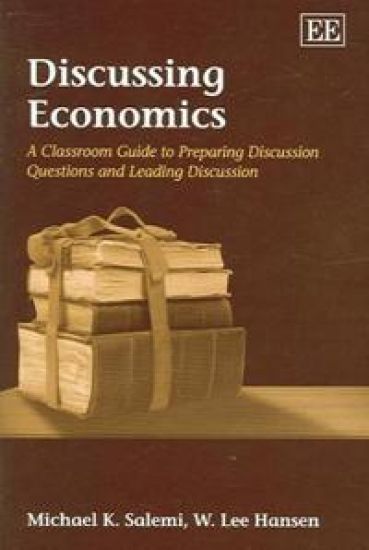
Discussing Economics

Discussing Economics

Michael K. Salemi; W. L. Hansen

Edward Elgar Publishing Ltd
2005
sidottu
Discussing Economics treats discussion - meaning formal consideration of questions about a reading - as a new approach to learning economics. Setting out a detailed approach modeled on the ideas of Mortimer Adler and the Great Books Foundation, the authors explain why instructors should organize discussion around interpretive questions, how to plan and lead discussion, and how to integrate it into a course. They then provide a guide to over 60 classic and contemporary readings that span much of the undergraduate economics curriculum. For each, they provide a synopsis, learning objectives, recommended questions, and discussion suggestions. The authors make the case for discussion as a productive, cost-effective pedagogy that provides students with the opportunity to improve their economic literacy. As students form and revise their interpretations, they use the concepts the authors used in ways that deepen their understanding, lengthen their retention and enable them to transfer their mastery to new contexts. An invaluable resource for undergraduate and high school economics instructors, this volume will also be a useful tool for economic educators and those interested in classic economic writings.