

Kirjailija
Michael Keating
Kirjat ja teokset yhdessä paikassa: 22 kirjaa, julkaisuja vuosilta 1979-2026, suosituimpien joukossa The New Regionalism in Western Europe. Vertaile teosten hintoja ja tarkista saatavuus suomalaisista kirjakaupoista.
22 kirjaa
Kirjojen julkaisuhaarukka 1979-2026.
Public Policy to Reduce Inequalities across Europe
Paul Cairney; Michael Keating; Sean Kippin; Emily St Denny
Oxford University Press
2022
sidottu
This is an open access title available under the terms of a CC BY-NC-ND 4.0 International licence. It is free to read at Oxford Scholarship Online and offered as a free PDF download from OUP and selected open access locations. There is a broad consensus across European states and the EU that social and economic inequality is a problem that needs to be addressed. Yet inequality policy is notoriously complex and contested. This book approaches the issue from two linked perspectives. First, a focus on functional requirements highlights what policymakers think they need to deliver policy successfully, and the gap between their requirements and reality. We identify this gap in relation to the theory and practice of policy learning, and to multiple sectors, to show how it manifests in health, education, and gender equity policies. Second, a focus on territorial politics highlights how the problem is interpreted at different scales, subject to competing demands to take responsibility. This contestation and spread of responsibilities contributes to different policy approaches across spatial scales. We conclude that governments promote many separate equity initiatives, across territories and sectors, without knowing if they are complementary or contradictory. This outcome could reflect the fact that ambiguous policy problems and complex policymaking processes are beyond the full knowledge or control of governments. It could also be part of a strategy to make a rhetorically radical case while knowing that they will translate into safer policies. It allows them to replace debates on values, regarding whose definition of equity matters and which inequalities to tolerate, with more technical discussions of policy processes. Governments may be offering new perspectives on spatial justice or new ways to reduce political attention to inequalities.
The United Kingdom has often been seen as a unitary nation-state. This book argues that it should be understood as a plurinational union in which the key elements of demos, telos, and ethos are contested. Except in the mid-twentieth century, its territorial boundaries have been contested and the matter of sovereignty has never definitely been settled. Since the end of the twentieth century, devolution to Scotland, Wales, and Northern Ireland has made this more apparent. With the weakening of the British national project, tensions between the centre and the peripheral nations have grown, greatly exacerbated by Brexit. Eurosceptics have long argued that membership of the European Union is inconsistent with the sovereignty of the British people and Parliament. On another reading, however, both the UK and the EU are plurinational unions and highly compatible. The EU, indeed, served as an important external support system for the devolution settlement. Brexit destabilizes it. Unionism historically served as a doctrine and a set of practices seeking to reconcile a unitary state with a plurinational reality. Since devolution, it has struggled to come to terms with the new constitutional reality or embrace the idea of shared sovereignty. The Union is under increasing strain but there is no simple way of resolving these strains, either by secession of the component nations, or a return to the unitary state. The peoples of these islands need to find new constitutional concepts for living together in a world in which traditional ideas of national sovereignty have lost their relevance.

Chasing Indiana's Game
Chris Smith; Chris May; Michael Keating
Indiana University Press
2020
sidottu
Hoosiers have always loved basketball! Long before Larry Bird carried Indiana State University to the 1979 NCAA National Championship or Bobby Knight walked the sidelines at Indiana University, basketball fostered community identity across the Hoosier state. From Indiana's tiniest towns to its biggest cities, high school basketball is a source of pride, unifying communities with different races, religions, and social and economic status.First drawn simply to documenting the architecture of Indiana's high school buildings and basketball courts, Chris Smith and Michael Keating quickly discovered that the real story was about more than just brick and mortar, maple and shellac. Told repeatedly by locals how important these places were to their communities, they began to embrace the "game on Saturday, church on Sunday" mantra that is found in many towns through Indiana, watching countless hours of basketball and becoming a part of the Hoosier tradition themselves. With over 150 color photographs and unforgettable stories from high school basketball and beyond, Chasing Indiana's Game: The Hoosier Hardwood Project is a tribute to the Hoosier state and all who love basketball.
Winners and losers: it's the brutal reality in most advanced economies. Increased inequality, economic stagnation and financial instability are the consequences of technological change, globalisation and the massive increase in financial systems. Governments struggle to deal with the unrest this creates and to resolve competing claims for the spoils of growth.Australia's egalitarian traditions and past reforms have served the country well, but the risks of weakening demand, stagnating living standards and structural unemployment are growing and require urgent attention. Does Australia have the fiscal and political capacity to achieve a reform agenda? Can the Australian political system manage these vital changes? Will voters support them? Fair Share ignites the necessary debate to instigate action.
The Global Energy Challenge
Caroline Kuzemko; Andreas Goldthau; Michael Keating
Red Globe Press
2015
nidottu
The supply and demand of energy, its security and environmental sustainability are increasingly central issues in the contemporary world. This broad-ranging new text provides an international and interdisciplinary introduction to today's political, economic, security, policy and technological challenges set in a clear historical context.
Social scientists have regularly proclaimed the end of territory under successive waves of modernization, yet it continually re-emerges as a key principle of social, economic, and political organization. Rather than a de-territorialization we are witnessing a rescaling of social life as functional systems, identities, and political expression migrate to new levels. This is not new, but is a recurrent feature of the European state. States have sought to reassert control over these new spaces, while political and social movements have sought to politicize them and open them up to popular influence. The result has been the emergence of the meso-level or region as set of contested spaces, and increasingly as a level of government. Social and economic interests are refracted at these new territorial levels to reshape the policy agenda and create new social alliances and conflicts. Regions have emerged as spaces for public policy, with significant divergences over economic development, welfare policies, public services and environmental issues. Rescaling poses important normative questions about self-determination and social solidarity. These cannot definitively be resolved but are reframed, with new forms of self-government being possible and social solidarity emerging at new levels. Competitive regionalism has become a dominant theme but there is no generalized race to bottom as regions respond to the challenge in multiple ways. Regions are not going to replace the nation-state as they remain loosely-bounded and contested spaces but territory continues to reshape European polities. Drawing on a rich interdisciplinary literature and on original research, the volume provides a fresh and engaging analytical approach to the understanding of territory and power in contemporary Europe.
Political Autonomy and Divided Societies
Alain-G Gagnon; Michael Keating
Palgrave Macmillan
2012
sidottu
An all star cast of academic experts offer an important and timely analysis of the pursuit of autonomy. They argue that it is key to move beyond the primarily normative debate about the rights or wrongs of autonomous regions on the basis of cultural concerns, instead focusing on understanding what makes autonomy function successfully.

Political Autonomy and Divided Societies
Alain-G Gagnon; Michael Keating
Palgrave Macmillan
2012
nidottu
An all star cast of academic experts offer an important and timely analysis of the pursuit of autonomy. They argue that it is key to move beyond the primarily normative debate about the rights or wrongs of autonomous regions on the basis of cultural concerns, instead focusing on understanding what makes autonomy function successfully.
A critical challenge to Scotland's new system of government is the making and implementation of public policy. This book offers a comprehensive account of the policy process in contemporary Scotland. There is a review of theories of policy-making, focusing on decentralised systems. The author then identifies the key actors and institutions, patterns of policy making, and the extent of convergence and divergence in comparison with England and other devolved territories. Case studies of policy making in health, higher education, housing, criminal justice, social inclusion and economic development allow the reader to see how policy making works in practice. There is an analysis of financial planning and decision making, and an examination of Scotland's role in UK and European policy networks. Comparisons are made with other devolved governments in Europe and beyond. The book is based on extensive research, including interviews with leaders of interest groups, politicians and officials across the Scottish Government and in the Scottish Parliament, an analysis of spending patterns, an examination of the legislative output, and case studies of policy making. Key Features *Provides the only comprehensive account of policy-making under devolution in Scotland *Places Scotland within a broader theoretical and comparative framework and analyses institutions and processes of policy-making *Contains case studies of specific policy fields and a thorough treatment of financial questions *Emphasis is placed on Scotland's insertion into UK, European and international networks The second edition includes new and updated information in the following areas: * Election results * Voting by class, etc. * Manifestoes * Scottish Executive (now Government) departments * Background of MSPs * Committees * Expenditure data There is also updating to take account of the change in government in 2007, including substantially revised material on intergovernmental relations and on Europe. The case studies on policy making have also been updated, with extensive changes in the section on economic development. In addition there is a new discussion of proposals for further devolution, following the National Conversation and the Calman Commission.
After three hundred years, the Anglo-Scottish Union is in serious difficulty. This is not because of a profound cultural divide between England and Scotland but because recent decades have seen the rebuilding of Scotland as a political community while the ideology and practices of the old unionism have atrophied. Yet while Britishness is in decline, it has not been replaced by a dominant ideology of Scottish independence. Rather Scots are looking to renegotiate union to find a new place in the Isles, in Europe, and in the world. There are few legal, constitutional or political obstacles to Scottish independence, but an independent Scotland would need to forge a new social and economic project as a small nation in the global market-place, and there has been little serious thinking about the implications of this. Short of independence, there is a range of constitutional options for renegotiating the Union to allow more Scottish self-government on the lines that public opinion seems to favour. The limits are posed not by constitutional principles but by the unwillingness of English opinion to abandon their unitary conception of the state. The end of the United Kingdom may be provoked, not by Scottish nationalism, but by English unionism.
Culture, Institutions and Economic Development
Michael Keating; John Loughlin; Kris Deschouwer
Edward Elgar Publishing Ltd
2005
nidottu
Regions are increasingly recognised as a key aspect of economic change in Europe, not merely as geographic spaces but also as social systems. Their history, culture, institutions and patterns of leadership mould the way in which they adapt to European and global competitive challenges. This book reviews the debate surrounding the construction of regions and presents eight case studies to illustrate how they are shaped and reshaped in a variety of different ways. The authors find that while some regions exhibit common patterns, there are significant variations, indicating that there is no definitive model of regional development.This book offers a systematic comparison of eight distinct regions and stateless nations, each with its own historical identity, but which is constantly being rebuilt in changing economic and political conditions. Avoiding economic or cultural determinism, the authors show how region-builders can shape their own responses to global challenges to produce models of development reflecting differing understandings and social compromises.Culture, Institutions and Economic Development will be warmly welcomed by academics within the fields of regional studies, European studies and political science.
Transnational integration and other challenges to the nation-state have deprived it of its mystique and broken the automatic link between state and nation. This has encouraged the revival of stateless nationalisms, but also provided new means for their accommodation. The author argues that these changes call for a radical rethinking of the nature of sovereignty and of the state itself to meet the twin challenges of recognition of nationality and of democracy. Drawing on the experience of four plurinational states - United Kingdom, Spain, Belgium, and Canada - and of the European Union, he analyses the challenges of plurinationalism and its recognition. Keating argues that we are not moving to a world without states, but to a complex political order with multiple sites of sovereign authority, and asymmetrical constitutional arrangements. This political order is new but at the same time old, as traditions of diffused authority and shared sovereignty, from before the rise of the nation-state, are rediscovered and rehabilitated. Democracy can no longer be confined to the framework of the nation-state but must extend to the new political spaces which are emerging above and below the state. Political movements and public opinion in the stateless nations are increasingly embracing these ideas and are the harbingers of a post-sovereign political order.
Culture, Institutions and Economic Development
Michael Keating; John Loughlin; Kris Deschouwer
Edward Elgar Publishing Ltd
2003
sidottu
Regions are increasingly recognised as a key aspect of economic change in Europe, not merely as geographic spaces but also as social systems. Their history, culture, institutions and patterns of leadership mould the way in which they adapt to European and global competitive challenges. This book reviews the debate surrounding the construction of regions and presents eight case studies to illustrate how they are shaped and reshaped in a variety of different ways. The authors find that while some regions exhibit common patterns, there are significant variations, indicating that there is no definitive model of regional development.This book offers a systematic comparison of eight distinct regions and stateless nations, each with its own historical identity, but which is constantly being rebuilt in changing economic and political conditions. Avoiding economic or cultural determinism, the authors show how region-builders can shape their own responses to global challenges to produce models of development reflecting differing understandings and social compromises.Culture, Institutions and Economic Development will be warmly welcomed by academics within the fields of regional studies, European studies and political science.

Scottish Independence
Jo E. Murkens; Peter Jones; Michael Keating
Edinburgh University Press
2002
nidottu
How might Scotland achieve independence? And what would be the consequences, for Scotland and the rest of the UK? Independence is ever-present on the Scottish political agenda. This book is the first serious study of the likely road to independence, and the consequences for the Scottish people and the Scottish economy. Scottish Independence starts with a detailed guide to the stages along the route to independence and goes on to analyse the legal, political and economic consequences. It asks key questions: *If Scots vote for an SNP government in Edinburgh, how will that government deliver its manifesto promise of achieving independence in Scotland? *If the Scots attain independence, what will change? What will Scotland's place be in the world? Can Scotland remain in the EU? *What are the economics of independence? Would there be a flight of capital and a stock-market fall? How much economic freedom would an independent Scotland have? *How much would change in the daily lives of Scots as a result of independence? How much autonomy would Scotland have as a small independent state in Europe?Scottish Independence will have an impact on public policy and on academic thinking, and is of key interest to politicians, civil servants, academics, journalists and anyone interested in Scotland's future.

Transnational integration and other challenges to the nation-state have deprived it of its mystique and broken the automatic link between state and nation. This has encouraged the revival of stateless nationalisms, but also provided new means for their accommodation. The author argues that these changes call for a radical rethinking of the nature of sovereignty and of the state itself to meet the twin challenges of recognition of nationality and of democracy. Drawing on the experience of four plurinational states - United Kingdom, Spain, Belgium, and Canada - and of the European Union, he analyses the challenges of plurinationalism and its recognition. Keating argues that we are not moving to a world without states, but to a complex political order with multiple sites of sovereign authority, and asymmetrical constitutional r s6ngements. This political order is new but at the same time old, as traditions of diffused authority and shared sovereignty, from before the rise of the nation-state, are rediscovered and rehabilitated. Democracy can no longer be confined to the framework of the nation-state but must extend to the new political spaces which are emerging above and below the state. Political movements and public opinion in the stateless nations are increasingly embracing these ideas and are the harbingers of a post-sovereign political order.
Are political and socio-economic issues handled in a radically different manner in a federal Canada than a devolved Britain? To what extent in both states have administrative arrangements and developments in public policy begun to by-pass constitutional forms and debates? Are the real loci of power in each better identified by 'following the money' than by constitutional and legal provisions? If the arrangements between the state capitals and the constituent parts of Canada and Britain are becoming more ad hoc, individual and varied, what problems does this pose for the continuing cohesion of their systems? In The Dynamics of Decentralization leading Canadian and British authorities, practitioners and academics, plot their way through these minefields and offer insight into the current stage of development. Contributors include Claude E. Forget (C.E.F. Ganish Corporation), Jane Jenson (Universite de Montreal), Harvey Lazar (Queen's University), Kenneth Morgan (University of Wales), Sir George Quigley (Bombardier Aerospace), Richard Simeon (University of Toronto), Shorts Hugh Segal (Institute for Research in Public Policy), and Peter Stoyko (Queen's University).

In the 1990s, the states of Western Europe faced twin challenges, from above in the shape of globalization and European integration, and from below in the form of new regionalist movements. In this authoritative book, Michael Keating traces the historical origins of regionalism, showing that territorial politics has always been a feature of the West European state. Then he analyses the post-war model of territorial management in the Keynesian welfare state, and shows how current trends are re-shaping the meaning of political space and encouraging new forms of political mobilization and action. This new regionalism is no longer contained within the nation state so that regions must face the global market and an integrating Europe directly. Professor Keating argues that regionalism is a complex phenomenon, spanning culture, economics, politics and policy. It takes different forms in different settings, shaped by the imperatives of economic competition in a global age, as well as by political forces within the regions themselves. There is a discussion of regionalism as a strategy for economic development, of the emergence of a regional level of government and of regions with the European Union.The New Regionalism in Western Europe will be essential reading for academics and students interested in European politics, future integration within the European Union and European political history.
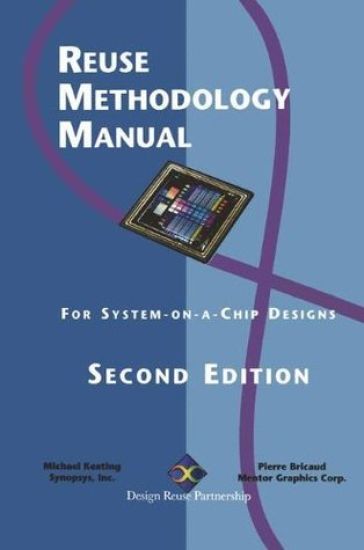
Reuse Methodology Manual for System-on-a-Chip Designs
Michael Keating; Pierre Bricaud
Kluwer Academic Publishers
1999
sidottu
Silicon technology now allows us to build chips consisting of tens of millions of transistors. This technology not only promises new levels of system integration onto a single chip, but also presents significant challenges to the chip designer. As a result, many ASIC developers and silicon vendors are re-examining their design methodologies, searching for ways to make effective use of the vast numbers of gates now available. This work outlines an effective methodology for creating reusable designs for use in a System-on-a-Chip (SoC) design methodology. It is an attempt to capture and improve on current practices in the industry, and to give a coherent, integrated view of the design process.
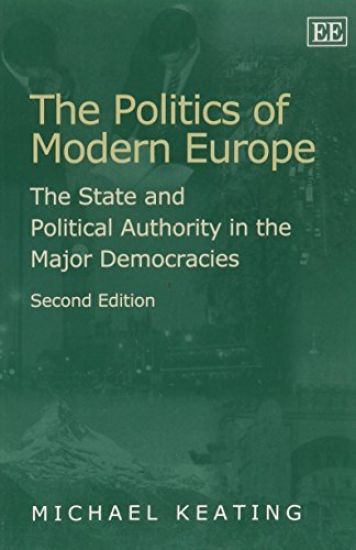
This major text has been thoroughly revised and updated for the second edition. It sheds new light on the changing roles of the state in Europe and the European Union.After introducing conceptions of the state, bureaucracy, interest groups, patronage and political currents within Europe, Michael Keating focuses on the five major European democracies - the United Kingdom, France, Italy, Germany and Spain. In each case, state and government as well as parties and elections, policymaking and territorial policies are investigated. Key new issues affecting the whole of Europe are discussed including:the effects of and prospects for European Integration and the single currencythe end of the Cold War and its effect both on the boundaries of Europe and the internal politics of the countries of western Europethe debate centred on the retreat or strengthening of the state; the market versus politics in the age of globalization the consequences of increasing multiculturalism on the political order in nation statesClear, concise and thought-provoking, The Politics of Modern Europe provides an excellent resource for students of European studies and the politics of Europe.